Episode 373
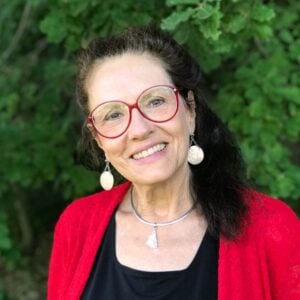
Kylea Taylor, M.S., LMFT
In this episode of The Psychedelic Podcast, Paul F. Austin speaks with therapist and InnerEthics® founder Kylea Taylor about what ethical psychedelic practice requires beyond codes of conduct. Kylea explains why extraordinary states amplify intimacy, countertransference, and practitioner blind spots, and how self-inquiry helps facilitators remain in right relationship. They explore personal experience, facilitator dosing, touch and consent, inner healing intelligence, romantic transference, and peer consultation. Kylea offers a practical ethical compass: protect the client, serve their best interests, and keep asking, “Who is this for?”
Kylea Taylor, M.S., LMFT is a California licensed therapist who has been thinking and writing about ethics for over three decades. She founded InnerEthics®, a self-reflective, self-compassionate approach to relational ethics taught in breathwork and psychedelic practitioner trainings. A certified Holotropic Breathwork® Facilitator, she worked with Dr. Stanislav Grof as a Senior Trainer in Grof Transpersonal Training throughout the 1990s. She is the author of Peer Consultation Groups & Ethical Awareness Tools for Psychedelic Practitioners and The Ethics of Caring: Finding Right Relationship with Clients. Kylea also co-founded SoulCollage®, helping train more than 6,000 facilitators in 63 countries. Her InnerEthics® certification courses and Wisdom Circles support licensed clinicians and other psychedelic practitioners.
Podcast Highlights
- Why extraordinary states amplify ethical risk
- Self-inquiry beyond codes of conduct
- Personal experience as practitioner preparation
- Facilitator dosing and client safety
- Touch, consent, and client autonomy
- Trusting the inner healing intelligence
- Right relationship as an ethical compass
- Recognizing transference and countertransference
- Peer consultation and compassionate accountability
Show Links
- InnerEthics®
- KyleaTaylor.com
- Kylea's books at Hanford Mead
- Kylea on LinkedIn
- InnerEthics® Homestudy Courses-Level 1
- InnerEthics® on Instagram
- SoulCollage® Community
- Psychedelic Guide Network
- Episode 334 – Ethics as Medicine: Redefining Integrity in Psychedelic Facilitation with Ashley Carmen, M.S., LMFT
These show links may contain affiliate links. Third Wave receives a small percentage of the product price if you purchase through the above affiliate links.

An 18-week live online certification led by Paul F. Austin, author of Mastering Microdosing, for coaches, wellness practitioners, and career changers. Experience Paul’s microdosing protocol for nervous system regulation firsthand, build coaching skills through live practice, and graduate with a ready-to-launch microdosing offer.
Podcast Transcript
00:00:01 Paul F. Austin
In our own practitioner trainings, we talk a lot about walking the walk, but psychedelic ethics ask an even more uncomfortable question: can we recognize when our own fears, desires, or need to help are getting in the way of the person that we are meant to serve? Welcome to the Psychedelic Podcast. I'm your host, Paul Austin, and that question is at the center of today's conversation with Kylea Taylor.
00:00:23 Paul F. Austin
Kylea sees ethics as more than a code we consult after something goes wrong; it is a continual process of self-inquiry, right relationship, and knowing when to step back so the client's own process can lead. I wanted to explore how that practice changes the way that we think about touch, transference, altered states, and the responsibilities of anyone who is holding space for another person in an altered state.
00:00:50 Paul F. Austin
Kylea Taylor is a California-licensed therapist who has been thinking and writing about ethics for more than 3 decades. She founded Inner Ethics, a self-reflective and self-compassionate approach to relational ethics that she teaches in breathwork and psychedelic practitioner trainings. Kylea is also a certified holotropic breathwork facilitator and served as a senior trainer with Dr. Stan Grof throughout the 1990s. She is the author of "The Ethics of Caring" and "Peer Consultation Groups and Ethical Awareness Tools for Psychedelic Practitioners." She and her husband also stewarded "Soul Collage" for 25 years, helping train more than 6,000 facilitators across 63 countries.
00:01:31 Paul F. Austin
Here's a little taste of what we talk about today: why extraordinary states amplify the practitioner's inner world, how self-inquiry reveals blind spots that rules cannot anticipate, whether practitioners need firsthand experience with altered states, the ethical risks of taking psychedelics while facilitating, why touch and consent become more complex in vulnerable states, facilitating versus directing and knowing when not to intervene, recognizing transference, countertransference, and when we're starting to drift away from right relationship, why peer consultation requires compassion as well as accountability, and how Inner Ethics helps practitioners to put these principles into practice.
00:02:15 Paul F. Austin
All right, before we get into our conversation with Kylea, let's first hear a quick word from our sponsors.
00:02:22 Kylea Taylor
If you work with clients who are taking SSRIs and asking about psychedelics, check out our new SSRI Deprescribing and Psychedelic Readiness Certification. It's taught by Dr. Dave Rabin, a board-certified psychiatrist and neuroscientist with more than 20 years of experience working with psychiatric medication reduction. You'll learn how to assess readiness, understand the tapering process, collaborate with prescribers, and support clients through the transition while staying within your professional scope. Learn more through the link in the description.
00:02:51 Paul F. Austin
All right, folks, without further ado, we bring you Kylea Taylor.
00:03:17 Paul F. Austin
Kylea, thank you for joining us for this podcast.
00:03:20 Kylea Taylor
It's my pleasure.
00:03:22 Paul F. Austin
How does it feel to hear that bio? I mean, you've had quite the career in the space, and I mean, for many, many years now.
00:03:29 Kylea Taylor
Yeah, it's always when I hear the bio, it's really? I did that? I can't remember.
00:03:34 Paul F. Austin
Right, right. Yeah. Yeah, I mean, to work with Stan throughout the 1990s, you know, I was very fortunate that in 2019, just after his stroke, he came back to teach a holotropic breathwork workshop at CIS.
00:03:48 Paul F. Austin
I was living in Oakland at the time. And, you know, he was, 3 months after having his stroke, was still on the floor, working with people, you know, helping folks out.
00:03:57 Paul F. Austin
So I can only imagine, you know, being supporting him and being in that work from the early days. I mean, that must have been profoundly impactful for you.
00:04:07 Kylea Taylor
It was. You know, I really had the benefit of hearing hundreds of hours of his Q&A and response to the weird and surprising things that always happen in extraordinary states of consciousness. So, yeah.
00:04:21 Paul F. Austin
Right. Right. Well, and really what I brought you on to talk about today is ethics and sort of why ethics require that much more attunement and attention in non-ordinary states, especially in the sort of midst of this quote-unquote "psychedelic renaissance."
00:04:37 Paul F. Austin
And, you know, Stan Grof is famous for calling psychedelics "non-specific amplifiers." And you've said yourself that extraordinary states of consciousness amplify everything.
00:04:49 Paul F. Austin
And so I'd love if we could just start with, you know, what is it that makes ethics in psychedelic work fundamentally different from ethics in conventional talk therapy, if you will?
00:05:00 Kylea Taylor
I think one of the main reasons is that it amplifies everything that could come up for the practitioner as well. And I think, you know, the long hours, you have to be present for a long time, and the intensity of the work, and the emotional, well, there is emotional intensity, and there's also quite a bit more intimacy than there usually is in talk therapy.
00:05:36 Kylea Taylor
And one of the basic things is the defenses soften or go away. A lot of talk therapy is about how to get rid of the defenses so we can really start doing the work. And the psychedelic does that, or the breathwork does that.
00:05:56 Kylea Taylor
And so the role changes. And a lot of people do not understand that role shift in psychedelic work. The therapist has to think about diagnosis and treatment plans and agenda and how do we, what model am I using? And
00:06:19 Kylea Taylor
when the psychedelic takes effect, it's about following that trajectory and really trying to support it in a way like a midwife supports birth. It's happening. It's coming up. The healing energy is coming up in some form.
00:06:40 Kylea Taylor
And the client just really needs presence, compassion, encouragement sometimes, protection sometimes. But all of those things are amplified in extraordinary states of consciousness. All of the things that are needed, all of the issues that arise, and especially our self-awareness needs amplification.
00:07:08 Paul F. Austin
Well, and that's something that with Inner Ethics, right, the focus really is on self-inquiry rather than strictly rule-following. And so to sort of build on this, why is it that a facilitator's awareness of their own motivations, fears, and biases, why is it that self-awareness is so essential when a client, when they're working with a client who's in this non-ordinary state?
00:07:34 Kylea Taylor
Well, one reason is surprising things happen and they are not always covered in the rulebooks. And the other thing is that we don't want to get in the way.
00:07:47 Kylea Taylor
And a lot of times our unconscious material gets in the way of the healing that the expert inner healing intelligence, as some people have called it, is trying to bring up.
00:08:06 Kylea Taylor
So what we need to do is know about that so we can make wise choices that are to the best of our ability in the client's best interests.
00:08:16 Paul F. Austin
And especially for new folks who are being trained in how to work with ordinary states, practitioners, clinicians, therapists, medical doctors, what are some of the most common challenges that they may come up against in terms of stepping into this work when it relates to, again, this learning how to sort of inquire into the self rather than saying, okay, these are the strict, obviously there are, I would say, fundamentally ethical rules that have to be followed for safe work, but there is more of a process of like, how do I follow my truth as part of this and ensure that a safe space is being created?
00:09:03 Kylea Taylor
Well, there's the rules and the laws and the standards of care that have been decades in the process of being compiled. And they were compiled because mistakes were made and harm was caused. And they're really important for us to know and follow and look at and reflect on when something comes up.
00:09:32 Kylea Taylor
But there's something else. There's, as I said, there's always unique things that happen, surprises that happen, and unique things in ourselves that we may not be fully conscious of.
00:09:45 Kylea Taylor
So there's two things that Inner Ethics does. It helps with certain ethical awareness tools to identify the ethically precarious situations. Because a lot of times it's so confusing, all this is happening, but people don't know what to name it. Once they name it, they can start thinking about it really fast, hopefully, and look at their own stuff and see how that's contributing to what's arising.
00:10:24 Kylea Taylor
And that's part of the self-inquiry. And that's the second thing it helps them do is to really reflect on the shadow, what's in their unconscious that probably is at least semi-conscious or unconscious. And it can arise because of something that's happening in the client's process, because of intensity itself, or because of countertransference.
00:10:58 Kylea Taylor
For example, if a client gets angry, it might take a practitioner back to an experience in childhood of a parent being enraged. And all of a sudden, they're back in their own world. So we got two worlds going on. We got the client's world, we got the practitioner's world.
00:11:20 Kylea Taylor
And then how do they get back to being present and keeping one foot, at least one foot in the material world so that harm doesn't happen, so that they're there to protect the client and to serve their needs if there are needs? So those two things are what Inner Ethics, as it developed, tries to help practitioners with, naming those precarious situations and providing them with tools to really look inside and at the relationship to see where it might be off track and how to get back on.
00:12:08 Speaker 2
There's a question more and more practitioners are hearing from their clients. I've been on an SSRI for years. I want to come off and I'm interested in psychedelic therapy. Can you help me? And for a lot of therapists, coaches, and psychedelic practitioners, the answer is still some version of, well, talk to your doctor and come back when you're off.
00:12:25 Speaker 2
The problem is that leaves a huge gap in care. Coming off an antidepressant isn't simply about waiting for the medication to wash out or clear the body. You need to understand withdrawal, how to distinguish withdrawal from relapse, when someone may or may not be ready for psychedelic work, and where your own professional scope begins and ends.
00:12:44 Speaker 2
That's why we created the SSRI Deprescribing and Psychedelic Readiness Certification. This training is taught by Dr. Dave Rabin, a board-certified psychiatrist, neuroscientist, and psychedelic researcher who has spent more than 20 years studying chronic stress and working with psychiatric medication reduction.
00:13:00 Speaker 2
Over 3 months, Dave will teach the deprescribing and readiness process from end to end, including screening, tapering principles, withdrawal versus relapse, psychedelic interactions, nervous system support, and how to collaborate effectively with a client prescriber. He'll also work through real cases in facilitated labs, so this isn't simply information that you listen to and forget.
00:13:21 Speaker 2
The goal is to help you become far more useful to medicated clients while staying firmly within your professional scope. Learn more about the SSRI Deprescribing and Psychedelic Readiness Certification through the link in the description.
00:13:34 Paul F. Austin
I think one question that's coming up for me in this is, in our own training program, we talk a lot about the importance of walking the walk. And there's been a lot of conversation in the last 10 years or so of, you know, as psychedelics become more accessible and available, whether that's in Colorado and Oregon, whether that's through potentially the FDA, we're still waiting on FDA approval, potentially the FDA, there's a lot of conversation about, well, you know, does a practitioner need to have personal experience with these non-ordinary states in order to ethically hold a container for a client who is navigating them?
00:14:07 Paul F. Austin
And so I'm kind of curious to hear your take on that. You know, is it essential that a practitioner who is supporting someone through this work have navigated the work themselves with altered states? Or do you think it's not necessarily a prerequisite to hold someone in, you know, psychedelic or non-ordinary state work?
00:14:32 Kylea Taylor
I think it's essential. I don't think it has to be psychedelic extraordinary state. I think almost anything that comes up in psychedelics can come up in holotropic breathwork, for example. But I think practitioners need to know the territory to be able to attune. I said that one foot in the material world, they need to have the other foot a little bit in the world of the person. Even if they don't know exactly what that is, they have a sense of what they might need from the person who's sitting for them because they've been in the experience or position.
00:15:17 Kylea Taylor
And I don't think it's a one-time deal. I think we have to keep doing our own work. And our own work in extraordinary states of consciousness helps us get triggered and resolve those triggering situations. You know, one of the things I think about, a lot of people are afraid of triggers. They don't want to be triggered. We have all these cautions in the cultures. Okay, this is a triggering thing. A warning comes up. But for a practitioner, that's a clue of something that they need to deal with in order to be a good and a better practitioner. So when you get those clues, you go back on the mat and do some work and see what comes up and what can be resolved.
00:16:15 Kylea Taylor
And I think it's really important too that after you take a certification program like you have in the Third Wave, that you have a peer consultation group that you can go to and also that you get experience, supervised experience sitting for somebody. And people do that in trainings. I don't know whether you do that in trainings where people trade the sitter role and the experiencer role, but some trainings do that. And I think that's great.
00:16:50 Kylea Taylor
But like in the Grof transpersonal training, there's always an experienced, several usually experienced trainers supervising a room full of breathers and sitters. And if something comes up for the sitter that they don't know what to deal with or whatever, they can raise their hand and get some help right on the spot and get through it. And then there's Q&A afterwards and they get to hear from their partner that had the experience, what worked and what didn't work and vice versa. So I think that's an important part of ongoing training and apprenticing that's important for practitioners. And it's not really accepted in the field right now that that's necessary, but I think it is.
00:17:42 Paul F. Austin
One, and I think partly that has to do with
00:17:48 Paul F. Austin
the sort of challenge of legal accessibility, meaning, you know, let's say the FDA does approve psilocybin this year. You know, a lot of these practitioners, maybe they've gone to the Netherlands or they've gone to Jamaica or Colorado or Oregon, or they simply worked in the underground, so they've experienced with psilocybin, but there isn't really a clear pathway right now for any and all practitioners who are going to sit for this to know, okay, I can legally do this and, you know, I'm not going to lose my license.
00:18:14 Paul F. Austin
You know, like the board isn't going to take away my ability to practice. So I think prohibition complicates things significantly, you know, unfortunately.
00:18:23 Kylea Taylor
I think it does, but it doesn't with breathwork. And you can learn a lot through breathwork. And I think that hasn't quite integrated into the field.
00:18:34 Paul F. Austin
Yeah, it's still at the peripheries to some degree. Yeah, yeah, yeah, yeah. How do you hold then? Because like when it comes to ayahuasca, or when it comes to even more broadly, you know, what I would categorize as the indigenous use of entheogens or plant medicines, oftentimes the curandero or the shaman will, you know, drink ayahuasca as part of the facilitation, or they'll eat mushrooms as part of the facilitation.
00:19:06 Paul F. Austin
And we in the West, of course, in this sort of more traditional, whether it's a psychotherapeutic model or even in maybe a group therapeutic model, the facilitator is sort of, you know, advised against from being in an altered state, partly because of ethical concerns, suggestibility, loose boundaries, et cetera, et cetera. So I'm sort of curious from an inner ethics perspective, how do you hold that, you know, when it comes to facilitators and practitioners?
00:19:33 Paul F. Austin
Like as an example, we, you know, with the intensives that we host in Costa Rica, we have some facilitators who consume what I would call like a working dose, so maybe a quarter gram to a half gram of mushrooms. And we have some facilitators who are totally, who haven't taken anything, right? Just in case there is a medical emergency that arises. And so we sort of explain that context. And we have about 10 facilitators in total because the group ceremonies that we host are fairly large.
00:19:59 Paul F. Austin
Now, when I'm doing one-to-one work, I won't take any medicine at all, you know, if I'm sitting one-on-one with a client because of just potential challenges or risks or if there's a medical condition that may arise, I really want to be on top of things. So from an inner ethics perspective, how should practitioners, you know, hold that and navigate that in terms of when they're actually facilitating?
00:20:24 Kylea Taylor
That's a really good question. I'm not going to tell a shaman what to do.
00:20:29 Paul F. Austin
Right.
00:20:31 Kylea Taylor
I do think that shamans are in a different situation because they know all their participants from birth, usually in the village. They have all the participants are in the same ceremonial ideology. And the shaman has usually had a lot of practice or they're apprenticing with a shaman who has had a lot of practice. So there's some layers of protection for the participants.
00:21:05 Kylea Taylor
I think the problem is that taking a psychedelic in any form is an invitation to your own world and to not being able to differentiate between your responsibilities for your client and what comes up for you. I think it can easily be a slippery slope when that happens in a training, then they go out and think that it's okay to do in whatever group they're doing. And I think you need a lot of experience before you can kind of say, well, I doubt if anything's going to come up for me on a quarter gram, you know, and I think I can be. But it's different for everybody.
00:22:00 Kylea Taylor
And mostly inexperienced people don't know when it's a danger for the client. So the first thing is to know your duty as a responsible party is what I call them. The responsible party is responsible and they have two duties to protect the client because they might not have the same understanding of the material world as they need to have if they get near a window or a balcony, for example. And the second is to serve the client's best interest, not your own.
00:22:43 Kylea Taylor
And so one question I would have right at the beginning is, how is this serving the client's best interests? Or is this serving your interests in wanting to get a little high? You know, so I wouldn't advocate it because of that.
00:23:02 Paul F. Austin
It's interesting, right? With the sort of, let's say, quarter gram to half gram, you know, we have a team of musicians as an example, right? And so the musicians are really focused on sort of the sort of download of the music and bringing that through. And so they will do often a little bit more.
00:23:20 Paul F. Austin
And then we have team members that are sort of more out on the floor, let's say, who are really potentially working with clients or helping them go to the restroom or, you know, taking them. And they're for the most part in a very sober state, especially those who have medical training.
00:23:33 Paul F. Austin
But I think it's a good consideration, you know, of like what is modeled? Because someone like me, I have nearly 20 years of personal experience with psychedelics, right? And so I kind of have a sense of, okay, the lower doses are appropriate because I'm not going into this, for me at least, highly altered state.
00:23:57 Paul F. Austin
But that's not the case for everyone, as you said. A lot of people, even at a quarter gram, may be in a place where, you know, they take that amount and they can't properly discern what is theirs and what is not, you know, or what is their client and what is them. And that can be tricky, especially for folks who are quite new to this.
00:24:17 Kylea Taylor
Yes. And if somebody is dissociated, sometimes taking a substance is a shifting mechanism into another state. So that's another thing I've just thought of. My feeling is that you can learn to go into that state of consciousness without drugs, without breathwork, and be quite rapid in being able to get out of it if you need to, because you haven't taken anything. And that is the safest for the client.
00:24:58 Paul F. Austin
Right. Let's talk a little bit about touch, because touch is a big point of conversation in the ethical space and just a little in psychedelic therapy space and holotropic breathwork space, right? It's very much a conversation.
00:25:16 Paul F. Austin
And there are some people on the one hand who will say, no touch at all. There will be other people who will say, if consent is granted ahead of time, you know, only touch on the feet, the hands, you know, nowhere obviously around the torso or the groin, but some touch in certain places. And there will be other facilitators who will do full-on body work with a client while they're in an altered state on a psychedelic.
00:25:46 Paul F. Austin
And so when it comes to sort of how we ethically navigate touch, because even it feels like with, like I've been in the room with holotropic breathwork and someone's going through a big release and you need to get in there and maybe work on some fascia or work on a certain part of the body to help that release really open up. We also know that in psychedelic therapy, one of the sort of foremost modalities is hachomi or somatic experience, you know, somatic work. So we're really helping people to get back into their body.
00:26:19 Paul F. Austin
So how do we as practitioners hold touch? When is it appropriate? How do we ask for consent as it relates to it? When is it maybe not appropriate? You know, that feels like one of the sort of places of a lot of nuance and complexity when we're talking about ethical psychedelic facilitation.
00:26:38 Kylea Taylor
Yeah, that's a really good question. And it's really, I think the injunctions about not touching are an attempt to prevent harm in inexperienced practitioners and a wise injunction because so much can be communicated by touch. You can have a touch that's non-sexual where the practitioner is unconscious of their sexual desire and the experiencer picks it up and makes whatever meaning they make out of it. It's true, you know, they're extra sensitive, they're making meaning.
00:27:30 Kylea Taylor
Or it could be that the practitioner had no intention at all of having sexual stuff go. It's maybe purely energetic or it was purely this thought, this was the best thing for the client. But yet the experiencer needs to make meaning in some way of touch. They're in a reenactment process. And so it's fraught.
00:27:58 Kylea Taylor
I think it's easy to disempower a client in a process in an extraordinary state by touch, by intervening. And usually in holotropic breathwork, people don't do what they call focused energy release work until the end. And the question is always, is there something in your body still? Where is it? What is it? What's it feel like? What do you need to do with it? And do you want to do anything with it?
00:28:34 Kylea Taylor
And there's a lot of training that goes into teaching people about focused energy release work. You can go to a holotropic breathwork workshop and look at what's happening and think, oh, that, you know, that's easy. I can do that. I know what to do. And it really takes, it took me three years to learn it, both as an experiencer and as a practitioner, how to read body language, how to make tentative movements if you're unsure and quickly go back if it's not the right thing, and to get consent in the middle of an extraordinary state.
00:29:17 Kylea Taylor
And usually the only way you can get consent in the middle of an extraordinary state is to have an agreement that if you say that you want something, I will provide it and agree that that's okay to happen in the middle of. If the person says, I don't want touch at all at the beginning in the prep sessions, then that's what is important to be committed to and not change.
00:29:49 Paul F. Austin
And has to be honored even if in the middle of a non-ordinary state, they all of a sudden want to hug you or they, you know, right?
00:29:56 Kylea Taylor
Yeah. And they can do it differently next time.
00:29:59 Paul F. Austin
Right.
00:30:00 Kylea Taylor
They can make a different decision, but they have to learn that way if they have said, don't touch me. But I think, you know, you can learn, again, you can go to the Grof transpersonal training for many modules and learn focused energy release work and do that if it's allowed in your clinic or whatever. But I wouldn't do too much touching in the middle of a session.
00:30:31 Kylea Taylor
It's usually interfering unless the client has agreed to touch and they're reaching out to you and that's what you think they need because they're regressed or whatever.
00:30:46 Paul F. Austin
Right, right. Well, and this is an important distinction here that you often draw in this work, the distinction between facilitating and directing.
00:30:56 Paul F. Austin
And so I'm curious, you know, just to go a little bit deeper into that, how should a guide think about when to step back and trust the client's inner healing intelligence versus when to intervene?
00:31:06 Paul F. Austin
I mean, even with our ceremonies in these practitioner intensives, what I always say to our facilitators is the default is to not intervene.
00:31:17 Kylea Taylor
That's what I was going to say. The default is to trust the process that's happening and not to intervene unless protection is needed or connection is needed. And it's very clear that it's really needed. So yeah, and I think it's trusting the inner healing intelligence. And I think many people don't interpret that correctly. They don't really know what that is. And that's partly because they haven't done the work long enough. I think that everybody that I know who has done a lot of the work has this deep trust in the inner healing intelligence.
00:32:04 Kylea Taylor
And what is it? What it's not is it's not an entity inside us. It's not, I mean, inner healer is a shorthand for it, but there's not some little guy in there that's the inner healer that's directing the process. And it's not a religion, like was said in the FDA hearing. And it's not a modality either. It's just the natural property of living things to move towards surviving, healing, growing, and evolving.
00:32:38 Kylea Taylor
So when we go into extraordinary states, the barriers to doing that healing, evolving, and growing diminish so that it can be done and material comes forward that wants to be worked with. And we find a way to grow, heal, and evolve. And in a way, that living property, that natural property becomes the expert in the room because nobody really knows better than that property that's inside and has lived with that body and psyche all this time and knows what's in the unconscious and so forth, the unconscious.
00:33:29 Kylea Taylor
Something in there knows what to do, just like the white blood cells know where to go to heal a cut and we don't interfere generally. So I think a better description of the inner healing intelligence is the Dylan Thomas poem, the force that drives the flower. It's that pranic force inside us as well. So what we want to do is really be a midwife for that force.
00:34:05 Kylea Taylor
Brain spotting, I took the brain spotting certification and they have a good metaphor. They say that the client's process is the comet. And what we do as the brain spotter or the practitioner is to follow the comet's tail, to be on the comet's tail. And I thought that was a really good metaphor. That's how we serve the client's best interests. Yeah.
00:34:35 Paul F. Austin
Right, right. And this feels like one of the challenges in training practitioners and because especially those who are in, let's say, the medical profession, and this is a generalization, but kind of bear with me, is, you know, we have this sort of model of care in allopathic medicine of being very involved and intervening and providing a pill or providing a surgery or, you know, I have to be useful, so I have to do something because this is how I've been trained.
00:35:09 Paul F. Austin
And so I think one of the big that I've seen, one of the big lessons and learnings for practitioners who maybe come in with a pretty strong medical background is first the process of unlearning some of these things that may not be as conducive for holding that pranic force to really revitalize itself and come alive within the client.
00:35:29 Kylea Taylor
I think that's really true of therapists and people that have been in the system that really are trained in the system. And the people that aren't trained in the system have to learn some skills. So it's both ways. Some people have to learn some things and some people have to unlearn some things. And the way you do that is to do the work and get into the extraordinary states of consciousness and see what works.
00:35:57 Paul F. Austin
And have great mentorship and great, like you said, great supervision, I think is essential, right? It's that because there oftentimes is a lot of sense-making that has to take place.
00:36:07 Paul F. Austin
What is it that arose? What part of myself am I facing? What was that sort of archetypal symbolic thing that came up when I was in this deeply altered state?
00:36:19 Paul F. Austin
It can be deeply unsettling if we don't have someone that we can ask about it and lean into and help us to make sense of it, you know?
00:36:29 Kylea Taylor
Yeah, you're talking about integration processes.
00:36:33 Paul F. Austin
Yeah, even for the practitioner, right? The practitioner in training or someone who is helping support others, right? As they're doing their own work, it's.
00:36:39 Kylea Taylor
Of course, but that, what I'm saying is that would happen after a session, not in a session, just to work.
00:36:45 Paul F. Austin
Correct, correct. Yeah. What are some of the early warning signs in oneself, let's say as a practitioner, that you're drifting out of right relationship with a client? And what should be done in that moment?
00:37:00 Kylea Taylor
Well, the first thing is to identify it and to identify whatever precarious situation might be involved. And there's some really common ones. And one of the tools in inner ethics is a checklist of about seven common ones that we talked about, transference and countertransference and power and so forth. So once you identify that, you kind of have, okay, well, that's what's going on.
00:37:30 Kylea Taylor
And so how is that connecting to what's inside me? What are my motivations? And maybe my motivations, what do they have to deal with? Do they have to do with sex or do they have to do with power or truth or some other transpersonal things? And there's a very good chart that is part of the inner ethics, ethical awareness tools called the Chart of Vulnerabilities to Ethical Misconduct.
00:38:05 Kylea Taylor
And if you have semi-conscious things that are going on and you know the chart, you can in your mind's eye look at the chart and say, well, where are my fears and where are my desires that are pulling me off right relationship, off that line of right relationship? And okay, I can maybe give that up right now and get back to being present with my client. But until we know what it is, sometimes it's hard to let go of it. It's easier to let go of it when we know.
00:38:44 Kylea Taylor
So the tools are really important. And that's what I've spent a lot of time, I've spent a lot of time thinking about, well, how, you know, what are these common things? And how can I teach this so that people can become more aware and more conscious and therefore be more helpful and present with their person who's in another world in an extraordinary state?
00:39:14 Paul F. Austin
How would you define being in right relationship within an altered state?
00:39:20 Kylea Taylor
It's a good question. I have a good answer somewhere. Let's see. I think it really comes down to what's my mission and am I doing my mission? Those are questions to ask yourself. And again, the mission is simple. I've narrowed it down to two things in which there are thousands of things under those.
00:39:42 Kylea Taylor
But if you can just ask yourself, am I protecting my client and am I serving the client's best interests? And one of the ethical awareness tools is just the simple question, who's this for? Is this for the client that I'm thinking of doing this or is it for me? And sometimes it's for both and sometimes it's for neither and sometimes it's not the right time, but it's a good start to start with that question.
00:40:14 Kylea Taylor
So if the answer is that I am protecting my client, I am present for them and I am serving their best interests to the best of my ability, then you're in right relationship as far as you know. Now, if something happens with the client where you have this gut feeling that something's off, then it's time to go back to the chart and look again and see what might be off.
00:40:46 Kylea Taylor
And it could be that the relational container is off. And there's a tool for that too, to look and see if more protection is needed, more encouragement is needed, less protection, less encouragement, or connection, more connection or less connection. And that's a really quick way to assess whether there's a right relationship in the container between the two of you that will be helpful to the client.
00:41:19 Paul F. Austin
Kind of what's coming up for me is, because we haven't talked explicitly about it, but transference and countertransference, right? Within a container. And how do practitioners, let's say they're working with a client and it's a client of the opposite sex. And that client does express romantic interest in the practitioner, right? That it sort of arises as part of the container in some way.
00:41:50 Paul F. Austin
And the practitioner is clear that obviously there's no way that I would ever get involved, but I also don't want to do something that's going to really hurt the client, you know, or totally sort of push them away. So it feels like a bit of a dance in terms of how can that material be utilized to help the client really grow rather than it just being like, oh, I can't believe you would bring that up. Never say that again. There's no way that would ever happen, right? Being very sort of stern and strict about it.
00:42:21 Paul F. Austin
So I'm curious, like, and this is probably a whole conversation and workshop in and of itself, I would imagine. But like, how does an experienced practitioner navigate that skillfully where it really can become for the client and their growth and development and, you know, like evolution?
00:42:42 Kylea Taylor
It's really important. Transference is one of those precarious, common, very common, precarious ethical situations. And if we have reactions to the transference, whatever the client is transferring, that's countertransference. So one thing to know, it's normal. We can take a deep breath and relax, but it's not about us.
00:43:10 Kylea Taylor
If it's transferred to us or to anything else, it's the client's and they're not ready to take it back. So the way, especially in a session where you're not going to get into a conversation about it, you accept it, but you don't get attached to it and you're not going to act on it.
00:43:34 Kylea Taylor
It's, I'm going to hold this so the client can work out their meaning and their reenactment or whatever is happening with them about needing to put that on you. And in the integration session, what you can do is be curious and unattached. You don't have to be upset or scared of it or
00:44:07 Kylea Taylor
just you want to listen. You want to listen to what the meaning is and why it happened, why they think it happened. And at some point, you can remind them.
00:44:23 Kylea Taylor
It's hard to know when to return transference. But if you think they're ready to take it back, you can remind them that this is normal. You got to see this by transferring it to me and feel that sexual energy and whatever else happened. But it's not about me. It's yours. Do you want it back? That kind of thing.
00:44:55 Paul F. Austin
You know, there's questions like this, challenges like this that arise all the time, especially for practitioners in this field who don't have a rigorous clinical background, right? Like as a, you know, board-licensed therapist, for example. And there are a lot of practitioners who are getting into this work who aren't necessarily board-licensed and they've done trainings and, you know, they have experience in groups or they have experience with facilitation, but they're still young and early.
00:45:22 Paul F. Austin
And so, you know, we hinted at this, but I'd love to go a little bit deeper on this. What role then do peer consultation groups and a culture of compassion and accountability play in helping to keep this work ethical and helping practitioners to continue to grow and evolve into being outstanding facilitators with non-ordinary states?
00:45:47 Kylea Taylor
I think that's a really good question. And we touched on it with apprenticing and keeping doing your own work. And I think we need each other to do this well. And that's why I came up with a particular structure for peer consultation groups.
00:46:03 Kylea Taylor
I thought, well, peer consultation groups don't have to cost money. If they do cost money, they cost a lot less than formal supervision. And so there must be a way to do this well enough because in a peer consultation group, you don't have a facilitator. You don't have a paid facilitator. So how can we make this safe enough so that people get to share what they really need to share about this work?
00:46:33 Kylea Taylor
Because this work is hard. There's challenges, there's difficulties, there's surprises, there's unique situations. And it's really good to be able to talk to other people that are doing this work. So I came up and the answer is not more rules. The answer is, you know, a practitioner could be following every rule in their ethical guidelines and still be meeting their own needs instead of serving the client's best interests and pretending that they're serving the client's best interests.
00:47:08 Kylea Taylor
So I think what we want to build is an ethos and the culture where it is expected and assumed that a psychedelic practitioner or a therapist is having that kind of peer consultation, is having peers that support them in this work and is having other kinds of supervision if they need it. They're doing self-supervision, they're doing formal supervision in groups, they're doing formal one-on-one supervision, or they're doing therapy for themselves. If they have issues about some particular thing that's really coming up with more than one client, there's an issue there.
00:47:56 Kylea Taylor
So the structure that I came up with is to have rotating roles. And there are three roles, a presenter, a facilitator, and a consultant. And the facilitator is not like ordinary facilitators who are responsible for everything that happens in the group. The facilitator really focuses on the presenter and makes sure they have enough compassion and that they're getting what they want. And there's autonomy for the presenter because they get to say what they want and what they don't want from the group.
00:48:32 Kylea Taylor
But they have everybody in the group when their presenter really has a mission to do self-inquiry and relational reflection. So it's not about how can we fix the client. It's not about what's wrong with the client. It's what's going on with me in this situation that is challenging for me.
00:48:58 Kylea Taylor
One of the things that happens when the roles rotate, everybody gets to be a facilitator, everybody gets to be a presenter and consultant. There's an equalization of power. And what happens is the power changes with the role shift. But then another role shift happens and the power changes again.
00:49:20 Kylea Taylor
And the other really important thing that is emphasized in these peer consultation groups is compassion. Because what I've seen is that if people get enough compassion, their defenses soften, just like with psychedelics. And if their defenses aren't softening, they haven't gotten enough compassion. It works the other way too.
00:49:43 Kylea Taylor
So you know that if there's resistance in defenses, well, they just need more compassion before they get to do self-inquiry. Because we all have little protector parts in there that are trying to keep us from getting into those places where we need to do self-inquiry, and rightfully so. But if we do find a group who really cares about us and is compassionate, then we're willing. We get to the willingness because we know we need to do it, but we're willing to do it.
00:50:21 Paul F. Austin
Let's, I mean, so before we wrap up, I'd love for you to share a little bit about the Inner Ethics training, because I know you have your own sort of training and certification. And that way for folks who are curious to go deeper within this work, you know, we'll provide a link in the show notes as well. But I'd love for you to share a little bit about where they can get that.
00:50:42 Kylea Taylor
I'll share a little bit. Inner Ethics certification level one is home study and it provides 20 APACEs to licensed people and it provides a seal to both licensed people and people who are practitioners without licenses. They might have certifications, but not a license. So, and what you learn in level one is all the tools and what Inner Ethics is all about, the concepts and the precepts.
00:51:19 Kylea Taylor
Level two is live practice with the Inner Ethics tools. And that happens in two ways. Peer consultation groups and groups in which you practice challenging situations that have already happened to somebody and step into that role and do that in a group so that you see what other people feel and what other people would do in that situation.
00:51:51 Kylea Taylor
So the other part of level two is peer consultation groups and the Psychedelic Guide Network is now making it really easy to join a group. They interview everybody and they put people in the groups if they really have the intention to do self-inquiry and they're doing the work and they will work well with others. So, and this level two also gives 20 CEs. So licensed people can get some very interesting CEs, which are not always interesting, but these are, I think, by doing the Inner Ethics work.
00:52:44 Paul F. Austin
Fantastic. Fantastic. And we'll provide links to all of that in the show notes. What's the official name of the, is it the Inner Ethics certification? Is that the name of the training?
00:52:54 Kylea Taylor
Level one and level two, yes.
00:52:55 Paul F. Austin
Level one and level two.
00:52:56 Paul F. Austin
And the Psychedelic Guide Network, which you mentioned, is run by Ashley Carmen. We've had Ashley on the podcast prior and I think she's a faculty in our next training program and we're starting to collaborate more because we have a lot of practitioners who go through our training who naturally ask, okay, now how do I find this peer support group? And so we've started to explore how we can support them with that.
00:53:16 Kylea Taylor
She's great. I mean, you can start the peer consultation groups yourself. My book, Peer Consultation Groups and Ethical Awareness Tools, tell you all how to do it. But most people don't have the time to do that and they may not be able to find other people who really want to do it as much as they do. So Ashley does that all. She's great.
00:53:35 Paul F. Austin
She is. Yeah. Well, Kylea, thank you for joining us for the podcast today. This was fun to dive in with you. I really appreciate the way that you hold this very, you know, complex and nuanced field because you've learned over the years and you're bringing something that's really needed and necessary at this point in time. So I appreciate the work that you've done and you continue to do.
00:54:06 Kylea Taylor
It's complex and multidimensional. And yeah, what we're trying to do is just, like Bram Doss says, is not get in the way of other people's work.
00:54:18 Paul F. Austin
And walk each other home, right?
00:54:19 Kylea Taylor
That's right.
00:54:20 Paul F. Austin
That's the other Rob Doss quote.
00:54:21 Kylea Taylor
Thank you very much for inviting me.
00:54:24 Paul F. Austin
You're welcome. It was great to have you on. All right.
00:54:26 Paul F. Austin
If you enjoyed that episode, like, follow, rate, review, and share the Psychedelic Podcast wherever you wish. Social media, text message, email, by pigeon, whatever feels good. Subscribe to Third Wave on YouTube if you want to get the full video conversations.
00:54:42 Paul F. Austin
And you can follow us on social, Third Wave at Third Wave is here. And myself, Paul Austin, I'm on X, LinkedIn, Instagram. Send me a note, let me know that you listen to the podcast.
00:54:52 Paul F. Austin
All right. It's great to be here with you all once again. Thanks for tuning in and we will see you next week.