Episode 376
Mira Funk, LCSW
In this episode of The Psychedelic Podcast, Paul F. Austin sits down with Mira Funk, LCSW, a Harvard-educated psychotherapist and the founder of Unjourneying, a private practice built around 5-MeO-DMT, N,N-DMT, and salvia divinorum.
Mira traces her path from fourteen years of Zen meditation into psychedelic work, and explains how a severe reaction to a common nootropic supplement unexpectedly reoriented her entire practice toward presence rather than dramatic, otherworldly trips. She and Paul go deep on the extended-release routes she has pioneered, including subcutaneous, rectal, and vaginal 5-MeO-DMT, and the titrated e-mesh method she uses for salvia divinorum.
Throughout the conversation, Mira is candid about the real risks of self-administration, the role of chronic illness in shaping her gentle approach, and why she believes structure matters most for those newest to this work.
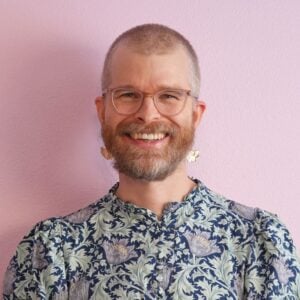
Mira Funk, LCSW (she/her), is a Harvard-educated queer, nonbinary psychotherapist and psychedelic guide specialized in 5-MeO-DMT, N,N-DMT (including analog ayahuasca), and salvia divinorum. Based in Oregon, she is the founder of Unjourneying, a private therapy practice blending somatic, nondual, and neuroscience-informed methods to optimize psychedelic healing and insight. Unjourneying draws its name from Neem Karoli Baba’s reported non-response to LSD; observing this same effect in herself and long-term clients, Mira embraced the radically vivid here and now as her lodestar, rather than some mystical elsewhere.
Having battled neurological Lyme disease for over three decades, Mira brings a gentle, trauma-informed approach to clients with physical and emotional challenges. She is the inventor of The Hourglass, a lung-friendly 5-MeO-DMT vaporization system with zero liquid carriers and two-stage cooling, and offers multiple extended-release routes of 5-MeO-DMT, including subcutaneous, rectal, and vaginal preparations for sexual trauma and pelvic floor dysfunction. She is currently the only psychedelic therapist in the field offering titrated dosing of pure salvinorin-A in an e-mesh format.
Podcast Highlights
- Fourteen years of Zen before mushrooms filled the gap
- Why structure helps most early in psychedelic work
- A supplement reaction that reshaped her entire practice
- 5-MeO-DMT as explosion versus something you can surf
- Building The Hourglass: her own zero-liquid vaporizer
- Subcutaneous, rectal & vaginal routes for 5-MeO-DMT
- A rectal 5-MeO-DMT session and healing pelvic trauma
- Real risks of DIY dosing and sourcing injectables safely
- Titrating salvia to a whisper with a custom e-mesh device
Show Links
These show links may contain affiliate links. Third Wave receives a small percentage of the product price if you purchase through the above affiliate links.

An 18-week live online certification led by Paul F. Austin, author of Mastering Microdosing, for coaches, wellness practitioners, and career changers. Experience Paul’s microdosing protocol for nervous system regulation firsthand, build coaching skills through live practice, and graduate with a ready-to-launch microdosing offer.
Podcast Transcript
00:00:01 Paul Austin
There's a story about a guru who was handed a massive dose of LSD and felt nothing at all, and it became the foundation of a psychedelic practice built entirely around presence instead of departure. The medicine at the center of that practice, though, happens to be one of the most explosive, ego-dissolving compounds on Earth.
00:00:23 Paul Austin
Welcome to the Psychedelic Podcast. As always, I'm your host, Paul Austin, and today's guest and episode sponsor, Mira Funk, built her entire practice, Unjourneying around that story: the idea that the goal was never to go somewhere else, but to become more completely here.
00:00:41 Paul Austin
And she works with some of the most intense compounds in this space, 5-MeO-DMT and Salvia Divinorum. However, she works with them through gentle extended-release methods that she developed herself, partly out of necessity because her own body couldn't tolerate the fast, jarring version that most people associate with these medicines. That personal constraint turned it into a real body of clinical innovation, and that's what I wanted to dig into in this episode.
00:01:13 Paul Austin
Mira Funk is a Harvard-educated, queer, non-binary psychotherapist and the founder of Unjourneying, a private practice in Corvallis, Oregon. She specializes in 5-MeO-DMT, NMDMT, and Salvia Divinorum, working through a blend of somatic, non-dual, and neuroscience-informed methods.
00:01:32 Paul Austin
Mira invented the Hourglass, a lung-friendly 5-MeO-DMT vaporizer with zero liquid carriers, and she's one of the only practitioners in the field offering extended-release routes of 5-MeO-DMT, including subcutaneous, rectal, and vaginal preparations, along with titrated Salvia dosing through a custom eMESH device. Her approach grew in part out of her own decades-long battle with neurological Lyme disease, which taught her to work gently with her sensitive nervous system.
00:02:03 Paul Austin
All right, here's what we're going to talk about: why 14 years of Zen meditation left something missing that mushrooms filled in a single setting, the case for structure early in psychedelic work, and why more freedom is available once you've been around the block a few times. How a reaction to a common nootropic supplement accidentally reoriented her entire practice, the difference between 5-MeO-DMT as an explosive full-release and as something that you can surf.
00:02:32 Paul Austin
Building the Hourglass: her own zero-liquid vaporizer from scratch. Why she moved to subcutaneous, rectal, and even vaginal 5-MeO-DMT, and what each route actually does. A rectal 5-MeO-DMT session that helped her process decades of pelvic trauma.
00:02:48 Paul Austin
Real talk on the risks of DIY dosing, from aspiration to sourcing injectables safely. And how to titrate Salvia down to a whisper with a custom eMESH device, and the search for a long-acting route that doesn't exist yet.
00:03:05 Paul Austin
As you can tell by some of what I've talked about already, this is a pretty fascinating episode. I love bringing on these folks who are doing things at the cutting edge of psychedelic work, and Mira fits that bill. So, before we get into the conversation, let's first hear a word from our sponsors.
00:03:22 Paul Austin
If you work with clients who are taking SSRIs and asking about psychedelics, check out our new SSRI Deprescribing and Psychedelic Readiness Certification. It's taught by Dr. Dave Rabin, a board-certified psychiatrist and neuroscientist with more than 20 years of experience working with psychiatric medication reduction. You'll learn how to assess readiness, understand the tapering process, collaborate with prescribers, and support clients through the transition while staying within your professional scope. Learn more through the link in the description.
00:03:51 Paul Austin
All right, folks, that's it for today. Let's get into the conversation with Mira Funk.
00:04:20 Paul Austin
So, Mira, welcome to the podcast. It's great to have you.
00:04:23 Mira Funk
Thank you. I'm excited to be here.
00:04:25 Paul Austin
Let's talk about you shoveling horse manure on your aunt and uncle's farm, having just fallen apart in your first month of college.
00:04:33 Mira Funk
Yeah.
00:04:33 Paul Austin
You know, your mind went quiet, and that one moment sent you to a Zen center.
00:04:37 Mira Funk
Mm-hmm.
00:04:37 Paul Austin
What did the mushrooms give you that the cushion couldn't, necessarily?
00:04:42 Mira Funk
Oh, so much. I mean, yeah, the horse manure shoveling incident was just this teeny-tiny glimpse at a mind that was not so burdened with discursive and obsessive thinking. And that was kind of like the, you know, the load star, like where I was pointing my compass needle, like, okay, whatever that was, I'm fascinated by it. It's a relief from all this anxiety and distress. I want to go there.
00:05:07 Mira Funk
So then, yeah, sitting hours and hours and hours with Zen, which wasn't necessarily, I think, the best, honestly, Buddhist modality for me to start with, because there's just so minimal instruction. I think I could have actually benefited from a lot of instruction. So, you know, I'm just sitting there, mostly stewing into my own juices, but every once in a while, you know, even in these long retreats in Korea, you know, having just a little moment of some clarity and experiencing the mind settling. And that was very, very helpful.
00:05:33 Mira Funk
But even after, I think it was around like 14 years or so of that, there was definitely something missing. I mean, my mind was quieter. I had more focus. But, you know, I was reading about non-duality, the sense of this, you know, softening between the boundaries of subject and object, or, you know, different accounts of awakening, things like that. And I just felt like, I don't think I'm really getting any of that. You know, I'm more functional, but there's something missing.
00:05:55 Mira Funk
So, mushrooms definitely filled the gap. And it was extraordinary. Yeah, it was a pretty small dose, just about a gram and a half, like my very first experience. But, yeah, I just remember lying down, closing my eyes, and just feeling this unmistakable dissolution of subject and object, where it just felt like, yeah, my entire sensory field just felt like one kind of oceanic experience.
00:06:16 Mira Funk
And, yeah, it was just crystal clear, oh, of course, everything is consciousness. This is what I've been reading and hearing from my Zen teachers for so long, and this is it. So that was kind of the beginning of a shift for me from just doing, you know, psychotherapy, and professionally also, like psychotherapy and mindfulness-based psychotherapy, into wanting to incorporate psychedelic work, because I could just see the potential was vast.
00:06:41 Paul Austin
And why is it that more structure would have been helpful for you early on? Because I think there's a relationship here to psychedelic work as well, in large part.
00:06:51 Mira Funk
Oh, yeah. I mean, gosh, if I could somehow do it ever again. I mean, you know, it is what it is, of course, and I accept that and embrace it. But I just think, I mean, I think Zen, this isn't true for everybody, right? This is just me speaking for my own path. But, you know, most Zen meditation centers, I mean, apart from just some basic instruction on posture, I mean, they're not, there's never really technique. I mean, you know, sometimes there's a little, I mean, the Korean tradition I was practicing, which is the Kwon Im school, there might be some kind of inquiry you're doing, like they have this, like, what-am-I-don't-know thing with the breath. Very, very minimal.
00:07:27 Mira Funk
But for somebody like me, who at that point in my life, and this was layering on, you know, just lots of depression and anxiety with what I later came to know as neurological Lyme disease, which is something I'm still struggling with, there was just, like, my mind was just this endlessly spinning hamster wheel. And so, in the absence of a lot of structure, most of what I did, honestly, I mean, even when I decided to go really deep with meditation and go to Korea, was just sitting there ruminating. I mean, honestly, that's mostly what I was doing. I mean, for just, like, eight hours a day for about three months, I would just sit there and just be, like, thinking about things. Sometimes very actively. You know, I'd be, like, planning, you know, the lunches I would be making for myself when I'd get back to college. I mean, really ridiculous stuff like that. And not even having necessarily a strong sense that I should be doing anything differently, because there wasn't a lot of feedback, right? I mean, I'd go and do a little koan session or something like that.
00:08:17 Mira Funk
But, yeah, it would have been awesome, I think, honestly, to start with, you know, some kind of Vipassana-style, I wouldn't say Goenka, per se, because to me that's also a bit too rigid, but just somebody saying, like, hey, let's just, you know, for the next three weeks, like, just do a body scan meditation and just tell me how that's going. You know, to give my mind something to do, to get some traction with mindfulness. Because, yeah, that just, like, open awareness, Shikantaza, do-nothing type practice, I think it's, I personally think it's, like, best reserved for, you know, somebody who's farther along in the path. Not for everybody, but for me, I think it would have been better. But, you know, it is what it is. I got where I needed to get to, somehow.
00:08:58 Paul Austin
I think this is a good teaching point in terms of working with psychedelics as well, that early on, when folks are quite new to this work, it helps to have structure, it helps to have scaffolding, it helps to have someone who can, you know, do a proper intake, ensure you're prepared, you know, support you with integration.
00:09:14 Paul Austin
And then as you have a number of experiences, you know, like, yeah, go do, you know, four hits of acid at Burning Man and, you know, see what happens, right?
00:09:24 Paul Austin
There could be a little bit more flexibility there, whereas, you know, I'm not going to recommend someone who's never done acid before to go do four hits at Burning Man.
00:09:32 Paul Austin
But if you've been around the block enough times and you want to, like, explore that way, just prepare that you might go, you know, you might go insane for a little bit, but eventually you'll come back.
00:09:41 Paul Austin
Hopefully you'll come back.
00:09:42 Mira Funk
Yeah.
00:09:44 Paul Austin
So, and I think this has to do as well with your method of Unjourneying, in large part, that, you know, it's based on this, I'll call it a proverb, because it feels proverbial, the story.
00:09:59 Mira Funk
I like that.
00:10:00 Paul Austin
Of Neem Karoli Baba, who supposedly took a massive dose of LSD and felt, you know, nothing. And now you've built a practice around 5-MeO-DMT, one of the most powerful ego-dissolving molecules on Earth. It seems like you're kind of holding the ends of a massive, massive polarity, you know, not going anywhere, but yet working with potentially the most powerful molecule.
00:10:27 Mira Funk
Yeah.
00:10:28 Paul Austin
Talk to us a little bit about the relationship between, you know, 5-MeO and Neem Karoli Baba.
00:10:34 Mira Funk
Yeah, I think the short answer to it is that it's progressive, right? So I'm certainly not claiming by any means that I take a client in and, you know, give them even a titrated dose and, like, nothing's happening. No, no, no, that's not how it happens. The Unjourneying kind of is like an asymptotic aspiration towards the sort of deeper end of the pool, like the longer-term arc of practice. And that's true for me personally, as well as for some of my longer-term clients.
00:10:58 Mira Funk
Yeah, but, you know, the whole Unjourneying thing for me, it started accidentally, honestly, where I, it's sort of a long story, but I'll try to keep it short, where I, because of my Lyme disease, which I actually did not know I had at the time, but I was just having all these just massive symptoms of brain fog. So I started just experimenting with a lot of different supplements that are supposed to be for brain fog, one of which I stumbled across is Lion's Mane, which, of course, you know, many people swear by. Paul Stamet, you know, is a big advocate.
00:11:26 Mira Funk
And what I didn't know is that there's a small subset of the population that, for reasons that are still not clearly understood, these folks have this, like, massive, horrible neurological side effects that can just be, like, utterly life-destroying. And if you haven't heard about this, it's kind of interesting. I point people to, there's this Reddit, the subreddit called Lion's Mane Recovery, which has, like, I think it's like 65,000 people on it or something like that. And it's, like, devoted exclusively to this phenomenon of people taking Lion's Mane and just having these, like, horrible, long-term, life-destroying side effects.
00:12:01 Mira Funk
Yeah, I know. I can see why your face, you're like, your jaw's dropping. It is shocking, because most people know it as this awesome brain tonic. And for many people, it is. And I don't want to take that away from them. And then for other people, and the reason I, you know, am so familiar with this is, like, that's exactly what happened to me. Reading the forum, it seems ridiculous. You're like, no, there's no way this could be possible. Like, this must just be some contagion effect or something. But I can't deny that that's exactly what happened to me.
00:12:29 Mira Funk
I took, you know, not very many doses of Lion's Mane. And, you know, I did some experiments, sort of A/B experiments, like isolating it from other supplements I was taking. And I was having these, like, really weird effects. And then I, yeah, the last dose or two, there was, like, a very clear correlation. And, yeah, I basically, I still struggle with it, honestly. I mean, I feel like each passing year, it's, like, a little bit less. It's been about six years now since my last dose of it. But it just kicked up this, like, massive wave of neuroinflammation, is the best of what my doctors could make sense of, that just impacted everything. Like, I felt there was, like, DPDR, there was, like, just basic cognitive, you know, dysfunction and.
00:13:10 Paul Austin
What's DPDR?
00:13:11 Mira Funk
Oh, sorry. Like, depersonalization, derealization type stuff. This is, like, a technical psychological term that comes up in, yeah, psychiatric, and also sometimes psychedelic literature. You know, when people, it's like things start to feel detached or, like, unreal or dissociated. So there was a lot of that. A lot of just, like, basic stuff. I remember trying to watch cartoons with my kid and, like, you know, Tom and Jerry level stuff and just, like, having a hard time following the plot. I mean, literally, like, you know, I couldn't play Battleship with my kid because I was like, this is too cognitively taxing. It was, like, that bad.
00:13:43 Mira Funk
Anyway, the reason I bring all that up, it's kind of an interesting rabbit trail, but it's because I don't know exactly what happened, but somehow something in my neurology shifted so that after, in that peak period of neuroinflammation, I noticed when I started to take psychedelics, at this time I was working with mushrooms, there was just a very different flavor to it, because I was very used to this experience of going elsewhere, right? It's like, okay, I'm going to put on my eye shades, put on some music, and just, like, go into the light show and the, you know, the visuals, and, you know, it's just going to be this really beautiful time of, like, fractals and whatnot. And for some reason, that just, like, did not happen. It's like I felt like I, like, hit a brick wall. And at first, I felt this sense of grief, like, oh, am I not going to get to have this beautiful, you know, trip that I'm used to?
00:14:30 Mira Funk
But then what was interesting is I took my eye shades off and I remember I could still feel the medicine. Like, it was still definitely, like, acting in my system. But instead of the direction pointing to this kind of mystical elsewhere, it just pointed to me, like, hard, like, right here. There was this, like, very, very strong sense of this compelling, just crackling immediacy of the vividness of now, of, like, experience. And it was in that moment that I suddenly remembered the story I read about Neem Karoli Baba, which Ram Dass, you know, as Ram Dass is Guru, like, swears by. It could be apocryphal, nobody knows, but at least Ram Dass, like, swore by it. And apparently, he tried to do it a second time just to confirm the experiment, to replicate it. It still worked, supposedly.
00:15:12 Mira Funk
And I was like, oh, that's interesting. Maybe there's something here that this interesting, you know, neuroinflammatory episode is, like, teaching me that, like, perhaps there's a different way to work with psychedelics. It's not necessarily about having these repetitive, really cool, amazing, you know, something to write home about, trip report experiences, and something that's just about a kind of, like, mindfulness super glue that just, like, you know, turns up the volume to 11 on sort of, like, mindfulness. And so you're just, like, so radically present. And that's kind of, yeah, that just, like, totally changed the direction of everything I was doing in my personal practice and professionally.
00:15:49 Mira Funk
And I want to be clear, I don't have any, I mean, if people want to, like, have fun on psychedelics, like, by all means, like, do your thing. I'm not in any way saying one's better than the other. It's just, this is just where I ended up landing, partly accidentally, but then it actually became very interesting, much more interesting for me, and sort of more in alignment with my values, with, yeah, with Zen, with mindfulness, with non-duality, Zogchen, I mean, these different approaches. They all speak to this sense of, you know, arriving, like, here, like, this now, just the immediacy of experience. And I feel like working with psychedelics in that way, it's a different orientation that can, like, lead you into this, yeah, this curious paradox of something that can be very powerful, but it can be just totally presencing and not, like, elsewhering.
00:16:33 Mira Funk
And to answer your kind of initial question, I know I've gone a bit of a rabbit trail here, like, how do I reconcile the polarity between, like, the explosive TNT of 5-MeO with this orientation? And like I said, it is, like, progressive, basically. So what I find is, and this is true for me with 5-MeO as well, it's like, for most people, their minds are, like, incredibly tight, right? So I almost, I think of the metaphor of, like, what's in astronomy, the iron core. Like, before there's, like, a supernova, it's like, the star has gotten, like, so dense. It's just this, you know, rock-hard, like, iron core. And I think most people's minds, like, when they come to this medicine, are like that, because of conditioning, because of biology, and their bodies too, like, restoring, like, all this tension.
00:17:17 Mira Funk
And so 5-MeO is, like, so exceedingly good at just, like, exploding that, you know? And you could describe the full release as, like, a supernova, right? But you don't have to go straight there. And that's where this progressive approach, the titration, stepwise, as it's sometimes called, is doing these, like, small doses. And are people having experiences? Oh, absolutely. Like, people start with this medicine. They're not Unjourneying. I mean, they're going all sorts of, I mean, they're, like, moaning and, you know, rushing around and vibrating and doing, you know, spontaneous forms of, like, TRE and yoga. And I mean, there's all sorts of energetic stuff that's happening, you know, within their window of tolerance.
00:17:52 Mira Funk
And then we're getting all the way up to that full release. But then what's interesting is I find that once I've worked with somebody, sometimes in the course of a single retreat, but it's often over, like, you know, two or maybe three, especially when we start incorporating some of the extended-release routes, which I could talk more about, such as, you know, subcutaneous, rectal, vaginal, these are ways I serve, is there's this capacity to now remain and kind of marinate in the medicine for longer, right? For, like, maybe 30 minutes, 60 minutes. And there's less and less happening. So again, that asymptotic kind of approach.
00:18:24 Mira Funk
And I absolutely have some clients where, yeah, like, I can serve them some, you know, low to moderate doses, or sometimes even higher doses, and they're no longer doing those very dramatic energetic things, because their mind has now, like, supernovaed. But then it's sort of, like, you know, settled now into just, like, an open, spacious presence. Again, getting back to the kind of Mahamudra, Zogchen type non-duality stuff.
00:18:47 Mira Funk
And so, yeah, if the medicine comes through, of course, there's physiological effects, there's maybe waves of energy coming through, but there's less of just some kind of fundamental state shift or a sense of, like, cosmic explosive stuff happening, because their baseline orientation to life now is just open, radical presence. And so the psychedelics just, like, have nowhere to take them. And that, to me, is, like, probably what Neem Karoli Baba was doing, I suspect, yeah.
00:19:14 Paul Austin
There's a question more and more practitioners are hearing from their clients. I've been on an SSRI for years. I want to come off, and I'm interested in psychedelic therapy. Can you help me? And for a lot of therapists, coaches, and psychedelic practitioners, the answer is still some version of, well, talk to your doctor and come back when you're off.
00:19:31 Paul Austin
The problem is that leaves a huge gap in care. Coming off an antidepressant isn't simply about waiting for the medication to wash out or clear the body. You need to understand withdrawal, how to distinguish withdrawal from relapse, when someone may or may not be ready for psychedelic work, and where your own professional scope begins and ends.
00:19:50 Paul Austin
That's why we created the SSRI Deprescribing and Psychedelic Readiness Certification. This training is taught by Dr. Dave Rabin, a board-certified psychiatrist, neuroscientist, and psychedelic researcher who has spent more than 20 years studying chronic stress and working with psychiatric medication reduction. Over three months, Dave will teach the deprescribing and readiness process from end to end, including screening, tapering principles, withdrawal versus relapse, psychedelic interactions, nervous system support, and how to collaborate effectively with a client prescriber.
00:20:20 Paul Austin
He'll also work through real cases in facilitated labs, so this isn't simply information that you listen to and forget. The goal is to help you become far more useful to medicated clients while staying firmly within your professional scope. Learn more about the SSRI Deprescribing and Psychedelic Readiness Certification through the link in the description.
00:20:40 Paul Austin
I'm glad we're bringing this up as a topic, because one of the core points that I encourage our facilitators and practitioners who go through our training program is to not just simply passively engage with psilocybin, because we work with mushrooms at our intensive in Costa Rica, but to really sit up and be with the experience and the medicine, sometimes eyes open, sometimes eyes closed, and then feel what it's like to really be in it and be with it. I mean, this is also very common in ayahuasca circles, right?
00:21:15 Paul Austin
100%, yes.
00:21:16 Paul Austin
You sit with the Shipibo, who are the indigenous group that do it in the more circular, right? The Huni-Kun, the Yawanawá tend to do it a little bit differently. But the Shipibo, you're sitting, and the invitation is usually to sit up in the ceremony.
00:21:30 Paul Austin
And so it almost feels like, as you mentioned, when folks are quite new to this, it's, you know, psychedelics are so different from their normal waking consciousness that it does feel like a trip.
00:21:41 Paul Austin
But I think part of the developmental process, I suppose, or the maturation process might be a better way of phrasing it from a mindfulness lens, is to be able to sit and hold the energy even as it envelops you, and to be as present as possible with it.
00:21:58 Mira Funk
Oh, yeah. I totally resonate with that. Yeah. Yeah, I sometimes give my clients the metaphor of a big wave coming in. And what I tell people is, with 5-MeO, you know, when the wave of the energy of the medicine comes in, the first thing you want to do when you work with it is just surrender, just become water, just let it wash over you, just drop underneath it and just dissolve into it completely. Like, don't try to do any Unjourneying or anything like that. Just let it take you. I think that's the best way to start with 5-MeO.
00:22:25 Mira Funk
But then what I find is once people have had, you know, a few full releases and they've gone deep with it, then, you know, if they have the curiosity, I say, let's see what it's like to try to surf, right? And I'm distinguishing surfing from trying to, like, fight the wave, right? It's not like you're standing up, like, trying to push back against the wave to, like, change the course of it. It's not like that. It's some kind of, like, middle ground, like you're saying, where the energy's coming through, but you are maintaining a certain level of lucidity and presence and surfing it.
00:22:52 Mira Funk
And ayahuasca, what you're saying, I mean, some of those indigenous methodologies of working with it, I can't agree more. And I am so, so fortunate and grateful that in the ayahuasca circles that I've sat with, that was the approach. You know, I wonder sometimes if I had sat with a facilitator who just told me, oh, yeah, just take, you know, drink the cup and just lie down and just, like, you know, just go into your, whatever, your visionary experience, that would have been really different than, you know, the way it was done in my circle, which is exactly what you describe.
00:23:25 Mira Funk
It's like, the focus was very much on, let's all sit up, and, you know, there's the music happening, and maybe we're doing some singing or chanting or just bearing witness to the music. And it very much felt like a group meditation circle. And so for me, along with this theme of Unjourneying, that was very, very instructive, because I definitely felt this kind of neurological entrainment between the energy of the NMDMT, along with, like, the rhythm of the music, and it felt like this natural just mindfulness flow.
00:23:52 Mira Funk
And it was so obvious to me when my mind was starting to get sucked into some kind of just, like, I don't know, visionary fantasy. Again, not that there's anything wrong with any of these things if people are interested in them, but I don't know, even if I was, I don't know, visioning some goddess or something like that, none of that seemed quite as compelling or interesting as, like, just the actual sound of the music in that moment, just, like, breaking through into my raw awareness. And that's what really just kept me staying there. So, yeah, it is really interesting that some of the indigenous technologies around this emphasize that kind of approach.
00:24:24 Paul Austin
So let's go to talk specifically about 5-MeO. 5-MeO is more and more in the conversation. I think just yesterday, Eli Lilly finalized their acquisition of a Tai Beckley. They have an intranasal 5-MeO that they are starting phase three clinical trials for depression shortly.
00:24:48 Paul Austin
In the underground, 5-MeO DMT is often consumed in vape pen form or sometimes in powder form in a vaporizer, so it'll be smoked or inhaled. And then we also have a cousin of 5-MeO DMT, which has been found in snuffs in the Amazon called Yopo, also Vilka, has an active ingredient called Bufotenine.
00:25:20 Paul Austin
None of these methodologies are what you are doing, which is offering it rectally, vaginally, and subcutaneously. So really, what you're doing is quite novel. I've only heard of the subcutaneous approach with one other practitioner, Steve Rio, who is doing inhalable, smoked 5-MeO in combination with subcutaneous.
00:25:45 Mira Funk
Right. I think he does intramuscular potentially, but he does wrong.
00:25:48 Paul Austin
You're right. You're right. It's intramuscular. It's not subcutaneous. So it's intramuscular 5-MeO.
00:25:52 Paul Austin
So talk to us about this, because what I have talked about on the podcast before is my experiences with rectal ketamine, which I've really loved. I did it with a body worker, and it was fantastic. But I myself do not have any experience with rectal 5-MeO or even subcutaneous 5-MeO.
00:26:14 Paul Austin
So I would love, love, love to hear you talk a little bit about what is the impact of this, how is it different, why might people be interested in exploring this, kind of give us the 411.
00:26:25 Mira Funk
Absolutely. Yeah. I am so enthusiastic about this topic, so I'm happy to dive into it. I do want to say, just for the record, I do offer vaporization. So I try to offer people a full spectrum kind of approach.
00:26:39 Mira Funk
Usually, when I lead retreats with people, it's often a one-day, full-day kind of format. I'm usually in the morning, I'm giving them stepwise or slowly titrated vaporized medicine.
00:26:52 Mira Funk
And I actually built this vaporizer. I thought I could do a little show and tell, since we have video here. So this is what it looks like, if anyone's watching this on YouTube or whatever. So this is just a vaporizer built.
00:27:03 Paul Austin
It's like an hourglass in some way.
00:27:04 Mira Funk
Yeah, I actually call it the hourglass. That's what I call it. So you connect a little vaporizer like this to here at the input port, and then it's sort of like a two-stage cooling. So the vapor loads up here. I open this valve, and then the medicine flows down here. It's a little bubbler, and then the client is, like, you know, sucking through the whipped tube.
00:27:23 Mira Funk
So it's a way to work with, I work with just the pure molecule, like in vape cartridges, so I don't use any liquid, you know, carriers, which I think reduces kind of coughing or other respiratory issues. And, yeah, so anyway, I do offer the vaporizer that way, and that is a big primary focus of what I do. And then we transition, usually in the format of the retreats, to the afternoon kind of module, where I invite people into this open field of exploring what I like to call these extended-release routes.
00:27:55 Mira Funk
And, yeah, I include all of the, you know, intramuscular, even intranasal. I mean, all of these kind of have a different energy to them in that they have a longer come-up, right? So it's like five to ten-minute come-up instead of ten seconds, you know? And they tend to have a longer duration. So we're talking about maybe 30 to 60 minutes, as opposed to, you know, maybe like 15, 20 minutes at the peak with vapor.
00:28:19 Mira Funk
So, yes, but to get to your specific question, the three of those extended-release routes that I have specialized in over the years is primarily subcutaneous, and then is what I mostly offer, and then to a lesser extent the rectal and vaginal. So let me explain that kind of breakdown and what each of those do.
00:28:37 Mira Funk
So the subcutaneous, I love it because, I mean, if you're comparing subcutaneous with intramuscular, they're pretty similar. I mean, they're both injections. And in case people don't know the sort of physiological difference, it's basically you're injecting into fatty tissue under the skin as opposed to muscle tissue, right? And so what that means is that the needle is shorter, and so it's just like a slightly less invasive, slightly less painful kind of procedure.
00:29:01 Mira Funk
It's a small, it's an insulin syringe, basically, delivered to the abdomen, although it could be, you know, any fatty part of the body. And, yeah, the IM pharmacokinetics are, like, just a little faster. Like, it feels like it's a little sharper. You know, you feel it a little quicker. I feel like with the subcutaneous, it's like a little more gentle, and that's why I like it.
00:29:24 Mira Funk
It usually takes, like, a full five minutes before people really start reporting things. And so for those two reasons, just, yeah, just easier to administer and, I would say, safer. There's less risk of infection or any other kind of, like, skin-related kind of issues with giving a subcutaneous injection, and it's just a little gentler.
00:29:41 Mira Funk
But, yeah, the main advantage to these extended-release routes, including subcutaneous, is that they are slower. And so because of that, when we're talking about this incredibly explosive, powerful, fast-acting psychedelic, generally, you know, with the vaping, this offers, excuse me, like, an alternative kind of energy or flow with it.
00:30:04 Mira Funk
And the best way I can probably illustrate this is what clients often tell me, which is, I've had a lot of clients come to my retreats, and they bring a journal, and there's some kind of expectation of, like, okay, I'm going to have all these cool insights to journal about, you know, between doses. And what I find is that the journal is almost always blank after the morning, because the vaping is just so fast that it bypasses the thinking mind. It's pre-verbal, it's purely energetic, and they have nothing to say, you know, in a good way. It's just like, yeah.
00:30:35 Mira Funk
But what's interesting is during the afternoon, when we do the routes like the subcutaneous, because it is slower, I feel like people do have a little bit more of an experience to it that's perhaps more akin to the flow of psilocybin, maybe, or to the flow of ayahuasca, where there's some capacity to have more of your thinking mind, your ego functions, your memory, your psychology online. And I actually think that's a good thing.
00:31:02 Mira Funk
I think it's good to have both, right? I think it's good to, like, break through the armor of the ego, and then I think it's also good for integration, kind of like you were saying earlier, to, okay, have some of these things online and yet still feel the expanded flow of the medicine. And so that's why I like to serve it to people, because I think with integration, it does give them this full-spectrum kind of approach to allow them to process things pre-verbally and verbally, basically. And, yeah, so in terms of the, let's get to the rectal and then the vaginal and how those are different.
00:31:34 Paul Austin
Before we do, though, I have a question on dosage for subcutaneous. What's the total dose look like?
00:31:42 Mira Funk
So you have to be careful, because you're always working with salt forms, because it has to be dissolved in some kind of, you know, vehicle, usually saline, or I like to use phosphate buffered saline, because it makes it more of a pH, close to pH-neutral solution. And so in terms of dosing, I say you have to be careful, because there's always, like, a stoichiometric sort of calculation.
00:32:03 Mira Funk
So you can't just sort of measure out whatever milligrams of the salt form and think that that's the dose you're getting, because you have to sort of apply a coefficient to make sure you're getting what they call the free-base equivalent. So when we're talking free-base equivalent, I usually dose either, like, four milligrams, six milligrams, or eight. And I kind of present that as kind of like a mild, medium, or spicy type approach.
00:32:26 Mira Funk
And I try to gauge that depending on the client's metabolism based on what I've seen in the morning. You know, if there's somebody who tends to be very sensitive to the vapor and they don't need much to go deep, I'll probably recommend the four, you know, whereas if we were hitting, like, you know, 15, 20 milligrams on the vapor, I might be like, well, you know, if you feel up to it, I think you could probably handle the eight. I rarely go beyond that, except for certain special clients when I've seen them already at different milligrams, yeah.
00:32:53 Paul Austin
Great. Thank you.
00:32:54 Mira Funk
Yeah, yeah, absolutely. And, okay, so let's get into rectal. Yes, so this is an incredible route, and I didn't even know about it for a long time. And what happened was I was working with a client back when I was just doing psychedelic integration, psychotherapy, and he mentioned a facilitator who had served him this and how helpful it was. And it just sort of, yeah, like, piqued my curiosity, because at the time, I was actually struggling with a lot of pelvic floor dysfunction, and I was going to see a pelvic floor physical therapist. And I was starting to connect some of the dots and realizing, oh, you know, like, I had a lot of issues with, like, potty training when I was a kid, and I had a lot of trauma when I was a kid, like, to that part of my body in various ways, like corporal punishment. I think there was also something going on for me as, like, a little queer kid, like, growing up in this, like, fundamentalist Christian household in Texas and just, like, lots of, like, repression of my sexuality and my gender identity that I suspect got concentrated in the pelvic region or the root chakra.
00:33:59 Mira Funk
But regardless of the etiology, like, I just, yeah, as an adult, like, in my late 30s, like, found myself just struggling with all these different forms of dysfunction and not sure what to do. And so when I heard this news about rectal 5-MeO, I just, something in me just said, yes, like, that is exactly what I need. And I just had this, yeah, this kind of intuition that it would be helpful for me. And I'm happy to report that my intuition was correct. That experience, which was about 15 milligrams, so rectal dosing tends to be, I would say, anywhere from 5 milligrams. You can get up to, like, 30, you know, but 15 is, like, a good starter dose for most people. But, yeah, so that experience completely changed my life, and it completely changed the direction of my practice, because, you know, I had this intuition, but I didn't know if that would be borne out in the results. I just had this hunch that maybe it would do something for me. And that experience was just, like, nothing short of a revelation.
00:34:58 Mira Funk
I mean, you know, talk about, this is, like, well before I'm in the Unjourneying phase, right? So there's a big trip report to this experience, because it was very dramatic, and it was very intense, and it was extraordinary. And I hope this is okay to say on the radio, but after working with it, I remember my guide asked me, like, what was the experience like? And the easiest way I could describe it is, said, I just feel like God just fucked me in the ass, is how I would describe it. You know, it felt, again, getting to this metaphor of, like, something, like, very tight, like a neutron star or something that, like, blows up. It's like, I felt like my entire pelvis was this just, like, incredibly dense, closed energy kind of ball. And when I received rectally, there was just this massive opening, and it felt like there was, like, this divine wind, like, coming up through me. I felt like I was giving birth to, like, myself. I felt this incredible sense of safety. I felt this, like, energy moving up through my pelvis and, like, coming out through my hands, all this kundalini-type phenomena and stuff like that.
00:36:02 Mira Funk
And so, to me, that just, like, turned the light on for me. And this is, you know, this has not been studied clinically, so this is still very anecdotal. It's very experimental, and nobody knows exactly why exactly this happens. But the hypothesis is that even though, you know, anytime you're delivering to a mucosal route, mucous membrane route, there's obviously, it's getting into the bloodstream, so you have a systemic effect. But the hypothesis is that for some people, because these particular regions of the body are so highly innervated and so connected to, you know, visceral nerve response, like, there can be this, like, localized peripheral effect that's in parallel with a systemic effect. And so if you've had trauma that is impacting somehow your pelvic functioning, or, you know, some people describe this as, like, a root chakra blockage or something like that, it could be that a localized delivery there, it's not, like, you know, it's not functioning like a topical cream or something like that. It's not that kind of route, but that there's some kind of infusion of those mucosal membranes and those local tissues with a medicine that is actually having some local effect that can be very dramatically healing. And that was my personal experience.
00:37:11 Mira Funk
And so, yeah, ever since then, I trained, you know, with this guide in the rectal, and I started offering to clients. And I always frame it this way. I always tell people, you know, subcutaneous, it's the easiest, it's the most bioavailable, it's the most straightforward, so it makes sense to lead with that. But what I tell people is, if you have some kind of intuitive sense that you carry your trauma in your pelvic floor, specifically if you had some kind of, like, sexual trauma impacting that region of your body, and you feel called to do this, it might be worth trying, because there is a potential for some kind of healing here that isn't available the other routes. And I know that because I vaped a ton of 5-MeO, and I also smoked, you know, the toe down in Mexico and all this sort of stuff, and none of that ever touched my pelvic trauma. It was only receiving rectally that opened that up, and so that was very instructive for me.
00:38:00 Mira Funk
And then, I guess, yeah, I should touch on the rectal, or sorry, the vaginal as well, which is the final route. And this one, I should say, I have the least amount of practice knowledge and experience to report, because it is the most, it's what I'm kind of actively working on in terms of something very experimental and new in my practice.
00:38:16 Mira Funk
I've been serving clients rectally for about three years now and had a lot of great, powerful effects. The one challenge, and I find this is true with a lot of these mucosal routes, is that the bioavailability can be low and can be hit or miss. I would estimate possibly as high as even 50% of people just, like, don't seem to absorb well through those routes. So I've kind of learned to prepare people. Sometimes people are very excited about the rectal, and I'd tell them, I'm excited for you too. Let's try it, but keep your expectations open, because it's possible it might be a dud. I've seen this happen many times, and then we pivot into the subcutaneous. But, yeah, so I've been serving that way and had good results with those for whom it is bioavailable.
00:39:00 Mira Funk
And then, yeah, I heard about a colleague who serves vaginally, and this was new to me. I just didn't know. I mean, obviously, you know, the vaginal mucous membranes are a viable route for many different medications, including, you know, hormone replacement therapy and so forth. But, yeah, I just didn't, it hadn't occurred to me to administer there. And so I started to counsel with her and consult and sort of understand her protocols and sort of working on some protocols. And then, yeah, and then sort of little by little with informed consent, mentioning this to clients who are interested and trying to, you know, tell them, like, this is experimental. I'm in consultation. This is essentially kind of beta testing. But people who feel called are very enthusiastic to try it, and, you know, they're very aware of the fact that it might not work.
00:39:46 Mira Funk
And because I know some of my colleagues are very concerned about these matters, I want to be clear that, you know, because the vagina is a very delicate kind of microbiome, I take great pains to compose these formulas. So it's literally just phosphate buffered saline and then a salt form of the medicine. And it's pH-calibrated to, like, vaginal pH, so it's, like, very, very safe for the vaginal environment. It's not introducing any kind of imbalances.
00:40:08 Mira Funk
I also really like to be very clear, because these are very sensitive conversations and very sensitive parts of the body, that these administrations, both for rectal and vaginal, are always done in private, right? So I'm giving people a kit. I'm leaving the room. I'm not physically present in the room. And, yeah, and I always talk extensively with people ahead of time to make sure they're comfortable, to make sure they're in a comfortable posture, you know, having a blanket over them, whatever they need to make sure it feels private and supported. Yeah.
00:40:35 Paul Austin
And is this delivered through a lubed syringe?
00:40:38 Mira Funk
It is, yes. Yes, again, I prepared for show-and-tell, so I brought everything. So if anyone wants to see what it looks like, this is the syringe. Yeah, it's just, like, a 2-mL syringe, and I put a little kind of, what is this, a plastic washer on it. That's for the rectal, so people know the exact insertion depth.
00:40:58 Mira Funk
And for the vaginal, it's much more straightforward, because this is about the length that it needs to be inserted. And, yeah, it's just as simple as that. Just give people some lube and, you know, they administer. Yeah.
00:41:11 Paul Austin
Fascinating. Well, I mean, I'm curious about this. Like, I, you know, the listeners will know, because they've probably been listening long enough. The rectal ketamine, I did for the first time six and a half years ago, and I've done it one more time since then.
00:41:28 Paul Austin
And this was in combination with a gentleman who is the sort of a world-class body worker who has been doing body work for 50-plus years and found out about rectal ketamine through the. In the '80s and has been using it ever since then. So when working with these things in sensitive places or even novel places, it's also important to have a practitioner that has an understanding of how it may impact you.
00:42:03 Paul Austin
And so part of the reason it was so great is because he knew how to work at the intersection of that, and it was one of, if not the most, effective healing modality that I've ever worked with. And he explained it similar to you, which is that for a lot of ketamine work, like intramuscular ketamine, it tends to shoot people into the higher chakras, whereas with the rectal ketamine, it keeps you really grounded into these lower chakras, which allows you to be actually present and available on the table as he's working on you, rather than sort of off in La La Land and not able to actually engage with the medicine.
00:42:41 Paul Austin
So I'm curious, like, when someone is working with subcutaneous or rectal or vaginal, how does that process unfold? Are they simply in their own space? Is there any sort of conversation going on? Is there any sort of somatic work that might be going on, like, about how long does it tend to last? Give us a sense of, like, what that experience, that journey is actually like.
00:43:06 Paul Austin
Yeah, I think in terms of somatic work, I think there's a lot of potential for that, and I love that you describe the intersection there of the psychedelics with the somatics. I am not a body worker, so I want to be clear about that. I'm a licensed clinical psychotherapist, yeah, social worker. And so that's not something that I offer, but I think it's a great idea to explore that combination.
00:43:27 Paul Austin
I would say, you know, obviously, with psychedelic facilitators, even within 5-MeO, there's such a range in terms of styles and approaches. And I would say just in general, and this is true for me just as a therapist, I tend to be highly non-directive, because I find that when people are in these deep energetic states, even if they're in a lighter dose of 5-MeO where they're still more open, I still feel like there's so much suggestibility there and so much room for intrusiveness and so much room for just entering language into a space where they might just be, I don't know, just in something more energetic kind of mode. And so I really do very little, honestly, you know, in the actual moment.
00:44:13 Paul Austin
After the administration happens, I mean, people are usually lying down. They usually have a blanket over them. They usually have some music if they want that. And honestly, I just sit there and hold space and just meditate and just, you know, during the actual administration of 5-MeO, I tell my clients this. I see it as my primary job is just to keep you safe, you know, physically, first of all, make sure you don't bump your head, roll off the mattress, or anything like that. I'm also here if you need any kind of, like, emotional support in the form of supportive touch, right? So occasionally, clients may be crying or in some kind of state of vulnerability, and they may request me to hold their hand or put a hand on their shoulder or something like that. So I'm happy to offer that kind of support.
00:44:55 Paul Austin
But, no, I've, you know, to be honest, I have seen witnessed in certain 5-MeO circles, like, the therapists try to make the 5-MeO an active psychotherapy session where they're, like, asking these probing questions or trying to do active IFS work, like, in the middle of the session, you know, asking clients, like, so which, you know, is this your firefighter parts or is this your protector parts? And I just, it just does not vibe with me. I just feel like it's overly conceptual-analytic. It's clunky. It's getting clients in their head, in my experience, and it's keeping them out of just the direct experience, which might be impossible to name, of, like, the vibratory sensations that are, like, coming up through their vagus nerve right now. And that's what I really want clients. And where, you know, clients who come to me are seeking, because of the name of my practice and what I do, like, they're seeking this experience of presence and embodiment. They're not coming to me because they want to do a bunch of analytical kind of psychotherapy work.
00:45:51 Paul Austin
So, yeah, short answer, I mostly just sit there and do nothing, really, and just let clients have their experience. Then afterwards, you know, obviously, we can talk about it, and we can, you know, they can tell me whatever they want. I can help them hold space for it. We can make it, like, a little therapy session if they want to afterwards. But in the middle of it, nah, I'm going to just let the medicine do its job. I think of the medicine as kind of like a body worker in a way. You know, I tell people, like, just think of it as, like, you're getting a massage; you're lying on the table. You don't need to grab the therapist's hand and move it to the right spot. You know, you just let the medicine do the work. Yeah.
00:46:25 Paul Austin
And so are you, like, really the only practitioner who is actively exploring this as a modality? I know you mentioned you were in consultation with one, maybe, who was supporting you, but I just, like, you know, you're courageous in that you're somewhat out in the open. I mean, you're coming on the podcast and talking about this, and although you are located in Oregon, right, psilocybin is legal and regulated in Oregon. 5-MeO-DMT, not necessarily.
00:46:50 Paul Austin
So I know there will be people who listen to this episode and, of course, think, okay, I'm interested in exploring this. What would be some of your, you know, cautions, I guess, around navigating this by oneself, especially because, you know, if folks aren't located in Oregon or can't make the flight out there and they're interested in exploring this, yeah, just kind of what are cautions, concerns to be aware of with subcutaneous, you know, rectal, vaginal? I mean, I imagine the biggest one is just quality of what you're working with.
00:47:26 Paul Austin
Yeah, thanks for bringing that up. Yeah, there's so many different precautions to take. I do just want to say, you know, because I live in Oregon, among the different things that I serve, salvative enormous is the only thing that is not controlled here. So if we're doing a retreat locally, that's going to be focused on salvia. But if people are doing the other medicines, we have to make arrangements to go elsewhere.
00:47:46 Paul Austin
So Canada is often a good destination. Vancouver is not too far away, so that's a good place for retreats. And NDMT is a little tricky because, yeah, the closest thing place really is, like, Jamaica, that, like, where it's, like, really not controlled there. Mexico can be good for 5-MeO, although Mexico has also tightened up restrictions on vape devices recently. So if you try to fly into Mexico and you have a vaporizer with you, they might compensate that. So that's become a little more tricky.
00:48:14 Paul Austin
So, yeah, I'm a big fan of Vancouver as a destination. Anyway, just wanted to say that for the record in case people are confused about that. Yeah, I just want to be clear. I'm not doing anything, yeah, underground.
00:48:27 Paul Austin
Okay.
00:48:28 Paul Austin
So, but, yeah, in terms of safety, yeah, I mean, I really don't recommend that people do this on your own. I mean, without a sitter. I think that's very risky with 5-MeO. I would definitely not recommend it. You know, there's the old maxim in the psychedelic space, start low, go slow. That's very biblical for me. I think it's very important. And, yeah, I mean, specifically, I mean, if you're talking about injectables, I mean, wow. I mean, you have to be exceedingly cautious about where you're sourcing stuff. I mean, I don't even recommend doing any of that on your own. I recommend, like, working with a professional because I just think it's too risky.
00:49:01 Paul Austin
Because, yeah, if, you know, if you're not preparing it in a super sterile environment using syringe filtration and so forth, yeah, I mean, there's a potential to accidentally give yourself some kind of sepsis or abscess or something horrible like that. So, yeah, please don't DIY this. See a professional. If somehow you have access to salt forms of medicine and you feel inspired to try rectal or vaginal, which I, again, I don't recommend doing this outside of a professional context, but I'm trying to do harm reduction work here since he asked the question. So I would say, yeah, dose very low, have a sitter.
00:49:40 Paul Austin
5-MeO is dangerous. It is. I mean, I hate to, I don't want to scare people about it, but, you know, as a guide, having sat now for, like, hundreds of hours watching people in this medicine, there's definitely potential for harm. And usually, the harm is, you know, there's a potential to hit your head. I mean, that's a real thing. I mean, you can thrash around and move, and you can bump into furniture, you can bump into glass, you can bump into the floor. You could get a concussion.
00:50:04 Paul Austin
And the other big one is, you know, if you're not fasting, there's the potential for aspiration. You know, and I've seen this. It doesn't happen too often, but because I have people fast, but sometimes people are aspirating, or, I mean, they're, like, just starting to purge, like, some saliva, and if I don't turn them swiftly in the recovery position, yeah, there's a potential to aspirate saliva there. So you don't want to do that on your own. Please, yeah, get a sitter.
00:50:27 Paul Austin
Get a sitter, folks. And that's why we brought Mira on the podcast, is because if this is of interest to you, if you're curious about it, then you have, you know, one of, if not the most qualified, guide to support you in that process.
00:50:39 Paul Austin
That's why we brought her on, was to amplify what she's doing and the modality itself, because there's the mainstream things that we know about psilocybin for depression and LSD for, well, LSD for everything, in my personal opinion, but LSD for anxiety and, you know, MDMA for PTSD.
00:51:01 Paul Austin
But as many listeners know, there's a world of medicines out there and a world of, you know, so many unique ways in which they can be applied for so many different reasons and intentions.
00:51:12 Paul Austin
And so if this podcast is, you know, has piqued your interest, has you with more questions, I would encourage you to reach out to Mira. Her website is Unjourneying.com. Is that correct?
00:51:27 Paul Austin
That's correct.
00:51:28 Paul Austin
Okay, Unjourneying.com. That's U-N, journey, G, or J-O-U-R-N-E-Y-I-N-G dot com.
00:51:38 Paul Austin
I'll drop a link in the show notes as well in case you're on the road and you can't do it.
00:51:41 Paul Austin
Get a sense of what she's up to there. Reach out to her if you have questions or if you're curious about this, if you're interested in this.
00:51:49 Paul Austin
Any other places that you'd like to send folks, Mira? Any other sort of websites or platforms or spots that, you know, may be interesting research to do after this?
00:52:01 Paul Austin
I think that pretty much covers it.
00:52:03 Paul Austin
Yeah.
00:52:04 Paul Austin
Yeah, I feel like I want to honor some of the requests of my salvia friends, because I know we didn't talk a lot about salvia, but if folks are interested in salvia, I think you should check out Christopher's website, you know, salviahealings.com.
00:52:17 Paul Austin
Also, my friend Mariano Gru, who's just a salvia genius, has this website called thesagelab.net, which he recently launched and has just a lot of really awesome citizen science going on there.
00:52:29 Paul Austin
So just wanted to put that in there as a little aside and support my friends, my salvia geek friends.
00:52:37 Paul Austin
And, you know, if you are interested, I mean, let's talk a little bit about that before we close. So let's just, because I wanted to do a series of.
00:52:43 Paul Austin
Okay, sweet. Yeah, because I was like, I hope we can get a little bit of salvia in, because that's also a huge, that's honestly, I mean, I love serving. 5-MeO is mostly what I do, but in terms of my own personal work and what I am most excited about, salvia is definitely has, you know, taken my interest.
00:53:00 Paul Austin
Right. So we've had Christopher on the podcast before, so folks, if you haven't listened to that episode and you want to do a full deep dive into salvia, listen to the podcast episode with Christopher Solomon. But talk to us about your methodology in terms of using an electrical mesh screen.
00:53:16 Paul Austin
Yeah, you might.
00:53:16 Paul Austin
With salvia. What's going on there?
00:53:18 Paul Austin
Yep. Yeah, so I, again, I love routes of administration because they offer these different angles in medicine. So I offer two different routes. I'm in sort of beta testing a third with a colleague, but the, yeah, so there's e-mesh is the main one. And in a way, this is very parallel to the 5-MeO route. So, you know, with 5-MeO, I have the quicker acting, right, the fast-acting vapor, the extended-release routes. Similar with salvia. So the e-mesh, again, I brought everything just in case you want to see it. So this is what it looks like. It's a little, it's literally just this little piece of steel mesh that's on top of this battery called a box mod. And it's, you know, it's sort of this computerized battery. You can set a particular temperature control to it.
00:54:05 Paul Austin
And I take pure extracted salvinoin A. So there's no leaves that are being smoked or anything like that. The main reason I moved away from smoking the leaves is, A, I have ridiculously sensitive lungs. I think that's part of my neurological Lyme disease. I just have a ton of inflammation in my body. And so I, everything I do psychedelically, it's always, like, calibrated for people with very sensitive bodies. I feel like I'm, like, the gentle dental of psychedelic guides because I do what works for me, and I have to be super gentle with my body. So people who come to me often have chronic illness or just, like, are more sensitive people who are looking for something gentle. And so, yeah, like, if I try to smoke salvia, I'm going to feel sick for the rest of the day, honestly, because it's just, like, the smoke just, like, irritates my lungs. It causes, like, brain fog. It causes all sorts of inflammation for me. For some people, it's fine, right? And, yeah, there's no problem. You don't have to worry about it.
00:54:54 Paul Austin
But so I was looking for a route that would take away all of those extra inflammatory kind of, you know, molecules. And so, yeah, so I, you know, I use the pure salvinoin A, which is a beautiful molecule. It's like a white crystal, and it dissolves clear instantaneously in acetone. And so what you do is you mix a certain concentration of acetone, and then I have a dropper bottle. It has to be Teflon, so it doesn't, like, dissolve the bottle. And then you just, like, do drops on this mesh screen. And then, you know, I hit it with a heat gun for a moment, or you can just sit there and wait if you want to. I like to just get it heated up quickly. So the acetone evaporates 100%, so you don't have to worry you're going to inhaling acetone vapor, right? And then you just hit the fire button. And I like to plug this into a bubbler. So, again, it's more cooling and soothing on the lungs. And so it's really incredible.
00:55:44 Paul Austin
So you're literally inhaling pure, the pure active ingredient, the pure salvinoin A. And because salvinoin A is so powerful by weight, I mean, you're often inhaling less than a milligram of material. And so in terms of, like, respiratory comfort, it's very comfortable, even for me. Like, it feels almost not that different from just breathing. And, yeah, so, again, like, what's nice about as well the e-mesh route is in terms of titration, you can get pretty precise with it because if you're just, you know, measuring out leaves, like, it's a little bit unclear, like, how much salvinoin A you're actually getting in a certain, you know, hit of smoke, depending on the concentration within each leaf. But, yeah, working with a pure molecule, you know, you can know more or less. I mean, there's a little variability in the size of a drop, right? But you have some sense within a certain margin of error how many micrograms you're depositing there on the mesh.
00:56:39 Paul Austin
And so this is a means to achieve, like, a really nice fine titration, which, again, parallels. And I've, there's a lot of, like, cross-talk in my practice between the different medicines. So I've learned a lot from working with 5-MeO and how to work with salvia. So I can give people a very light dose, like 200 micrograms, 250 micrograms of salvia. And so before things get really weird, which it can very fast with salvia, before you leave the plane, before you go into another dimension, you might just be able to sit there and actually meditate. And this is very similar to the work that Christopher does with folks and feel greater embodiment, feel greater presence, feel your mind quiet down, and just feel kind of this, you know, the kind of pulse of sensory experience. And that may be as far as people need to go.
00:57:20 Paul Austin
But if people are curious to go deeper into salvia, then I can just keep putting more drops on the mesh, or potentially I can, you know, have another solution that's a little more concentrated. And, yeah, we can get up as far as they want to go, up to a milligram, potentially higher if they want to. And, yeah, that's when you start getting into some of that really interesting salvia territory, which, again, there's another parallel here because sort of similar to 5-MeO, I mean, when you take a high dose of salvia initially, when you first get there, I mean, as you may know, like, it can be just, I don't even know how to describe it, just, like, so fantastical. I mean, I've had, yeah, early on, I had experiences of meeting entities, you know, interdimensional travel, you know, experiencing the entire sensorium of reality, like, turning into this giant slow-motion blender of fractals and then kind of blinking out of existence and coming back. And, I mean, you name it. I've experienced so many strange things.
00:58:12 Paul Austin
But, again, what's interesting, I find, is in the longer arc of salvia practice as well, combining it with meditation and doing this titrated approach, there's less and less, I would say, psychedelic or fantasmagoric or otherworldly stuff happening. It feels much more of just, like, a meditation aid. Again, getting back to, like, you know, sitting up in the ayahuasca circle. It's just like that. And then what's interesting is because salvia is so short, right? It's even shorter than 5-MeO. I mean, a high dose of salvia can sometimes last just, like, 7 to 10 minutes. It's amazing how fast it is.
00:58:47 Paul Austin
I actually personally, I'm not a huge fan of vaping stuff because it's just too fast. Like, to me, it's like running through a museum or something like that. There's, like, so much stuff happening, and the density of that experience is so great, and it's impossible to, like, see every little, you know, thing, to see every painting if you're just running through the museum. But fortunately, we have the rectal, you know, with 5-MeO.
00:59:09 Paul Austin
And then with salvia, I've tried rectal salvia. I have not gotten it to work. Salvia is a notoriously complex molecule. It's a huge molecule. You know, it's non-polar. It doesn't dissolve well in anything except for, like, acetone and DMSO, which are not things you want to put in your body.
00:59:25 Paul Austin
So it's like, I've tried to formulate injectables. I've tried to do rectal. It does not work. If anybody, honestly, if anybody figures out how to do, like, long-acting extended-release salvia, like, please contact me. Let's collaborate.
00:59:37 Paul Austin
I feel like I would want to see that person get awarded the Nobel Prize, because to me, that's, like, the holy grail of psychedelic kinetics is, like, if somebody can do long-acting salvia. You can get there with what's called the buckle route. Now, this is traditional, like, in the indigenous, the Mossatech culture, they just, they roll up the leaves and they chew it.
00:59:56 Paul Austin
It's a quitting.
00:59:57 Paul Austin
And so it's getting, yeah, quitting, exactly, which is great. And actually, you can have pretty extended experiences. But what I find is the only disadvantage to that is you have this huge bolus of stuff in your mouth, which, A, can be uncomfortable. Some people don't like the taste. I personally don't mind it, but some people find it disgusting.
01:00:14 Paul Austin
But for me personally, and this is true for some of my clients who want to go really, really deep with it, when you go very deep with salvia, there's definitely the potential for what's often called in meditation, like, a cessation or naroda where a consciousness can sort of drop out in this, like, climactic kind of way. And you really don't want to be losing consciousness with a huge bolus of stuff in your mouth, right? Like, I mean, you know, at the very least, you might just, like, drool green stuff all over your, you know, meditation cushion or whatever. But, you know, worse, you could be looking, again, at an aspiration situation.
01:00:44 Paul Austin
So you need a sitter. But, yeah, I would love to find a route that is long-acting but does not involve having something in your mouth. I haven't figured that out yet. I've been trying for years. But the buckle is pretty great. And actually, you know, one of the solutions that's been an improvement on the leaf chewing is this cornstarch preparation, which is something that's kind of known in some of the salvia forums.
01:01:07 Paul Austin
So you get a full spectrum, like, green extraction. So this isn't the pure salvinoin A. This has some of the other terpenes, I believe, in there. And, yeah, and you deposit that in cornstarch. And so it's actually, like, it's much more concentrated and much easier to hold in your mouth. So you can get some pretty high doses without a lot of just, like, oral discomfort or just having this huge wad of leaves.
01:01:30 Paul Austin
And I, that's honestly my favorite at the moment, like, my personal favorite psychedelic practice is, you know, titrating these different doses of the buckle cornstarch powder because I can actually just sit on my meditation cushion, and I can push that to two, two and a half hours of meditation where I'm sitting there in salvia. And it's so interesting because, yeah, like I said, I used to travel to other dimensions, and now there's very little happening, you know, in terms of what you might think of as mystical type experiences because just, you know, the experience of looking out the window at a tree or just, like, hearing the hum of the refrigerator or whatever feels just so complete and so already mystical.
01:02:12 Paul Austin
And it feels like the salvia is just doing this deep entrainment of my mind to just actually stay in the flow of that. And thoughts are slowing down, and there's just a lot more presence. So that's what I love. And, yeah, some of my clients who are interested in that kind of work, that's available to them.
01:02:29 Paul Austin
Have you combined salvia quitting with 5-MeO rectal?
01:02:33 Paul Austin
I have not done that yet. That's an interesting experiment yet to be done. Yeah, I'm kind of at an interesting point in my own personal work because I actually had to take a long hiatus from most psychedelics because the thing about if you have something like Lyme disease, like, especially neurological Lyme disease, this is also true of autoimmune encephalitis, what else? Graves' disease, multiple sclerosis, like, some of these sort of neuroinflammatory conditions. The serotonergic psychedelics, you have to be careful with because they can sometimes be anti-inflammatory, but sometimes the reaction can get pushed the other way, and they can cause flare-ups. This is kind of a known phenomenon. And I have seen both sides of it.
01:03:14 Paul Austin
So when I first started working with the serotonergic psychedelics, it was very, it felt very cooling and healing for my brain. At some point, the scales tipped, and it was heartbreaking for me because I had to stop working with everything except for salvia because it's a different set of receptors. Because, yeah, even just a small dose of 5-MeO would send me into this kind of, like, neuroinflammatory cascade.
01:03:35 Paul Austin
But I'm at this interesting point where, oh, I was saying that because I haven't combined things because I had to sort of stop my experiments. But just recently, I've been working really hard on my Lyme disease and taking all these antibiotics and trying to improve. So I'm starting to just dip my toes in the water again.
01:03:50 Paul Austin
You know, I recently did some rectal 5-MeO after not doing it for, like, three years. And then, but, yeah, I've been doing the salvia. So, yeah, there's a potential to stack. Part of me doesn't feel that interested. Like, I feel like each medicine is so interesting in its own flavor. But it would be worth trying, I think, at least once, right? See what I can report, what I can learn.
01:04:12 Paul Austin
Yeah, always interesting to see, you know, explore, see what else might be, what else might be out there.
01:04:19 Paul Austin
Well, Mira, so Unjourneying.com, that's Mira's website. Folks, if you're interested in her work in what we talked about today, make sure to go there, check it out, send her a note, let her know you have questions, let her know you're curious.
01:04:30 Paul Austin
And I just appreciate you coming on and sharing so much, being so generous with everything. And also, I think it's pretty cool that you, you know, you're clearly a tinkerer, you know, an experimenter.
01:04:38 Paul Austin
That's so true.
01:04:39 Paul Austin
I always appreciate those. So not only are you doing it psychologically, but also physically with some of the stuff that you've built and some of these formulations that you've put together. So kudos for being real that way. It's been fun to chat.
01:04:52 Paul Austin
Thank you. Yes, I definitely identify that way. I'm always inspired by my own physical challenges, but also some of my clients that come, it's like, they can't do the medicine one way, and then I'm like, hmm, how can I figure out a solution for you?
01:05:02 Paul Austin
And then I invent, sometimes I invent a thing just, like, I have this client that's coming up, and I'm inventing this, like, DMT vaporizer just for him because he has to do these, like, super high doses.
01:05:11 Paul Austin
But once I create that, then, you know, it's available for other clients. So, yeah, the tinkering goes on.
01:05:18 Paul Austin
You're like an inventor.
01:05:20 Paul Austin
Yeah.
01:05:20 Paul Austin
In the psychedelic space. That's so fun. Well, again, Mira, thank you so much for joining us for the podcast.
01:05:24 Paul Austin
Yeah, thank you, Paul. It's been a pleasure. Really appreciate the opportunity.
01:05:29 Paul Austin
Hey, folks, thanks so much for tuning in to the episode.
01:05:31 Paul Austin
Like, follow, rate, review, and share the Psychedelic Podcast on Spotify, on Apple, on YouTube, wherever you listen to podcasts.
01:05:40 Paul Austin
You can subscribe to Third Wave on YouTube for full video conversations, and you can follow us on Instagram @ThirdWaveIsHere.
01:05:47 Paul Austin
And you can also connect with me on social. I'm on LinkedIn, X, and Instagram. Just search for Paul Austin, and I'll probably pop up.
01:05:55 Paul Austin
All right, thanks for tuning in, and we will see you next week.