Daily Low-Dose Ketamine: Why Repetition May Matter More Than Intensity
LISTEN ON:

Episode 377
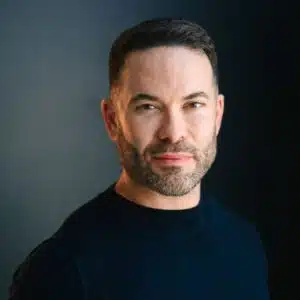
Eiad Asbahi
In this episode of The Psychedelic Podcast, Paul F. Austin sits down with Eiad Asbahi, founder of Mindscape, a patient care coordination platform that connects people with licensed providers and pharmacies for low-dose ketamine care. Eiad spent 17 years running a hedge fund and reached the kind of success he had always dreamed about. Then his largest investment collapsed and his marriage ended, and he was forced to look inward.
Eiad describes the moment he realized he was the common denominator in his own failures. He talks about the core belief underneath it all, that he was “defective,” and how Internal Family Systems therapy showed him there are no bad parts. He explains how building inner safety changed the way he parents his daughter, and why he uses ketamine to reconnect rather than to escape. Paul and Eiad also discuss the thinking behind Mindscape’s daily low-dose model and the case for repetition over peak experiences. The conversation ends with a candid disagreement about dependence, personal agency, clinical oversight, and what responsible access to ketamine should look like.
Eiad Asbahi is a founder and father. He spent 17 years running a hedge fund and reached the highest levels of professional success before a long professional collapse. Around the same time, a divorce sent him inward. He wanted to model a secure relationship for his daughter, so he began Internal Family Systems therapy and spent the next five years rebuilding his relationship with himself.
Eiad founded Mindscape to make the kind of guided, medically supervised care that changed his life easier to find and navigate. Mindscape is a patient care coordination platform that connects people with independently licensed providers and pharmacies, and its approach is built on repetition over intensity. Today his work centers on what comes after healing: deliberately rebuilding identity, motivation, and meaning.
Podcast Highlights
- From hedge fund highs to a five-year professional collapse
- Realizing he was the common denominator in his failures
- The core belief beneath it all: feeling defective
- Internal Family Systems and the idea that there are no bad parts
- How repeated inner work builds inner safety
- Becoming the protector for his daughter that he never had
- How Mindscape's stripped-down model differs from other ketamine platforms
- Daily low-dose ketamine: repetition over intensity, connection over escape
- Eiad's self-care practices: movement, music, and red light
- Dependence, agency, and accountability: where Paul and Eiad disagree
Show Links
Podcast Transcript
00:00:01 Paul Austin
For more than a decade, Eiad Asbahi was at the top of the hedge fund world: private jets, a dream home, everything he had imagined as a young investor. Then his largest investment collapsed, his marriage ended, and he found himself asking, "What was wrong with me?" The answer he eventually found had nothing to do with the markets; it was a core belief he had carried since childhood.
00:00:24 Paul Austin
Welcome to The Psychedelic Podcast. I'm your host, Paul Austin. Today's guest and episode sponsor, Eiad Asbahi, is the founder of Mindscape. What drew me to this conversation is that Eiad didn't come to ketamine looking for a big mystical experience; he came to it after years of IFS work, looking for deeper access to himself.
00:00:43 Paul Austin
His approach, and the one behind Mindscape, is repetition over intensity: low doses woven into daily life rather than occasional peak experience. It's a model that pushes against some of the most familiar assumptions in this space — what a meaningful psychedelic experience has to look like, what we really mean by dependence, and where personal agency ends and clinical accountability begins. We take all of this on directly.
00:01:08 Paul Austin
Eiad Asbahi is a founder and father. He spent 17 years running a hedge fund before a long professional collapse and a divorce sent him inwards. He then spent 5 years rebuilding his relationship with himself through internal family systems therapy. Eiad has founded Mindscape, a patient care coordination platform that connects people with independently licensed providers and pharmacies to make the kind of navigated, medically supervised care that changed his life and made it easier to find and navigate.
00:01:35 Paul Austin
Today we'll talk about the realization that cracked his ego open after years of blaming everyone else, how internal family systems helped him to make peace with parts of himself that he'd been at war with, why he takes ketamine to come back into himself rather than escape, and what he does with the space that it opens up.
00:01:52 Paul Austin
Eiad's case for small, consistent doses over time instead of occasional peak experiences, what Mindscape strips out of ketamine care, and why he thinks most people won't miss it, and the line between daily therapeutic use of ketamine and dependence, and who actually gets to decide that.
00:02:09 Paul Austin
All right. Let's get into it with Eiad Asbahi.
00:02:35 Paul Austin
Eiad, welcome to the show. It's great to have you on.
00:02:37 Eiad Asbahi
It's great to be here, Paul. Thank you for this opportunity.
00:02:41 Paul Austin
So before you started Mindscape, you had a fund that was research-focused and catalyst-driven called Prescience Point out of Baton Rouge, and you were best known specifically for activist short reports. Your two signature calls as part of that.
00:02:57 Paul Austin
So you, you know, I can imagine working in the sort of finance world, more or less, is very, very stressful. And it sounds like, in particular, the last 5, 6 years have been very, very stressful.
00:03:09 Paul Austin
So for you, you know, what led you to ketamine in the first place? What were you navigating professionally and personally where, you know, you were like, "Okay, I really feel like this is a medicine that could be, you know, useful and helpful for my own path here"?
00:03:23 Eiad Asbahi
Yeah. So, yeah, I've managed a fund, a hedge fund, for 17 years. I'm shutting that down now. Man, I hit the highs of the highs. I mean, probably for about 13 years, I think a lot of people may, you know, may have considered me like a prodigy or something. You know, in the hedge fund space, if you're running a fund for more than a year, you kind of doing a good job. You know, you run a fund for 5 years, 3 years, you're in the major leagues. You know, I ran a fund for 17 years. We compounded capital at a very high rate. On average, is what I'm talking about, for 13 years. And me personally, the way that that was reflected out in my life is, I mean, I was flying on private jets and things like I had always dreamed about.
00:04:06 Eiad Asbahi
But then the last 5 years, oof, bro, pain, suffocation. The moment I come up from air, you know, the moment you try to take a breath, you're sucked back under. You know what I mean? Over and over and over again for 5 years. I've been, in a way, forged in a fire. But later on into my career, and this is still as I was peaking, I was going through turmoil in my personal life. Like, I went through a divorce. I was in a conflictual relationship, and my daughter was getting older, and she began to become aware. And I just knew that I needed to give this being a better opportunity.
00:04:57 Eiad Asbahi
After separating and stewing on my life, I, you know, I went back to the marriage counselor and I was like, "Steve, you know, what can I I've realized my highest priority is to model a secure relationship for my daughter." He set me on a path. He said, "This is the most effective kind of therapy. Here's the name of a therapist. Go and do this type. It's called internal family systems." I embarked on that journey. Again, you know, professional life was just booming at that point.
00:05:34 Eiad Asbahi
And I began to change. I began to heal. I began to feel lighter. For the first time ever, I started to feel connected to something greater than myself. I'd been kind of stuck in my head, you know, for 42 years at that point, nonstop. Just, I began to feel the joy of life, if that makes any sense.
00:05:58 Eiad Asbahi
But then I collapsed professionally. About a year or two into my healing journey, our largest position collapsed, you know, one day, about 60%, in September 2021. And it was just immensely painful, even traumatic. We had replaced directors on the board of this company. Our name was attached to it. My reputation was attached to it. And it collapsed. And I just remember needing to hide under a blanket. You know what I mean?
00:06:38 Paul Austin
Like literally or figuratively?
00:06:40 Eiad Asbahi
No, no, literally. I've had some moments like that in managing the fund where I've hid literally under a blanket. Yeah. It's not just my own wealth I'm managing. You know, my mom is in there. My dad is in there. My brother is in there. All my investors, high school friends, you know, these are all people betting on me. And it just got worse and worse from there.
00:07:09 Eiad Asbahi
Now, here's what's crazy. Outside of work, even though my life was collapsing, I was, like, the happiest I've ever been. It shocked me, you know. And I continued on in this inner healing journey. It became my passion. I was doing the work. I was looking for the childhood wounds. I'd put myself in stressful situations, write down my thoughts, the inner dialogue, and then I'd go into therapy with them.
00:07:37 Eiad Asbahi
I began to search for my motivation once again. I think I'd lost it. You know, the dream was I wanted to be the greatest investor in the world, right, as a young person coming into the industry. And I mean, I fucking I hit the heights, you know, I hit the heights. And then I collapsed, and then I didn't get it back. That focus, that locking in, walking in alignment every single day with this North Star mission.
00:08:07 Eiad Asbahi
You know what I mean? With the vision. I went on a long journey of trying to find the motivation until, like, this spark emerged of, like, this idea for Mindscape. And then I the vision, the vision grew and grew, like the spark turned into a flame. And I followed, I followed the path. I was being called toward it. And next thing you know, you're like, a team is forming around me. It's almost like, you know, when you're locked in like that, it's almost like reality bends in your favor, you know?
00:08:47 Paul Austin
Yeah.
00:08:49 Eiad Asbahi
So anyways, ketamine came later on in this journey, in that collapse. You know, I was able to heal myself in therapy. The childhood wounds is what I'm talking about. About 65%. I mean, I went as deep as I could go. I looked for the lockboxes you're never supposed to open. I kept going and going until I couldn't find anything more.
00:09:14 Eiad Asbahi
And I was a completely different being at this point relative to who I was going in. I'd become secure. I've never been secure before. I've always been anxious and avoidant, both. But I began to feel my security reflected to me in my from my daughter. I was raising a daughter. She was 3 at the point of divorce. And even while I was going through this professional collapse, but I'm on this inner healing journey, you know, I was the most present father. It was a gift given me through this healing journey.
00:09:50 Eiad Asbahi
Anyways, ketamine basically I used, you know, as a tool for even deeper access, not to escape, to reconnect.
00:10:03 Paul Austin
I mean, I'm curious for you to go a little bit more deeper into that. Like, what did you realize you were hiding? Or what were you hiding from? You know, do you have a moment or, you know, an aha or an insight that you finally, like, integrated or really came to you where things started to turn a corner for you, where you were able to start to come out of the collapse and feel like you were on the right path again?
00:10:29 Eiad Asbahi
Yeah. I had, like, deep pain as this divorce kind of, like, you know, started to transpire and I had to get out. And I went to Austin, actually. I had to get out of town. I was just sitting in it, man. It was just terrible.
00:10:48 Eiad Asbahi
So I did have a moment of clarity. The moment of clarity was I'm the common denominator in all my failures. I'd never thought like that in my entire life, brother. Everything was everybody else's fault.
00:11:04 Eiad Asbahi
And yeah, when I turned inward like that, it's when my ego began to crack. To know that I'm the common denominator in all my failures, you know, relationship failures, professional failures, all of that, it's me. And that's when I began to, I guess, like, build the drive to go in deep, you know, and keep going.
00:11:27 Paul Austin
And I mean, what did you discover as part of that? Like, what were some of the patterns that were running? I mean, it's one thing to take responsibility, which is often the starting point, but then it's a whole nother path and process to actually address the things that need to be addressed to make the change.
00:11:43 Eiad Asbahi
I mean, so to me, the most dramatic realization that I had that was at the center of everything going on in me, like being on a hamster wheel constantly, you know, seeking validation externally, never feeling present and happy, was that was when I realized I feel defective. Like something is wrong with me. Something's wrong with me. Like, you know, I'm unlovable. Something's wrong with me. You know what I mean?
00:12:18 Eiad Asbahi
But that something is wrong with me is the deepest seed. It was a part of all the wounds, if that makes any sense. It was almost like, you know, when I think back to my parents' divorce when I was 10, a massive rock hitting a windshield and a big crack forms down the middle. You know what I mean? And then over time, the smaller cracks kind of like spread. That one right there was at the core.
00:12:51 Paul Austin
You know, I imagine a lot of our listeners, including myself, can resonate with that, you know? Like, there's probably a part of us that has felt that way at some point in our lives, even if that isn't the sort of core wound that has really driven everything.
00:13:04 Paul Austin
And so, you know, you had mentioned early on in the interview, you had initially turned to internal family systems, IFS. Since that discovery, what has the path been like for you to come into more love, you know, to come into a sense of greater acceptance of all parts of who you are, to realize that, you know, fixing oneself or, you know, these quote-unquote "defective" parts or aspects of self are really just things that we can love deeper.
00:13:30 Paul Austin
Like, tell us a little bit about your own, you know, path of transformation, if you will.
00:13:34 Eiad Asbahi
Yeah. One of the most empowering realizations that amounted to turning a corner for me was basically like, there are no bad parts of me. Like, there's no bad aspects of me. All of the aspects of me, as damaging as they've been, were trying to protect me. They think they're trying to help me. And I need to basically go into my system, sit with the kid in the painful moments, all of them, where I took on negative messaging, mentor him as my current self through the moment and how to process it, help him take out the negative messaging he's been stuck with for all these years, stuck in the moment, and ask him if he wants to come with me into the present under my protection. He has a protector now.
00:14:28 Eiad Asbahi
When you do that over and over and over again, the system responds. When you go in to talk to other aspects of your own system, they're familiar with the work you've done with other aspects of your system. They have an immediate trust eventually. Over time, you build this is the secret unlock. It's inner safety. You build inner safety. And everything changes. And that's what I mean.
00:14:58 Eiad Asbahi
And, you know, if you're talking about it in attachment language, it's, you know, going from anxious or avoidant or whatever to secure. It's essentially I built inner safety.
00:15:10 Paul Austin
How has that impacted your relationship with your daughter then? You feeling that safe, like, how has that then showed up in your closest relationships? What have you noticed, you know, has shifted and changed from that?
00:15:22 Eiad Asbahi
Well, it's contagious. She has a sense of inner safety. She knows she has a protector, something I never had, you know, when I was a child, I never felt safe.
00:15:35 Eiad Asbahi
And then I'm also building the protector inside of her so that she can protect her own self when I'm not around. And from that platform, it's life-changing. You know, I'm amazed just watching her grow up because I feel like I'm living in a miracle.
00:15:55 Eiad Asbahi
You know, I've broken the generational curse, you know, the generational pattern, and it stopped with me. So she's having a nice childhood. Yeah.
00:16:07 Paul Austin
Let's kind of shift and start to talk a little bit more about Mindscape as a company, you know, and as a platform.
00:16:13 Paul Austin
So our listeners, you know, are probably aware that there have been several telemedicine ketamine companies that have come. Some are still around, and many have gone as well, right?
00:16:30 Paul Austin
And the sort of typical model for telemedicine ketamine has often been sort of a closed system, if you will, where you'll go to a company, they'll have prescribers that are within the company. Those prescribers will make sure that you're okay to take the ketamine.
00:16:47 Paul Austin
They'll send the ketamine to your home with maybe a branded box, if you will. And, you know, you'll log into their backend and you'll get playlists and other things that are from that company.
00:16:58 Paul Austin
My sense is Mindscape is a little bit different in terms of how it's built and the structure of the platform. And I could be off on this, so please correct me, but it feels like more of a true sort of platform rather than a closed-loop system.
00:17:13 Paul Austin
So help us better understand Mindscape, how the idea came about, and just from a business perspective, like, how is Mindscape different than some of these other telemedicine ketamine platforms that are, you know, already out there and quite prevalent?
00:17:28 Eiad Asbahi
So Mindscape has basically, like, stripped the frills out of the cost of the medication. Most of the platforms, and I respect all of them, the way that they're built is, you know, you basically you pay a high cost for a more premium service with a lot more stuff bundled in. And a lot of people just don't use those things. Mindscape has stripped those things out of the cost of the medication.
00:18:01 Eiad Asbahi
We do offer free healing, you know, collateral, and we're building upon that daily. Our customer support is high level. I did it myself for the, you know, first six months post-launch. And I set the tone from the top. And, you know, we try to give everyone a very high level of service.
00:18:24 Eiad Asbahi
And yeah, again, like, the daily dosing protocol is key. Like, lasting change for me never came from peak experiences. And I've had a lot of them.
00:18:38 Paul Austin
Why is it that you think, you know, the repetitious protocol, so the everyday protocol, is potentially more efficacious or more helpful than, you know, once a month with a very high dose of ketamine? Like, what really speaks to that, you know, repetition rather than just the sort of one-off peak experience that some of these other, you know, telemedicine ketamine providers may, you know, do?
00:19:03 Eiad Asbahi
Our providers prescribe a daily dose protocol. The medication is meant to be integrated into your daily life. And there's a reason for that. And I can talk about my own experience with ketamine. So basically, like, the way I like to describe it is that ketamine creates space between your thoughts. And when space is created between the thoughts, you can fall into your body.
00:19:30 Eiad Asbahi
Like, what I mean by that is you feel completely present. When you feel completely present like that and the thoughts have slowed down, you can now observe your thoughts as they come up rather than subconsciously suppressing, suppressing, suppressing, suppressing, and feeling like something is building in the background. You're like watching them come up and then you observe them and then you connect with them and you have compassion for where they came from and you process it.
00:20:01 Eiad Asbahi
And when you do that over and over and over and over again, consistently, when you get that practice, you're building a self-relationship. That is what self-love is. Your whole system responds to that. You know, you begin to see more joy. I began to see more joy in the simple things in life.
00:20:22 Eiad Asbahi
So to me, it was like inner healing is my passion. I'm building a platform. I help people find the answers that I was able to find on this inner healing journey much more easily. And so Mindscape was the natural answer. It is a different company. You're right. I guess the way I think about it is that you don't have to be sent on some massive journey to realize the healing benefits of this medication. I think that the consistency is the way to go.
00:20:58 Paul Austin
Talk to us a little bit about kind of what a standard protocol might look like for someone who's interested in working with Mindscape. You know, what did you find in your own work to be an effective approach, especially if it was combined with something like IFS?
00:21:16 Paul Austin
You know, I think one of the so-called promises of the psychedelic renaissance has been not just the drug itself, but also the container around it. So preparation, integration, ongoing support, right?
00:21:31 Paul Austin
Behavioral change that sort of emerges from working with these highly neuroplastic agents. So talk to us a little bit about kind of how does Mindscape look at the protocol of low-dose ketamine?
00:21:45 Paul Austin
What are some practices that are encouraged or invited? And what does the container, you know, look like of support for those who are, you know, potentially going to start with these medications?
00:21:58 Eiad Asbahi
Yeah. Again, I'll talk about my experience here. You know, like with ketamine, the way that I take it is to not to escape. It's to connect with myself, okay? I don't want to be sent out on an external journey. I want to turn inward and be in here. I want to be doing self-care while I'm doing it.
00:22:28 Paul Austin
What does that look like? Talk to us about what that looks like actually in practice.
00:22:32 Eiad Asbahi
The way that I like to set the environment, I like to frame the experience. This is important. People need to know. You should be framing your experience. And we do send, you know, obviously tips like this out to our patients. But music, red lights. And I mean, I have in here one of those three-foot trampolines.
00:22:55 Paul Austin
Yeah, a rebounder.
00:22:56 Eiad Asbahi
Yeah, exactly. When you create space between your thoughts, you fall into your body. And the body takes control sometimes and knows exactly what to do to fix itself. I never was stacked like this before, ever in my entire life. My joints had been realigned. Like, my body did it, you know?
00:23:20 Eiad Asbahi
Stretching the fascia, vigorous movements, stretching. And I know the body's taking over because I would find myself in, you know, stretching, like, in a way I'd never done before, even thought about, and thinking, oh my God, I can't believe I'm doing this. It's a connection to the bodily instinct. The body literally takes over.
00:23:42 Eiad Asbahi
And so I'm jumping on the trampoline. I'm working out. I'm stretching in different ways. And then I basically do red light therapy. Red light therapy for my head, you know, for my hair. Trying to keep the hair healthy. You realize over time when you begin doing this that every single aspect of your body wants to be felt, stimulated, alivened.
00:24:08 Paul Austin
Right. There's something vitalizing about these lower doses. I mean, we often on the podcast talk more about microdoses or low doses of LSD, psilocybin, huachuma, you know? But we have had conversations around ketamine.
00:24:23 Paul Austin
I'm curious, you know, when it comes to ketamine in particular, you know, it can be habit-forming. And we've seen this mostly, I will say, with intranasal ketamine because it's hitting a certain receptor in the brain and the nose.
00:24:37 Paul Austin
And I know, you know, there are other companies out there who have low-dose ketamine. And, you know, it seems like just like we ideally have tapering-off plans for SSRIs or other psychiatric medications, you know, it feels like we should also have tapering-off plans for low doses of ketamine.
00:25:00 Paul Austin
And even with microdosing, like say LSD or psilocybin, we always tell our folks, like, have a two-week washout period every six weeks or something like that. So how do you engage with low doses of ketamine that way?
00:25:11 Paul Austin
You know, for how long is it an everyday thing? Do you take breaks? You know, how long are those breaks? Kind of tell us about the longer trajectory of low-dose ketamine work.
00:25:25 Eiad Asbahi
So I leave the protocol to the clinical decision-makers. But I will say that lots of our patients leave, come back, leave, come back. They do, you know, what works best for them. And there is just one concept I'll challenge. It's this concept of addiction. You know, we're taught drugs are bad, right, from a very early age. And that addiction will wipe you out, right? Drugs are bad. Addiction will wipe you out, basically.
00:26:02 Eiad Asbahi
Well, first off, all drugs are not bad. You know, I think they've been a part of human civilization for 10,000 years. So what is a drug and what is a medication? You know, we receive tons of emails daily from patients who are expressing gratitude, like in the greatest way, because of the life-changing effects, positive life-changing effects this medication is having in their life.
00:26:30 Paul Austin
What I find to be true is, I mean, let's use SSRIs as an example, right? There are people who have been on this daily medication for 10 years. Some, it's really helpful. Others, not so much, right? It really is a personalized and individual conversation.
00:26:44 Paul Austin
I think where low-dose ketamine at times can be challenging, and this is just from, you know, experiences that I've heard about or seen in the field, is when it doesn't have the tight container around it, when there's not necessarily accountability with a third party or a prescriber. And when there tends to be this sort of behavior of, okay, I'll start at these low doses, but I, you know, but on the weekends I'm going to do some higher doses. And that's once a month and then it becomes once a week. And, you know, so it can sort of creep up on you.
00:27:19 Paul Austin
And I also say this as someone who hasn't, I haven't necessarily struggled with ketamine in particular around, you know, my own drug use, let's say. But I have, you know, gone through this process, and this has been quite recent over the last couple of months, where I'd engage with a lot of different things. And it got to a point where I was just like, okay, it might be good to take a break now and give my system a rest.
00:27:40 Paul Austin
So I think my sense is a healthy relationship with anything, right? And it doesn't, we're not even talking about drugs now. It could be, this could be about sex. This could be about food. This could even be about exercise. There's at times too much of one thing is harmful. Moderation is always helpful, right? Variability is always helpful. Coming on, coming off, experimenting and doing things.
00:28:02 Paul Austin
So it feels like an appropriate lens for this is how do we have a relationship with it? How do we have accountability around it? And how do we not sort of bullshit ourselves so we don't get in too deep with ketamine? Because I have seen enough people be hurt from the overuse of ketamine that I think just like I've seen people get hurt from the overuse of ayahuasca or just obviously of alcohol and even cannabis. So it's not black and white. But the nuance of the conversation, I think, is like, yeah, what are the structures and the containers that need to exist so folks have support if they need support in that way?
00:28:46 Eiad Asbahi
Yeah.
00:28:46 Paul Austin
And not to be, you know, fear-mongering about it either, right? There's a balance here.
00:28:52 Eiad Asbahi
Yeah. So the structure and support does come from the clinicians.
00:28:57 Paul Austin
Right.
00:28:58 Eiad Asbahi
You know, those are their decisions to make. Just because you come to Mindscape doesn't mean you'll be approved for medication. Some people get rejected by the clinician for whatever medical reasons that clinician thought to make that decision. But, you know, I am also a believer in giving people agency.
00:29:22 Eiad Asbahi
You know, like you can go to the corner store and buy alcohol, you know? I'm not saying ketamine is for everyone either. You know, so I get what you're saying. And at the same time, I'm pushing back a little bit because it's like, well, how much control do you want to have on people's lives? You hope that people make good decisions for themselves in all facets. That doesn't mean restricting tools that could benefit the masses.
00:29:56 Paul Austin
Yeah. I mean, the fact that these are illegal or scheduled in the first place when alcohol is basically available on every corner is insane and ridiculous. So we have to remember that we're starting from a lens of our populace isn't super well-educated about this. These are fairly new drugs for most people. We've already had to overcome a lot of stigma. I mean, the sort of classic stigma with ketamine is it being a horse tranquilizer. And so there's, you know, I think that all has to play into consideration.
00:30:24 Paul Austin
I mean, I'm the same way with acid. I think acid should be widely available at low doses. It's perfectly safe to do fairly often. You know, it becomes problematic when people are doing very high doses very often. Now, do I think we should make acid available to anyone in a corner store? You know, I don't know about that. Not yet. But I think that's simply because we don't quite have the sort of literacy that's necessary yet.
00:30:51 Paul Austin
So I'm with you that ketamine is a neuroplastic agent when done in low doses. I mean, I love the somatic element, like getting on the rebounder, working with red light. You know, people have to, you have to be careful with water in ketamine. I mean, we learned this from Matthew Perry's death. So at low doses, even just being mindful of being in water and what that could look like. That's more of a liability thing than anything that I'm communicating on this podcast.
00:31:17 Paul Austin
But we're still at the very early stages of even understanding ketamine, you know, and what it does to the body and how impactful it can be. For all we know, ketamine daily could be a really great supplement. I mean, again, I think it's helpful with anything. I say this with creatine. I say this with fish oil. I say this with basic supplements. You know, every so often, take a week or two off before you come back to it. It's helpful to have that in and out.
00:31:43 Paul Austin
But we could end up finding that ketamine really is a fantastic catalytic agent for gray matter and white matter in the brain, just like meditation is. So we're still learning a ton. And so I think making it accessible, making it available, making it low cost is important, you know? It's really important as part of that process.
00:32:02 Eiad Asbahi
Yeah. Yeah, no, totally agree with all of that. And I appreciate your cautious stance. It's definitely deserved.
00:32:11 Paul Austin
I'm curious sort of as a final question for, you know, our audience, because you, you know, you ran a hedge fund for 17 years. You're well-versed now in the psychedelic landscape is my sense.
00:32:25 Paul Austin
So if you put your investor hat back on, where is the sort of durable value in psychedelic medicine right now? Like, what gets you excited, you know, having the investor hat on? What gets you excited about the potential commercialization of psychedelics? And what can't be quantified necessarily from just a purely investor lens? It's also important, you know, for people to get access to more healing.
00:32:53 Eiad Asbahi
Yeah, no, I'm very excited about this entire space. And I'm doing this from passion because as a long-term patient myself, I've experienced the benefits. This is why I'm here. I feel as though I'm the smartest I've ever been, can process information the fastest I've ever been able to.
00:33:18 Eiad Asbahi
I feel the electricity in my body from the standpoint that, like, you know, I mean, I can feel all the way out to my fingertips. The miracle of life, you know, sometimes I'll just squeeze the air when I'm sober. But I do attribute a lot of these benefits that I'm experiencing
00:33:41 Eiad Asbahi
to some of the experience that I've had with the medication, you know? And yeah, it's exciting to share something that you believe so deeply in. And that's basically what this is.
00:33:51 Eiad Asbahi
I'm literally experiencing my dreams materialize. The vision that we were talking about earlier materialize once again in something that I'm immensely driven by.
00:34:04 Eiad Asbahi
And yeah, this whole space, you know, Trump just signed an executive order to open the space up a little bit. And lots of exciting things happening.
00:34:10 Eiad Asbahi
I don't know what that means for me or Mindscape. And I don't really care. You know, I'm on for this ride. Let's go, you know?
00:34:17 Paul Austin
Right. Yeah, I mean, it is like, you know, a tie just got acquired by Eli Lilly for 2.8 billion plus another billion if they hit certain phase three metrics.
00:34:27 Paul Austin
Compass Pathways just announced that they're hiring 100 sales reps to roll out COMP360, which is synthetic psilocybin for treatment-resistant depression.
00:34:37 Paul Austin
So I think, you know, I was just kind of curious, you know, from an investor perspective, like, what is there to, there's a lot to be excited about, it feels like, you know, in the broader space.
00:34:46 Paul Austin
And what I hear in your response is you're very focused on Mindscape. And this is your passion project. And all these other things going on are great.
00:34:54 Paul Austin
But, you know, you're really doubling down and focused on how do you, how are you building a system and a platform to get this low-dose ketamine in the hands of as many people as possible.
00:35:04 Eiad Asbahi
Who need it.
00:35:05 Paul Austin
Who need it.
00:35:06 Eiad Asbahi
Or whose life it would improve, rather.
00:35:07 Paul Austin
Correct. Correct. Right. Which is important to emphasize. So if folks want to learn more about Mindscape, you know, about treatments, about protocols, about prescribers, whether it may be a fit for them or not, what's the URL for folks to learn more about Mindscape?
00:35:26 Eiad Asbahi
Yes. It's themindscape.com. TheMindscape.com. You'll find a lot of information on the site. We also have a blog there. I've written a couple of articles on that blog. And I'm looking forward to publishing more content soon.
00:35:42 Paul Austin
So themindscape.com. There's a blog. There's the science. There's FAQ. There's membership. There's more details about their approach. So you can go to themindscape.com to learn about all of that. There's also Eiad's story. So there's a nice little video on there that you can learn more about Eiad and his work. And then are you active on social at all? If folks wanted to connect personally with you.
00:36:06 Eiad Asbahi
I am. Please follow our Instagrams @themindscape.official and @EiadAsbahi.
00:36:13 Paul Austin
EiadAsbahi. And we will have a link to everything in the show notes. So folks, you can go just to Third Wave's website and go to the show notes. And you can find all of this in case you're, you know, on the road.
00:36:28 Paul Austin
Eiad, thank you so much for joining us. You know, thanks for all the time, energy, and effort that you've put in and you continue to put into Mindscape. You know, I've said it before, I'll say it again. These medicines can be life-changing for the people who need them. And low-dose ketamine is no exception.
00:36:43 Paul Austin
And we need accessible options, you know? It's critically important, especially with the sort of clusterfuck of psychiatric medications that we find ourselves in. SSRIs and SNRIs and, you know, mood stabilizers and all these, you know, benzodiazepines, everything.
00:37:00 Paul Austin
Ketamine is a fantastic bridge for a lot of people to do, to get into the deeper and deeper work. And especially low-dose ketamine is very, very safe to take. So, Eiad, thank you for joining us for the podcast. It's been really great to host you today.
00:37:15 Eiad Asbahi
Thank you, brother. Appreciate it. I'm grateful. Thank you.
00:37:19 Paul Austin
All right, guys, if you want to learn more about Mindscape, its approach, and whether it may be a fit for you, visit themindscape.com. You can also follow Mindscape on Instagram @themindscape.official and Eiad @EiadAsbahi.
00:37:31 Paul Austin
Like, follow, rate, review, and share the Psychedelic Podcast wherever you tune in, Spotify, Apple, or otherwise. Subscribe to Third Wave on YouTube for full video conversations.
00:37:41 Paul Austin
And you can follow Third Wave on social @ThirdWaveIsHere and myself. I'm usually on X, LinkedIn, and Instagram @PaulAustin3W. All right, thanks for tuning in, folks. And we will see you next week.