Episode 367
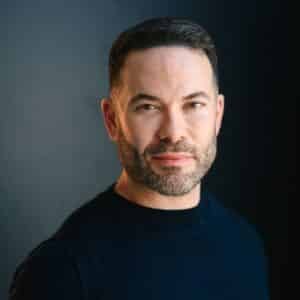
Ian Gardner
In this episode of The Psychedelic Podcast, Paul F. Austin speaks with Ian Gardner, founder and CEO of The Acraya, about dark retreats as an ancient contemplative practice now entering Western culture. Ian explains what happens when external stimulation disappears, why boredom and difficult inner material can become central parts of the experience, and how dark retreats compare with psychedelics and extended meditation. He also discusses screening, facilitator training, post-retreat integration, and his vision for technologically supported retreat centers in Costa Rica, Nepal, Bali, and beyond.
Listeners of The Psychedelic Podcast can receive 5% off an Acraya retreat. Visit https://acraya.global/thirdwave and use discount code 3WAVE when booking.
Ian Gardner is the founder and CEO of The Acraya, a network of dark meditation retreat sanctuaries. A seasoned entrepreneur, he has founded and exited five companies across biotechnology, renewable energy, and electric vehicles in private and public markets.
While earning his MBA from the University of California, Los Angeles, Ian was introduced to yoga and meditation. He later explored Transcendental Meditation, Self-Realization Fellowship, Eckankar, Mudrashram, and the Bridge Path. In 2001, he traveled to Allahabad, India, for the Maha Kumbh Mela before entering a year of seclusion, during which he meditated for up to eight hours daily.
Ian has written six books related to esoteric teachings and spent two years working at the Esalen Institute. In 2023, he founded the Church of the Acraya to support the development of dark meditation retreat centers worldwide. He lives in Scottsdale, Arizona, with his wife and children and maintains a daily meditation practice.
Podcast Highlights
- Ancient roots of dark retreat practice
- What remains when sensory anchors disappear
- Psychedelics versus gradual inner awakening
- Boredom as a gateway to deeper material
- Preparing for several days in darkness
- Why facilitators need embodied experience
- Screening for psychological contraindications
- Technology designed to support retreat safety
- Integrating before returning to ordinary life
- Scaling dark retreat centers worldwide
This episode is brought to you by The Practitioner Certification Program by Third Wave’s Psychedelic Coaching Institute. To learn more about our flagship 8-month training program for coaches who want to integrate psychedelic modalities into their practice, click here.
Third Wave occasionally partners with or shares information about other people, companies, and/or providers. While we work hard to only share information about ethical and responsible third parties, we can’t and don't control the behavior of, products and services offered by, or the statements made by people, companies, or providers other than Third Wave. Accordingly, we encourage you to research for yourself, and consult a medical, legal, or financial professional before making decisions in those areas. Third Wave isn’t responsible for the statements, conduct, services, or products of third parties.
Podcast Transcript
00:00:01 Paul Austin
What happens when you remove light, distraction, your phone, and nearly every external reference point for who you are? For some people, a darker treat becomes less about escaping the world and more about confronting everything that usually stays hidden beneath the surface.
00:00:15 Paul Austin
Welcome to the Psychedelic Podcast. I'm your host, Paul Austin, and today's episode is sponsored by The Acraya, whose founder, Ian Gardner, joins me for this conversation.
00:00:24 Paul Austin
Dark retreats have been part of contemplative and monastic traditions for thousands of years, but they are only recently beginning to enter the broader Western conversation. You know, I've been curious about this practice for a while, especially after longer experiences with Vipassana, ayahuasca, and iboga. And what interests me is not just the darkness itself, but what can happen when the usual stimulation disappears, when you are simply left with your breath, your thoughts, and whatever begins to emerge.
00:00:51 Paul Austin
So today we'll have on Ian Gardner, who runs The Acraya, a network of dark meditation retreat sanctuaries, beginning with a location at Holos Retreat Center in Costa Rica. Ian brings together more than 25 years of contemplative practice, with a background in building and exiting companies across biotechnology, renewable energy, and electric vehicles.
00:01:11 Paul Austin
So today we'll talk about why darkness has been used as an advanced contemplative practice for thousands of years, what can happen when nearly every external reference point disappears, how dark retreats compare with psychedelics and extended meditation, and one of the most surprising and challenging parts of the experience, which I won't give away here, why preparation, screening, and skilled support matter, how technology is being used to support safety and remote facilitation, and Ian's vision for dark retreat centers in Costa Rica, Nepal, Bali, and beyond.
00:01:45 Paul Austin
For listeners who feel called to explore an Acraya retreat, Ian is offering our audience 5% off. Visit acraya.global/thirdwave and use the code 3WAVE. That's 3-W-A-V-E when booking.
00:02:00 Paul Austin
All right, Ian Gardner is the founder and CEO of The Acraya. He's a seasoned entrepreneur, founded and exited 5 companies across various sectors. And Ian began practicing yoga and meditation while earning his MBA at UCLA.
00:02:12 Paul Austin
In 2001, he traveled to India to attend the Mahakumbala, later spending a year in seclusion and meditating for up to 8 hours a day. He has written 6 books on esoteric teachings and spent 2 years working at the Esseline Institute in Big Sur. In 2023, Ian founded the Church of The Acraya to support the development of dark meditation retreat centers around the world. He currently lives in Scottsdale, Arizona, with his wife and children, and maintains a daily meditation practice.
00:02:37 Paul Austin
I think you're going to find this to be fascinating. We touch a little bit on psychedelics, but the focus of this is really about the dark, and I think you're going to love it. So before we go to the conversation, let's first hear a word from our sponsors.
00:02:51 Paul Austin
After over a decade of working professionally in the psychedelic space, one thing has become clear to me. If we want to guide others through this journey, there is no substitute for doing our inner work. At the Psychedelic Coaching Institute, we train people to guide others through transformation, ethically, effectively, and with integrity.
00:03:09 Paul Austin
Our certification combines science-backed education with coaching mastery, culminating in a legal psychedelic experience at our in-person intensive in Costa Rica. You'll gain practical skills, leadership training, and get to connect with a supportive community grounded in compassion, rigor, and efficacy. If you're a coach, clinician, or conscious professional ready to serve at a higher level, we'd love to meet you. You can learn more and apply at psychedeliccoaching.institute. Again, that's psychedeliccoaching.institute, or simply see the link in the description.
00:03:43 Paul Austin
Third Wave sometimes shares or partners with outside providers, but we don't control and aren't responsible for their statements, conduct, products, or services. We encourage you to do your own research and consult appropriate professionals.
00:03:55 Paul Austin
Hey everyone, I want to take a moment to share something important with you. At Third Wave, one of our biggest commitments is helping people to explore the power of microdosing safely, intentionally, and with the right support systems in place. That's why I'm excited to introduce you to our go-to company, Golden Rule, one of the most respected names in the microdosing space.
00:04:14 Paul Austin
Golden Rule crafts premium, ethically sourced microdosing products, including psilocybin single strain and blends, San Pedro, and LSD options, all designed to support clarity, creativity, emotional healing, and performance. What really sets them apart is their integrity, honoring traditional plant wisdom while embracing modern science to support real and lasting transformation.
00:04:36 Paul Austin
Together, Third Wave and Golden Rule are working to make safe, high-quality microdoses more accessible while ensuring you have the education, tools, and community to feel confident on your journey. If you're curious about microdosing and want to try some of my personal favorites, head over to goldenrulemushrooms.com/thirdwave and use code 3WAVE at checkout for 10% off. Not just once, but for every future order too. Again, that's goldenrulemushrooms.com/thirdwave and use code 3WAVE for a lifetime discount of 10% off.
00:05:10 Paul Austin
All right, folks, without further ado, I bring you Ian Gardner.
00:05:37 Paul Austin
Ian, welcome to the podcast. It's great to have you on.
00:05:39 Ian Gardner
Thanks. Good to be here.
00:05:41 Paul Austin
So dark retreats are something I've been hearing about since probably Aubrey Marcus made it a thing in, I don't know, 2019, 2020, 2021. And then Aaron Rodgers went to the same place in Oregon, which from now, from what I understand, has sort of booked out for a long time.
00:06:00 Ian Gardner
2029.
00:06:01 Paul Austin
Yeah. And then a sort of mentor and teacher of mine has become quite obsessed with these as of late and has even experimented with 5-MeO-DMT in these sort of dark retreats. Now, she's an indigenous elder.
00:06:18 Paul Austin
She's very experienced. You know, she's been working with peyote since she was 13. So this isn't a sort of thing of, "Also do this at home," but it's more and more been on my radar. And in fact, in 2023, I did a Vipassana, a 10-day Vipassana, and a dieta with ayahuasca. And immediately once I told people that I had done these two things, the, like, again and again, the next question was, "Are you going to do a dark retreat next?" And I really haven't had the chance yet, but I'm curious. So I think just before we get into the details of it, I mean, folks may be wondering, "Okay, this is a podcast about psychedelics, but we might touch on psychedelics, but it's more what the dark retreat facilitates."
00:06:58 Paul Austin
So talk to us a little bit about the background, or especially the sort of ancient history behind darkness. Like, what is it that's so profound and so sort of transformative about dark?
00:07:11 Ian Gardner
Yeah. Well, this is a practice that has been sequestered and cloistered community, esoteric communities, monastic communities for thousands of years. So if you peer into the esoteric literature of Christianity, around the Desert Fathers of Buddhism, the Bön tradition in Tibet and Nepal that predates Buddhism, Islam, all of them have aspects of that where you go into complete darkness for an extended period of time. And in the darkness, magical and transformative things happen.
00:07:52 Ian Gardner
And those traditions have very specific practices that you do in the dark over generally a specific amount of time. So it's not like you just go in and sit in the dark and, like, you know, stare at your belly button and hope stuff happens. Like, in the Bön tradition, it's a 49-day practice. Each week, there's a specific thing that you're doing. The monk comes and knocks on the door and checks in every day. You tell them what the experience is that you had. He gives you corrections or explanations or support. And it's designed to move you through that path's journey in a very specific way so that you can experience and identify the markers in the inner worlds that mark progression of your development.
00:08:36 Ian Gardner
There is a Vipassana angle where you can do it where you just watch the arising thoughts and you're acting as the observer. And so these are kind of the two ways that you can go about it. But when you go in the dark, the reason it is so powerfully transformative is that when you are out here, when we're in everyday life, right, I'm sitting here, I can see you, I can hear your voice, I'm sitting on my chair, my arms are resting on the desk, I can hear the air conditioning, I've got my car parked outside, I went to Starbucks this morning, my wife's calling me to talk about the kids. Like, all of those different experiential touchpoints with reality are comprised in a kaleidoscope that define who you are as a person. They define your personhood relative to the things around you. Whether you're a good athlete, whether you're good-looking, whether you're successful, everything is in juxtaposition to something that's on the exterior.
00:09:35 Ian Gardner
When you're in the dark and you're absent all of those connection and contact and anchor points to reality, all that exists is your breath and your thoughts, which is very disconcerting for most people, and which is why the great esoteric traditions kept this as a sacred advanced practice. Because if you just go in and try to raw-dog it and, you know, say, "I'm just going to power through," it generally doesn't deliver good results. You need to have a stable practice and you need to be supported unless you're an advanced practitioner and can go and do it by yourself.
00:10:13 Ian Gardner
And so once you get in and you disassociate from all those anchor points and the aperture of all your senses open, then all the stuff that's down in the basement, that's the subconscious and the unconscious that we don't want to deal with or have stories about or haven't sorted out, all that stuff starts to become visible and it starts to come up. And so it can lead to a lot of processing of stuff that has guided our unconscious behaviors.
00:10:41 Ian Gardner
And then on day 3 or 4, depending on how your biochemistry works, and this is the interesting analog to the psychedelic experience, your pineal gland starts to produce DMT endogenous. And so the veil between the outer and inner worlds becomes transparent. And unlike ayahuasca or psilocybin or DMT, where it rips you out of your body, it shoves you up into the astral. You have some crazy adventure that you can't control, and then you come back down, and then you got the physical stuff that goes with it. In the dark, it's a gradual awakening and opening, and the inner vision, the oculus of the inner vision expands, and you can experience those inner worlds in full consciousness with full sound, smell, taste, hearing in a stable way.
00:11:33 Ian Gardner
And so, like, if you're working on a path and you're sort of skeptical, you know, "Is it my imagination? Is it real?" or whatever, this is, you're in the dark, this starts to open. And if you have a meditative practice, you can meditate, you can do your practice, and you can see the inner markers in a way that's as stable and 3D as you and I sitting here talking to each other. And that allows you to consciously manage your spiritual development and unfoldment. Because then as you do the practice, you can actually see the inner form unfold and the transmutation of karmic accretions and darkness, and you can see literally more light coming into your inner bodies and replacing the dark.
00:12:18 Ian Gardner
And so as the West has started to awaken, these monastic tradition keepers, recognizing the great cycles of time and the turning of the wheel, have started to release these practices into the West so that you have the monastery meets the marketplace, the sky meets the street. And in their view, and in the view of a lot of these teachings, this cycle of human consciousness is where we learn to take all these spiritual principles and embody them in everyday householder life. And this is part of helping support that transition.
00:12:53 Paul Austin
I have a lot of questions, so I'll kind of try to pick a few different paths that we can explore in being in service to our listeners.
00:13:01 Paul Austin
One, you know, just to trace the history a little bit more from a modern perspective, when did this start to become a little more relevant, a little bit more prevalent?
00:13:09 Paul Austin
Like, when did you start to pay attention to the dark retreats and what was going on there? I mean, I mentioned the Aubrey Marcus anecdote, but kind of how did this come to be in a way in the last decade or so?
00:13:23 Ian Gardner
The Westerner who led the movement was a guy named Severin Gezer, who started the hermitage at Lake Atitlán 10 years ago. And he was a Buddhist monk, became a householder, got married, had some kids, and started this dark retreat center at Lake Atitlán. And over the course of 10 years, took about 1,000 people through the process.
00:13:43 Ian Gardner
And along the way, he met Scott, who manages Sky Caves in Oregon, where Aaron Rodgers went that has the three-year waitlist out to 2029. And he helped Scott get that up and going, the best practices and protocols. And that was really sort of when it started to become more prominent in the West.
00:14:01 Ian Gardner
And I learned about the teachings through a Bön Rinpoche I was studying with over COVID, and he gave the teachings over Zoom during the pandemic, which I took, and I shut down a room in the house, and I tried it for a couple of days, and was just completely blown away by the potency of this transformational modality.
00:14:25 Ian Gardner
And I've been, I mean, I've been meditating and doing yoga since 1997 and have done fasting, plant medicine, holotropic breathwork, all the Ayurvedic stuff, transcendental meditation, yoga, I mean, all of it, right?
00:14:41 Paul Austin
You're a peak experience junkie, right? You've done everything.
00:14:45 Ian Gardner
Well, I don't know if it was peak experience junkie. It was, I was really committed to unraveling reality, and I wanted to find the most powerful transformational methodology available that would enable me to realize that goal.
00:15:00 Ian Gardner
And when I got in the dark and all that stuff started to happen, I was like, "Oh, this is why it's been locked away for thousands of years." Because I had 20 years of meditation experience under my belt at that point, and I was still like, "Holy shit. Like, this is something."
00:15:18 Ian Gardner
And so after that, I was like, "Okay, this is something that the West is going to want and is ready for." And so I spent a bunch of years, you know, trying to develop a site in New York at some land that we had. It didn't work.
00:15:33 Ian Gardner
And so that's how I came on to the concept for the Acraya, which is to build, we want to build 2,000 of these dark rooms around the world over the next 10 years so that people can go experience it.
00:15:44 Paul Austin
Okay. So the next parallel that I have is, you know, psychedelics. And the audience is very familiar. I've talked a lot about this first wave of psychedelics, the ancient and indigenous use, and oftentimes in the, particularly the Greek use of, let's say, Kaikion and the Eleusinian mysteries. It was, you know, if you talked about it, there was either death or you were excommunicated. There was a really tight ritual, a tight container around it. And this has been historically how psychedelics have been held and contained.
00:16:12 Paul Austin
And now we're sort of experimenting with, you know, "Well, I can go online and get mushrooms delivered to my house in a week, and I can just take 5 grams at home." And, you know, Eli Lilly, Eli Lilly, the largest pharmaceutical company in the world, just bought 5-MeO-DMT, and now, you know, millions of people could have access to this. So, you know, the dark retreat is obviously another step further because it's not just a drug that you're taking, it's a process that you're committing to that takes some time to unfold.
00:16:42 Paul Austin
But, you know, a lot of what we talk about in the podcast is how do we prepare people in a culture who's psychedelically illiterate to step into these experiences and not become totally destabilized and, you know, actually, you know, get something accretive and helpful from it. And so I'm curious kind of to hear your take on that as, let's say, you're successful in this vision of having 2,000 centers, you know, across the globe in the next decade, how do we actually prepare people to step into a dark retreat? Like, what does that preparation look like for a population that can hardly spend, you know, 30 minutes off their phone on a day-to-day basis?
00:17:24 Ian Gardner
Well, I'll give you a little anecdote and it'll answer your question. So it's interesting, when you put teenagers in the dark for a couple of days, you take teenagers who have been diagnosed with ADD or ADHD, you put them in the dark for 48 hours or 72 hours. When they come out, they're like, "I don't have ADHD. I just need to get off my phone for a while." And they're able to focus and maintain continuous attention, and all that stuff goes away. But, you know, that's different conversations.
00:17:50 Ian Gardner
But to answer your question, I have a little bit of a different take on that. So in my experience, the reality that we live in consensually is a reflection of our state of inner development, as above, so below, right? And so, and like Biggie Smalls had the famous quote, "If you want to change the world, you got to change yourself first." And I think that's the analog here. So, you know, I would say that, like, the psychedelic movement is not Westerners co-opting indigenous practices. It's all the souls who are now incarnated in the West who are ready to accelerate their development, calling in that reality to help convince them that the other side is real and prepare them for the next stage of the journey.
00:18:43 Ian Gardner
And so if you kind of look back at how these waves have progressed, you know, in the '70s, you kind of had yoga and all those teachers coming through, and then you had meditation, and then you had plant medicine. And over the arc of 20 years, you can watch the adoption of those practices in the West, and the S-curve is almost the same for every wave. And so if you consider, if you look at the dark from a first principles perspective, and if you talk to people who have done dark retreats, they will generally, by and large, back this up.
00:19:17 Ian Gardner
If you look at it, people go and do these practices because they experience something that changes them that they like, whatever that is. It could be more peaceful, more flexibility, blah-de-dah, whatever it is, you do the practice, you have some subjective experience, it's valuable to you, and you continue doing it. And that subjective experience has a potency to it. So you did your first Bikram yoga class, or you did your first TM meditation, or you did your first plant medicine journey or whatever, and there was a potency to that experience that grabbed you, and you either said, "No, I don't want to do this ever again," or you're like, "Wow, this is great. I got to go keep doing it."
00:19:54 Ian Gardner
And the dark, I would argue, is more potent than any of those, which makes sense of why it's coming in the wave behind those other waves, because people had to be prepared to be ready for it. Because if you had, in the '50s, if you had stuck somebody in the dark for three days and they started seeing Jesus or, you know, their soul, there's no context for what any of that means and how to deal with it, right? Because it's not in the popular lexicon.
00:20:22 Ian Gardner
Whereas now, 50 years later, people have done all these things, they've read the books, how to change your mind, the whole kit, your podcast, doing acid in college, all the rest of it. Yeah, there's something out there on the other side. There's something to these spiritual worlds. I don't really know what it is. Maybe it's just my imagination, but there's a there there. And this is the pathway to make that a stable, integrated, lived reality versus a voyeur trip up and down.
00:20:54 Paul Austin
That's a great segue to my next question. Can this be a practice or is this often a one-time thing? So in other words, the teachers that brought this over, was this something they did consistently?
00:21:02 Paul Austin
Was it more of like an initiation that they would put individuals through, maybe once or twice in a lifetime? Like, how has this been held historically and how do you perceive this in a modern context?
00:21:14 Paul Austin
Is it something that's helpful to do once every six months? How often do you do these dark retreats yourselves? Talk to us a little bit about frequency.
00:21:21 Ian Gardner
I think the analogy is a yoga retreat. You go to your yoga class every day. It's 60 minutes or 90 minutes. You go to your studio, you sweat, you get out. It keeps you kind of balanced. But then when you want to really go deep and really, like, develop your practice and take it to the next level, you go somewhere for seven days or 10 days or three days, and you find a teacher you like, and you drop in and you just focus on it and you make a bunch of progress. And then your new baseline is at a higher level.
00:21:47 Ian Gardner
So I think the dark room modality, it's not something you want to do every day. It's something you do at a cadence that is aligned with your developmental rhythm. And typically the way spiritual development works is you do a bunch of work, you make a bunch of progress, and then you have to stabilize and integrate and establish your new baseline. And then you do a bunch of work, you make a bunch of progress, and you stabilize and integrate.
00:22:11 Ian Gardner
And the dark is a modality that makes that, make a bunch of progress, makes that curve more asymptotic and less gradual so that you can get up to the next level, have the experience, and then take six months or nine months or a year and integrate and ready yourself for your next things. So the cadence really is driven by your own developmental ambition and availability of time and resources.
00:22:38 Ian Gardner
And I would tell the audience that you should just listen to your intuition and your heart. And when you really feel like, "Okay, man, I'm ready for the next thing," that's when you go drop in and make the big push versus, "Wait a second, like, there's a lot's happening. I need to integrate. I need to stabilize. I just need to chill for a little bit."
00:22:53 Paul Austin
Right. Bring us through kind of the narrative of someone's experience going into this, right? Like, I think of an ayahuasca, you know, ceremony or journey. You go there, you know, if you're with the Shipibo, they open up with a little prayer, they blow on the tea, you come up to the front, you drink the medicine, you go back to your seat, it hits in about 30, 45 minutes, you're in the complete black, you know, dark, et cetera, et cetera. You get the point. At some point, the purging happens, but that's not as pleasant.
00:23:21 Paul Austin
And what's different about a dark retreat, let's say like the 72-hour dark retreat is, you know, we're in a rhythm in normal everyday life and we have a circadian rhythm. And when the sun comes up, we have energy. And when the sun goes down, we, you know, we go to sleep. But if you're in dark for 72 hours, it must be pretty hard for your body to tell when it's okay to sleep and when it's not okay to sleep.
00:23:41 Paul Austin
And so I'm sort of curious, you know, based on your experience and the many people that you've talked to about this, what does that trajectory typically look like for someone who's never been in a dark room for 72 hours or four days or five days before? And what are maybe some psychological challenges that may arise as part of that?
00:24:04 Ian Gardner
Yeah. So there's also, I mean, aside from the spiritual components, there's a lot of health benefits to this, to your physiology. So most people are on a sleep cycle that is manufactured, right? You have an alarm clock that you set that goes off when you need to get ready to go to work and take care of, do whatever your thing. You go to bed at night kind of when you go to sleep. So you don't want to do drugs in the dark. That's a compounding effect that works against you. So you just want to go and clean.
00:24:38 Ian Gardner
When I go do dark retreats, my appetite goes through the floor because I'm not very active. And so, you know, whereas in regular life, I might eat three meals a day. In the dark, I may eat a couple of hard-boiled eggs and an apple for breakfast, a light snack in the afternoon, and really that's kind of about it. But what happens is for the first 48 hours, most people just sleep because you don't realize unless you're wearing a whoop or something and you're really, like, super dialed in on it, most people have a sleep deficit that they're not really aware of. And so you get in, you don't have your cell phone, there's no light, you crawl in bed, and most people sleep for the first 48 hours, which is really important because it resets your metabolic clot and your melatonin, your testosterone, your estrogen, your hormones, all of those different things.
00:25:26 Ian Gardner
When your mind and senses are not taking in data from the physical world and your frontal cortex is not interpreting that as either stressful or pleasureful, then and not creating the cortisol, which dysregulates your body and creates a state of disease. When all that is gone, your body returns to a homeostatic, stable level, and your body does what it's designed to do, which is it naturally heals itself. And so there's all kinds of stories around people who go into the dark and have ailments that go away. Like Joe Dispenza used the Buddhist technique to go in the dark and regrow his spinal column. I know two other guys who have gone in in wheelchairs and done his practice and walked out afterwards because they regrew their spinal column or they regrew parts of their nervous system. And so in the absence of all this external stimuli and with the right practice, you can make your body do amazing things that most people would consider completely impossible.
00:26:26 Ian Gardner
And so part of what we're going to do with our location is we're doing a study with the Institute for Advanced Consciousness Research and the Harvard Meditation Center around the physiological impact of being in the dark and what that does to your DMT levels, to your hormone levels, and all the other things that go with it to document the anecdotal stories that people tell about healing in the dark.
00:26:49 Ian Gardner
So that's sort of the first 48 hours. And then you start your wake cycle starts to, and sleep cycle starts to shift. And it's very difficult to tell in the dark whether you're awake or you're asleep, especially if you're a lucid dreamer, because when your eyes are closed and when your eyes are open, it looks exactly the same. And if you are an active dreamer or a strong meditator, you know, meditating with your eyes closed and experiencing the inner world and meditating with your eyes open looks like the same thing. And so you start to go into either observing the phenomenon that's arising or working through your practice.
00:27:30 Ian Gardner
And then at about day three, that's when your brain starts, your pineal gland starts to produce DMT endogenously. And then that awakens the inner vision and the veil starts to dissipate. And then you can, and then it depends on, it's very much dependent on your practice, your state of development, and the person who's facilitating you. And different facilitators have different, like, specialties. It's like going to your yoga studio and, you know, do you want to do the Ashtanga flow or do you want to do the yoga aerobics or do you want to do the Bikram or do you want to do the Yana yoga or whatever it is.
00:28:08 Ian Gardner
When you are working with a facilitator, there's, and this is going to sound even more woo than the rest of this, there's like a quantum-level entanglement that happens. And if the facilitator has a special thing that they're good at, like past-life regression or family karma or seeing into your body with your third vision or whatever, the retreatant typically picks up on the facilitator's cities and emulates their experience. And so who you pick to be your facilitator is a really important question, which is why we have, like, the app store for facilitators. So if you sign up at one of our locations, there's a dozen different facilitators available and you can pick your, choose your spiritual adventure.
00:28:51 Ian Gardner
So around day three, all that starts to awaken. And then it's a rhythm between sleeping, meditating, and having that experience, and boredom, to be honest. And a lot of places where a lot of people get hung up is in the boredom part, because in the boredom part, most people are very uncomfortable just sitting with themselves and their thoughts. And just like if you take a glass full of muddy water, you sit it on the table, you leave it alone, the mud settles to the bottom, and then it's clear. In the dark, the same thing happens with your mind, and then all the stuff in the basement starts to come up. And that's when people have challenges and need the support of a teacher to help them get through it.
00:29:34 Paul Austin
This reminds me a little bit, I just sat with Iboga a few weeks ago, and for the listeners and maybe Ian as well, Iboga is like a 24-hour, if not longer, experience, right? And so unlike mushrooms or ayahuasca where you're in it for five, six, seven, eight hours, you know, and then it sort of dissipates and you wake up the next morning and, you know, you're not back to normal, normal consciousness, but you're not still in the gunk of everything.
00:30:02 Paul Austin
You know, Iboga was confronting precisely because of what you're saying. I mean, there was really no escape. It's like all of the stuff under the basement that I had refused to confront came up. And what I'm hearing a little bit in what you're sharing is with dark rooms, it's like that, you know, maybe for 72 hours or five days or 10 days, especially more than a Vipassana, because when I was in my 10-day Vipassana, boredom was also the thing that got me by like day six.
00:30:31 Paul Austin
I was like, I don't mind sitting and doing, you know, the sits in the center room and getting up at 4:30. But it was these 10 to 15-minute things at the end of like an hour session where I was just like, okay, how much longer do I have to continue to sit before this hour is done, you know?
00:30:52 Ian Gardner
Yeah.
00:30:54 Paul Austin
And so that experience doesn't make my skin crawl, but it definitely brings up a level of anxiety for sure.
00:31:03 Ian Gardner
Yeah.
00:31:03 Paul Austin
You know, I'm like, what do I do when there's no more meditation and there's nothing to distract myself with? And there's not even light, you know? It's like the void, basically, that just goes on and on and on and on and on, you know?
00:31:20 Ian Gardner
Yeah, that's right. And it could be scary. It could be really scary if you're not accustomed to that. And so the teacher is super important. And also a lot of people say when they get out, man, that was the hardest thing I've ever done. And then if you talk to them in a month or three months or six months, they're like, that was the most transformative and beneficial practice I've ever experienced, I've ever gone through in my life.
00:31:41 Ian Gardner
And so you want to do it, you need to do a minimum of three days in the dark to kick yourself off. There are folks who do seven, eight, you know, weeks like that. A lot of people say that that doesn't give you a lot of incremental benefit. You know, sort of if you do a six-day retreat with four nights in the dark, three full days, that gives you a day on the front end to come check in, get oriented, relax, unpack, go dark the second day, stay in the dark third, fourth, fifth day.
00:32:09 Ian Gardner
The morning of the fifth day, you turn on the lights and you come out and you want to be in like a really peaceful environment because when you come out, all the aperture of your senses is wide open and you're super sensitive to everything. I mean, beyond just the light, like sounds, smells. There are people in the dark who claim that they can hear the sunlight breaking over the trees at sunrise because they become so sensitive. So you really become highly desensitized to all this stuff.
00:32:39 Ian Gardner
And then when you get out, like you can't drive, you can't do anything. So you got to have a day buffer zone to armor back up, put all the layers back on, ground down, get your personality going, get ready to go back to work. Because it's like being on a, like a three-day Molly Bender, you know, without any of those physiological side effects, but from a senses perspective and a heart perspective.
00:33:00 Ian Gardner
And so you just got, you just want to come out, get a cup of coffee, sit in nature, feel the breeze, listen to the trees, put your feet on the dirt, let yourself sort of come down. And then on the next day, you know, sort of around noon, you can check out and get going.
00:33:18 Paul Austin
Let's talk a little bit about the structure of Acraya, because you're a serial entrepreneur. You've built and sold five companies and this one you set up as a church.
00:33:27 Paul Austin
And so I'd love to just hear your sort of, your ethos about how you hold this, the stewarding of this work and this contemplative practice and how you may be approaching this differently than the startups that you've had in the past.
00:33:43 Paul Austin
And also how you might be approaching it in a similar way with some of the scale that you're looking to accomplish with it.
00:33:49 Ian Gardner
So this is, you know, where I am in my professional journey for me. This part of it is about, you know, impact and making this available to people and supporting them through that journey. And so it's a three-part structure that we've set up.
00:34:03 Ian Gardner
So we have the church, which is the nonprofit, and that promotes and makes available meditation practices and teachings. And so we do, you know, online meditations and there's a library and we teach people meditation and it's everything that a normal church function would do.
00:34:20 Ian Gardner
And then there's a separate company that does the real estate development. That's a for-profit company. That's an LLC. And so that goes, the way we do it is we go to established wellness centers and we build dark rooms as an amenity. So instead of building like a fancy Italian spa, put in a couple of dark rooms, they provide food and beverage, they provide housekeeping and maintenance and front desk, and then we build the rooms and then we manage them on our system and provide all the guests and the technology.
00:34:50 Ian Gardner
And then there's a separate company that develops the technology that goes in the rooms to make it safe and to enable the guests to be facilitated remotely by a teacher in any language, anywhere in the world, through the cloud and in real time. And so there's three, those three separate companies that all work in concert to bring this experience to a broader audience.
00:35:14 Ian Gardner
And so we've got, we're building rooms in Costa Rica at Holos. We're building six rooms in Nepal in Wustong with a Bun monastery there.
00:35:25 Paul Austin
I love Wustong.
00:35:28 Ian Gardner
Oh my God, don't even get me started.
00:35:30 Paul Austin
I hiked the Empire years ago, you know, and was there for, you know, a day or so.
00:35:34 Ian Gardner
I mean, in Nepal, the monks sit in the caves in the hills for three years. They stay in there. It's like a totally different thing. So anyway, that anchors us with the tradition keepers. And then we're building a half a dozen rooms in Bali with the yoga barn in Ubud. And then we've got a whole pipeline of folks who want to do them other places.
00:35:53 Ian Gardner
But the technology is what is different about how we do it. So we have adopted monitoring technology from the Israeli nursing home industry. And so we put sensors in the rooms that are hardwired. There's no Bluetooth, there's no Wi-Fi, and they passively monitor the guest to make sure, basically to make sure they're safe. So heart rate, temperature, respiration, movement. And so we can tell, are you alive? Are you stressed out? Are you moving?
00:36:25 Ian Gardner
If your vitals start to escalate towards some sort of breakthrough, you know, psychotic break event, the algorithm will pick that up and we can initiate an intervention and call you up and say, hey, are you okay? Or have someone come knock on the door and say, hey, do you need some help? So first and foremost, it's about making it safe because things can go wrong because it's an intense experience. And we want everyone to be, to have, to be safe and have a good experience.
00:36:49 Ian Gardner
And then the second thing that the system does, and it's all audio controlled, is it's a note-taking system. So traditionally, if you were in a dark retreat and you're in there and you're getting the download and it's all coming through and you're like, oh, I got to capture this, you can either press the button on a voice mic and hope the batteries are working and it's the right button and it's actually recording something, or you can stumble around in the dark, find your desk, find your notebook, find your pen, try to remember where you were, try to remember the download, scratch some chicken stuff. Hopefully you can read it later. Hopefully you capture it.
00:37:20 Ian Gardner
So with our system, you say, house, take a voice note, and you just start talking, stream of consciousness, and it records it, encrypts it, transcribes it, stores it in a HIPAA-compliant cloud storage system. And then when you get done, you've got all these files for your experience.
00:37:35 Ian Gardner
And then the last piece that we do is a remote facilitation system. So you're in there and you say, I need, you want to talk, you're seeing, you know, pink elephants and dwarves or whatever, and you're like, oh, I need to talk to my teacher. You say, house, make me an appointment with my teacher. And the system knows when you're awake and asleep because we're monitoring all your vitals. And so it sends a note to your facilitator that you want to consult. That person can see your wake and sleep schedule. They schedule 30 minutes when you're awake. And then at the appointed hour, the system chimes and says, Paula, are you ready for your consult? And then you just start talking.
00:38:13 Ian Gardner
And we put 20 speakers in the rooms so that in the floor and in the walls and in the ceiling, and we have a radar system that tracks where you are in the room. And through the algorithm, we deliver the sound to 10 inches in front of your face, no matter where you are in the room. So it sounds like you are sitting there talking to your teacher as if they were right next to you. And we can translate in any language in real time from anywhere in the world.
00:38:41 Ian Gardner
So you could be in a room in Costa Rica working with a Russian Orthodox monk in Siberia, and he could be speaking in Russian. You could be speaking in English, teaching you in real time in the dark, transcribed, stored, saved, HIPAA-compliant, and available for you when you get out. And so the idea is that we are going to aggregate the best teachers in the world and make them accessible, just like the App Store, to anybody who wants to go in the dark.
00:39:12 Ian Gardner
And so you could do the Catholic five-day Italian monk path. You could do the Sufi path. You could do the Russian Orthodox path. You could do the past life regression path. You could do the couple's conscious conception path. I mean, like there's a whole host of things. There's therapists in Eastern Europe that are using the dark to treat alcoholism and addiction with the same success rates as psychedelics.
00:39:34 Paul Austin
Oh, wow.
00:39:34 Ian Gardner
And so this is an entire new field of science and wellness that's emerging. And our technology is the foundation layer upon which that entire industry can be built.
00:39:46 Paul Austin
How do you find those facilitators? I'm just genuinely curious, you know, as part of our work for Third Wave, we've built out this directory. You know, I've been in the psychedelic space a long time. I love finding like who are the best guides and teachers and mentors and body workers and things like that.
00:40:03 Paul Austin
But it takes time, you know, to really kind of see through just the marketing or, you know, who's most popular.
00:40:11 Paul Austin
And so I'm kind of curious for you, like, I mean, you've been in the contemplative space for 25 years. I'm sure you have a strong personal network, but are you sort of leaning into other people on your team and kind of how are you discerning who would be a good fit for something like this versus who may not be as good of a fit?
00:40:29 Ian Gardner
So we have a team that manages the facilitators. It's led by Sevrin, this guy who started the Hermitage in Lake Atitlán, and he's arguably the most experienced Westerner in the space. He's an investor. He helps us build this network and he helps us build the protocols. And so you can go and you can apply to be a facilitator and then there's an interview process and a vetting process and then, you know, either you are or you aren't.
00:40:55 Ian Gardner
But we've been, I've been going and embedding with monastic communities for 20 years all around the world. And so we also have relationship capital from past adventures where we have trusted relationships with cloistered communities where we know the abbot or we know the Rinpoche or we know the monks and we can go and we can enroll them into the process as we go.
00:41:16 Ian Gardner
But the long pull in the tent is experienced facilitators. And it takes, it's not like a yoga training where you go for two months and, you know, like do your training and then you're good to go. This is a little bit more intense and it takes a longer time to get good at it and understand what you're doing. And so there also is a facilitator training program, but that takes a little bit longer.
00:41:37 Paul Austin
And that was going to be my next question. Like, will it be a requirement then for those facilitators that you choose to do the dark themselves so they understand it pretty well? And yeah.
00:41:50 Ian Gardner
Yeah, multiple times. Yeah, you have to, it's not an academic exercise. It's a lived embodied exercise. You got to go do it.
00:41:56 Paul Austin
Yeah, we have the same thing with our practitioner training program. There are a lot out there that are online, they're didactic and, you know, theoretical.
00:42:03 Paul Austin
And I'm like, you got to go sit with five grams of mushrooms or four grams of mushrooms and be in the dark. And, you know, we do a sweat lodge. We do all these sorts of things as part of our intensive because you got to walk the walk.
00:42:15 Paul Austin
And I would imagine that's just as important for, especially important for dark rooms because it's just, it's so deep, the experience people get brought into.
00:42:25 Ian Gardner
Yeah, it's got to be authentic. You have to have gone through the crucible. And when stuff comes up, you have to know what's going on and be able to speak to it and support the person. Otherwise, it's a disservice. You put them at risk. And so we're pretty rigorous about who we let onto the platform.
00:42:39 Paul Austin
Who is not a good fit for dark retreats? You know, with psychedelics, it's like if you have a family history of schizophrenia, if you have a certain, you know, personality disorder, you probably shouldn't be doing psychedelics.
00:42:54 Paul Austin
You know, when you're looking at vetting for who's actually coming in, I mean, even when I did my 10-day Vipassana, they had us fill out an application and certain people aren't allowed in because they may become overly destabilized.
00:43:04 Paul Austin
What sort of things are you looking at as part of that process to go, okay, yes, we feel good about letting this person come sit in the dark and taking care of them for the whole time?
00:43:15 Ian Gardner
The screening criteria is very similar to what you see for psychedelics. So schizophrenia, no. Addiction, no. PTSD with the right facilitator and support is okay.
00:43:30 Ian Gardner
But the predominant risk is, you know, when that veil thins and you start to experience the other side, the inner worlds, if you can't differentiate between that world and this world, and then you take action based on that experience, that can lead to unattractive outcomes. And so you have to, and if you have stuff going on in your physiology or mentally or spiritually that makes you more at risk for those types of experiences, then we screen for that upfront.
00:44:08 Ian Gardner
And either we will customize a support plan for you so that it's working, you're working with a facilitator who has experience like with someone who has PTSD or whatever, and they can guide you through the journey so that when stuff comes up, they can be like, nope, this is what's happening. It's okay. Don't worry. Here's what you got to go do.
00:44:26 Ian Gardner
Or it's just, this is a hard no. You know, I'm sorry, but you're not a good candidate for this. We want you to be safe. So we're going to have to politely decline.
00:44:34 Paul Austin
Are there any physiological concerns? Like, for example, if someone's in their 70s or 80s and they're interested in working with psychedelics and they're on, you know, high blood pressure medication or they maybe have had a cardiac issue in the past, anything physiological that should be, you know, kind of checked on, or is it mostly just psychological that you're looking at for the dark retreats?
00:44:56 Ian Gardner
It's more psychological. I mean, we build special shelves in the rooms that have recesses for medicines so that you can, if you have things that you have to take for your health and wellness, that you can continue that while you're in the dark. You don't have to go cold turkey.
00:45:12 Ian Gardner
But the body tends to relax into a homeostatic, stabilized, balanced state. And so a lot of those at-risk things that might have something to do with your physiology, actually, this can be beneficial for that versus negative.
00:45:25 Ian Gardner
And so it's mostly the psychological things, you know, fears of being in the dark or being alone or, you know, things of that nature that are the bigger risk. And that's just not, that doesn't seem to be age-related. It's more on a case-by-case basis.
00:45:38 Paul Austin
Right. So we talked a little bit about your experience in the dark, but I don't think we touched on it quite enough.
00:45:44 Paul Austin
I mean, clearly it was transformative for you. You're now dedicating this next chapter season of your life to making this accessible and available.
00:45:54 Paul Austin
So the question that I have is like, what did your own longest stretch in the dark teach you that you weren't expecting? That was a surprise or sort of, you know, out of the ordinary.
00:46:05 Ian Gardner
Yeah. I mean, when I do my, because I came to this practice later in my journey, it was less about convincing myself that the other side was real or kind of observing the rising and falling of phenomenon and thought. It was more about very specific things that I was working on related to the practice and path that I'm aligned with.
00:46:32 Ian Gardner
So when I go in, I have a specific goal of like a spiritual milestone I'm trying to achieve or a city I'm trying to unlock or an experience that I'm curious about and want to absorb into. And so I'm pursuing a very specific practice, but I will still call a teacher I'm working with while I'm in there for support, despite having a couple of decades of, you know, road under my feet and lots of scar tissue of going through this stuff.
00:47:04 Ian Gardner
And so it's just an accelerant. It's things that, the way I use it is there's things you kind of get stuck in places, like you're kind of stuck in a cul-de-sac and you can't break through and you're trying to get to that next level. And the dark is just a primordial soup where you can drop in there and it's completely pure and completely still and stable and you can find, you can marshal the energetic strength to push through to that next level and continue on your journey.
00:47:36 Paul Austin
Have you ever taken psychedelics in a dark retreat?
00:47:41 Ian Gardner
No.
00:47:43 Paul Austin
You're not mixing and matching?
00:47:45 Ian Gardner
No. And most of the people I know that run dark retreats prohibit that because for a whole variety of reasons. So we don't allow that. I mean, obviously if someone sneaks stuff in, you can't really control them, but we do make people, ask people to agree to not do plant medicine in the rooms.
00:48:04 Ian Gardner
Now, the one exception to that that I would say is we are co-developing retreat experiences with herbalists and people who use plants for health benefits, not necessarily psychoactive plants, because when you, each plant has its own nature and personality and spirit.
00:48:27 Ian Gardner
And when you do, my wife's an herbalist and so I've seen this firsthand, when you're working with a plant, you ingest a bunch of it, you sit and meditate with it, you connect to the spirit of the plant and you talk to it and the plant tells you why it exists and what it's good for and what you should use it for.
00:48:41 Ian Gardner
And so we're co-developing courses where herbalists can go in the dark with like blue pea or whatever the material is and actually get to know that plant more intimately and talk to it and dialogue with it to enhance their skill and abilities as an herbalist, which is different from, you know, doing mushrooms or dropping acid or ayahuasca or something like that.
00:49:05 Paul Austin
Sure. It's in some ways similar to like a dieta with ayahuasca where you'll kind of work with the ayahuasca as a way to purify or detoxify or clear space. And then, you know, you'll establish a relationship with Bobinsano or Guayusa or Marusa or any of these dozens of Amazonian plants and trees as a way to like kind of attune deeper to it. But instead of ayahuasca, it's the dark as a sort of. That's
00:49:30 Ian Gardner
right. And we do like, so like at Holos, we're building an entheogenic, a shaman's garden as part of the location.
00:49:36 Ian Gardner
And that will have entheogenic plants that are planted on the site and cultivated on the site around the rooms in addition to herbal plants with strong herbal properties that are domestic to Costa Rica because we want to create that standing frequency at the location that people can tap into with their meditation while they're on site.
00:49:58 Ian Gardner
So every single component of the site is deliberately designed to create a resonance that enhances the user's experience and ability to connect with the other side.
00:50:08 Paul Austin
Beautiful. Well, I'm interested, you know, like I haven't had this extensive of a conversation about dark retreats before and I'm more curious than I was before we started our conversation. I'm sure there's a lot of listeners as well, like myself, who have heard of this and just haven't found the right kind of place to go or unsure, you know, how to sort of explore this as a practice.
00:50:35 Paul Austin
So I'd love if, you know, just to close this out, like let's say someone's listening to this and they're curious and they'd love to attend one of these experiences. When are you opening them up at Holos? Like what would next steps be?
00:50:48 Paul Austin
I mean, I think, you know, there's a website I'm sure they can go to, but kind of what should people do next if they're interested in committing to this as a modality or as a practice?
00:50:59 Ian Gardner
You can go to the website. It's acraya.global. There's a reservations. Costa Rica is open for reservations. We're conducting the study from October 1st to February 14th. So if you want to be part of the study, you can go, there's a link to the study page.
00:51:14 Ian Gardner
You can go through, you can sign up for a week and participate in the study. If you just want general reservations, you just click on Costa Rica, on Holos, that'll take you, you just pick your dates and you sign up.
00:51:25 Ian Gardner
And then for our locations in Nepal and in Bali, there's a waitlist. So Nepal will come online probably towards the end of this year and then Bali will come online in July of next year. And so if you want to be notified when the reservation booked for those locations opens, you can join the waitlist and we'll let you know when they're available.
00:51:45 Paul Austin
All right. So acraya.global, that's A-C-R-A-Y-A dot global. And if folks do have questions, they can reach out through our contact form there.
00:52:01 Ian Gardner
Yeah, there's a WhatsApp button on the site as well that goes directly to me. So if you just jump on WhatsApp, we've got a business account, it comes directly to me. I'm happy to answer any questions and have conversations about it.
00:52:12 Paul Austin
Great. Well, I'll be in touch with you after this and I'd love to, I mean, Nepal sounds really interesting. I've been meaning to make a trip back. I'd love to go. I'm obsessed with the Snow Leopard, Peter Mathewson's book and Mathewson's book.
00:52:27 Paul Austin
And I'd love to go up to like the Upper Mustang in our Dopel area. And I've been looking for a good excuse to make it back that way. So I appreciate you coming on the show, Ian. I appreciate you sharing so generously about everything related to the dark.
00:52:42 Paul Austin
acraya.global is the website. And if folks, you found this interesting, write into us and let me know if you're considering a dark retreat because this is something I've been curious about as well. So thank you again for joining us, Ian. It was great to have you on the show.
00:52:57 Ian Gardner
Appreciate it. Thank you.
00:53:00 Paul Austin
I don't know about you, but after that conversation, I really am feeling a pull or compulsion to explore this. And, you know, when we went offline just before Ian and I exited the conversation, I was talking with Ian about Nepal and he said, well, you know, in Nepal, the way we're doing it is really in the ancient bone tradition. There's actually no technology involved in the Nepal one. They're a week long instead of three days one. And they're going to start doing them beginning of next year. And I was like, that sounds right up my alley. So maybe I'll come back a year from now and have, you know, this whole thing, tell you all about dark retreats. We'll see.
00:53:32 Paul Austin
Anyway, for those interested in exploring an acraya retreat, our listeners can receive 5% off by visiting acraya.global/thirdwave and using the code 3WAVE, 3-W-A-V-E when booking. Share this episode with someone who might be curious about dark retreats, meditation, or other approaches to altered states.
00:53:50 Paul Austin
Follow the Psychedelic Podcast and please take a moment to rate and review the show wherever you listen. You can also subscribe to Thirdwave on YouTube for full video conversations. You can follow Thirdwave on Instagram at @ThirdwavesHere and check me out on socials, Paul Austin 3W, Twitter, X, LinkedIn, even Instagram.
00:54:08 Paul Austin
All right, folks. Thanks for tuning in and we'll see you next week.