Episode 366
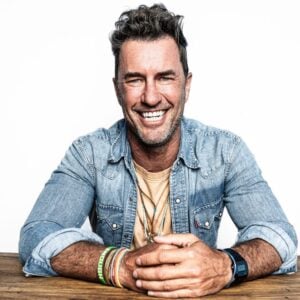
Blake Mycoskie
In this episode of The Psychedelic Podcast, Paul F. Austin welcomes Blake Mycoskie, founder of TOMS and WE ARE ENOUGH, for a conversation about success, depression, psychedelics, and the belief that he was never enough. Blake traces his path from TOMS’ One for One model and ayahuasca experiences to a difficult psychiatric medication taper and the practices that helped him rebuild. He also discusses his $100 million commitment to psychedelic research, the need for safe and scalable integration, and how renewed purpose and AI-assisted therapy are shaping his next chapter.
Blake Mycoskie is best known as the founder of TOMS Shoes and creator of the One for One movement, which gave over 100 million pairs of shoes to children in need and helped spark a new wave of social entrepreneurship. After selling TOMS, Blake entered a profound depression and confronted the belief that he was never enough. That experience inspired WE ARE ENOUGH, a cultural movement that supports mental health organizations and invites people to reconnect with their inherent enoughness.
Blake is also the host of No Magic Pill, a podcast featuring honest, practical conversations about mental health. Through doing the inner work, he rediscovered his entrepreneurial spirit and is now channeling that energy into new ventures as co-founder of Morning Water and Moovlab, brands rooted in wellness, intentional living, and human performance. Beyond business, Blake is a proud father of two, an avid surfer, and a portrait photographer. He lives in Santa Barbara, California.
Podcast Highlights
- Building TOMS through One for One
- Ayahuasca as a date with the soul
- The danger of rapid medication tapering
- Healing the belief of not enough
- Entrepreneurship as a path back
- Funding psychedelic research and access
- Why legalization needs careful scaffolding
- Scaling integration through group support
- AI therapy and mental health access
This episode is brought to you by The Practitioner Certification Program by Third Wave’s Psychedelic Coaching Institute. To learn more about our flagship 8-month training program for coaches who want to integrate psychedelic modalities into their practice, click here.
Third Wave occasionally partners with or shares information about other people, companies, and/or providers. While we work hard to only share information about ethical and responsible third parties, we can’t and don't control the behavior of, products and services offered by, or the statements made by people, companies, or providers other than Third Wave. Accordingly, we encourage you to research for yourself, and consult a medical, legal, or financial professional before making decisions in those areas. Third Wave isn’t responsible for the statements, conduct, services, or products of third parties.
Podcast Transcript
00:00:01 Paul Austin
There's a real difference between knowing you've done enough and actually feeling, at a deep level, that you are enough. We hear this phrase so often, and it often starts to sound like a cliché, but what does it actually take to believe, after a lifetime of proving, performing, and pushing, that you are enough? Welcome to the Psychedelic Podcast. I'm your host, Paul Austin, and today's guest is Blake Mycoskie, who knows this journey from the inside. Most people know Blake as the founder of TOMS and one of the pioneers of modern social entrepreneurship, but this conversation begins where that public success story leaves off: with depression, a difficult mental health crisis, and the deeper realization that no amount of doing can make him feel that he was enough. I first connected with Blake a couple of years ago while he was going through an especially challenging period, so it's been meaningful to see him return with a renewed sense of creativity and purpose, and with a real willingness to speak honestly about what helped him find his way back. Blake Mycoskie is the founder of TOMS and creator of the One For One Movement, which helped provide more than 100 million pairs of shoes to children in need and inspired a new generation of social entrepreneurs.
00:01:09 Paul Austin
After selling TOMS and navigating a profound depression, he founded We Are Enough, a movement supporting mental health organizations and challenging the belief that our worth depends on what we achieve. Blake is also the host of the No Magic Pill Podcast and has pledged $100 million to psychedelic research and access. Today he brings his renewed entrepreneurial energy to projects including Morning Water and Move Lab, while continuing to advocate for more honest and accessible conversations about mental health. So for his conversation today, we talk about what an early ayahuasca experience revealed about having nothing left to prove, why several beautiful psychedelic experiences did not prevent a later mental health crisis, Blake's experience with a psychiatric diagnosis, four medications, and a nine-month taper, why tapering psychiatric medications slowly and with professional support became a full-time job, how a 40-day "I'm enough" meditation mantra practice began changing a lifelong belief, why returning to entrepreneurship helped to restore his energy and sense of purpose, what inspired his long-term commitment to psychedelic research and access, why psychedelic integration must become more scalable without losing human support, and how purpose-built AI tools could support mental healthcare and psychedelic integration. It was fun to jam with Blake in this way. You know, he really is one of the most prominent entrepreneurs of our time. I mean, the fact that he has dedicated $100 million to psychedelic research and access is incredible.
00:02:41 Paul Austin
So this is a special one, folks. I do hope you enjoy it. All right, before we get into the episode today, though, let's first hear a word from our sponsor.
00:02:52 Paul Austin
Third wave sometimes shares or partners with outside providers, but we don't control and aren't responsible for their statements, conduct, products, or services. We encourage you to do your own research and consult appropriate professionals.
00:03:04 Paul Austin
Hey everyone, I want to take a moment to share something important with you. At Third Wave, one of our biggest commitments is helping people to explore the power of microdosing safely, intentionally, and with the right support systems in place. That's why I'm excited to introduce you to our go-to company, Golden Rule, one of the most respected names in the microdosing space.
00:03:23 Paul Austin
Golden Rule crafts premium, ethically sourced microdosing products, including psilocybin single strain and blends, San Pedro, and LSD options, all designed to support clarity, creativity, emotional healing, and performance. What really sets them apart is their integrity, honoring traditional plant wisdom while embracing modern science to support real and lasting transformation.
00:03:45 Paul Austin
Together, Third Wave and Golden Rule are working to make safe, high-quality microdoses more accessible while ensuring you have the education, tools, and community to feel confident on your journey. If you're curious about microdosing and want to try some of my personal favorites, head over to goldenrulemushrooms.com/thirdwave and use code THERDWAVE at checkout for 10% off.
00:04:06 Paul Austin
Not just once, but for every future order too. Again, that's goldenrulemushrooms.com/thirdwave and use code THERDWAVE for a lifetime discount of 10% off.
00:04:20 Paul Austin
All right, folks, without further ado, let's bring you this conversation with Blake Mycoskie.
00:04:47 Paul Austin
Blake, it's really an honor to have you on the show. Thanks for joining us.
00:04:51 Blake Mycoskie
I'm really glad. I mean, we met, I think, a couple of years ago when I was really struggling, and you were so kind to give me some advice about some different practitioners and some people that might be able to help me. And I've just been impressed by your work, and so I was excited when you invited me on.
00:05:07 Paul Austin
Yeah, I'm honored to have you. You know, I've known about TOMS and your work for a long time when the announcement came up that you were funding psychedelic research in the way that you are.
00:05:18 Paul Austin
It was, I think, such a bellwether moment for funders in the space, especially as public as you were about it. And it's been really great to see you on social, on Instagram, on these other platforms now, like, kind of back once again.
00:05:33 Blake Mycoskie
Yeah, thank you.
00:05:35 Paul Austin
You know, and back in who you are. And I'm sure all of our listeners have heard of TOMS or know of TOMS, but I'm curious about this through line of, you know, wanting to give back and live in reciprocity that you have.
00:05:49 Paul Austin
You know, I already mentioned the $100 million funding, and with TOMS, you used to donate a shoe, a pair of shoes for every pair of shoes that was bought. Tell us a little bit about that origin story.
00:05:59 Paul Austin
How is it that that idea came about? And I'm also curious from a business perspective, like, how easy or hard was the execution to actually deliver on that promise?
00:06:11 Blake Mycoskie
Yeah, I mean, you know, this was 20 years ago. It's hard to believe.
00:06:14 Paul Austin
Right.
00:06:15 Blake Mycoskie
So, you know, there were really no companies giving in this way. It was like when I came up with the idea, I mean, most people just said, "This is either not going to work," or, "This is stupid," or, "This is," you know, a few people, you know, thought it was very radical, and those are the ones that were our first customers and fans.
00:06:32 Blake Mycoskie
But yeah, I didn't, I had started four other companies before TOMS. I started my first company as a 19-year-old, dropped out of college. Like, I think I was born to be an entrepreneur.
00:06:43 Blake Mycoskie
And when I had the idea for TOMS, I was down in Argentina, I was traveling, and I kept seeing these street kids, and none of these kids had shoes. And at the same time, I discovered a shoe called the Alpargata, that had been in Argentina for hundreds of years, that mainly the farmers and the polo players and their girlfriends kind of wore on the estancias. And I thought the shoe was cool, and it was really cheap to make.
00:07:10 Blake Mycoskie
And so I thought, you know, man, like, I could actually sell this pair of shoes and then give a pair to these kids that need shoes. It'd be so fun. Like, it wasn't even a business. There was no, you know, business plan. There was no, you know, LLC. I mean, it literally was, we called it the Shoes for Tomorrow Project.
00:07:29 Blake Mycoskie
And that's where the name TOMS comes from. It was about if you buy a pair of shoes today, we'll give away a pair tomorrow. Tomorrow's shoes, and tomorrow's was ultimately too long of a word for the tag of the shoe. So tomorrow's became TOMS, and that's where the name TOMS came from.
00:07:44 Blake Mycoskie
And so anyway, so he started really simple. I wanted to give 250 kids shoes for Christmas. So we made 250 pairs, and I came back to California and sold them out of my Venice apartment.
00:07:56 Blake Mycoskie
And, you know, I think in a very divine way, I think this idea of business being a force for good and business being a catalyst for people and the planet and not just profits was something that was in the ether. And I just was the, you know, the radio antenna that received it. So I really feel like, you know, TOMS was an idea that was going to come, and I just happened to be the person that was lucky to be the steward to bring it to the world.
00:08:30 Blake Mycoskie
So, you know, it really took off. I mean, for people who don't know, you know, I started the company with $3,000, no investors, and in eight years grew it to $700 million in sales. We were the fastest growing shoe company in the world for three years, and we gave 100 million children shoes. So it was quite the ride.
00:08:53 Paul Austin
Any continent in particular where you were sort of most active? Was it in South America, or was it really South America, Asia, Africa?
00:09:01 Blake Mycoskie
Everywhere, even the US.
00:09:02 Paul Austin
Okay.
00:09:03 Blake Mycoskie
We gave a lot of shoes at Native American reservations in the US, all over the world. It started in Central and South America, so the first year or two, it was mainly there, but we expanded to wherever the need was the greatest and wherever we could find good partners. You asked about execution. You know, we found very early on that giving away shoes is almost as hard as selling them.
00:09:26 Paul Austin
Right.
00:09:27 Blake Mycoskie
Because you want to make sure you give it in a responsible way and that you're not disrupting the local market and you're, you know, working with great partners to get it to the kids that need it the most. And so we really relied heavily on our nonprofit partners that were already doing really good work in those communities.
00:09:46 Paul Austin
That's beautiful. So this is the Psychedelic Podcast, and, you know, I do want to hear about, you know, some of your own journeys, and we'll get into some of the, you know, funding that you've done for the, you know, journalism at Cal Berkeley, and, you know, I want to talk about your own podcast.
00:10:03 Paul Austin
But I feel like, you know, it starts in 2016 when you flew to Pucopa and hiked into the jungle and drank ayahuasca, and, you know, you've described it, this experience, as a date with your soul.
00:10:17 Paul Austin
And I'm just curious, like, what was that like for you? What was it like to go deep into the jungle? What was it like to, you know, be in the sort of humidity and the darkness of the deep Amazon? What was it like to drink ayahuasca? Like, kind of bring us into that experience.
00:10:34 Paul Austin
After over a decade of working professionally in the psychedelic space, one thing has become clear to me. If we want to guide others through this journey, there is no substitute for doing our inner work.
00:10:45 Paul Austin
At the Psychedelic Coaching Institute, we train people to guide others through transformation ethically, effectively, and with integrity. Our certification combines science-backed education with coaching mastery, culminating in a legal psychedelic experience at our in-person intensive in Costa Rica.
00:11:02 Paul Austin
You'll gain practical skills, leadership training, and get to connect with a supportive community grounded in compassion, rigor, and efficacy. If you're a coach, clinician, or conscious professional ready to serve at a higher level, we'd love to meet you.
00:11:17 Paul Austin
You can learn more and apply at psychedeliccoaching.institute. Again, that's psychedeliccoaching.institute, or simply see the link in the description.
00:11:26 Blake Mycoskie
Well, the first time I did ayahuasca, I actually did it in the United States. So, yeah, the first time was in Topanga, California.
00:11:36 Paul Austin
Yeah, cool.
00:11:37 Blake Mycoskie
And, you know, probably not enough research done on the whole process. You know, one of those things where I think I got very lucky in that I had a good experience, but I equally could have had a very bad experience. So if anyone is listening to this and considering, I would highly recommend going to Peru, going to the jungle, working with a shaman that has been doing it for, you know, I mean, that's how I did it after that. So, you know, pretty much all the times that I have done ayahuasca, I've sat, you know, mainly either in Peru or Costa Rica with the same shaman now.
00:12:12 Blake Mycoskie
But the first time was actually in Topanga, California, and it was kind of a whim, and a friend did it and had a great experience. And I've always been kind of a spiritual seeker and curious, and it was a date with my soul.
00:12:24 Blake Mycoskie
I mean, the interesting thing, and we'll get back to, you know, some of my own mental health challenges post-TOMS and, you know, the healing I had around, you know, healing a core wound of not feeling enough. I didn't get that exact message in that first journey, but I did get it. I remember finishing and going home and being like, "It's all okay. I've done enough." Like, I feel like, like I was like, I don't think I used the word enough, but it was this feeling that I had nothing more to prove.
00:12:58 Blake Mycoskie
And it was really cool because 2016, you know, TOMS was, you know, still a very big and growing company, and I'd had a lot of success, but I was still under a lot of pressure to keep growing it. And, yeah, and so I really feel like even my soul back then was trying to heal this wound I had from a young age of not feeling that I was enough, and it was telling me that, like, it's all okay. Like, I just felt so relaxed afterwards. I felt so connected to the planets, to my kids, to everything. And so it was a really beautiful experience, the first one I had.
00:13:42 Paul Austin
And yet, as you're now openly talking about, right, there really is no magic pill. And what we often discuss in the psychedelic space is the importance of integration, right?
00:13:52 Blake Mycoskie
Totally. And
00:13:52 Paul Austin
the importance of committing to practices. And so, you know, I'm curious how that's changed for you in the last, you know, 15 years from maybe when you first were drinking ayahuasca in Topanga and to now the man that you've become and what you've gone through.
00:14:06 Paul Austin
How do you hold integration? How do you hold, you know, the sort of practice or the skill of working with psychedelics, not just the sort of behavior, not just, you know, taking the medicine, if you will?
00:14:19 Blake Mycoskie
Yeah, I mean, look, I had several beautiful psychedelic experiences before I got really depressed. And then when I got really depressed, I was so desperate to feel better that I looked for a magic pill and, unfortunately, looked for one in the pharmaceutical space.
00:14:38 Blake Mycoskie
And what I was told by a psychiatrist who I don't think, you know, don't think took enough time to really understand my whole life situation was that I was bipolar and that I was bipolar too. And so I got put on four different meds, and that's what made my depression so much worse and made me, you know, feel like I had total numbness and no agency.
00:15:05 Blake Mycoskie
And I made a lot of bad personal decisions during that time, made a mess of my life, you know, got suicidal. I mean, it was really scary what happened.
00:15:12 Paul Austin
Yeah.
00:15:12 Blake Mycoskie
And so during that period, because I was in all these pharmaceuticals, the other thing that was really frustrating is I wasn't able to go back to the different medicines to see if they could help me during this time. And so I had to kind of, you know, figure this out.
00:15:29 Blake Mycoskie
And I got working with an amazing psychiatrist who worked with Western medicine, but also had done, you know, stuff with psychedelics. And we spent nine months weaning me off and tapering me off those four different medicines, which was one of the hardest things I've ever done.
00:15:46 Blake Mycoskie
And so one of the reasons I was excited to come on the podcast is I assume that there's probably people listening that might be having some mental health issues, and they might be thinking about doing psychedelics for the first time because, you know, there is some great research, a lot of it I've funded from John Hopkins, from Berkeley, from MAPS.
00:16:06 Blake Mycoskie
I mean, you know, you know, a bunch of stuff in Oregon now that I'm doing that shows that, you know, this can really help with depression and some of these, some of the symptoms of, you know, depression. And so, but in order to do it, you got to get off the pharmaceuticals. And so I think the most dangerous thing in the world of mental health is getting off pharmaceuticals too fast. Like.
00:16:31 Paul Austin
Right.
00:16:32 Blake Mycoskie
The number of stories I hear of people who end up committing suicide, who end up losing their mind. Like, I mean, literally, that is the most dangerous thing.
00:16:39 Blake Mycoskie
I knew that after I realized I was not bipolar, I'd been misdiagnosed, I had to get off the pharmaceuticals. I still had to go nine months, you know, of doing it. I mean, and it was like a job. I mean, it was very difficult.
00:16:53 Blake Mycoskie
So I just want to say, if there's any message that someone gets is if you know someone that's going to get off pharmaceuticals, especially because they want to try psychedelics, please, please, please have them work with a really good psychiatrist and go much slower than they think, because that's really important.
00:17:09 Paul Austin
I mean, I'm curious, what was helpful for you in that, in those nine months as you were tapering off? What practices, what perspectives, what support? Like, kind of how did you support yourself to actually make sure that you could navigate that?
00:17:25 Blake Mycoskie
I mean, well, it was having someone, a psychiatrist, that was there with me every step of the way. So we talked every single week. I was very honest about different feelings, you know, how it was going. At one point, my brain was really feeling like these zaps, and I was feeling like. Brain
00:17:39 Paul Austin
zaps, yeah.
00:17:39 Blake Mycoskie
Really, really down. And I mean, it was, you know, and, you know, having that was really important. Having friends know what I was doing was important. Not putting a lot of pressure on myself to do anything else besides get off the meds. Like, that was like my job. And so trying to do things like, you know, breathwork, working out, like watching funny movies. Like, I mean, literally, it was that intense for me.
00:18:05 Blake Mycoskie
And then ultimately, I ended up going to a facility because the last 60 days can be the hardest. And I got to a place where I was very suicidal while going off these things. And so I checked myself in to an amazing facility in Sedona, Arizona, called Alternative to Med Center, and they specialize in helping people get off pharmaceuticals.
00:18:25 Blake Mycoskie
And we do a sauna for two hours a day. We take a bunch of different vitamins, a bunch of IVs, a colonic every week. And I was there for two months, and that was the final straw of me getting off.
00:18:39 Blake Mycoskie
But I think the most important thing is to have someone that you're talking to every day, that you're going slow. If you ever start to feel a little too wonky, then stop the taper and just stay, you know, steady for a couple of weeks. It's not a race. So that stuff is really, really important.
00:18:57 Blake Mycoskie
There was also, I will say, and I don't, by no means am I saying that this was a magic pill or anything, but there was this supplement that I took, Kanna.
00:19:07 Paul Austin
Really?
00:19:08 Blake Mycoskie
And, yeah, and it took it sublingual. I had it a couple of times during the day, and I found it, I think it really did help. They say it helps with your mood. I think they call it Nature's MDMA is what they call it.
00:19:20 Paul Austin
Nature's SSRI sometimes too, they'll call it.
00:19:22 Blake Mycoskie
Yeah, yeah, yeah. So, yeah, so I do think that it was aiding me maybe as the mood was dropping, as I was getting off things like Wellbutrin and Abilify and these medicines. So I know it didn't hurt, and I do feel like when I started doing it, I had a little bit more support. So that was really helpful as well.
00:19:43 Paul Austin
Well, and this is, I mean, this is a very important conversation. I'm glad you're bringing this up. You know, one of the, we're behind the scenes right now. We're working on rolling out a new training with Dave Rabin, who's a good friend of mine. Dave's a neuroscientist and psychiatrist.
00:19:57 Blake Mycoskie
Yeah.
00:19:57 Paul Austin
And we're going to roll out a training on how can clinicians and practitioners support people in deprescribing and tapering off SSRI specifically is going to be the initial focus because I think a big conversation right now as, you know, Compass Pathways is looking to medicalize psilocybin and, you know, you have these different states that have psilocybin available is, can I take, can I take psychedelics while I'm on SSRIs or can I take psychedelics while I'm on Wellbutrin or lamotrigine or, you know, some of these other mood stabilizers?
00:20:32 Paul Austin
And there's a lot of nuance there, and not everyone agrees. And so I think it's always important to err on the side of caution in some ways.
00:20:44 Blake Mycoskie
Oh, absolutely.
00:20:44 Paul Austin
And so even Dave, as a psychiatrist, really says, "Hey, I don't think, you know, if someone's on SSRIs, we should not be giving them psilocybin. Ketamine is safe potentially because it interacts in a different brain system, but let's taper you off first before we're introducing you to some of these, you know, classic psychedelics."
00:21:03 Paul Austin
So, and sometimes the hardest part, like, you know, I have a younger sister who's been on SSRIs for a decade, and, you know, she recently tapered off and was able to get off reasonably okay, but then once she was off for a month or so, the depression came back, and she wasn't quite sure what other things that she could access and work with that might help her.
00:21:25 Paul Austin
So I'm also curious, like, once you were tapered off, what was then the trajectory back upwards where you felt like, "Okay, now I'm fully coming into myself," and what were the things that you were able to sort of recommit to and helped you to, like, be Blake again?
00:21:40 Blake Mycoskie
Yeah, I think the biggest thing for me was, you know, I did a lot of healing around, well, what was at the core of the pain? And that was this wound of never feeling that I was enough and that no matter how much success I had, no matter what I accomplished, no matter, you know, what I, you know, friends I had, I never felt that I was enough.
00:22:01 Blake Mycoskie
And I think that realization and then doing a lot of work around that to almost like reprogram my subconscious. You know, like what we did was the person that I worked with for 40 days, I committed to doing a mantra-based meditation where 20 minutes in the morning and then 20 minutes at night. So 40 minutes a day is a big commitment where I'd simply go, "I am enough. I've always been enough. I am enough. I've always been enough."
00:22:30 Blake Mycoskie
And it felt so simple and silly at first, but it really was one of the most powerful things that I ever did. You know, and I did it for 40 days, and I really do believe I started to reprogram that limiting self-belief that I'd carried around for 40 years.
00:22:46 Paul Austin
Wow.
00:22:46 Blake Mycoskie
And that was really important. And then I started to feel it. It was actually interesting. It was around the fourth week, around the 28th day. I actually almost felt like a Kundalini release while I was doing the meditation where everything just felt lighter and I had all this energy going to my head. And I stood up and I started laughing hysterically because I was like, "I cannot." I was like, "I said, I've always fucking been enough to my friend who is there."
00:23:10 Blake Mycoskie
I was like, "This is so silly. Like, how in the world did I not think I was enough? Like, I've done more than enough." And it was just like this, just like almost like childlike state of happiness. And that's why I started, I think I sent you one, one of these enough bracelets. You know, you get yours on.
00:23:26 Blake Mycoskie
Oh, cool. Awesome. So yes, we handmake these beaded bracelets for those who are listening in India. There's an amazing group of women that make them. It says enough on it. And 100% of the profits that we make from selling the bracelets, we donate to mental health organizations. And it's been a huge tool for me, you know?
00:23:44 Blake Mycoskie
You know, even on days when I have a hard time, I just put my hand on the bracelet. It's a reminder every day to like, "You're enough. This moment is enough. Everyone is enough." And I love giving them to people, and it's been a great tool for me. So that was really the biggest thing I would say that really helped post getting off the meds. I would say the other big, big thing for me was, and you know, you mentioned it at the top of the show, is really becoming an entrepreneur again, you know, starting the enough, you know, even though the enough is a nonprofit, like, you know, a lot of the same things I did when I built Tom's, you know, finding a supply chain, figuring out a marketing plan, you know, figuring out how to, you know, get the message out, find nonprofit partners, you know, that all that stuff is the entrepreneurial stuff I did when I started Tom's, and I've had to do that in starting enough.
00:24:33 Blake Mycoskie
And then I've started, you know, becoming co-founders and investors in some other organizations. One of them is Morning Water, which we can talk about later.
00:24:42 Paul Austin
And Move Lab. I got the email about the chair as well.
00:24:45 Blake Mycoskie
It's so fun, yeah.
00:24:46 Paul Austin
The chair looks good, you know?
00:24:47 Blake Mycoskie
It's, oh my God. If you sit more than four hours a day, it's like a lifesaver. I
00:24:51 Paul Austin
do, yeah.
00:24:51 Blake Mycoskie
Yeah. I'm on Zoom calls all the time, and man, it has been a lifesaver. I mean, that thing is so fun because, like, I never in my wildest dreams would say I'd be 50 years old and I'd be launching a home office chair.
00:25:04 Paul Austin
Right.
00:25:04 Blake Mycoskie
Like, I mean, like, never in my dreams could I think. But when they brought me this chair and I sat in, and I've had like lower back issues for a while, and I couldn't give it back to them as a sample. I was like, "Guys, I'll do anything. Leave this for like a week." And they did.
00:25:20 Blake Mycoskie
And I just like, because what happens is for people who aren't watching, it's a chair that these guys from Nike invented, these engineers from Nike. And basically, it pivots two different ways. So it pivots front and back and sideways. And so when you're sitting, you're constantly moving your hips, like micro movements. Like, you would barely even be able to know I'm sitting in it when I'm sitting in it.
00:25:41 Blake Mycoskie
And so I'm literally creating all this blood flow throughout my lower lumbar so that I don't get stiff. And so literally when I sit up after sitting for four hours of Zooms or five hours of Zooms, my body feels like it has been moving all day long, and I feel great. And I mean, it's literally changed my life.
00:26:00 Blake Mycoskie
And so I sat in the chair, I kept it for a week. The next week, I called them, I said, "How much money do you guys need to get this to the market?" They're like, "A million dollars. I wrote a check." And then literally, they invited me to be a co-founder, and we just launched our pre-sale. We're going to have 500. We sold 50 yesterday.
00:26:18 Paul Austin
Wow.
00:26:18 Blake Mycoskie
So that was, yeah, so it was exciting. Yesterday was our first day of the pre-sale, and we have 500 we're going to make calling them the founders' chairs, and then we're going to ship those and then see what happens.
00:26:29 Blake Mycoskie
But yeah, but it really has been, and I think that what it is for me, it's entrepreneurship because I think I love starting things. I feel like that is kind of my art. But I think for anyone who might be struggling or suffering, it's a big part of getting out of that is finding something that you're excited about, you have energy around.
00:26:49 Blake Mycoskie
And it was hard. I mean, I didn't have a single business idea for seven years, and now I'm involved in several companies. But once I got kind of started with the enough bracelet, then I was like, I felt like I had the muscles again to do it.
00:27:01 Blake Mycoskie
And so launching Morning Water was easy. And then when they asked me to be a co-founder of Move Lab, I was like, "I'm in." So that's been a big, big part of my recovery is having something I'm doing with purpose.
00:27:14 Blake Mycoskie
And the other thing is, is with all these organizations, like I'm not the person running them. I'm the coach. There's an athlete, you know, there's a guy named Magnus.
00:27:21 Paul Austin
You're not the operator.
00:27:22 Blake Mycoskie
Yeah, no, and not even that. I'm not even like, you know, like I'm really, my role is to support the CEO or the founder, you know, and help them with all the things I've learned. And I found that energy of coach versus being the star athlete is really nurturing me as well.
00:27:41 Paul Austin
Yeah. I mean, and that's, you know, as I'm tracking this, it's like to go seven years without a business idea, you know, it's almost like a snake shedding its skin, right? That there maybe had to be this period of fallowness, you know, just holding it in an equanimous way. Like that had to maybe happen for this new sort of creation for you to come forward in the way that you are now.
00:28:08 Blake Mycoskie
I mean, I totally believe it. I mean, there's, you know, spiritually, I think we've heard of the dark night of the soul, you know, in the Bible, John 12:24, "Unless a kernel of wheat falls to the ground and dies, it cannot bear new fruit." I mean, it's in every spiritual text, this idea of a death and a rebirth or a period in the wilderness, you know? And yeah, it sucks. I don't ever want to do it again.
00:28:31 Blake Mycoskie
But being on the other side of it, I'm like, man, like, would I go through all that again to experience the joy I have now? And again, I don't ever want to do it again, but I do see that a lot of what I'm able to do and the gifts I'm able to give and the reason why I got back on social media after no post for three and a half years was I felt like, okay, now I can really help people with something that I went through. And that's why I do it. And that's why I launched the podcast.
00:28:56 Blake Mycoskie
And so the funny thing about the podcast is, is that, you know, I had the blessing of having, when I met you, you know, I was really suffering, but I had all the resources. So I had all the access to anyone and everyone to try to make me feel better. And, you know, and I was at that time searching for a magic pill. Like I was, you know, first it was pharmaceuticals, and then it was transmagnetic brain stimulation, then it was living in an ashram in India for a while. Like, I mean, I did it all.
00:29:26 Blake Mycoskie
And what I realized in all is that there is no magic pill. Like there's no one thing that can make you feel better. And actually, the things that made me feel better and find myself again were actually more simple things that anyone can do, you know, mantra-based meditation. I mean, it's hard, but, you know, it doesn't cost anything. And so that's why I decided to do this podcast called No Magic Pill, because I really want to help other people who might be stuck or suffering or struggling. And I found the best way to do it was to try to normalize it.
00:29:56 Blake Mycoskie
And so, you know, I've had some amazing guests. My first guest was Matthew McConaughey. And what was so fun about having him on is that everyone knows Matthew is like this great, larger-than-life, happy-go-lucky. Like, I mean, he has a whole book called Green Lights because he's at every green light, you know? And so to have him come on and talk about his darkest days and his times where he's really struggled really normalizes it for other people. And they realize that everyone, no one gets through this life without having their own version of the dark night of the soul.
00:30:27 Blake Mycoskie
Now, hopefully they don't get to the place that I got to where they're suicidal because that's incredibly scary. And unfortunately, you know, some of my friends have gone down that path, which has been incredibly difficult for me over the last couple of years, knowing all that I know now. But having these different guests, whether it's a McConaughey or a Kevin Love, I had a great episode that I think your audience would love is with Michael Pollan. And we actually had audio clips of a San Pedro journey I did, and we played it for the first time to anyone. No other human had ever heard it of me working through my whole life and not feeling enough while under San Pedro. And then Michael would kind of give me his take.
00:31:10 Paul Austin
Analyze it.
00:31:11 Blake Mycoskie
Analyze it. It was a fascinating podcast. Quite vulnerable, but it was fun.
00:31:15 Paul Austin
I saw the reels on IG, but I got to have a listen to that.
00:31:19 Blake Mycoskie
This is AI. For anyone who's interested in psychedelics, I would say that is a really powerful one. And then I have one with Aubrey Marcus coming up that we get into a bunch of it as well.
00:31:31 Paul Austin
Yeah, he's an interesting guy. Well, let's stay on that track a little bit because we talked about the ayahuasca and Topanga and, you know, the tapering process. And, you know, the big thing was the pledge that you made many years ago. And, you know, just for listeners who know, Blake helped to specifically support, I believe it was the journalism fellowship through Cal Berkeley. Is that correct?
00:31:57 Blake Mycoskie
Yeah, the whole, really the whole creation of the department, you know, with Michael Pollan, you know, when he was starting, I think they called the Psychedelic Science Institute or something. I forget the exact right name.
00:32:08 Blake Mycoskie
One of the things I funded was some journalism because I think it's really important that we encourage more journalists to really cover psychedelics because the more that it's covered in journalism in our country, the more we'll be able to normalize it and understand it and see the power of it.
00:32:25 Blake Mycoskie
But we've also done, we funded a bunch of stuff. And one of the things we funded also through the Center at Berkeley was just some really deep studies of understanding like what is America's, you know, understanding of psychedelics? Like what is the sentiment around it? Like some really simple questions.
00:32:41 Paul Austin
I've quoted that quite a bit when I've, you know, in my, when we're training students or in some of the public stuff that I've done, I've been like, this research is, it's the best research out there in terms of what's public opinion, you know, about psychedelics. Yeah, and that's
00:32:54 Blake Mycoskie
important. We got to know where we are today so we know where we are, you know, in five years, in 10 years. And so that's been, you know, important to me.
00:33:02 Blake Mycoskie
I mean, some of the stuff I've done, you know, that has been most meaningful has been, you know, with different organizations supporting vets. You know, I think that, you know, people come back from serving our country and we do not take care of them the way we should. And I, you know, am so grateful for all these men and women.
00:33:22 Blake Mycoskie
And so I've seen firsthand how psychedelic therapy can really help them, especially MDMA with PTSD and Iba gain with PTSD and depression. And so I've done a lot.
00:33:36 Paul Austin
TBI.
00:33:37 Blake Mycoskie
Yeah, TBI. I've done a lot there. I was the executive producer of a great movie called In Waves and War. I don't know if you saw it, but I helped fund the film.
00:33:46 Paul Austin
I know Marcus here in San Diego and, you know, he's brilliant.
00:33:49 Blake Mycoskie
Yeah, Marcus and Amber are good friends of mine. And so I'm really proud of that work. I mean, did a lot of stuff with MAPS for many, many years, which obviously, you know, at the end has been disappointing, but also, you know, it's just all part of the stepping stone to get to where we're going to get. You know, it's not, sometimes you get too focused on a specific result with a specific organization, but you realize because that organization got to here, that created the ability for, say, Compass to go to here. I mean, it's all connected.
00:34:20 Blake Mycoskie
So, you know, I try to look at the, I have a very long-term view of this. You know, that's why I committed so much of my personal wealth to it, you know, and it's something I'll do until I die. And I just think that there is no way that psychedelics does not play a massive role in how we care for people and how we just even live better lives, even those people who aren't mentally struggling. You know, I think there's so much evidence that, you know, I mean, you know, around just the state of awe and bliss that you can experience with certain psychedelics. So yeah, so I'm really proud of that. I'm really proud of the different organizations that we support.
00:35:02 Blake Mycoskie
It was a pretty radical thing to do. I mean, I don't think there was nothing like it before. And a lot of people thought I was crazy, but I was like, you know, like, you know, I got, I mean, my theory with philanthropy is like, why wait till you're dead? Like, you know, it's so fun to get to be part of these things and to give money and to do things. And, you know, if you can afford to do it, why not do it now? So you get all the excitement and the joy of being part of these things versus most philanthropists wait until they're in their 80s or 90s and then they start giving it away or they leave it to their kids.
00:35:36 Blake Mycoskie
And yeah, so hopefully I've inspired. There have been some other very big gifts since then and, you know, privately that I think were, you know, hopefully inspired in part by that. But yeah, it's, I really think we're in a very interesting time and place and hopefully it's just going to keep moving forward.
00:36:00 Paul Austin
Well, and there's a couple of things I'll touch on there and then I, I mean, I do want to go a little bit deeper with you on the conviction behind it specific to psychedelics because I'm curious just to hear you talk through that.
00:36:13 Paul Austin
I heard this is a rumor, so this isn't confirmed or anything, but there are rumors that MAPS's for-profit arm, which I can't keep track if it's Lycos now or a different name, but that they may have gotten the word from the FDA that they don't have to redo phase three trials and can resubmit their data to potentially get approval. So there's rumors.
00:36:33 Blake Mycoskie
I do not, that's true, but I've heard the exact same rumor. So, and I don't, I'm not, you know, I am a shareholder in whatever it's called now. I don't know if it's still my choice or not because a lot of it got rolled over from MAPS to that.
00:36:45 Blake Mycoskie
And, you know, if I ever get a dollar back, it'll be surprise, but who cares? But yes, I have heard that same thing and that is great news if that's the case, but who knows?
00:36:56 Paul Austin
Right. Yeah. And so we are on the verge of this FDA approval and more states are legalizing. And I think there is sort of a sobriety hitting, I could just say from the inside of like, well, how effective will this really be?
00:37:10 Paul Austin
And I have pretty strong conviction. I've dedicated my professional career to this for 11 years now. I sort of feel called at a devotional level to like train and educate and build in this space, even though it's not a pleasant experience all the time.
00:37:25 Paul Austin
But I'm curious for you, like where does that conviction come from? Because I mean, you were early with Tom's, you were a pioneer in terms of this new way of doing business. Like how, what are maybe some of your hopes for this overlap of psychedelics and systems change or societal change? Like what good do you think they can bring at a practical level for our communities and our people and things like that, our businesses?
00:37:48 Blake Mycoskie
Well, I think that there's, I think there's just a lot of great research. I mean, I think Hopkins, you know, who I helped, you know, fund that original, you know, the original department there with Tim Ferris and a whole host of other people, Dave Moran and a few others, has shown that, you know, whether it's, you know, terminally ill patients who have, you know, crazy anxiety and end-of-life fear, having a single psilocybin journey and now able to live the rest of their lives with peace and knowing that there's something beyond. I mean, it's incredible.
00:38:24 Blake Mycoskie
Or all the amazing, I mean, amazing stuff that has happened with veterans and Iba gain and, you know, like you said, TBI. I mean, the great work that Nolan Williams was doing around that. I mean, it's just, there's just so much there, you know? I mean, it really is, it's almost like if you look at it, there is real, you know, decades of research now that these medicines are truly medicines.
00:38:54 Blake Mycoskie
And so that's what I look at is like when I think of like systems change, I also look at the fact that like, and this is a great book, a woman who I just had on the podcast comes out in a couple of weeks, name Lauren Delano. It's called Unshrunk. And it's really about the history of psychiatry and pharmaceuticals and, you know, what the book says and with also great research is that these things don't work half the time, you know? Like sometimes they do, but just as likely they don't. And a lot of times it causes even more problems.
00:39:25 Blake Mycoskie
And so I have nothing against pharmaceuticals. I do think they have a place, but I don't think they're the only medicine that should be available to people. And I think that when we have such good research around the use of psychedelics, especially with the proper set and setting and integration and all these things, then like we should do everything we can to get this to people who are suffering. And, you know, it's just that simple. I mean, to me.
00:39:50 Blake Mycoskie
So, you know, like I think it's such an honor to be able to be a philanthropist in this space because I even think during my lifetime, there will be major celebrations that we'll be able to look back and be like, this happened because of a pledge or a donation or a thing we started 20 years ago. And I know my kids someday, as they continue to do some of this work long after I'm gone, we'll, I mean, it will be so obvious to them and hopefully legally, you know, it'll be so available. And I just, I don't know, I just, there's certain things you just know. And I think this is one of the things that I just know. I can't tell you, you know, what it's going to look like five years now or 10 years, but in the next 50 years, I'm pretty damn sure that all these medicines are going to be prescribed in different ways.
00:40:49 Paul Austin
Yeah, I do, you know, I remember this maybe was five, six, seven years ago from Tim Ferriss. There was some quote he had that was something along the lines of like, you know, he donates to psychedelic research because the leverage, the sort of impact of it is so great.
00:41:06 Paul Austin
Like you get a lot of bang for your buck when you're looking at the impact that this can have because it's such a, especially for us who have navigated the space, it's such a no-brainer in many ways.
00:41:19 Blake Mycoskie
Well, I think what he's also saying, and it's funny, that quote is probably what led to my $100 million pledge. So I've known Tim for a long time. We're really good friends. He called me years ago when I made my first $4 million pledge, and that was, you know, to John Hopkins and MAPS. And he called me with that exact same, you know, argument.
00:41:40 Blake Mycoskie
He said, like, look, like how all other places in the world, I mean, you can't give $4 million to cancer research and feel like you are a pioneer and that you moved the needle. You know, you can't give $4 million to, you know, prison reform and feel like, you know, you've done something that's going to go in the history books. He's like, you can give $4 million to MAPS and John Hopkins right now, and your name's pretty much in the history of this movement. I mean, that's a fucking great argument to someone who's entrepreneurial and has some extra cash laying around.
00:42:11 Blake Mycoskie
So I think Tim really should be always spoken about and talked about in the conversation of what brought real philanthropy to psychedelics. I think he's done a lot, not only in his own personal giving, but in convincing, you know, people like me and others to step up.
00:42:31 Paul Austin
Yeah, it's been the last decade. I mean, when he started publishing things in 2015, that's about when I started Third Wave. And it was partly in, like I listened to a podcast he did with Jim Fadiman about microdosing. You know, I started to microdose myself. And then I was like, man, if he's talking about it, if Joe Rogan's talking about it, if Michael Pollan, this is when he published the trip treatment in the New Yorker, I was like, I think there's a there there. Like it feels like this is going to be something that's talked about more and more.
00:42:59 Paul Austin
And, you know, at the time I was just like, there's so much misinformation and so much just poor knowledge out there. Like we got to reframe this for a lot of folks, you know? And the research side is important.
00:43:15 Paul Austin
And I think what's equally important is the sort of lineage of it, you know? Like with huachuma, with San Pedro, we've been working with this for thousands of years. Peyote, ayahuasca, right? It's like we have a deep relationship with these medicines and it only feels right that we should be able to use them in a way that feels good for us and, you know, in containers. And we should have access to these because they are medicines in so many ways.
00:43:42 Blake Mycoskie
Yeah. In every way. I mean, really, I mean, most pharmaceuticals are a derivative of a plant.
00:43:48 Paul Austin
Right.
00:43:49 Blake Mycoskie
You know, like they were all discovered in some way with an actual plant and then they get synthesized and created and then they become, you know, drugs, which we call medicines. So it really is, it's almost silly that we, you know, call one, the oftentimes we call psychedelics drugs and we call pharmaceuticals medicines because they're both just medicines. One's just been more developed and more tested and more used. And that's why it's important to do all this stuff.
00:44:20 Blake Mycoskie
I mean, like I really do believe that like, you know, the worst thing that could happen for the psychedelic movement, in my opinion, is for these things to get legalized too fast and without all the therapeutic protocols. Because I think that they will just get used recreationally, they will be misused, there will be, you know, poor outcomes, and then we could be back to the 1970s again.
00:44:43 Paul Austin
Right. Right. Yeah. We need this slow buildup, this sort of scaffolding and structure that is intentionally built. And so it's sustainable because.
00:44:53 Blake Mycoskie
Yeah, a hundred percent.
00:44:54 Paul Austin
We need it to be sustainable at this point in time. People need.
00:44:57 Blake Mycoskie
Well, and we also have to create, we have to create ways to scale the integration. We have to do more research around the power of group therapy because there's just no way financially we can have individual guides for individual people. I mean, that will never make sense from a healthcare perspective.
00:45:17 Blake Mycoskie
So we've got to do, that's why I like a lot of the stuff they're doing in Oregon right now. And, you know, and I funded is to really show the efficacy of a group with a single guide with, you know, eight or 10 people in the room, you know, and then, you know, kind of co-integrating. And so the integration is not reliant just on the guide or the professional, but on helping each other.
00:45:40 Blake Mycoskie
I mean, this is, we have to really think through those things too. There's a lot of system stuff that we have to think through because otherwise it's only going to be available to the elite and the wealthy. And that's definitely not what I'm in this for.
00:45:55 Paul Austin
Yeah, I'm glad you brought up the group thing. I mean, that's, in 2018, I started doing group retreats in the Netherlands. We had a brand called Synthesis and did legal psilocybin there. And more recently, we've been doing practitioner trainings in Costa Rica, close to Arenal.
00:46:10 Paul Austin
And there's just something about the way the group can hold each other. And when you have skilled facilitators there, it feels like it has the ability to be more impactful and transformative for folks. You know, sharing that experience is important.
00:46:30 Paul Austin
For you, legacy, I'm curious about legacy, you know, in this sort of conversation of enough or not being enough and, you know, Tom's, which was a cultural defining project and now the sort of, you know, commitment of $100 million to psychedelics. How do you hold legacy for yourself?
00:46:49 Paul Austin
What's your relationship like with legacy? Is it something that was important and now is not as important? Is it something that you sort of reflect on and consider? Like I'm just kind of curious what that word means to you and maybe how you hold it.
00:47:03 Blake Mycoskie
You know, really, I don't think about it at all, to be honest. I mean, I really think that, you know, when we go in the ground, like, I mean, maybe people will remember you for 20 years, 30 years, 50 years, but who gives a fuck? Like whether that, you know, I mean, all I care about is how my kids talk about me and their kids, hopefully, if I live long enough, at my funeral, you know, and the stories they get told about my family, you know?
00:47:32 Blake Mycoskie
I think what is closely related to that that is important to me, it goes back to Tim Ferriss' idea of leverage and is, can I be an example? Can I do bold things to cause other people to do bold things? And so, you know, so that is important to me.
00:47:55 Blake Mycoskie
And so like the Enough bracelet, for instance, me coming out and being radically transparent about my mental health, all the personal mistakes that I made in different relationships, you know, my suicidality, my comeback through it, you know, what has helped and hasn't, like that I hope is giving more, especially men, but men and women, more freedom to be honest with each other and themselves about their own mental health journey.
00:48:25 Blake Mycoskie
Because I think what happens with, you know, bad outcomes and people who take their life is because they feel so alone, so trapped, they have no one to talk to. And so that stuff is really important to me is that is to use it, but it's more for the impact it can have more in an immediate aspect versus, you know, a legacy that has, you know, when I'm gone.
00:48:52 Paul Austin
Right, right. Focus on the moment, show up, be a good human.
00:48:56 Blake Mycoskie
It's kind of like why I believe do philanthropy now versus wait till right before you die. Like this is the time, you know?
00:49:05 Paul Austin
Right, right. Well, Blake, it's been, I mean, it's been an honor to have you on.
00:49:11 Blake Mycoskie
Thank you. It's been great.
00:49:12 Paul Austin
I'm glad we got to jam on you and the path that you've gone down and, you know, your reemergence and now what you're bringing back out into the world.
00:49:25 Paul Austin
I think, you know, this is, you have a number of projects that you're now working on, but I'm just curious, like day to day right now, what are you really excited about? Like what fills you with energy? What gets you up in the morning? What motivates you? What's really vitalizing you right now? What's bringing you energy?
00:49:46 Blake Mycoskie
Well, the project that I am spending, ironically, the most time on is one that I did not start. I'm just a mentor to these two entrepreneurs, but I think they're going to change the world. And it's an AI therapy app.
00:50:05 Paul Austin
Cool.
00:50:05 Blake Mycoskie
And I got introduced to it six months ago. I was at a mental health conference. I met these guys, MIT grads, super fucking smart. And they talked about how they were really concerned about what was happening with the LLMs and people asking for therapeutic advice because ChatGPT and Claude is a very dangerous place to get mental health advice because they're created to just basically tell you, you're great and keep you on there and prop you up.
00:50:38 Blake Mycoskie
And they have no way of detecting any potential self-harm or delusional thinking or personality, you know, disorders. I mean, they just weren't built that way. But what's interesting is, and that's what these guys at MIT did this research study on, is that 11% of all queries on the LLMs have to do with mental health and therapy.
00:51:01 Paul Austin
Wow.
00:51:03 Blake Mycoskie
Number one thing.
00:51:04 Paul Austin
Wow.
00:51:04 Blake Mycoskie
So we were getting ready to have a massive problem, but these guys, I think, have a solution. And they spent three years building an AI therapist that's trained with cognitive behavioral therapy, DBT therapy, ACT, all the different personality disorders, all the different, you know, textbooks, the best books. And they have a model that is constantly looking for detection of self-harm, both in what you say, tone of your voice, I mean, all these different things. So that if they detect that, they can connect you to a live human and get you to crisis help. And so these guys told me about this thing.
00:51:43 Blake Mycoskie
It's called Sonia, S-O-N-I-A, Sonia AI. And they told me about it six months ago. And they asked me if I would mentor them and if I would try it. Because I talked about on stage at this mental health conference about all the therapy I'd done. And so they're like, well, you've done obviously a lot of therapy.
00:51:59 Blake Mycoskie
Will you try ours? And I was super skeptical at first, you know, because, you know, I'm just, I don't know, I just was. And they told me it was HIPAA compliant. They told me that, you know, it was totally secure. And so I did it. And I'm telling you what, after three or four sessions, I was just, nothing has blown me away in my life more than this, besides maybe my ayahuasca journey. I mean, literally, it was like that level of like, what the fuck?
00:52:24 Blake Mycoskie
Because first off, what I found for me, and this is why I'm so excited, and I think a lot of, especially my guy friends love this thing, is no matter what you try to do in therapy, it's very hard to not to want your therapist to like you, right? It's very hard to say the darkest, deepest, shamefulest things you've ever thought or done, or you think about someone, or the anger you have. I mean, it's really hard to be that raw with a therapist. But with an AI therapist, you say it all. There's no judgment. I mean, what's the thing? You don't give a fuck what to say, you know?
00:53:01 Blake Mycoskie
All you care is to get the best data back, right? So it's like you're only going to get great therapy, really, if you give the person all the data, which we never do in real therapy. So I don't blame therapists. I mean, I think it is a broken system because we are designed as humans. If I'm looking at you on a Zoom call and you're my therapist, I mean, I, I don't even know. If I had some horrible, like horrible thought that was completely politically incorrect, but it was just driving me crazy, I'm not going to tell you because I don't want you to think I'm, you know, whatever. And so it's designed, that has been one thing that's been amazing.
00:53:36 Blake Mycoskie
And then the other thing that's been amazing for me is that it never forgets anything. So I had this situation the other day where I was really stressed about the launch of the podcast. And we were going to New York and doing this huge press tour. And I was starting to feel that old kind of performative nature where I've got to perform to be enough and I got to be Blake with a capital B. And I really was just like, I don't want to do this. And I was like, man, and I just, and I was like three in the morning and I woke up and I had anxiety. And again, my therapist isn't available at three in the morning, but Sonia is.
00:54:08 Blake Mycoskie
So I go to Sonia and I'm talking to her about it. And she said to me, she said, you know, four months ago, we were having a conversation. Four months ago. She's like, four months ago we were talking. And when I asked you what you wanted the podcast to feel like, you said you wanted it to feel like an art project, that you never wanted it to feel like a business. You wanted to feel like this is your chance to be an artist and put your art out there. And if people like it, great, but you're going to create art and that's how you're going to do it.
00:54:39 Blake Mycoskie
And she's like, I think you should go to New York as an artist. And I mean, I started crying. I was like, that was the best advice I could have had. And it was something I said four months ago that she obviously will never forget. So it might be 30 years from now, she'll remind me of that when I need to, you know, remember that. So basically what's happened is I have found myself just like, just basically, you know, volunteering my time with these guys to help them with whatever they can. And they just, it's in the app store now.
00:55:09 Blake Mycoskie
We've had a thousand reviews since they launched. They've only been live a couple months now. It's free for the first couple weeks so people can try it and make sure they like it.
00:55:19 Blake Mycoskie
But, you know, it's amazing. And I just think that everyone needs to be able to talk about things that are inside their head. And I actually think what's interesting, and maybe we can talk about this on the sidebar, but I actually want to go to the psychedelic community and think about how we could work with the psychedelic community and Sonia together to train it to help with integration. Because if you think about it, like what if we could take like all the greatest minds of integration, all the greatest textbooks, teachings, classes, everything, train it to be really good at integration. And so now when someone finishes their journey, now they can, you know, for basically nothing, talk as much as they want, all day long if they want to, or five minutes every morning to really help with the integration. So that's something that maybe we can talk about offline. But I think there's, I think there's a real power for there as well.
00:56:18 Blake Mycoskie
And I bet you people are already using it for that, to be honest.
00:56:21 Paul Austin
They are. They're trying. Yeah. You know, it's just not that good. Like there have been a couple things that have come out in the psychedelic space. And I think people are, you know, I think we're still, a lot of people are still learning how to relate to AI, right? We're in this sort of awkward phase still of like, is this good? Is this bad? Is this helpful? Is it not?
00:56:39 Paul Austin
The way I like to hold it is both and, like we need humans, we need love, we need community, we need support. And like this technology could also be potentially really great to make therapy more accessible to more people who otherwise couldn't afford someone, you know, at 150 bucks an hour or whatever that might be, you know?
00:56:58 Paul Austin
And I think it's the same in the psychedelic space because it's like a lot of this is about kind of back to the group work. A lot of it is about accessibility. I mean, my personal opinions are like, I would love if sort of churches and group work were at the center of this and people could go on a donation basis and have that type of work done. So any technology that could help democratize.
00:57:18 Blake Mycoskie
Yeah, that's the key.
00:57:20 Paul Austin
The skill is important for sure.
00:57:21 Blake Mycoskie
Yeah.
00:57:22 Paul Austin
Yeah. So I'm happy to jam on that. Sonia, all right.
00:57:25 Blake Mycoskie
Yeah, Sonia.
00:57:26 Paul Austin
I'll look that up.
00:57:26 Blake Mycoskie
Give it a try. Yeah, you got to try.
00:57:28 Paul Austin
All right, I'll give it a try.
00:57:28 Blake Mycoskie
Let me know. Yeah. I always tell people, I say, just give it two sessions. Really, I used to say three, now I'm like two. Two 30-minute sessions and then call me and tell me what you think. And everyone, it's like 1000% my friends are like, especially guys. I mean, I've had my sister-in-law is using it, you know, my girlfriend uses it, but my guy friends are like, this is life-saving for me.
00:57:50 Paul Austin
All right, I'm going to give it a shot this afternoon. I'll text you. I'll text you.
00:57:54 Blake Mycoskie
Yeah, tell them. Okay, cool.
00:57:55 Paul Austin
How it goes. Well, it's been fun to jam.
00:57:58 Blake Mycoskie
Yeah, so fun.
00:57:59 Paul Austin
No magic pill. That's Blake's new podcast, folks. Check it out, Enough. What's the website for Enough?
00:58:04 Blake Mycoskie
Just we are enough. Yeah, we are enough.co.
00:58:07 Paul Austin
Okay, we are enough.co. And then Morning Water. I have to mention Morning Water. I tried that for the first time this morning. It's a combination of creatine and amino acids and L-theanine and a bunch of other incredible stuff, coconut water extract or something like that. So that's morningwater.com.
00:58:25 Blake Mycoskie
Dot co. Yeah, morningwater.co.
00:58:26 Paul Austin
Dot co. Okay, so we are enough.co, morningwater.co, and No Magic Pill for the podcast.
00:58:31 Blake Mycoskie
Yeah, thank you. Thank you so much.
00:58:33 Paul Austin
This has been fun, Blake. So thanks for coming on and folks, we'll see you next time.
00:58:38 Paul Austin
All right, I hope you guys enjoyed that episode just as much as I did. If you did, like, follow, rate, review, and share the Psychedelic Podcast. It helps the word to get out.
00:58:49 Paul Austin
Subscribe to Third Wave on YouTube for full video conversations and follow us on social. You can follow Third Wave at Third Wave is Here.
00:58:56 Paul Austin
I'm pretty active on LinkedIn, X, sometimes Instagram, but not as much anymore. So find me. If you enjoyed this episode, say hi, reach out. Thanks so much for tuning in and we'll see you next week.