Episode 355
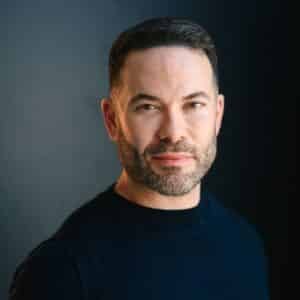
David Adam Burns
In this episode of The Psychedelic Podcast, Paul F. Austin speaks with David Adam Burns, a transformational coach, artist, and founder of The Mysteries, about what may be missing from today’s psychedelic conversation.
David challenges the emphasis on insight in psychedelic work, suggesting that deeper transformation comes through presence, healing, and embodied evolution. He outlines a framework for healing through integration, purification, and emotional “thawing,” and explains why presence may be the most important skill for navigating psychedelic experiences.
They also explore myth and storytelling as tools for collective growth, including David’s work with The Mysteries and Earthsong, a retelling of the Persephone myth, and discuss the role of community, leadership, and stewardship in shaping the future of psychedelics.
David Adam Burns is a transformational coach, artist, and facilitator devoted to helping human beings remember who they are. Since 2015, he has guided leaders through deep personal transformation in his one-on-one practice and co-founded The Mysteries, an artists’ collective dedicated to expressing the ineffable through myth and performance.
Podcast Highlights
- Why insight is often overvalued
- Healing as integration, purification, and thawing
- Presence as the core psychedelic skill
- Story and myth as collective technologies
- The role of community in transformation
- Why leadership determines long-term outcomes
The Microdosing Practitioner Certification empowers you to launch a sustainable practice built on integrity, science, and results. Learn Paul F. Austin’s signature San Pedro Microdosing Protocol, master somatic coaching skills, and confidently guide clients toward lasting transformation. Click here to learn more and apply.
This episode is brought to you by The Practitioner Certification Program by Third Wave’s Psychedelic Coaching Institute. To learn more about our flagship 6-month training program for coaches who want to integrate psychedelic modalities into their practice, click here.
Third Wave occasionally partners with or shares information about other people, companies, and/or providers. While we work hard to only share information about ethical and responsible third parties, we can’t and don't control the behavior of, products and services offered by, or the statements made by people, companies, or providers other than Third Wave. Accordingly, we encourage you to research for yourself, and consult a medical, legal, or financial professional before making decisions in those areas. Third Wave isn’t responsible for the statements, conduct, services, or products of third parties.
Podcast Transcript
00:00:01 Paul Austin
What if insight isn't the thing that actually brings about change in our lives? Welcome to the Psychedelic Podcast. I'm your host, Paul Austin. And in the psychedelic space, there's been a really big emphasis on breakthroughs, realizations, and insight. But more and more, it's becoming clear that insight alone doesn't necessarily lead to meaningful change. So the question becomes, what actually does?
00:00:25 Paul Austin
My guest today is David Adam Burns, a transformational coach, artist, and founder of The Mysteries. Dave is a dear friend, as I introduced at the beginning of this episode. We've known each other for many years. He was a faculty and facilitator for some time in our practitioner training program. And Dave has been hard at work on a new project, which is premiering May 22 through 24 in Austin, Texas. And so in this conversation today, we talk about why insight is often overvalued in psychedelic work, what healing actually looks like beyond insight, how presence becomes the core skill for transformation, the importance of mastery around attention and depth of awareness, psychedelics as a training ground for presence, waking up, growing up, and showing up, why story and myth are essential for collective growth, and the role of community in leadership and integration.
00:01:17 Paul Austin
David Burns is a transformational coach, artist, and facilitator devoted to helping human beings remember who they are, since personal transformation in his one-on-one practice, integrating somatic intelligence, contemplative practice, and practical life design. He has also served as faculty for multiple coach training programs, including ours at the Psychedelic Coaching Institute. And in 2022, he co-founded The Mysteries, an artists' collective dedicated to expressing the ineffable through myth and performance. He is currently producing Earth's Song, which is premiering May 22 through 24 in Austin, Texas, a theatrical retelling of the Persephone myth. David lives in Austin, Texas, with his partner, Megan, and their newborn son.
00:02:00 Paul Austin
All right, you guys will love this episode. Dave and I have a very close relationship. You'll notice that in the back and forth. But before we go to the episode, let's hear a word from our sponsors.
00:02:10 Paul Austin
If you've been wanting to turn your passion for psychedelics into a meaningful and profitable practice, then check this out. Enrollment is now open for our microdosing practitioner certification program. And in just 18 weeks, you'll become a certified microdosing practitioner, mastering my signature San Pedro microdosing protocol for nervous system regulation while developing the somatic coaching and business skills to launch or expand your practice. This isn't just another theoretical course. It's hands-on, high-touch training that helps you integrate our microdosing protocol, refine your practitioner presence, and graduate ready to start enrolling clients right away. If you're ready to help others move from dysregulation to balance and build a thriving business doing work that matters, I'd love to see you in our next microdosing practitioner cohort. Just follow the link in the episode description or visit psychedeliccoaching.institute to learn more and apply.
00:03:06 Paul Austin
Third Wave sometimes shares or partners with outside providers, but we don't control and aren't responsible for their statements, conduct, products, or services. We encourage you to do your own research and consult appropriate professionals.
00:03:18 Paul Austin
Hey, everyone. I want to take a moment to share something important with you. At Third Wave, one of our biggest commitments is helping people to explore the power of microdosing safely, intentionally, and with the right support systems in place. That's why I'm excited to introduce you to our go-to company, Golden Rule, one of the most respected names in the microdosing space. Golden Rule crafts premium, ethically sourced microdosing products, including psilocybin, single-strain, and blends, San Pedro and LSD options, all designed to support clarity, creativity, emotional healing, and performance. What really sets them apart is their integrity, honoring traditional plant wisdom while embracing modern science to support real and lasting transformation. Together, Third Wave and Golden Rule are working to make safe, high-quality microdoses more accessible while ensuring you have the education, tools, and community to feel confident on your journey. If you're curious about microdosing and want to try some of my personal favorites, head over to goldenrulemushrooms.com/thirdwave and use code THIRDWAVE at checkout for 10% off, not just once, but for every future order, too. Again, that's goldenrulemushrooms.com/thirdwave and use code THIRDWAVE for a lifetime discount of 10% off.
00:04:32 Paul Austin
All right, that's it for now. Let's go to this conversation with David Burns.
00:04:59 Paul Austin
Dave, welcome to the show. It's great to have you here.
00:05:01 David Adam Burns
Thank you, man. It's great to be here.
00:05:03 Paul Austin
So we go back to 2018. We were introduced through a mutual friend. I happened to be in LA for the first time. She was like, "I'm going to make one introduction," and this introduction was to you. On the day that I was arriving, you happened to be, I think, flying out to Pittsburgh, and you had a home in Santa Monica, and we had literally just met, and you were like, "Yeah, you could just stay at my home for a week. No problem." So immediately, I was like, "Okay, this guy's interesting. He's trustworthy. He seems to trust me." And since that point in time, our relationship has really flourished.
00:05:38 Paul Austin
You were a core facilitator for our intensives in Costa Rica as part of the practitioner training program, and now you've been cooking up something really fun and exciting. So I'm curious just to hear a little bit about what are you just diving into in April 2026?
00:05:59 David Adam Burns
Yeah, a very clear and very short list right now. Currently obsessed with fatherhood is number one. Had our first kids three months ago now, little Gabriel with my partner, Megan. And the second thing I'm obsessed with is the production of Earth's Song. And then the third thing right now, it is exclusively a list of three things.
00:06:20 David Adam Burns
The third thing I'm obsessed with is really the confluence of wisdom streams. So we're living in a time right now where there's a coming together of some of the treasures from different cultures and different continents in a way where we have access to multiple streams simultaneously. We have an opportunity to facilitate dialogue between these different streams of wisdom and of technology. And I think it's an incredibly exciting time to be alive, to get to see these southern medicine traditions contact for the first time, Eastern meditative traditions, and both of those contact Western psychotherapeutic tradition and many, many more. So that's the third area of study, obsession, and practice.
00:07:03 Paul Austin
Tell folks a little bit about your background in terms of what inspired you to spend, at this point, two and a half, three years on focusing on developing this ritual theater with Earth's Song and The Mysteries. What's the origin story behind this initiative?
00:07:21 David Adam Burns
Yeah, absolutely. So there are a couple of different ways I could start this story, but I'll say I have a degree in classics and ancient Greek and Latin from Williams College. And at that time in college, I didn't anticipate that when I went to school. I went to school as a hopeful music and math major, but very quickly ended up converting over into the classics, maybe because I fell in love partly with the language, but especially with the stories in those languages.
00:07:50 David Adam Burns
So the stories that are at the heart of the Western tradition, the myths of ancient Greece and of Rome. And so learning to study those in the original languages and getting to become more and more intimate with those old myths was the driving force of my early adulthood. And then that interest really continued over the years as I got into the world of coaching, which is the primary thing I've done in my adult life professionally, and entered my first coach training program right out of college.
00:08:18 David Adam Burns
So as I got into the domain of coaching and then my recreational interest in psychedelics transitioned into a professional one very quickly, then, of course, the Eleusinian mysteries became not yet an obsession, but certainly a background area of interest. The Eleusinian mysteries is this one domain where the field of ancient Greek myth and the topic of psychedelics meet in a very clear way.
00:08:46 David Adam Burns
And so fast forward to years later, I moved to Austin, Texas, and through a friend, I got invited to this very unique and incredible event called Bloody Easter, which is an Austin-only experience. So this is 2022, is basically a highly competitive, multidimensional, mythopoetic Easter egg hunt put on by this woman, Sophie Krupp. And I went, I was just blown away by the experience. It was so fun and so rich and deep and engaging, and especially Sophie, who is kind of the center of it and the visionary of the whole experience.
00:09:25 David Adam Burns
And so immediately afterwards, I expressed an interest in doing something together, co-creating, collaborating. And the first meeting we sat down, we went with a small group to go see the movie, Everything Everywhere All at Once, an incredible movie, and then went back to my place and everyone left except for me and Sophie and eating stew and just opening up the question of, like, what might we want to do together? And I was like, well, there's a short list of things that are kind of on my creative bucket list. One is I want to create an EDM Greek tragedy. Another is I want to create an album of the Orpheus story. And then the third is I want to recreate a modern version of the Eleusinian mysteries. And she was like, that one sounds interesting. So that got the ball rolling.
00:10:12 David Adam Burns
And then about a year and a half later, we produced our first, it was outside of Austin, our first recreation of the Eleusinian mysteries, which, unfortunately, the details of I am sworn to secrecy about, because we maintained that tradition of silence around the mystery. Everyone who attended was sworn to silence around it. So I wish I could talk more about how exactly we went about it, but I can say that through that production, the first production by this collective, the mysteries that formed around us, through that production, we fell very deeply in love with a story that's at the heart of the Eleusinian mysteries, which is the story of Persephone.
00:10:52 David Adam Burns
And so the question that we ended up asking that led to our current production was, and this isn't, I don't mean this to be a historical question, but the kind of thought experiment that gave birth to it was, what if the actual psychedelic at the heart of the mysteries, of the Eleusinian mysteries, was the story? What if it was the story that was the primary transformational technology, the story of Persephone? What if that's the actual brew that people are imbibing? And then what if the secret, what if the thing that no one can speak about, about the Eleusinian mysteries, isn't something that people are banned from saying? It's an experience that people, by its nature, can't articulate. So what if the psychedelic of this story transmits something fundamental and ineffable and life-changing?
00:11:50 David Adam Burns
So that was the thought experiment that ended up leading to our current production, which is this public-facing new mythic musical called Earth's Song, which is a telling of the Persephone story in the tradition of the Eleusinian mysteries.
00:12:03 Paul Austin
Beautiful. And we're going to come back to that. So it's a good loop to open up in this conversation. We will get into the details of what is the Persephone story and how is it now being recreated through this ritual theater?
00:12:17 Paul Austin
But before we get into that, I want to talk a little bit about some nuts and bolts of psychedelic work. So one of the ways that we've deepened our relationship is you were fairly involved for maybe two years in our own practitioner training program, the focus being on prep and integration. So I'm curious to hear your thoughts on, first of all, what do you think the current prep and integration paradigm is missing? And where do art and ritual and beauty and myth fit into a model that has so far been dominated by clinical and therapeutic language?
00:12:52 David Adam Burns
Yeah, great questions. So it's interesting. The second question that you're asking around how ritual and beauty and myth fit in, especially to the psychedelic experience as a whole, is I see the primary place that fitting into the arc of psychedelic work today, the potential for that being in ceremonies themselves, in journeys and ceremonies themselves. And I think it's a really incredible opportunity that we have right now to be at essentially the start of a new medicine tradition. As in the West right now, as a pluralistic society, we're open to and drawing from many different cultures. And there's a downside to that. There's an unrootedness, and there's a gravity towards the shallow. But there's also this incredible opportunity, one is to draw from multiple treasure sources, as I said, but also to create something new out of them. And so I think inside of ceremonial spaces, rather than trying to simply extract an old way of doing things and plop it down in the middle of the Western psychotherapeutic model and then see what happens, I think a full creative engagement with something new, with the co-creation of a new method from scratch in the spirit of the new wave of artistic freedom that's been made possible through technology and also through the kind of renaissance of the mystery traditions, through these reencounters with old wisdom streams and old stories. So I think all of those things are going to continue. I'm not a frequent attendee of Burning Man. I don't identify as a burner, but I think there's an aspect of the spirit of Burning Man I would encapsulate as, let's create the most beautiful thing that we can, given the resources at our disposal. I think that spirit, grounded in the therapeutic tradition, and then respectfully dialoguing with different medicine traditions, will be able to create more and more new experiences that have an element of the ancient, but also take advantage of everything that's available today in the modern world and with modern technology. So that's maybe a convoluted answer to the second question that you asked. But when it comes to preparation and integration, I see the--and I don't want to say that it's missing, because I think that many of the things I'm going to share are happening already. But what I see to be most exciting about the forefront of what's happening has a couple of different elements. One is there's, I think, a shift happening away from an emphasis on insight. And I think that's a really good thing. I think the three main intentions that most Westerners might come into a psychedelic experience with are insight, healing, and evolution. And out of those three, I think insight has historically been the most overvalued. Psychedelic experiences can certainly provide insight, but it's possible, for example, in both prep and integration, to focus attention on insight, to try to prepare oneself for insight, and then to try to actively integrate insights that one had in a way that I think misses out on richer opportunities and can be actively harmful. So insights are either practical insights or philosophical insights. Philosophical insights can be really fun and beautiful, but are rarely useful. They rarely increase our capacity for skillful conduct. They rarely increase our fulfillment. And then practical insights are one of two categories. Practical insights people have in psychedelics are either things that they already know. It's like, oh, I should quit smoking. I already knew that. Or they're guidance about a future path that's highly unreliable in a psychedelic state. It's like, oh, I should marry this person. It's like, if that's a message that you receive in a psychedelic experience, it's not something that you should blindly follow. And so I think when it comes to the-- a lot of people still show up to psychedelic planning sessions or preparation sessions with an anticipation of insight, conscious or unconscious. And a way that I've found it valuable to help redirect that is just to ask the question, have people go through a practice of, what do you suspect you're going to discover in this experience? And get a list of, oh, I need to quit smoking. I need to quit my job. I need to apologize or come clean to this thing about my wife, whatever it is. Come up with that entire list of things. Great. Okay. Do all of those things before the psychedelic experience and actually make the attendance of the psychedelic experience contingent on the completion of all of those things so that you don't then have to go in and waste time getting a second opinion from a plant. So the shift away from insight and the redirection or the front-loading of insight into preparation, I think, is one of the things-- it's a good direction that's happening currently.
00:18:18 Paul Austin
Well, you know insight is the start of the conversation, not the end of the conversation, right? And I feel like what often happens is, like you said, people will have these sort of breakthroughs or ahas, some of which may not have been conscious previously. So I think to your point, there are certain things that are conscious of, okay, I want to quit smoking, or I need to come clean about this, or I want to quit my job. There may also be conscious things that we think will be insightful as part of an experience, but there's a much deeper relational layer that tends to emerge that isn't necessarily in the conscious mind initially.
00:18:52 Paul Austin
And I think this gets into the work that you've supported people through with somatics or maybe what's in the body, which I think is an important part. And in fact, one of the most sort of powerful healing experiences I've ever had was bodywork, sometimes with psychedelics, where there are certain aspects in my sort of fascia and tissue that get to be opened up and unlocked, which lead to a deeper healing in the nervous system. And so even some of these insights, the insight, it feels like it's much more Freudian in nature, and that sort of fixation on the insight is Freudian in nature.
00:19:31 Paul Austin
And so I love how you're like, okay, there's these two deeper layers, healing and evolution. So sort of what I would come back to you with is, okay, so insight, yes, and healing and evolution. So what's the relevance of healing and evolution then in terms of the sort of overall prep and integration process when it comes to psychedelics?
00:19:49 David Adam Burns
Yeah. So that's where things get really interesting to me, is evolution is a kind of vague word I want to get more specific about in a moment. But to start with healing, I guess the healing, I see, is having three primary types or sub-ims. One is called integration. One is purification. Then was thawing or melting. So integration, purification, and thawing. Integration is bringing things together in the self that previously were being held apart. Purification is releasing things from the self-structure that no longer serve. And then thawing is the melting or softening of layers of protection around the heart. So those are the three main forms of healing that I see being worthwhile under that larger umbrella.
00:20:46 David Adam Burns
Very cool thing about all three of those forms is all three, as the person going through a healing experience, are best facilitated through presence. So the intelligence of the body is one of the things that brings about the process of healing. If there's medicine there, also the intelligence of the medicine. If you have an actual healer, like you're saying, a bodyworker or a Shipibo-Conibo energetic surgeon, they're also contributing to the healing process. But in terms of your role and primary responsibility as the person going through healing, which you're doing both for yourself and also through your lineage, for your family and everyone you're connected with, the skill, the most important skill to allow that healing to occur, to receive the gifts from the intelligence of the body, the intelligence of the medicine, and any healer that might be present, is presence.
00:21:42 David Adam Burns
And presence, people use to mean different things. But the way I use the word presence, it's often used to mean something like attention on sensory phenomena and attention off of thoughts. I think that's an okay definition, but I think there's a limit to it because it's possible to be present with thoughts. So I see presence, the most helpful definition I've found of it, to be freedom of awareness. And I think freedom of awareness has these two different forms. Freedom of awareness means both mastery of attention and also depth of vantage point. So mastery of attention means the capacity to have your attention follow your intention. I intend for my attention to go somewhere, and it does.
00:22:31 David Adam Burns
And then depth of vantage point means this is the one that, of all the things I'm going to talk about today, is maybe the hardest to articulate. It's kind of famously, but I'm going to do my best. Depth of vantage point be understood as experiential identity or where you're coming from. So, for example, right now, you might be experiencing your sense of, I am looking out through my eyes at the world around me. That's a vantage point. I have a sense of being behind my eyes. Well, maybe there's a sense of, I am actually distributed throughout my whole shifting landscape of physical sensations, filling up my whole body. That's a vantage point. You might have an out-of-body experience where your sense is, I'm somewhere behind the body. I'm looking out at the whole room. Or I am a sort of spacious, timeless field of awareness that all my sensory experiences are happening inside of. And it can go deeper and deeper and deeper.
00:23:35 David Adam Burns
So I see depth of presence from the standpoint of vantage point means depth of experiential identity or freedom from fusion of awareness to higher layers of experience. So awareness can be fused with thoughts, in the sense of, I am my thoughts. It can be fused to personhood. I am Dave here in this body-mind. It could be fused to time and space. I am existing inside of time and space, even if I'm sort of spacious awareness. It can be fused to a sense of duality. I am inside and the world is outside. And it can be fused to a sense of center, individual consciousness. I am one small part of something larger. Those are different types of fusion. I'm drawing this slight modifications from a map that's, I think, best developed in the Tibetan Buddhist tradition. But those are different fusions. And freedom from those fusions means a greater depth of vantage point, means greater freedom of awareness, which means deeper presence. So I've seen a direct correlation between depth of healing in a psychedelic experience and the depth of presence practiced throughout the experience. And so what that means, I think the best way to prepare people for the healing aspect of psychedelic experiences is to teach the skill of presence.
00:25:03 Paul Austin
Which often starts as, very simply, learning how to breathe or learning how to attune to the breath. And of course, we have so many different lineages of various contemplated practices, many of them focused on meditation, which have been established for thousands of years, which are meant to support this lens. And as we've talked about on this podcast extensively, a lot of folks who are now these sort of modern meditation teachers who come from the '60s and '70s initially had that first depth of vantage point experience, if you will, from psychedelics. And they chose meditation as a modality to go even deeper into that lens and into that understanding and to really cultivate or enrich themselves in this capacity to be present with what is.
00:25:56 Paul Austin
And sort of I'm curious, as a continuation of this, once we're able to step into presence and cultivate presence, which allows for a deeper healing, how does that then contribute to our individual evolution? And how might it contribute to a greater, let's say, collective evolution? As I think a lot of folks who are involved in this sort of third wave of psychedelics not only care about their own experiences, but they're also interested in systemic change at large in terms of business and healthcare and politics and all these sorts of things.
00:26:32 David Adam Burns
Yeah, I think that's a great question. And then connects to that third core intention that we usually have in the West for psychedelic use, which is evolution. So yeah, the question is evolution, both individual and collective. Evolution I see as best defined as embodied learning. And the model that I currently like best for different categories of that is from Dustin DePerna, which breaks it down into, maybe modifying the teaching slightly, but inspired very much by Dustin, these categories of wake up, grow up, and show up. So three different aspects of evolution: waking up, growing up, and showing up.
00:27:20 David Adam Burns
Waking up is really simply something we've already talked about, is just the depth and stability of one's vantage point. So how much of the day, how much of moment-to-moment life are you having the direct, not the concept, but the direct experience of being who you really are?
00:27:40 David Adam Burns
The second piece, growing up, is maybe the most confusing of those three. The definition that I like is capacity to hold multiple points of view, including the point of view that only one of those points of view is right. So we often associate growing up with taking responsibility. Growing up means learning to expand your sphere of responsibility. But I think what taking responsibility is, is learning to take the perspective of more than yourself. If you're taking the perspective of each of your family members, you naturally extend your sphere of care to those family members. If you take the perspective of a larger ecological body like the Earth, then your sphere of care naturally expands to that.
00:28:37 David Adam Burns
The third category of showing up is really simply capacity to be of benefit. So between those three, I think healing can very much directly and indirectly contribute to showing up. I think one of the obvious ways is healing decreases dukkha, decreases suffering. Dan Brown, the meditation teacher is now passed, but whose work is really incredible, highly influential on me, translates dukkha, usually translated suffering, as traumatic reactivity. Traumatic reactivity. I love that definition. So through healing, diminishing our traumatic reactivity, we have the ability to be of less harm and be of more benefit naturally, for sure.
00:29:26 David Adam Burns
But also, I think working with psychedelics in particular has the capacity to increase our effectiveness in some more interesting ways by increasing our skill, our fundamental skills of effective humanness. So when it comes to growing up, I think it's possible that psychedelics could have a beneficial impact on that. But I don't think psychedelics are actually the best technology for it. I think a much better tested technology for growing up, for expanding our capacity for perspective taking, and therefore our responsibility, is story, is myth. I think story and myth serve as collective healing technologies, but maybe more than anything as collective technologies for growing up, for expanding our capacity for perspective taking and the responsibility that comes with that naturally. So that's some of what's inspired the shift to the expansion of my current sphere of care to the mysteries and to Earthsong, is that concern for more collective growing up and collective healing that I think is best accomplished through story. And I'm particularly excited about the medium of theater.
00:30:41 David Adam Burns
But when it comes to waking up and showing up, I think the mechanism of action is pretty straightforward with psychedelics. You already mentioned how many of the teachers who got started in the '60s, '70s initially had this deepening vantage point through a psychedelic experience. I see when it comes to evolution, embodied learning, psychedelics have the capacity to help us by making some things harder and making some things easier.
00:31:13 David Adam Burns
So the things they make harder include mastery of attention. It's harder to maintain steadiness of attention in the face of the sensory amplification that happens with psychedelics. It's harder to not let your attention get pulled into beautiful experiences or to run away from painful or frightening experiences when those beautiful and frightening experiences are as multisensory and as magnified as they are on psychedelics. So to show up and maintain the intention of steady presence throughout a psychedelic experience is an incredible workout. It's hard. It's hard to maintain mastery of attention. And because of that, integration work doesn't really have to happen. Preparation work to teach people the basics of steadiness of attention is extremely helpful, I think invaluable for both preventing harm from psychedelic experiences and for getting the most from it. But the things that psychedelics make harder, you get the benefit just from showing up. Integration is real-time. The workout is done.
00:32:15 David Adam Burns
Things that psychedelics make easier demand the most integration. Those are just temporary experiences if you don't deliberately integrate. And one thing that psychedelics notoriously make easier is increased depth of vantage point. So people regularly have, not always, but regularly have these breakthrough spiritual experiences where they might disidentify from thoughts for the first time or disidentify from personhood for the first time or disidentify with individual consciousness for the first time, time and space. So people can have these full dissolution experiences into fundamental unity with the divine or with all things, which is just a depth of vantage point. People can have those experiences in psychedelics, and then the experience closes up and they're back to ordinary day-to-day life. And generally, sometimes there's a person that accidentally it just stays open with, but it's very, very rare. Much more common is it closes without deliberate integration. So the protocols for deliberately integrating those kinds of experiences and making those new depths of vantage point that open up in psychedelics, one's new baseline, are really simply deliberate and precise integrated daily meditative practice connected to the specific depths of vantage point that open during the experience.
00:33:34 Paul Austin
And I would like to add to that and ask for your sort of thoughts on what's coming up for me. I think another aspect or element outside of the individualized experience, so we talked about with waking up, there's the psychedelic experience. With growing up, there is story or myth that allows for a way to see how our life has been, in a way, played out before. There's sort of this archetypal nature to it, and we can sort of utilize the scaffolding of other stories to understand our own meaning and our own purpose and why we might be here. And of course, for showing up, then that consistent practice of attentional awareness and sort of stabilizing in that new vantage point.
00:34:15 Paul Austin
However, I would say that community and mentorship is also a very essential element in this, that without accountability, without relational sort of depth and communication and context, that we're kind of missing a huge part of the experience. And I think part of the challenge with integrating psychedelics into the current, let's say, Western ethos or model is that we come from a very individualized experience. The indigenous peoples or traditional peoples who have used this for thousands of years didn't necessarily have that same thing.
00:34:50 Paul Austin
You could argue that the Greeks, because they didn't have access to smartphones and sort of modern technology, although they did have this sort of notion of an individual person, there was still this awareness of the collective and mentorship and mysteries within that. So I'm curious, from a modern lens, what's your take on the role of community and accountability and mentorship as part of the waking up, growing up, and showing up process as well?
00:35:22 David Adam Burns
I think that's an incredible question. Yeah, and it's been one of my biggest learnings, one of a handful of my biggest learnings in the, I guess, 11 years now that I've been coaching is early on, I started paying a lot of attention to the vetting process for choosing what clients to work with and who I was qualified to help and what I could reasonably guarantee people in terms of the transformation they'd experience if they put in a certain amount of work.
00:35:52 David Adam Burns
And one of the biggest learnings that I had was the impact of not having a strong community. Working with, you take two different people, roughly the same circumstances in most areas, do exactly the same work, psychedelic and otherwise, have one of them absolutely blossom and flourish and thrive, and the other one make very slow progress, and have the one variable between the two of them be the presence or absence of a thriving community.
00:36:27 David Adam Burns
So I do think today in the West, in the modern technological West, there's in some ways more of a challenge of creating and maintaining a thriving community than in any culture and history, probably. And some of that is due to the natural gravity that people have towards the privilege of privacy and solitude and being uninterrupted. Being a part of community means being exposed to other people, not necessarily at times that are convenient for you, which is a much more traditional way of living. But the benefits of that are, yeah, I think hard to overstate those.
00:37:12 David Adam Burns
So I think huge, huge for preparation and integration. It's one of the pivotal things that is now part of my preparation and vetting process for taking on clients and being able to map out their work is how much community exists and how much needs to be built. And I will say, this isn't quite what you asked, but I've recently had the experience of fatherhood for the first time. And I've had a lot of friends have kids and have gotten to hear what it's like, what their experiences have been. And I've heard a lot of very difficult things. And so I was ready for a lot of difficulty. And my experience of parenthood so far, we've been very lucky in many ways, healthy child, I have an incredible partner. But the experience has been so much easier than I expected it to be, one of the easier areas of my life. And I think one of the main reasons for that is we happen to be blessed with a really thriving community. It's been of incredible support. People were bringing meals for us every day for the first almost month. We didn't cook one of our own meals. We have people, we have little auntie and uncles come every day to hold the baby so that Megan can have a nap or so that Megan and I can have a date. It's just the experience of having to go through parenthood without having a community to help hold the parents and the kid. I've seen how difficult it is. And so it's not just prep and integration. I really think we're not meant to live in as disconnected a way as become endemic.
00:38:51 Paul Austin
Yeah, I think that's beautifully said. And it's something that I'm reflecting on. I'm not yet a father, and yet I intend to have children. And sort of one of my fears and concerns is exactly what you mentioned, that to have children, to have family in a more sort of isolated suburban container is intimidating. And I think there is a pretty distinct relationship as well between modern financial wealth, privacy, and our ability to be in community. One thing I've noticed, and this isn't across the board, but I would say it's very common that the wealthier people get, the more isolated they become, because in modern times, they are utilizing that wealth to buy privacy and distance and separation from other people. And I love the example of, for a lot of, let's say, chiefs in indigenous or traditional communities, part of the role of the chief was to pour resources back into the community. It wasn't to necessarily hoard those resources for themselves, but instead, with the responsibility of becoming a leader or a chief within a tribe or whatever it might be, the understood responsibility was you were going to host potlatches and you were going to ensure everyone is taken care of, and you will essentially make sure that the resources are available for the village and the tribe. And unfortunately, we live in a time now where we just don't have that. Now, I know many of us are sort of exploring that and looking at what that could look like in terms of a modern time, but we're still sort of in betwixt and in between that coming to full life.
00:40:34 Paul Austin
We opened up a loop at the beginning of this conversation around Earthsong and the mysteries, and we sort of briefly touched on the story of Persephone. But I want to start to bring this full circle, discussing the technology of myth in terms of this growing up process. I think a lot of us who listen to this podcast believe that we're now at a phase in time where the majority of people support the approval of psychedelic therapy for medical conditions. There's a lot of momentum in the FDA to get psilocybin and eventually things like LSD and 5-MeO-DMT approved for clinical conditions. We've seen states like Oregon, Colorado, and now New Mexico who have and are making psilocybin and other psychedelics more accessible within a legal and regulated framework. And yet the big question remains of how does this become integrated individually and collectively? So you've started to hint at that in terms of, okay, psychedelics can be very useful in the waking up process, but how do we actually get people to really grow up? And this is where story comes in. So what is it about the story of Persephone? What is it about the story of the Eleusinian mysteries that is such an important story to tell in this phase of exploring the integration of psychedelics within Western culture?
00:41:49 David Adam Burns
Yeah. Yeah. So the last piece of your question around why this story is particularly important right now at this time of the integration of psychedelics with Western culture, I don't know the answer to. And I'll say I can see the direction of a possibility being the Eleusinian mysteries is at the heart of our roots culturally. It seems to be the psychedelic experience that was at the heart of the West, the birth of the West as we know it. And so I suspect that there's something about going back to that root that might provide benefit as we see the West perhaps coming to its end, at least in an important phase of its evolution. Yeah, I think there's something that's deeply kin between beginnings and endings.
00:42:42 David Adam Burns
And I think what is clear to me is that this time in the world more broadly, apart from just the integration of psychedelics into Western culture, this time more broadly, I think every story is embedded with certain archetypes and certain themes. And that by experiencing stories, by experiencing myths, especially through this technology of theater, which has the capacity, I think, more than other media to be a truly psychedelic experience. I think psychedelic in the etymological sense of mind or soul manifesting, mind or soul revealing.
00:43:23 Paul Austin
Why is that? Why theater particularly?
00:43:26 David Adam Burns
When we get to see actual physical bodies expressing and living out the fundamental dramas, intentions, and conflicts of our own individual and collective unconscious, we have an embodied shared experience of the deepest layers of our minds coming into the material world, being expressed through humans, through human bodies, people that we primarily interact with, people that are our main sphere of care. And so the boundary between the inside and the outside, between the conscious and the unconscious, dissolves in a way through the medium of theater that I think is particularly potent and particularly psychedelic.
00:44:10 David Adam Burns
When it comes to the story of Persephone specifically, the themes that are encoded in a specific story's architecture are unique to each story. And some of the themes that are built into the story, the myth of Persephone, include power, the earth, agriculture, climate change, desire, law, sexual assault, and time. And I think those themes, for various obvious reasons, are helpful and important themes for us to face in a direct and in a visceral way right now through this ancient technology of story.
00:44:54 Paul Austin
I mean, what is the story of Persephone?
00:44:58 David Adam Burns
Well, I mean, to find out our understanding of it, you'll have to come to Earthsong.
00:45:02 Paul Austin
So we've talked on this, touched on this a little bit, why this myth, why this moment, right? What does the Persephone story have to say about a culture that is collectively descending into something that we do not understand? Many would say we're at this liminal point of cultural transition that with AI, with
00:45:25 Paul Austin
the sort of breaking down of the typical nation-state, with the transition from industrialization into software and technology, with the transition from extraction, hopefully into regeneration, I think there is this hope in the psychedelic renaissance that something both ethically and maybe also morally positive will result from the approval and integration of psychedelic substances. And I'm curious to hear your take on what will determine or decide that.
00:46:02 Paul Austin
In other words, a lot of people, I think we've sort of matured beyond the sort of idea that just taking a psychedelic is going to help us to become better humans. I think there's been enough conversation now to recognize that it's a lot about set and setting. It's a lot about context. It's a lot about the fact that these are nonspecific amplifiers, that these can be, as we've talked about today, useful for insight in healing and evolution, but it depends a lot on how they are introduced and the context in which they are utilized.
00:46:31 Paul Austin
So I'd be curious to sort of hear your take on what do you think will be the difference maker? What will be the distinction point? What will help the sort of use of psychedelics to become a broadly positive thing rather than just another, let's say, drug that is distracting or numbing or potentially sort of negative in its consequences and repercussions?
00:46:59 David Adam Burns
Yeah, huge question. So I think the short answer is I don't know. And I will do my best to share thoughts that I do have on it, which is I suspect with, if any, powerful tool and if any powerful technology gets big enough, is used by enough people, and it's going to be used in worse and worse ways. We've seen that with every mystical and religious tradition. It's inevitable. If more people are going to benefit from psychedelics, that means there's going to be more misuse. And
00:47:41 David Adam Burns
I believe that in the evolution of psychedelics use on a large scale and in addressing the question of how best to steward this technology, these different technologies, I think the thing that will make the deciding difference is a continued and renewed generational commitment to leadership.
00:48:10 David Adam Burns
I don't think I could imagine best case scenario right now in our generation, we find an incredible, highly reliable way to work with and spread psychedelics, and the majority of people use it just that, use them just that way. Best case scenario, I think in a short amount of time, there would inevitably be an entropy and a corruption of the way that they were used.
00:48:36 David Adam Burns
And so I think it's not so much about the one-time solution of the question for the integration of psychedelics. These are a powerful technology in the same way that working with the powerful technology of screens at our disposal right now is not a one-time question.
00:48:53 David Adam Burns
Almost everyone that I know, I think I can certainly say, yeah, almost every client that I've ever worked with has had to regularly recommit to a clearer, more harmonious relationship with screens. These are very powerful technologies that have the ability to be of tremendously positive impact and also suck people's life force and pull them into a gravity well of shallow entertainment and addiction.
00:49:23 David Adam Burns
So in the same way, I think you could call it an uphill battle, but I would just say it's a continuous and continuously renewed responsibility for stewardship and for leadership and for living the moment-to-moment, generation-to-generation questions and the inevitable trade-off, the impossible questions of co-leading a human community on a planet like Earth. The continued renewed commitment to that is the only thing that can prevent an otherwise inevitable downwards spiral of corruption in the way the psychedelics are used.
00:50:05 Paul Austin
That's beautifully said. And we could probably do a whole episode. I mean, we've done many episodes on then. Well, what is that leadership? What are the particularities of that leadership and how do we help leaders to evolve in that way? And we've done quite a few episodes with Eric Kaufman, who is a really he's a close friend and mentor, chairman of the board at Dr. Bronner's and does a lot of this in the business space. How do you help actually cultivate leaders who can hold his frame as wisdom, power, and love and sort of hold those in a way that supports not only the organization or the community that you are responsible for, but also the sort of broader swath of humanity and our deep understanding of our interconnectedness and all these sorts of things? So I would encourage folks to go and listen to those episodes if you want more details there.
00:50:55 Paul Austin
What I will close with is we've mentioned Earthsong. I mentioned the dates in the opening, but Dave, tell us what's going on in Austin in May. Why should people not only in Austin, but from all over the United States fly in and see this show? What's going to be yeah, what's going on with Earthsong and the mysteries?
00:51:14 David Adam Burns
Yeah. Yeah, sure. Thank you for asking. So yeah, May 22nd to May 24th in Austin at the East Side Performing Arts Center, we're going to be putting on the first full-length premiere of Earthsong, which is this year's offering from the Mysteries, which is the artist collective I'm a part of, just dedicated to giving a voice to the ineffable.
00:51:35 David Adam Burns
And Earthsong is really simply the story of Persephone brought alive again for our world today. And so I've shared some of the reasons why I think it's an important story for today and some of the questions that led to us producing it. But I'll say people who I suspect would resonate and both enjoy and benefit from coming are people who are not afraid to face the really heartbreaking questions of human life, people who aren't afraid to face and integrate their own shadows and the collective ones, and I'll say people who want to do so through devotional mythical beauty.
00:52:25 Paul Austin
Well said. So if folks want more details on Earthsong, the website is themysteries.us. And you'll see all the details about Earthsong May 22nd to 24th in Austin, Texas. Any final words, Dave, or any kind of final places to point folks who may be either interested in your work or Earthsong as a production?
00:52:52 David Adam Burns
Yeah, I have other resources on my website to point people towards some of my favorite resources and also more information about the mysteries at my website, davidadamberns.com. And no, man, it was a pleasure to be here. Always loved talking to you. Thanks for having me on.
00:53:08 Paul Austin
Hey folks, thanks so much for joining and tuning in for today's episode. Again, you can learn more about Dave's work and Earthsong at davidadamberns.com as well as themysteries.us. If you enjoyed this episode, consider sharing it with a friend.
00:53:21 Paul Austin
Follow us on YouTube at youtube.com/thethrdwave, rate and review this on Spotify and iTunes. Just make sure to follow the Psychedelic Podcast wherever you listen so you don't miss future episodes. I'm also very active on social these days, X, LinkedIn, Instagram. Follow me there. Tell me that you listen to the podcast and say hi.
00:53:39 Paul Austin
Thanks for tuning in and we'll see you next week.