
Episode 354
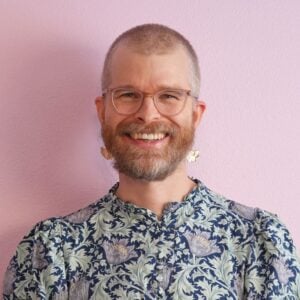
Heather Smith
In this episode of The Psychedelic Podcast, Paul F. Austin speaks with Heather Smith, founder of The Moxie School and a certified Internal Family Systems (IFS) therapist, about the intersection of parts work and psychedelic healing.
Heather explains how IFS offers a practical framework for working with what arises during psychedelic experiences. She describes IFS as an approach that helps people stay present with different parts of themselves, especially when difficult or unexpected material comes up.
The conversation explores how psychedelic experiences can bring awareness to underlying patterns and past experiences, and why that awareness on its own often doesn’t lead to lasting change.
They also discuss common misconceptions about combining IFS with psychedelics, the role of preparation and integration, and how working directly with parts supports more stable change over time.
Heather Smith is a visionary in the field of psychedelic healing, blending Internal Family Systems (IFS) therapy with expanded states of consciousness to catalyze deep transformation. A Certified IFS therapist and experienced guide, Heather has completed Levels 1–3 of IFS training and served as a Program Assistant multiple times.
She is the founder of The Moxie School®, where she trains psychedelic facilitators in IFS-informed approaches, equipping them with the skills and confidence to navigate complex transformation processes. Her work focuses on bridging psychedelic-assisted therapy and parts work, offering a structured yet intuitive framework for working with internal systems in expanded states.
Heather leads immersive retreats and training programs that support both personal healing and professional development, helping practitioners refine their craft, deepen self-leadership, and create meaningful healing experiences for others.
Podcast Highlights
- Misconceptions about IFS in psychedelic work
- IFS as a mindset, not a method
- How psychedelics reveal internal parts
- Why insight alone isn’t enough
- The unburdening process in healing
- Working with fear and difficult experiences
- Preparation and integration as core skills
- Practitioner integrity and embodied practice
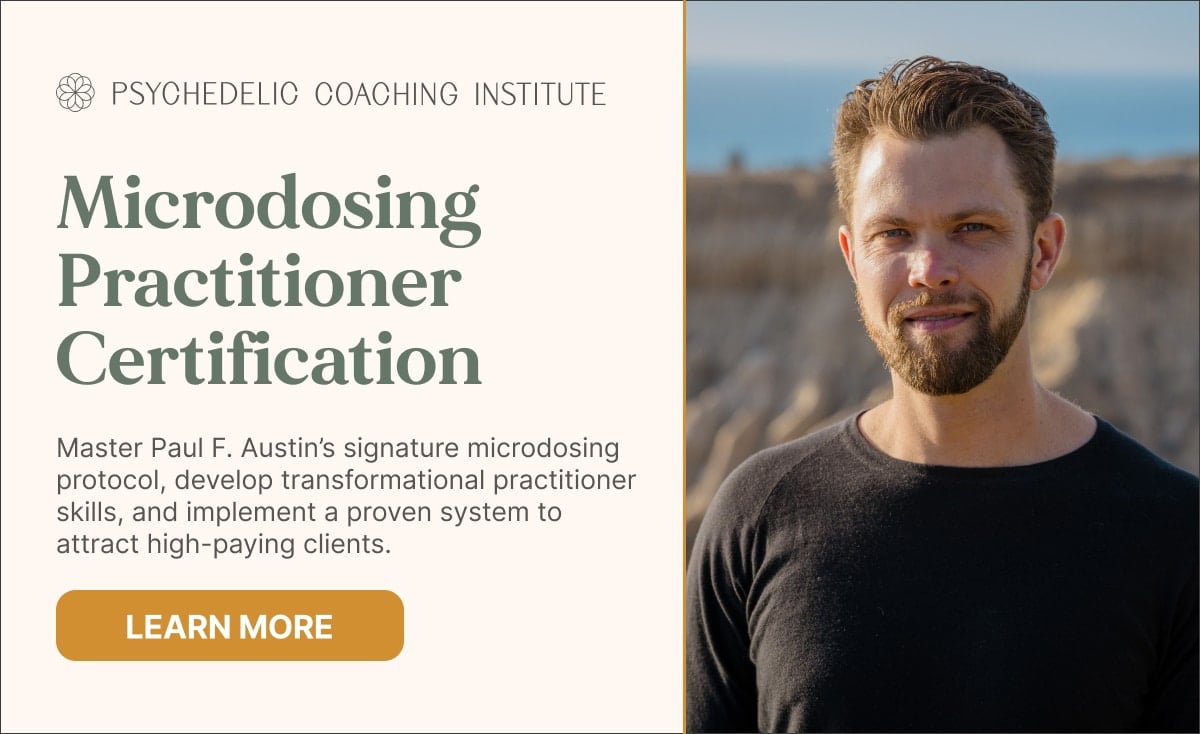
The Microdosing Practitioner Certification empowers you to launch a sustainable practice built on integrity, science, and results. Learn Paul F. Austin’s signature San Pedro Microdosing Protocol, master somatic coaching skills, and confidently guide clients toward lasting transformation. Click here to learn more and apply.

This episode is brought to you by The Practitioner Certification Program by Third Wave’s Psychedelic Coaching Institute. To learn more about our flagship 6-month training program for coaches who want to integrate psychedelic modalities into their practice, click here.
Third Wave occasionally partners with or shares information about other people, companies, and/or providers. While we work hard to only share information about ethical and responsible third parties, we can’t and don't control the behavior of, products and services offered by, or the statements made by people, companies, or providers other than Third Wave. Accordingly, we encourage you to research for yourself, and consult a medical, legal, or financial professional before making decisions in those areas. Third Wave isn’t responsible for the statements, conduct, services, or products of third parties.
Podcast Transcript
00:00:01 Paul Austin
There's a moment that happens for a lot of people in psychedelic work. You see something clearly, maybe for the first time, it could be a pattern or a wound or a belief that's been running in the background for years, and for a brief moment it feels like everything has shifted, but then over time things start to settle back into old patterns. My name is Paul Austin, I'm your host here at The Psychedelic Podcast, so what actually creates lasting change?
00:00:27 Paul Austin
Today's conversation explores that question through the lens of internal family systems and how parts work can support deeper and more stable transformation. Now, we've had Dick Schwartz on the podcast before, the founder of IFS. Today's guest is Heather Smith, founder of the Moxie School and a certified internal family systems therapist. Here's what we talk about in today's conversation: why IFS isn't about running a therapy session during an experience, but it's actually about learning how to relate to whatever may arise in the integration phase, how psychedelics reveal different parts of the psyche and why that matters for healing, why insight alone often doesn't lead to lasting change and what's actually required for integration, how the unburdening process works and what it means to stay in relationship with difficult experiences, and what practitioner integrity really looks like when guiding others through this work.
00:01:20 Paul Austin
Heather Smith is a visionary in the field of psychedelic healing, blending internal family systems therapy with expanded states of consciousness to support deep transformation. She is a certified IFS therapist who has completed levels one through three of training and has served as a program assistant multiple times. She's also the founder of the Moxie School, where many of our psychedelic facilitators have trained. She trains these folks in IFS-informed approaches, helping them to build the skills and confidence to navigate complex transformational processes. Through immersive retreats, training programs, and consultation, her work focuses on bridging parts work with psychedelics, supporting both personal healing and professional development.
00:01:58 Paul Austin
I've been meaning to have Heather on the show for a long time. She lives in Asheville. You know, when that hurricane hit about a year and a half ago, we were supposed to have her on around that time, but then obviously that didn't work out. So this is a real deep dive. You know, everything I hear about our practitioners who have gone through the Moxie School mention how talented and skilled of a facilitator Heather is, so I think you're really going to enjoy this.
00:02:19 Paul Austin
All right, before we get into the episode today, let's hear from our sponsors. Third Wave sometimes shares their partners with outside providers, but we don't control and aren't responsible for their statements, conduct, products, or services. We encourage you to do your own research and consult appropriate professionals.
00:02:37 Paul Austin
Hey everyone, I want to take a moment to share something important with you. At Third Wave, one of our biggest commitments is helping people to explore the power of microdosing safely, intentionally, and with the right support systems in place. That's why I'm excited to introduce you to our go-to company, Golden Rule, one of the most respected names in the microdosing space. Golden Rule crafts premium, ethically sourced microdosing products, including psilocybin, single strain, and blends, San Pedro and LSD options, all designed to support clarity, creativity, emotional healing, and performance.
00:03:09 Paul Austin
What really sets them apart is their integrity, honoring traditional plant wisdom while embracing modern science to support real and lasting transformation. Together, Third Wave and Golden Rule are working to make safe, high-quality microdoses more accessible while ensuring you have the education, tools, and community to feel confident on your journey. If you're curious about microdosing and want to try some of my personal favorites, head over to goldenrulemushrooms.com/thirdwave and use code THIRDWAVE at checkout for 10% off, not just once, but for every future order too. Again, that's goldenrulemushrooms.com/thirdwave and use code THIRDWAVE for a lifetime discount of 10% off.
00:03:50 Paul Austin
All right, folks, without further ado, I bring you this episode with Heather Smith.
00:04:17 Paul Austin
So Heather, welcome to the podcast. It's great to have you on here.
00:04:20 Heather Smith
Thank you. Great to be here.
00:04:22 Paul Austin
What I'm excited about is, you know, the opportunity to really do a deep dive with you about this overlap of IFS and psychedelics. And as I mentioned at the beginning of the show, before we went live, I've had Dick Schwartz on before, so we've really done a deep dive into internal family systems.
00:04:39 Paul Austin
And what was cool about the Moxie School is the first time I heard about it was actually at the MAPS event in 2023 because we just happen to have booths right next to each other at the MAPS event. And since then, we've had, dare I say, dozens of practitioners who have gone through our core training program also enroll in Moxie Schools as a way to have sort of more of a specialized expertise in this overlap of IFS and psychedelics. So I'm really thrilled to have you on. I know many of our alumni who may be listening to this will be thrilled to hear this conversation.
00:05:12 Paul Austin
And where I'd love to start today is just around sort of the core misconception that comes up when people hear about this overlap of IFS and psychedelics. What do people most often misunderstand about how these two actually work together in practice?
00:05:31 Heather Smith
Yeah, that's a great question. So I think there's a couple of things. One is sometimes I think people think we're just going to do like a full IFS session in the expanded state. And that's one misconception that, you know, it's not necessarily about like having a technical therapy session, but it's more about the approach that IFS teaches. It's almost like there's an IFS philosophy that teaches us how to approach the different aspects of ourselves when we're in these expanded spaces, noticing these different aspects of ourselves. And so it may, you may use kind of the technicalities of doing IFS with guiding and supporting people in expanded states, but it's more about how do we approach it without self-energy, right, with curiosity, with the ability to stay with whatever's presenting itself. Like people like Bill Richards talks about like if a lion presents itself and it feels like it's about to eat you, you know, move towards it. And it's like, that's great advice, but how do you do that if you're terrified, right? And so I think IFS provides the actual tools and helps people develop the mindset of how to actually practice approaching the lion, you know? So I think it gives really practical tools for approaching these interesting, strange, scary things that might come up through psychedelics.
00:06:53 Heather Smith
Yeah. I think there's a second misconception as well, actually, and that's the idea that like what exactly is happening to our parts when we're in expanded states. And certain medicines do different things to different parts. So sometimes like in heart-opening type medicines, parts might really relax back and soften, but they don't necessarily go away. And so I think sometimes there's been a misconception of like parts falling asleep or completely, you know, disappearing and that you can just be in this amazing self-state. And the problem with that is for some people, they don't experience self-energy at all in these places, and they might think they're doing something wrong if all of a sudden they have a bunch of parts come up that are like resisting or terrified or panicking or something like that. So yeah, I think it's important for people to know that parts may still be really prevalent and even very activated during the psychedelic experience, and there's a way to work with those parts even in that type of expanded state.
00:07:55 Paul Austin
And would you say that's partly a skill or developmental issue? In other words, as someone becomes more experienced with expanded states of consciousness, they become more experienced with, you know, it could be meditation, you know, they do more work on healing, you know, trauma or having catharsis, that it's easier to step into self-energy?
00:08:14 Paul Austin
Like is this sort of a, I wouldn't say directly linear process, but something that people can, you know, sort of work through in a way?
00:08:22 Heather Smith
Absolutely. Yeah. In fact, I think that's, it could be through meditation, it could be through a lot of like personal work that people do. And specifically in preparation, I think that's a primary place that people can start practicing, like that window of tolerance of how much when they start like addressing certain fears or certain aspects of themselves that maybe they don't like or something like that, in prep, you can actually start practicing your tolerance for staying with that material, right?
00:08:52 Heather Smith
So for example, some people I work with in a preparation IFS session, they might start to see those dark, scary places within themselves and be like, I don't want to go there. Their system might totally shut them off from like going there at all. And if we don't kind of have that begin to open up and expand to that capacity to get curious towards that stuff, the potential is it will do that same exact pattern in the medicine.
00:09:20 Heather Smith
Like I've heard many people say, I saw a deep dark hole with a big grate over the top and I said, there's no way in hell I'm going there. And even under the power of like ayahuasca, they run the other direction. So it's really interesting how like we can help support and develop the capacity for opening up and going to those places in preparation to begin kind of practicing the ability to open. So.
00:09:47 Paul Austin
Yeah, that's a really good frame of reference because when I often, as I've been thinking about capacity lately to hold, right, I usually have been coming at it more from a nervous system lens, right, that oftentimes, right, with folks who are maybe new to psychedelics or new to inner work or new to making lifestyle changes that really support a nourished sense of well-being, that their nervous system is very frazzled or it's very stuck in a sympathetic sort of set.
00:10:19 Paul Austin
And so if you just layer on a bunch of psychedelics on top of that, sometimes it will make things actually worse rather than better. And that's sort of what I'm hearing you talk about even from this sort of parts lens as well. It's like if there's not proper preparation given to sort of preparing someone's, let's say, psyche to go into that dark area, then when they're under the influence of a psychedelic, you know, it might not necessarily give them the courage to do that. They might just, you know, reject it with even more sort of thing, which would somewhat be like an orientation towards bypassing the thing itself.
00:11:01 Heather Smith
Potentially. Yeah, it could be bypassing. It could just be like profound protection. Like if there's this terror to go there, it's almost like the system's truly protecting, right? It's attempting to protect us from something that feels too overwhelming, too terrifying, too shameful.
00:11:17 Heather Smith
And in terms of that nervous system piece, you know, I've experienced it where parts, you know, they trickle down fully into the nervous system, right? So when you think about like a panic attack or something, in that experience, that's very nervous system oriented, right? Like you're not in control of a panic attack or like dissociation. That's also very like almost, you know, parasympathetic type stuff, right?
00:11:42 Heather Smith
But even from that point of view, we can explore like the parts who take over the nervous system in that point. So yeah, I love kind of looking at all the different ways that our parts kind of trickle through the whole system of our body, of our being.
00:11:59 Paul Austin
You know, another question that I had that sort of builds on this is this notion of protectors that actually love psychedelics, right? So one thing I've seen is that protectors that are actually pro-psychedelic, right, they want the intensity, the breakthrough, the catharsis. So how do you work with a protector that's pushing for a deeper experience when that push itself may be protective?
00:12:22 Heather Smith
Yeah, that's a beautiful question. Yeah, I agree. I've witnessed many eager parts who are like, let's do this thing, you know? And a lot of times I think it's, sometimes I believe there's like a hopefulness in that, that, oh my gosh, maybe this is the thing that can finally fix me or break me free, right? Like a lot of people I think have tried tons of other things to try to address or resolve maybe stuck ways they feel. And so these like really hopeful parts think, well, maybe this will be the way to like finally crack the code, right? And even in that, the intent is like freedom from suffering, right? And so yeah, I definitely have witnessed those types of parts.
00:13:02 Heather Smith
And I've also seen people after doing psychedelics, like maybe a couple of times, start to have this idea that they don't feel like they could work with that material without having another medicine journey. And so you'll hear people say, I think I need to do MDMA again to go back and try to like explore that stuff more. And so it kind of creates parts where like believe that this might be the only place or way that they can connect with that material. So it's really interesting to watch how these protectors can kind of glom onto the experience as that like kind of resource for getting better.
00:13:39 Paul Austin
Well, and then how do, I mean, because you train practitioners in this precisely. So if a practitioner is working with a client where this may be a story that they have or an attachment that they have, what's a skillful way to help them to navigate that so they're not necessarily overly attached to the fact, okay, I got to do MDMA again or I got to go do more, you know, pen work with five or I got to, you know, go drink ayahuasca for the, you know, fourth time, you know, in four months. Like how do we as a practitioner hold that space for them to actually allow them to go in and tap into those things without the, I'd say, intensity of taking a psychedelic necessarily?
00:14:18 Heather Smith
Yeah, that's a really, really good question. Where I guide people there is about really exploring like the, what's the belief around, and most people don't really think about this, but like what's the process of experiencing transformation? Like where does transformation actually come from? Is it the ayahuasca or the medicine in general? Is it the medicine that's transforming you or is there some other element that actually is that activating agent that elicits change?
00:14:51 Heather Smith
And so that's one of the things that I teach is it's actually through the relationship of our self, our highest self, our wisest self that is in relationship to these parts who actually activates the healing or the transformation, right? And it's my belief that what the psychedelic does, it helps to amplify and expose and bring, it illuminates our awareness as to like what are those stuck places, right?
00:15:21 Heather Smith
It just kind of like shows us exactly what we need to see of where we're stuck, any kind of beliefs or things that happen to us or, you know, all those types of things. But then it's the way in which we work with that that actually can transform it. And so when we bring people back to this, like it's the self-energy, it's the self of you that helps elicit the change. We help take the pressure off the medicine to be the thing that they need and help bring it back to themselves. It's like, no, you are the actual like inner healer. You're the one who can have the power to change that for yourself. So it's kind of just a redirection and a little bit of education around like how does this process actually work? Yeah.
00:16:06 Paul Austin
That self-energy is so powerful, right? And it's often, this is a core element of internal family systems, right, is creating that sense of internal coherence so we can access the real self. And yet so many of us in modern life are, you know, really disconnected from that or we've never really been able to touch into that.
00:16:31 Paul Austin
And so psychedelics often provide for many the first opportunity to really feel or touch into this, you know, sense of unconditional love and this sense of, okay, everything is okay and, you know, I'm connected to something greater and all that. And that's really powerful.
00:16:50 Paul Austin
And so I would imagine then as a practitioner, it's like, and you know, this is where integration comes in, of course. Like what are practices and modalities that help us to reanchor into that remembrance without having to continue to take more and more substances to get back there, right? That is sort of the trick. And I'd be curious to hear you talk a little bit about the, you know, from an internal family systems lens, like what are those tools and practices within the integration phase, kind of practically speaking, that help someone to tap back into that really expansive sense of self as, you know, as they're navigating it?
00:17:30 Heather Smith
Yeah, I think one of the primary processes there, and this can happen at any point in the arc of the journey. Like people can have these experiences without ever taking a psychedelic, truly just in IFS alone, right? So this could have happened in prep. It could happen throughout the journey. It could happen in integration. But essentially that self-energy, it's that opportunity for me to witness and see these parts of myself that have never felt seen before, right? And I think that's one of the most like basic, most simple aspects of this whole process is, and Gabor Maté talks a lot about this. It's like what trauma is, is those moments. It's not necessarily what happened to you, but the fact that you were alone in it, right? Like nobody ever knew, nobody ever witnessed, nobody ever got how bad something was for you, right? And so when we go into this process, it's like we're able to finally see what those things were. Like, oh my gosh, that's the point in time I was so alone and came out with this horrible belief about myself, right? And so now from this space and time, from my, you know, present self, my wise self, I can see that moment. And just by the acknowledgment of me seeing that and saying, oh, I totally get it. That makes sense to me. That is that moment that crystallized to that like trauma for me, right?
00:18:51 Heather Smith
So, you know, particularly in integration, like if somebody has a bunch that they're seeing in the psychedelic journey, the personal practice on the back end becomes, how can you go back in and continue to witness that part that was revealed to you to really ensure that it feels seen, that it feels like you fully get like why this, you know, trauma got stuck in you or whatever. And that's the process where it begins to release is because it's like, ooh, I finally get it, you know? And that's the interesting thing is so many people don't understand why they feel the way they feel. They just know they feel like stuck in a certain way or blocked or depressed or whatever the experience is, right? But a lot of times we don't know why. And so again, I think that's the power of the medicine is it is just so illuminating to help us see where those original places started.
00:19:43 Paul Austin
Did you know that over 4 million people microdose psychedelics last year in the United States? And yet so few have real guidance on how to do it safely and effectively. That's exactly why I created our Microdosing Practitioner Certification. This is an 18-week professional training where you'll master my San Pedro microdosing protocol for nervous system regulation, learning how to coach clients through it with confidence and integrity. Just visit psychedeliccoaching.institute or use the link in the show notes to learn more.
00:20:14 Paul Austin
And so what I'm hearing in this is there's a gap between, let's say, an experience that happened and an awareness of what impact it's had, right? So what I'm hearing you talk a little bit about is how psychedelics facilitate a greater sense of awareness as to, oh, this is why I'm responding this way or this is why I am this way, right? And this is for me, like when I did, you know, I did about six months of therapy many years ago in New York, you know, a lot of big ahas for me were around like, oh wow, the reason I relate to women the way that I do is because of the relationship that I had with my mom and, you know, how I was treated or various other things, right? So there were some ahas. But then it's one thing to have the aha. It's another thing then to actually make the shift or the change or show up differently. And so I'm curious then, especially it's kind of staying focused on this internal family system lens, right? Bringing the unconscious into awareness is essential and it's an important first step, right?
00:21:10 Heather Smith
Yes. Yep.
00:21:11 Paul Austin
Where do we go from there then? How do we close the gap then from awareness to behavioral change, especially when we're looking at things from an IFS lens of psychedelics?
00:21:21 Heather Smith
Yeah. And what your name is so critical. I love that you're speaking for that because it's like the insight in and of itself is necessary, but it's insufficient for the actual change, right? And so that next step is really identifying like what did we come to believe in those moments that continue to repeat, repeat, repeat throughout our lives, right? So like if, you know, when you're young, you believe somehow you believe like women are too controlling or something like that. And that's because that's the pattern you grew up with or whatever. I don't know what your story is, but just as an example, right?
00:22:01 Heather Smith
So it's witnessing the part who originally came to that believe it, right? And understand why it came to believe that. And ultimately through IFS, what we do is this beautiful unburdening process, which is actually quite shamanic. It's informed by shamanic practices. And as we help that part unburden, essentially what's happening is it's releasing those energetic kind of holdings and the beliefs that we came to have way back when, typically when we were children.
00:22:31 Heather Smith
And ultimately we can call in more truth, right? So yes, maybe mom had some controlling parts, but, and maybe I adapted in certain ways, certain strategies to kind of like protect myself from that control. But what if I didn't have to do that anymore, right? Like what if I could be more in my present adult self now, my wise self, and allow myself to have like a new experience of that, right? So instead of constantly having to be in the pattern of like protecting myself from controlling women, how could I be open to receive a new experience? And that's what that unburdening process allows for is like for me to actually be in my present self living this life instead of living through the patterns of maybe 40 years ago. So yeah.
00:23:21 Paul Austin
And what feels true as part of this is moving from awareness to behavioral change is moving from the psychology to the SOMA or it's moving from, you know, IFS to Hakomi because I know as I've done many interviews on this podcast and talked to various practitioners within psychedelic therapy, the sort of my sense is the magical trifecta is a regulated therapist who understands internal family systems and understands Hakomi or somatic experiencing or some sort of body-based practice as well, right?
00:24:04 Paul Austin
That it's not just purely a neck-up game, right? That we really have to feel safe in our entire system for that to actually be unburdened and shift and change within us.
00:24:18 Heather Smith
Absolutely. Yeah. And you know, these parts live in our bodies, around our bodies. They're somatically held. They're nervous system holding. There's even legacy holdings.
00:24:29 Heather Smith
I've talked with so many people recently. It's interesting how themes and patterns come up in my work. People like identifying five generations back, great-grandparents who survived like different things through World War II and those like legacy traumas coming through, you know, the family line.
00:24:47 Heather Smith
So our parts hold a lot of information in a lot of different ways. So it's, I think it's quite holistic, all the different aspects and ways we're looking at it.
00:24:57 Paul Austin
Yeah. It's this epigenetic aspect. And I know, you know, IFS doesn't necessarily have an overt focus on biomarkers and physiology, but years ago we had Rachel Yehuda on the podcast and she's done a lot of interesting research about, you know, the people who come from, you know, grandparents that survived the Holocaust, that trauma shows up on a genetic level, literally in sort of telomere length and other things like that, right? So it is truly like everything is connected in that way.
00:25:35 Heather Smith
Yeah. Absolutely.
00:25:38 Paul Austin
Let's talk a little bit about the, you know, we've talked a little bit about prep and integration. Let's talk about the experience itself, you know? And you mentioned at the outset of our conversation that one of the misconceptions is that, you know, when exploring this overlap of psychedelics and IFS, that, you know, in the throes of the experience, there's going to be a lot of active work done where that's not necessarily the case.
00:26:04 Paul Austin
And yet depending on the medicine that's used, depending on the dose of the medicine that's used, right? There could be, right? I've been in experiences or guided through experiences with titrated doses of 5-MeO-DMT, low doses of 5-MeO-DMT where we've actively done parts work through some of these sessions.
00:26:26 Paul Austin
If you look at, you know, some of the clinical trials and clinical research, part of which you were involved in with MDMA, that there can be sort of active work that's done in the throes of the actual experience to help with catharsis and integration and healing. So I'm curious if you could talk a little bit about that nuance with guiding and IFS. When is it appropriate for a facilitator or a guide to be more active and engaged in that session versus being sort of more hands-off and really letting the medicine doing the guiding rather than, you know, the sort of communication doing the guiding?
00:27:04 Heather Smith
Yeah. Exactly. It's such a delicate balance. So my first piece there is that, you know, we really want to allow the medicine to be that primary leader, right? It's kind of like it's a medicine day. You know, we get to do therapy all the other days that we meet, but a day that the medicine is on board, we want to allow that to take the lead and to really, you know, take the client into that expanded state.
00:27:34 Heather Smith
And so, and then kind of behind it, you know, if you can imagine IFS is kind of supporting from behind or the guide is supporting from behind a little bit like a doulamite for like a woman giving birth or a person dying, you know, a natural organic process is happening for that person. And so we want to use kind of the techniques, the skills of parts work and kind of that awareness to help support whatever's organically coming up, right?
00:28:03 Heather Smith
So very careful to teach and help people understand like how do we not get in front of the medicine, right? Like we don't want our own agendas to get in the way. We don't want our questions to take people out of the medicine. We don't want to get people up into their thinking brain by any of that kind of guiding.
00:28:22 Heather Smith
So it's really important that there's a very beautiful amount of skill that people know how to, how do you actually do different prompts or invitations to explore what's coming up in a way that deepens it and keeps them like in it, like dialed in and potentially even deepening it more than maybe they're going so far, right? Like you might hear something like, oh, they keep saying this or that. And there's certain ways that you can kind of like bring focus to that. And sometimes you just watch a client go even deeper into exploring maybe something that seems to be rising up in their session.
00:28:59 Heather Smith
So for me, I think the emphasis here is if you know how to guide really well outside of psychedelics, right? If you can do this process really well with clients in regular coaching or therapy sort of spaces, then you have those skills to do it in the medicine. If you don't quite know how to guide in a real specific, helpful way outside of the medicine, it's probably better to sit back and just hold space.
00:29:28 Heather Smith
So it really depends on the person. Like it may be safer to do nothing and allow the medicine just to do its thing and kind of let the client go if you don't actually know how to do that sort of high-level facilitation.
00:29:43 Paul Austin
That's a great lens. So I'd be curious just to go into specifics like with what you do at the Moxie School, are you then preparing people through the Moxie School to be in medicine space and guide that at a high level or is the work or the training that you're doing through the Moxie School more so the preparation and integration?
00:30:02 Paul Austin
So sort of getting the fundamental skills established just around IFS within the lead-up and the sort of afterwards. How are you approaching that with the sort of training that you're doing at Moxie?
00:30:14 Heather Smith
Yeah. It's a little of both. The primary education coming into the initial courses that I offer is pretty much straight IFS. It's really the majority of people who come into my programs are somehow working in the psychedelic realm, whether they're doing like microdose coaching or something like that. They may be guiding medicine sessions, but they might be doing the adjacent type of work of prep and integration. And so we're just like really, you know, giving them IFS, you know, who are protectors, who are exiles? How do we work with them? And then from there, if people continue to kind of apply and go to more advanced levels, they then go into the nuance of like how does this then look inside the application of working in expanded states? But the initial outset, it's really just pure IFS. And typically probably for most practitioners, it's, you know, the integration and prep space.
00:31:09 Heather Smith
So yeah, but we do have advanced courses for the integration of both. And I love working with advanced students in that space. And it really, at that place, it goes way beyond IFS as well. Like we're applying IFS into the integration of the medicine space, but we're also looking at like much more mystical things like kind of, you know, work with spirit animals and guides and energy and, you know, so much more can come into that space in terms of how are you working with kind of all these different elements that may present above and beyond just parts work.
00:31:48 Paul Austin
I mean, I'm just genuinely curious. Like what trainings do you offer, right? Like I mentioned at the outset, but we've had a lot of our practitioners, kind of alumni who have gone through our main, let's say, prep and integration practitioner training program who have then joined the Moxie School to sort of go into this expertise of IFS and psychedelics. So I'm curious, you know, what trainings do you offer? You've already mentioned a little bit about as the trainings get more advanced, sort of how that expands outside of IFS, but I'm sort of curious what that landscape looks like for the Moxie School.
00:32:27 Heather Smith
Yeah. So the more introductory classes, we have two that are the foundationals. The one is called Art of You and that leads into the Art of Transformation. And those are pretty much just like pure IFS, a little bit of overlap with expanded states, but mostly it's just like giving people the IFS model.
00:32:46 Heather Smith
And specifically I want to say to that, the IFS Institute particularly trains a fit, you know, therapists primarily. They also have some coaching programs. The people who come into my programs tend to be lay people who can't get into the IFS Institute. So kind of my school really kind of caters to folks who can't otherwise get IFS training. So just to kind of make that distinction.
00:33:09 Heather Smith
And really, you know, my vision and purpose, my mission is to support the psychedelic community in having this model because I think it's so rich for the, you know, to complement what we're doing with psychedelics. And then beyond that, my more advanced class is called the Art of Guiding. And that's where we do that full integration of now you know IFS, you know how it works. And here's medicine space. How do we begin integrating those two?
00:33:35 Heather Smith
And we go all the way through from prep to facilitation to the integration and how to put IFS into each of those kind of containers. And then we also have an ongoing consultation group that's called True Essence. And that's for people who are using this with clients on an ongoing basis. And so for a lot of those people, it's, you know, consultation around the preparation that they're doing with clients, kind of integration tips and that sort of thing. So it's a full wraparound service we have going with all those different places people can join up.
00:34:10 Paul Austin
So, you know, one thing we emphasize in our trainings is walking the walk, right? So what's pretty essential as part of any training in psychedelics is, you know, having navigated these experiences ourselves. So for example, if, you know, we focus on psilocybin mushrooms because that is legal to work with in Costa Rica where we host our intensives. It's also legal in Colorado and Oregon. It's often the most common entheogenic substance that people want to work with. So we require everyone to go through a high-dose experience and encourage continued work outside of our training to continue to become more experienced with the medicine as an ally and an intelligence and all these sorts of things, right? So the trajectory of training is not just you're going to learn the sort of didactic or theoretical skills. You're also going to learn actually how you go through your own transformative arc.
00:35:00 Paul Austin
And I'm curious how that works for the Moxie School, right? So as you have folks who are going in and coming through the Art of You and the Art of Guiding and maybe into the consultation, what are you seeing happen from a developmental perspective to these practitioners in terms of how are they becoming personally more resourced and coherent and capable of, you know, stepping out of these containers and actually showing up with more self-energy? What are you sort of noticing in terms of those changes and transformations that people are going through?
00:35:35 Heather Smith
Yeah. Similarly, very much invite people to walk the walk and participate in a lot of IFS themselves. And so my invitation to students is to be participating as much IFS for themselves because truly I think the best way to learn IFS is to actually experience it. And so when you experience how it feels to meet your parts and to feel the felt sense of self-energy connecting with them and that sort of thing, it's so much deeper and more rich than me just telling them about it, right? It takes it to the next level. So that's a big part of what we encourage and do.
00:36:14 Heather Smith
We also do that through practice groups. Through a lot of our classes, we have these live groups where people are actually doing IFS with each other. I'm live and present with them, kind of coaching them in how to do the process. So yeah, our big piece is actually doing the parts work is the primary place we want to bring people in.
00:36:32 Heather Smith
I'd say probably the majority of people who join my classes have a pretty rich background in doing medicine work to some level, some degree. And so I'm not so much, you know, getting them into the medicine experience. It's like they're already coming with that. That's already kind of been their backdrop for, you know, for most people a couple of years of medicine work. And I think that's kind of the nature of a lot of my students are they're a little bit more mature in the field. They're ready and curious about guiding. They want to help support the integration and that sort of thing. So, you know, the medicine piece seems to be handled in terms of my students. So I'm adding on the IFS piece.
00:37:14 Paul Austin
Which makes sense, you know, because that is for folks to be effective at guiding, that is a more sort of refined skill that must be present, right? Just going through your own experiences yourselves, it's a necessary prerequisite for guiding experiences, but it isn't complete in itself. There needs to be further skill development for you to really show up in that guiding container and effectively help someone to navigate these experiences.
00:37:44 Heather Smith
Absolutely. Yeah. And the worst, worst case scenario of a guide is a person who's done no personal work. You know, it's like the level of self-awareness and truly the ability to be with yourself. And I think, you know, kind of a key marker for me for really good guides is if you're in error, can you receive feedback that maybe you're a little bit out of balance and you'd be brought back into center, you know? And I think when we do a lot of our own good personal reflection and work and stuff like that, if we're doing IFS and parts work, for example, it feels like we can get called back to center more easily because we're open to, you know, improving ourselves and that sort of thing.
00:38:26 Heather Smith
So yeah, I think, you know, for me, the trifecta of guiding and becoming good stewards of the medicine is both a solid understanding of the medicine itself, having lots of journey experiences. For me, it's working with IFS and parts work that that's a phenomenal, you know, support and complement to the medicine. And then the third piece is personal practices. And typically those become spiritual practices for people, whether that's meditation, you know, your different ways of continuing to connect and kind of feel into those expanded loving oneness states or, you know, whatever they might be for somebody. But those three things feel like really important to me in terms of how we help support and train people who want to facilitate.
00:39:13 Paul Austin
So like on that same note, I'm curious, you know, when it comes to blind spots for practitioners, we've been sort of talking around this, but to really get to the heart of it, what are some of the most common parts that show up in facilitators themselves during psychedelic sessions that they may be guiding? So rescuer parts, performance parts, fear of harm parts, right? How can practitioners actually navigate these and work with these in real time?
00:39:38 Heather Smith
Well, I think you just named them. Those are definitely all parts that show up. It sounds like you've been around the block. But yeah, definitely. So I think let's just take a couple of those and explain them a little bit. I think one is like performance parts, right? If it feels like a client isn't really launching or maybe they feel like nothing's happening or something like that, or there's a lot of resistance and they're not dropping in, a facilitator can feel like they need to do something to make something happen, right? Oh, this person's here paying me. I need to support them in making an occasion happen, right? I think that's one place that we really have to be conscious of, being careful about our role to make anything happen and really trust that whatever needs to happen will, you know, it'll develop, it'll unfold.
00:40:28 Heather Smith
I've done consultations with facilitators before who had that come up and got really anxious about nothing happening. And then they go dose a whole nother dose of, you know, and all of a sudden the person's on a very high level of medicine and then they have a really bad experience because it just got way more than they needed. So it's like we have to be really careful that it's not our responsibility to make something happen, but rather can we sit with and be with whatever is happening, which may at the moment feel like no experience at all? Okay. Well, let's be with that. What would it be like to actually just sit in the discomfort of what if nothing happens? Which I'm chuckling because it's always like 10 minutes later, something's happening, right? So it's almost like you just got to wait for it.
00:41:14 Heather Smith
And then I think another aspect of that is sometimes people, as facilitators, another part that can come up is like a frustrated part. Like sometimes facilitators get annoyed or frustrated if a client isn't like dropping in in the way that they want them to. They might be talking a lot or circling the drain or like just kind of repeat, repeat, repeat or something like that, right? And I think there's a, sometimes facilitators can just get a little bit like maybe wishing it was going a different way or something like that. So again, I think the more that we do our own personal practice with becoming conscientious of what does it feel like when I get blended with a part, right? Like if I've done my own work of acknowledging and recognizing that, when it happens in the moment, I can then catch it and be like, oh, time out. I'm getting annoyed with my client. How can I, you know, invite myself to reset, invite that annoyance to step back so I can return to this space with a more open, curious, available presence, right?
00:42:17 Heather Smith
So, but yeah, definitely. I mean, and that's one of the big things we teach also at the Moxie School is how do facilitators get conscious of their own parts? Because everybody brings parts to the table, right? And I think old school therapy suggests that like the therapist is some expert and they're all good to go. It's just the client that needs help. I think in IFS, we completely like wash that out and we say, nope. Like facilitators have parts too. How can we own them and be responsible for our own energy that we bring into the room?
00:42:49 Paul Austin
After a decade of professional experience in the psychedelic space, I've learned that direct experience with these medicines is essential. And that's why our practitioner certification program includes something rare, a week-long immersive intensive at Brave Earth, a regenerative community in Healy Art Center in the lush jungles of Costa Rica. This is more than an online certification. It's a comprehensive learning journey that combines psilocybin experiences, daily yoga and meditation, a Temesca ceremony, in-person coaching, and hands-on leadership development, all set against the backdrop of volcanic hot springs and clouded forests. The intensive is fully included in your tuition as part of our six-month program that fuses cutting-edge psychedelic education with practical coaching skills. You'll learn directly from me, our world-class faculty, and other leaders who are shaping the future of psychedelic practice. Join a global community of coaches at the leading edge of this third wave of psychedelics and walk away with the confidence, clarity, and credibility to guide others safely and effectively. If you're ready to elevate your practice, learn more, and apply for our next cohort at psychedeliccoaching.institute. Again, that's psychedeliccoaching.institute or check the link in the description. Yeah, it feels like old school is more the sort of Freudian psychoanalysis, right? Where it's like the therapist, the psychoanalyst is not bringing really anything into the room. They're trying to be as neutral, right? As neutral as possible, sort of like this there, but not there, so to say. Whereas with this sort of more gestalt work, which psychedelic, I would say, falls under, there's an awareness of the energy that we're bringing into the space and how that may inform or influence the overall experience itself, right? And that includes not just what we're asking, but it includes the way that we physiologically show up, how our nervous system is, how regulated we are, how present we are, how much in self-energy we might be, you know, as part of that experience as well. Because I've noticed again and again, it's creating safety for experiences like this. It's not so much what I'm saying, but it's really, it's the presence that I'm able to show up with in an experience.
00:45:11 Heather Smith
Exactly. Yep. Yep. How we're saying it.
00:45:14 Paul Austin
So, you know, IFS has become, I would say, more or less the dominant framework in psychedelic-assisted therapy over these last five or six years. Yeah, parts work before that, which parts work is IFS is a type of parts work, but not all parts work is necessarily IFS. Hakomi and cinematic experiencing has also played a pretty integral role. And sort of my final question is sort of looking forward, right, about the future of IFS in psychedelic therapy, assuming this continues to develop in terms of being one of the most common modalities. What would you want most practitioners to get right, you know, as they come out, as they call themselves, you know, IFS trained or they work with IFS? What do you think is really essential that practitioners who are doing this work out in the field, that they really get right to be in integrity and be in ethical practice as part of guiding psychedelic journeys?
00:46:14 Heather Smith
Yeah. I would say really working your own parts system, walking your own path with it. I think so many, because it's so popular and because it's been such the like, you know, like buzzword, that people kind of want to just like grab onto it. Oh, I want to get IFS trained. And it's like they just want to, it's extractive. They just want to grab it and get it and get the title, you know?
00:46:36 Heather Smith
And I've kind of seen that come through my school a little bit where I have parts who are like, ugh, don't extract this from me. Like I want true, authentic interest in with students who are truly curious about their actual system and knowing their parts. And so I think that's the most important thing is that people who are truly interested in this, like get yourself into some IFS therapy, begin to learn your parts system. And that's not just like, oh, I did three sessions and I met a part. It's like, no, like do the full course of like truly getting in there, do a longer span of depth with that, you know?
00:47:16 Heather Smith
And because it truly is one of these, it's one of these practices that like in order to lead it and guide it, you really have to have it integrally part of who you are, right? It's just like a really, really good yoga teacher is a good yogi has been practicing yoga practice for a very long time. And it's not just, you know, downward dog. It's like the whole yogic, you know, piece of that, for example, right?
00:47:45 Heather Smith
And so I really see IFS like that, that it's a much more, it's a way of living. It's kind of a lifestyle. It's a deeper way of knowing yourself. It's a practice. And so I'd invite people to lean into that more, that it's not just a popular thing to go get a credential in, but it's actually like more of a way of living and being.
00:48:08 Paul Austin
And what I love about that response is I would say that's true all the way through when working with psychedelics or just living life generally, right? I'd say that's pretty core to being an integralist person is to not be extractive, right?
00:48:28 Paul Austin
I mean, this is what we hear time and time again about generally working with psychedelics, that one thing we have to be very mindful of is to not just simply extract these alkaloids from the indigenous context and try to medicalize them and westernize them for particular clinical indications or pathologies that we have to be mindful of sort of the broader tent that we exist in.
00:48:48 Paul Austin
And so I love that you're also saying that same thing is true for IFS, that this might not be for everyone, but if you're going to sort of hang a shingle as a practitioner who works with IFS, then do that with integrity and really, you know, follow that path all the way through so you can show up and do this work in a really effective and beautiful way.
00:49:07 Heather Smith
Yeah. Absolutely. And that, you know, I think same follows with being a practitioner of the medicine, right? Like you just said, it follows suit, right? Like it's funny when I first started exploring working in medicine, I told my mother, it's just going to be a one-time thing. I'm just going to try it. Da, da, da, da, da.
00:49:27 Heather Smith
A couple of years later, she said, I thought you said it was going to be a one-time thing. And now it's like, oh, well actually, and hopefully this is where it's going. You asked me, you know, where does this go in the future? It's, I really believe in that, that idea that working with the medicine is a personal practice. It's a choice as a lifestyle, as a choice for consciousness that we can more deeply know ourselves and be on a path of continual evolution with the medicine, right? And obviously I tie IFS into that as well. But, and the other thing I'll say about where does this go in terms of kind of the future of IFS with medicine, I'm really curious how the medicine can actually help open up more dimensions of IFS.
00:50:15 Heather Smith
I think right now my, this is my personal view on it, is that we have kind of a basic elementary kind of map of what IFS is. And I have a sense that it can actually be expanded and opened up to some other levels. I think there's like other types of parts that exist that we may not have fully identified yet. But through working with the medicines, I feel like I've begun to kind of get some tabs on like other dimensions and types of parts that we have within us. And also just the potential of like more access to self and how we experience that, guides. I know Dick Schwartz is talking a lot more now about spirit guides and his own personal guides that have kind of, you know, guided him through creating this model. I just sense there's a lot more expansion that could come in those types of realms.
00:51:05 Heather Smith
So I'm excited to see what happens.
00:51:08 Paul Austin
I love that. That would be a, yeah, that would be a fun podcast episode to do a few years from now in terms of the evolution of IFS or parts work and how the more widespread, skillful use of psychedelics has expanded the scope of how we think about it, right?
00:51:26 Paul Austin
Because I often think about that in business. I think about that. I mean, we see this a lot, just to give a very sort of odd example, but we're seeing this a lot with NNDMT and alien intelligence right now in terms of how might the use of DMT expand what we thought was previously intelligent or non-intelligent. We're seeing this with the conversation around artificial intelligence in terms of how do we perceive that and what might that look like?
00:51:52 Paul Austin
And I think, you know, psychedelics tend to get lumped together in the sort of current psychedelic renaissance, MDMA, ketamine, psilocybin, LSD, ayahuasca, 5-MeO, ibogaine, you know? But, you know, those who are more experienced as practitioners know each sort of alkaloid or entheogenic medicine or drug, however you want to classify, has its own particular energy and intelligence to it. And so I'm also curious sort of how particular drug classes or entheogens may facilitate an expansion of awareness or intelligence in different domains. I think that's a really rich sort of topic for conversation.
00:52:32 Heather Smith
Absolutely. I love it.
00:52:34 Paul Austin
Yeah. Great. So Heather Smith, the Moxie School, what's the URL for the Moxie School?
00:52:42 Heather Smith
Moxieschool.com.
00:52:43 Paul Austin
So that's M-O-X-I-E, m-o-x-i-e school.com. We'll have the link to the Moxie School in our show notes.
00:52:55 Paul Austin
So if you're listening to this in the car, on the go, and you want to actually learn more details about that, go to our website.
00:53:00 Paul Austin
Any other sort of resources or places that you'd love to point people coming out of this podcast episode to learn more about you and your work, or is moxieschool.com the best place for folks to go?
00:53:12 Heather Smith
Yeah. Moxieschool.com is definitely the best place to go. Love to invite people who feel really like very curious, very serious about doing some more parts work. Would love to invite people in to check out some of our courses. And yeah, we'll give you a rich learning experience.
00:53:31 Paul Austin
That's what I've heard. That's what I've heard. I got to do it myself. I keep saying I got to join a cohort. I mean, we've had, like I said already in this conversation, we've had so many alumni who have gone through Heather's training and they've all spoken very highly of it. So if this is something that you all, you know, listeners really want to focus on, I'd highly encourage you to check out her trainings at moxieschool.com.
00:53:53 Heather Smith
Thank you so much.
00:53:56 Paul Austin
Okay. If this conversation resonated, consider sharing it with someone in your network who's exploring IFS or psychedelics or the combination of both of those. And if you haven't yet, leave us a review wherever you listen to podcasts. It helps more people to find these conversations. You can also subscribe on YouTube at youtube.com/thetheirdwave and follow myself on social media, Paul Austin. I'm on X. I'm on LinkedIn. I'm on Instagram. Just go there. Say hi. Reach out. Let me know that you listen to the podcast. All right. Thanks for tuning in and we'll see you next week.