Healing Before Leading: Psychedelics and Political Integrity
LISTEN ON:

Episode 352
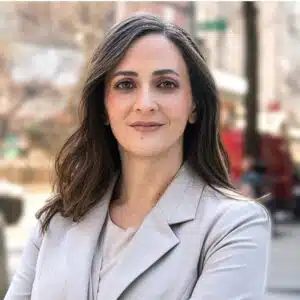
Laura Dunn
In this episode of The Psychedelic Podcast, Paul F. Austin speaks with Laura Dunn, civil rights attorney and congressional candidate, about trauma, leadership, and the role of psychedelic healing.
Laura shares how her work advocating for survivors led her to confront the deeper limitations of legal and institutional systems. While policy change can create meaningful protections, it often fails to address the underlying trauma individuals carry.
They explore how psychedelic experiences became part of her personal healing journey, and how that informs her approach to leadership, public service, and political integrity.
Laura Dunn is an award-winning civil rights attorney, former public school teacher, and congressional candidate in New York’s 12th District. She helped shape Title IX protections, contributed to the Violence Against Women Act reauthorization, and founded SurvJustice, a nonprofit supporting survivors of sexual violence. Her work bridges advocacy, policy, and trauma-informed leadership.
Podcast Highlights
- From survivor advocacy to policy reform
- Limits of legal systems in trauma healing
- Why leadership requires inner work
- Psychedelics as tools for self-awareness
- Breaking stigma in political leadership
- Bipartisan support for reform
- Veterans and policy momentum
- Trauma and leadership integrity
- A vision for conscious governance
Show Links
The Microdosing Practitioner Certification empowers you to launch a sustainable practice built on integrity, science, and results. Learn Paul F. Austin’s signature San Pedro Microdosing Protocol, master somatic coaching skills, and confidently guide clients toward lasting transformation. Click here to learn more and apply.
This episode is brought to you by The Practitioner Certification Program by Third Wave’s Psychedelic Coaching Institute. To learn more about our flagship 6-month training program for coaches who want to integrate psychedelic modalities into their practice, click here.
Third Wave occasionally partners with or shares information about other people, companies, and/or providers. While we work hard to only share information about ethical and responsible third parties, we can’t and don't control the behavior of, products and services offered by, or the statements made by people, companies, or providers other than Third Wave. Accordingly, we encourage you to research for yourself, and consult a medical, legal, or financial professional before making decisions in those areas. Third Wave isn’t responsible for the statements, conduct, services, or products of third parties.
Podcast Transcript
00:00:01 Paul Austin
What happens when people shaping our laws haven't done the inner work to actually understand themselves? Most of our systems aren't just built on policy, they're built on unprocessed trauma, unconscious bias, and inherited ways of seeing the world. And if that's true, then real change might require more than better laws; it might require different leaders altogether.
00:00:23 Paul Austin
Welcome back to the Psychedelic Podcast. I'm your host, Paul Austin, and in this episode, I'm speaking with Laura Dunn, a civil rights attorney, survivor advocate, and congressional candidate about the intersection of trauma, leadership, and psychedelic healing. We explore how her work in policy and advocacy revealed the limits of systemic reform and why personal healing may be a necessary part of meaningful leadership.
00:00:46 Paul Austin
I was introduced to Laura last year through a mutual friend, Anthony Adams, who we've had on the podcast before. I don't normally interview—I don't think I've ever interviewed—a political candidate, but you'll understand why as we get into this. I chose to have Laura on. Her work directly relates to our work here at Third Wave.
00:01:08 Paul Austin
So Laura Dunn is an award-winning civil rights attorney, former public school teacher, and congressional candidate in New York's 12th District. She has built her career advocating for survivors and marginalized communities across the courtroom, classroom, and public policy. As a survivor advocate, Laura helped to shape key Title IX protections, contributed to the 2013 reauthorization of the Violence Against Women Act, and founded Serve Justice, a national nonprofit supporting survivors of sexual violence. As a queer Latina leader with bipartisan experience, she represents a new generation focused on accountability, accessibility, and systemic change.
00:01:47 Paul Austin
So in this conversation, we explore how early experiences with injustice shaped Laura's path into advocacy and law, the limitations of legal and institutional systems in addressing trauma, why leadership may require deep personal healing, not just policy expertise, Laura's experience with psychedelics, most importantly, MDMA, and how it informed her self-awareness, the stigma around psychedelics in politics, and why more leaders aren't speaking openly, bipartisan momentum behind psychedelic policy reform, especially with veterans, the connection between trauma, shame, and how power is expressed in leadership, and what a more conscious and accountable political system could actually look like.
00:02:27 Paul Austin
I hope you enjoy this episode today.
00:02:29 Paul Austin
Before we hop into it, let's hear from our sponsors. Third Wave sometimes shares their partners with outside providers, but we don't control and aren't responsible for their statements, conduct, products, or services. We encourage you to do your own research and consult appropriate professionals.
00:02:47 Paul Austin
Hey, everyone, I want to take a moment to share something important with you. At Third Wave, one of our biggest commitments is helping people to explore the power of microdosing safely, intentionally, and with the right support systems in place. That's why I'm excited to introduce you to our go-to company, Golden Rule, one of the most respected names in the microdosing space.
00:03:06 Paul Austin
Golden Rule crafts premium, ethically sourced microdosing products, including psilocybin, single strain, and blends, San Pedro and LSD options, all designed to support clarity, creativity, emotional healing, and performance. What really sets them apart is their integrity, honoring traditional plant wisdom while embracing modern science to support real and lasting transformation. Together, Third Wave and Golden Rule are working to make safe, high-quality microdoses more accessible while ensuring you have the education, tools, and community to feel confident on your journey.
00:03:38 Paul Austin
If you're curious about microdosing and want to try some of my personal favorites, head over to goldenrulemushrooms.com/thirdwave and use code THIRDWAVE at checkout for 10% off, not just once, but for every future order, too. Again, that's goldenrulemushrooms.com/thirdwave and use code THIRDWAVE for a lifetime discount of 10% off.
00:04:02 Paul Austin
All right, folks, without further ado, I bring you this episode with Laura Dunn.
00:04:29 Paul Austin
Laura, welcome to the podcast. It's great to have you on.
00:04:31 Laura Dunn
Thanks so much. It's an honor to be here. I listen to you all the time.
00:04:35 Paul Austin
So as an opening to our conversation, your personal journey is pretty intense and focused a lot on healing your own path. You were a college athlete who was sexually assaulted and spent years in traditional talk therapy. Eventually, you built an entire legal career around protecting other survivors. And so I'm just curious if you could take us a little bit back to how did that early experience really shape the trajectory of your law career and even shape the path that you're on now in running for Congress?
00:05:13 Laura Dunn
Well, I can say with absolute certainty I would not be running for Congress had that never occurred, because when I was growing up, I came from a very politically divided family. It was half Democrat, half Republican, half Bears, half Packers. We couldn't get along. And I was someone who kind of stayed out of the mix. I wouldn't pick a team. I wouldn't pick a side for politics and really didn't see much value in it when I was growing up.
00:05:37 Laura Dunn
And then I had this horrible experience in college where two crew teammates made a decision to sexually assault me one of the first times I'd ever drank alcohol, and it reshaped my entire life. I definitely struggled, like so many survivors do, with whether to report. I really just wanted it to go away, and that was not possible. I had to see these men every single day in practice, and it became an untenable situation. So I chose myself. I left the team, which was very hard for me because I was a major athlete all through high school, had walked on to a Division I sports team. I felt very proud of those accomplishments, but I had to lose that part of my identity to keep moving forward.
00:06:18 Laura Dunn
And through all this victim advocacy, first speaking up for myself and then speaking up for other survivors, I found that law and policy really weren't responsive to the needs of people who are undergoing trauma and abuse. And that's not new news. I think anyone who's ever paid attention to sexual assault on a reasonable level knows that it's an ineffective system. We can see that right now with the Epstein files. We have horrible information about child sex abuse and trafficking, and yet no prosecution. So that's a theme in this area.
00:06:51 Laura Dunn
And so I became outspoken. I used my name, face, and story at a time when most survivors were still Jane Doe. This was all pre-MeToo. And from doing that, I actually first changed Wisconsin state law. For some reason, Wisconsin did not consider alcohol to be an intoxicating substance. Sometimes people laugh at that, but that really meant that survivors didn't get justice because there wasn't such a thing as being too drunk to consent. And I think anyone who now goes to college gets really good training under Title IX, letting them know what consent is when people are drunk, they can't give it, and creating a safer community. But that happened because of my story, because I went national, and because I got the attention at that time of President Obama.
00:07:35 Paul Austin
And the Wisconsin thing is interesting because I've seen memes lately that sort of show Wisconsin, I think, has they get way more drunk there than most other states. There's a reason that Miller Light and sort of Miller Brewery is in Milwaukee. And so the fact that you were very instrumental in changing that, and the fact that they didn't consider alcohol an intoxicant, I think speaks to a deeper issue at the heart of drug policy, which we will get to.
00:08:05 Paul Austin
What do we consider to be drugs, whether they're legal or illegal? What do we consider to be medicine? And I think this pairs perfectly well with psychedelic medicine and psychedelic therapy, which we'll sort of get into a little bit later in the conversation. So in many ways, you built an extraordinary legal career out of your pain. At what point did you realize that the traditional systems of healing and justice just weren't enough?
00:08:32 Laura Dunn
Well, I had a very unfortunate experience in college when I decided to report and to come forward. That's actually when the vast majority of trauma started becoming real for me. I think before I was kind of living in denial. But when I got to the point where I had bluntly been threatened again, I knew I had to come forward and get help. And I was met with a law enforcement system that didn't want to believe survivors, wanted to shame us, silence us, sweep it under the rug. And that caused the vast majority of the trauma, followed by, unfortunately, my own parents not being supportive. They really shamed me because I came from a religious community. They blamed me for drinking ineffectively, then blamed me for this rape. And it was deeply painful.
00:09:18 Laura Dunn
I would say the vast majority of my psychedelic healing is more so focused on the relational trauma that I suffered and the spiritual trauma I suffered than anything else. So I kind of went through college just clenching my jaw and gritting it out and making it through. I somehow managed to have two majors and a minor. I had two jobs at the same time. I basically became a workaholic to cope because if I didn't think and if I didn't process, then I could just keep putting the next foot in front of the next foot and make it to the end. And you get a lot of praise when you're a workaholic. People are always impressed that you've accomplished so much. But the truth was I was avoiding deep, deep pain.
00:10:01 Laura Dunn
And so at some point, that pain started coming out, as it always does. And I found myself drinking very heavily in party situations and becoming a person that kind of terrified me at times because I just would not have a sense of where I was and who I was anymore. So I consider it a blessing. I may not be a person of faith that would never claim Christianity anymore after everything I've experienced through the church and my evangelical family. But I definitely do think there was something divine in my ability to pull myself out of this horror that was building and building and to realize I needed help.
00:10:42 Laura Dunn
So unfortunately, the first person I went to was a really bad therapist. Went to a second therapist. They were also not so good. They said very victim-blaming and shocking things. And eventually, when I became a teacher and was in Chicago, I found an amazing therapist who went above and beyond and really talked with me at length about all the shame and the trauma and the spiritual abuse. But to be blunt, it didn't come through. I remember sitting in corners of couches and going through tons of clinics and just looking down the whole time.
00:11:12 Laura Dunn
And it was so interesting. The first time I did MDMA, all of a sudden, everything the therapist said made sense at once about how it was really blocking my healing. I had no ability to get out of that shame mode because it was my entire culture being brought up to be ashamed as a woman, as a sexual being, as a Christian, all these barriers to healing. And psychedelics immediately removed that. But that gap between that therapist that was very helpful in finding psychedelics is a crazy journey. And it involved me becoming a TED Fellow. I had never heard of psychedelic healing before. And I had done therapy, made it through law, and again, just started gritting my teeth and becoming this amazing victim advocate, taking cases all across the country, changing federal laws. And I could feel this thing happening where the more successful I got, the more I realized the inner being that I am is dying and has no room. And it became almost like it's almost like imposter syndrome, but I think in a different way. I just knew that underneath it all, I was crumbling and that no one could see that part of me. And I had to become this figure more and more, and I was losing myself.
00:12:26 Laura Dunn
So thankfully, I got a TED Fellowship in 2018. It took the TED stage and the US Constitution and its need to pass the Equal Rights Amendment to guarantee gender equality in the United States as a major tool for fighting gender violence. And one of those fellows kind of pulled me aside and said, "Hey, can we talk about healing?" And I'm not going to lie, I hated, absolutely hated when people were like, "Let's talk about healing," because I was the warrior. I was the tough one. I was the one gritting it out. It happened. So I was like, "Ugh, great. Another conversation where I have to fake that I'm healed." And this person had survived war, way more trauma than I can imagine, and had their own home turned into a prison at some point. And so had just seen the worst of humanity. And they were sharing that they had gone on a million different healing methods, and only MDMA therapy helped them. So I made a mental note. They were an international person, and I was like, "Huh, it must be legal somewhere else. I've never heard of it. It's not here, but good to know."
00:13:32 Laura Dunn
And then not even a few weeks later, a mutual friend of ours was hosting me and was saying that they were in the book Trust, Surrender, Receive, and that they had heard of psychedelics and that it really helped them and they're healed now. And I was like, "Why does everyone know? Just learning about this." And if that wasn't enough, the universe kind of tapped me on the head. A day later, a whole different friend in a whole different kind of realm got a drink with me and also said that they had just done MDMA therapy. And that was kind of like the last straw. I was like, "Okay, everyone knows about this. I don't know about this. It's time for me to dig in." And that's what led me to this beautiful journey that I'm on now.
00:14:13 Paul Austin
Wow. I mean, it's funny because this mutual friend, I also met him because he was on our email list at the time. This is early on in Third Wave. And I was going to New York, and I just reached out and was like, "Does anyone have a couch I can sleep on?" And he was like, "Sure, you can come and stay on mine. This is in 2017." And so Anthony has always been a very sort of generous human in many ways.
00:14:36 Paul Austin
And I hinted at this at the outset, but as part of this PBS documentary, that's a big step. It's one thing to do MDMA-assisted therapy and no one really knows about it, and it's private, and you're going through your own process, which is fantastic. But you're a practicing attorney who then chose to be fairly open about this and go on this documentary. What was going through your mind at that time when you made that choice and that decision?
00:15:10 Paul Austin
Why was it that you felt that it was so important to be a, yeah, just sort of open about it and reveal yourself in that way?
00:15:22 Paul Austin
Did you know that over 4 million people microdose psychedelics last year in the United States, and yet so few have real guidance on how to do it safely and effectively? That's exactly why I created our Microdosing Practitioner Certification. This is an 18-week professional training where you'll master my San Pedro microdosing protocol for nervous system regulation, learning how to coach clients through it with confidence and integrity. Just visit psychedeliccoaching.institute or use the link in the show notes to learn more.
00:15:52 Laura Dunn
Yeah, well, I want to preface this a bit. I was very straight-laced growing up. I wasn't drinking underage until college and then had that negative experience that one of the first times I ever drank. Definitely didn't smoke. I was very goody two shoes. Think of Pastor's Daughter. That's what I was.
00:16:10 Laura Dunn
And so when Anthony mentioned psychedelics, I got the book from him, Trust, Surrender, Receive, read all the testimonials. I went on to Maps and read their data. And I was struck in a, you know, I'm not going to get the data perfectly right, but it was something like 60 to 80% of people don't have PTSD after one session. And I was like, "If this is true, this is worth committing a crime over. It truly is, because healing is more important than anything I can imagine. It's more important than my career because I was losing myself, and it was something I couldn't show anyone. It was like this deep, dark secret I was waiting to be found out, and one day I was just going to lose it if I wasn't going to get help."
00:16:51 Laura Dunn
And so I took that brave first step. And then to end up on PBS, that was not my first session. That was definitely session, I think, number six. So I did a series of six, largely MDMA-focused, going into the PTSD, into the trauma, a lot of it very related to the sexual abuse, but also the family trauma.
00:17:16 Laura Dunn
And the reason I went for it, I remember, I believe the request had come through Maps and made its way down to Anthony. And he called me. He's like, "Well, you've been really public about being a sexual assault survivor, and that's unusual. Maybe this is in your wheelhouse." And I guess he told me much later, he was like, that he hoped I said no so he didn't have to join me for this PBS documentary because he is in it.
00:17:43 Laura Dunn
But I said yes. I called it, and he was a little shocked. But I said, "Yes, I want the world to know that healing should not be illegal. And if anything, if I lost my law license over this, good. Make me an advocate for this issue at a national level. Draw more attention." Because I have been helping survivors my entire adult life. I see this pain that is never ending. And to know that there is freedom possible from that is the greatest gift in the world. And to think that all of us avoid it because of arbitrary laws that have nothing to do with what is best for humanity, that's the kind of laws lawyers should break. And I don't know if you've noticed in my background, the couch that I did my session on and even the chair that Anthony sat on are now furniture in my own home.
00:18:34 Paul Austin
So it was that impactful for you and that instrumental. And I know it's now a pretty central part of the platform that you're running on. And we'll talk a little bit about what's going on with psychedelics and policy at this point in time. But I'm curious to hear, after that experience, what was the reaction? There was quite a bit of risk going into being sort of public about that. This documentary comes out on PBS. How did the legal community react? Did it cost you professionally, or did it potentially open doors that you didn't expect?
00:19:12 Laura Dunn
It amazingly did not cost me anything. Fingers crossed because at any moment, you know that can come back. And drawing more attention to it is always risking something. But it's important. It's important to know that this is still an unresolved issue, that the law does need to change, and people still deserve healing, even more so in this current political climate with all the horrors that are going on. So we have yet to see what the final outcome of those choices are. But in the short term, no. And I think that is a testimony to the level of advocacy that I achieved in my work for anti-gender violence, that it was bouncing off me rather than taking me down, and I dared it to take me down. So thankfully, most people saw it. It started conversations. It was a good opportunity to let clients know, "I can't help you as a lawyer with this, but by the way, read this book, Trust, Surrender, Receive. There's other options out there."
00:20:12 Laura Dunn
Knowing that ketamine is legal, that's a very safe option that I do actively send clients to if they're open to this medicine and this work. But the underground is something that I myself got involved in. I started actually sitting for survivors because I knew one of the hardest things when I chose to take the medicine and go into these settings was that I was changing and altering my consciousness in the presence of a man, and that that had happened once before, and I was very brutally sexually assaulted. And that came up 100% of the times that I went in these sessions, just this constant fear.
00:20:52 Laura Dunn
And I was like, "How exhausting. What if I, as a survivor, sat with other survivors and just said, 'You are safe here, and we can do it in your home. You don't have to change settings.'" I know some sitters have strong feelings and need to be their space. When you do survivor work, it is whatever the survivor needs, where they are comfortable, where their barriers can come down. So there was a small period of time where I was able to give that gift to other survivors. And the stories that I heard from those survivors of being assaulted by family and relatives and near-death experiences and violence and abuse, it's so amazing that people dare to heal from such horrors. And then the beauty of seeing the inner strength that we all have makes me keep coming back and makes me a lifelong advocate because we all have healing within us. We just need the opportunity to reach it.
00:21:51 Paul Austin
Yeah, it's beautifully said. And I could feel you right now, the emotion behind this and the process that you navigated. And one thing you mentioned, which I think is worth coming back to, is the fact that Anthony is a man and that you still felt safe enough to go through this experience with him, which not every woman would feel that way.
00:22:19 Paul Austin
I know a lot of people who do underground MDMA work and many who are survivors who would never step into a guided session with a man. Or if they did, they would want a woman who is there present, at the very least, to create a little bit more safety for them.
00:22:35 Paul Austin
I'm curious, did you have any sort of concerns about that going into it, or had you developed enough trust with Anthony at that time as a friend where it did feel fully safe for you to be in that context and that role with him?
00:22:53 Laura Dunn
Yeah, at that time, he had a live-in partner. And so there was an in-presence. And there were several occasions in my sessions where I needed her to be present just for reassurance. And it was nothing to do with Anthony. We've had a 20-plus-year friendship, and I see that lasting the rest of our lives. But fear is real in the body, and it overwhelms the senses.
00:23:16 Laura Dunn
And so what was interesting is actually with the PBS session, it was two men filming an audio and Anthony, and there was no female presence. And that felt like a much harder challenge. And the good thing is Anthony, as a great sitter that he is, was able to create this context and understanding before we ever went into the session of what may be required. But there was absolutely a moment where I felt very, very--I'm going to get emotional even saying it--but both the people recording the session were able to put their hands on me, send me comfort, let me know it was okay. And it speaks volumes to them and the willingness they had to come into this very sacred space.
00:24:06 Laura Dunn
Because I don't think it's a space where cameras belong all the time, but it was for a purpose. And that's kind of why I am doing what I'm doing now, running. It's not because politics is pleasant. It's quite the opposite. I don't know any sane person that wants to be a politician right now, but there is a bigger purpose, a bigger calling. And I've always been willing to heed that call.
00:24:36 Paul Austin
After a decade of professional experience in the psychedelic space, I've learned that direct experience with these medicines is essential. And that's why our Practitioner Certification Program includes something rare, a week-long, immersive, intensive at Brave Earth, a regenerative community in Healy Art Center in the lush jungles of Costa Rica. This is more than an online certification. It's a comprehensive learning journey that combines psilocybin experiences, daily yoga and meditation, a TEMES Skull ceremony, in-person coaching, and hands-on leadership development, all set against the backdrop of volcanic hot springs and clouded forests. The intensive is fully included in your tuition as part of our six-month program that fuses cutting-edge psychedelic education with practical coaching skills. You'll learn directly from me, our world-class faculty, and other leaders who are shaping the future of psychedelic practice. Join a global community of coaches at the leading edge of this third wave of psychedelics and walk away with the confidence, clarity, and credibility to guide others safely and effectively. If you're ready to elevate your practice, learn more, and apply for our next cohort at psychedeliccoaching.institute. Again, that's psychedeliccoaching.institute, or check the link in the description.
00:25:54 Paul Austin
Yeah, that notion of politics and how divisive it's become and how, in a way, how nasty it's become. And we've seen now several politicians come out in support of psychedelic medicine across both aisles. So AOC, and I think Dan Crenshaw is the congressman from Texas. Psychedelics are really one of the few bipartisan topics in the political conversation today where there is support on both aisles, largely because of the conversation around veterans that's created that level of support.
00:26:35 Paul Austin
I just saw a blurb about how Rick Perry, the former governor of Texas, who has been more vocal about supporting IBGANE specifically, is now writing a book on psychedelics for Christians, in fact, which is kind of interesting. And I know both you and I have that background and have, in some ways, left it behind. But in some ways, it's also meant something to us.
00:26:59 Paul Austin
But I don't know of any politicians thus far--and I could be wrong on this. You would know this better--who have been more open about their own personal healing journey with psychedelics. And I know that there are politicians in the Senate and in Congress who have done psychedelics. I'm very clear on this. So that's a big risk for you to take. You're kind of an N of one. It's a bit of an example. And you're used to this. You've done this before. But I'm curious, what made you go from, "I'm a lawyer who advocates for survivors, who has done psychedelic-assisted therapy," to, "I need to run for Congress and make this sort of a central point of the platform that I'm running on"?
00:27:44 Laura Dunn
Yeah, no, it's a great question. I definitely had visions in some psychedelic sessions that I needed to do something much bigger again. I've already had this wonderful career in victim advocacy in Title IX. And when Trump took office the first time, I knew it was going to overwhelm my capacity. And so I had moved out of the national nonprofit Served Justice that you mentioned into for-profit law. And after about a year of building up a case list at a boutique firm, I made my own national nonprofit. And I'd run that for four years. And I just saw the white writing on the wall. I didn't see it the first time. I never thought Trump would win. But the second time, I thought he would. And I knew if that happened that I was going to have to do something much bigger.
00:28:34 Laura Dunn
And in fact, the first time he won, I had already done the She Should Run programs and Vote Run Lead. And I was part of those groups of women that were like, "We need more women in politics to save us." And so I was prepared. But I had to sell my national practice. And that was actually very emotionally challenging. But I knew it was necessary because I'm seeing civil rights law crumble. I'm seeing the rule of law itself crumble. And I am seeing so much horror. I mean, we go day by day, but there are lives left and right because of this administration, whether it's immigrants in ICE detention or American soldiers in Iran or other people in the Middle East who are just poor civilians being caught up in this needless war. And so I felt like I needed to prepare.
00:29:29 Laura Dunn
So I sold my law firm, and I knew that politics was the likely calling. I did look at other options. It was definitely at NYU getting my executive NBA. And I thought I had some time. But I made several promises to myself that if Trump won again, I would look to run for office. If Jerry Nadler retired in my district, I would step up and run for that seat. And it just happened a lot faster than I had hoped.
00:29:55 Laura Dunn
But when I kind of came down to making that decision, because unfortunately, the very morning I found out Jerry Nadler was retiring and felt this calling, later that day, I found out my father was ill. And so I couldn't immediately act upon this. And so in the month that I took to really kind of gear up and question myself very deeply, I thought, "If this is really the last free and fair election, if we really have someone who wants 'a third term,' which is really dictatorship, and if we want women who's going to take away voting rights of women, this is it. I can't wait till I'm better prepared, and I can't wait till I'm ready."
00:30:35 Laura Dunn
And it made me realize that that decision to sell my firm was really valuable because I actually gave myself eight months to really lean to do much more healing work. I basically was able to coast and work part-time at a very low level compared to the level I had when I was running a law firm. And I built myself up. And in those sessions that I had, I definitely had visions of justice as a force in the universe and that I was called to serve it. So I, again, did not see it all kind of clicking the way it would. And I'm still in the fire. The race ends on June 23rd. So it's not done. But I'm so deeply grateful that I have the medicine, that I have this path. Because you think it looks bad from the outside in politics, step into it. It's worse on the inside. You would think that the Democratic Party would be united and say, "Get this tyrant out." But there is just as much infighting and failures and corruption as the other side has. And that's really disappointing to see.
00:31:44 Paul Austin
Yeah, the state of politics could be, I think, a whole episode in itself and how hopefully the FDA approval of psychedelic medicine and the legalization of psychedelics within states can actually be sort of an organizing or binding force because divisiveness is never good. And sort of a lack of etiquette and a lack of respect and a lack of dignity is, unfortunately, it seems to be kind of the era that we are in. And our hope, I would imagine, our shared hope is that psychedelic and psychedelic medicine can help bring us back together to some degree.
00:32:24 Paul Austin
And we've talked about how this is a bipartisan issue. And yet, no other politicians have openly talked about their own psychedelic use. Why do you think that is? And why are you willing to be that person who really sticks your neck out, so to say?
00:32:40 Laura Dunn
Yeah, well, there's politics as usual, and then there's me. Politics as usual, right? No one's ever done any drugs, but maybe they support decriminalization, maybe legalization.
00:32:54 Laura Dunn
But I think anyone who has reached a certain peak in pushing themselves to be the most that they can be, especially for other people, knows that you have to unlock some part of yourself that's not easily accessed. Some people use religion for that. Some people use endurance sports. For me, I went to psychedelics. And I don't want there to be any shame or silence around this. We know that it works. We literally have Johns Hopkins and all these amazing institutes doing research. There's not a question.
00:33:33 Laura Dunn
If anything, the law right now making certain drugs Schedule I, the very language says, "No medical benefit." It's not true. We already know that. So even if Congress hasn't gotten around to striking that down and fixing it and modernizing our laws, we know it. So I guess I'm living the world I want to have exist already. I want there to be a world where people not only have said, "Hey, I've done psychedelics to heal," but like, "I'm actually doing psychedelics to be a better leader," because there's no way a better leader is possible when you carry shame and trauma and unresolved issues.
00:34:10 Laura Dunn
It comes out. I mean, how many fun political stories have we heard of people being caught in horrible situations and committing abuses and having illicit affairs because they have unhealed wounds in themselves? So I want to live in a world where people are like, "Yes, I want a candidate that's handled their issues, that has actually faced their demons and come out the other end and decided, after all of that, not to live for themselves, but to live for other people at a time when the world wants to rip itself apart."
00:34:43 Laura Dunn
I talked a lot about the bipartisan nature of psychedelics. I mean, that is the power of the medicine. It's also the wisdom of MAPS to have picked veterans. But we cannot use people as fodder. We cannot send them to war and have no healing when they return. And so I really appreciate all the veterans who are courageous and outspoken because they've made it safer for me to be outspoken. There are many who have gone before me and so many who will come after me. And I'm just trying to do my part by being the most outspoken and vocal leader in Congress on this issue.
00:35:16 Paul Austin
So you've mentioned MAPS a couple of times now. And our listeners are very familiar with MAPS. And they're also familiar with Lycos and what happened about a year and a half ago when, unfortunately, MDMA-assisted therapy was rejected by the FDA. And we won't get into the specifics about why that is. But I think my audience is very clear where I stand on that, which is that it was bullshit.
00:35:38 Paul Austin
But you recently sat down with Rick Doblin to talk about the politics around psychedelics in New York. And I'm curious, how did that conversation go? What's the state of play right now when it comes to psychedelics and politics?
00:35:53 Laura Dunn
Yeah, well, big thank you to the Psychedelic Assembly for hosting myself and Rick for a forum here in New York City to talk about this very issue. Well, I think we all had some strange hope that, despite what the FDA did, that RFK would come in and maybe legalize psychedelics because he's doing a lot of things out of the box. And we thought, maybe it'll sneak in there.
00:36:18 Laura Dunn
I have personally lost hope that that's going to happen because what we do know about this current administration is it's whatever is in their interest, whatever will make them the most money. And we all here know the reason psychedelics is legalized is because it's not going to make big pharma any money. And that's who funds Congress. So it's really kind of unfortunate that we weren't able to have this unusual ally and get this passed. But obviously, there's still hope.
00:36:48 Laura Dunn
So Rick Doblin was generous enough to speak with me and to speak supportively. He does run a nonprofit, and nonprofits can't technically get involved in campaigning. So he was very thoughtful there. But anyone who's done psychedelics, who will stand up and then said they've done psychedelics and come from a legal background of successes, that stepping up for Congress is the leader we can follow into this fight. And whether that's me winning in this race or someone else being inspired because they heard me and they decided to step up and run, it all matters. So I know that he's got my back. And I know that the community is supportive here.
00:37:28 Laura Dunn
On April 19th, I'll be with the Psychedelic Assembly for Bike Day. We're doing a March for Cognitive Freedom here in New York City. So I'm going to keep being vocal. And nothing's going to silence me because we are literally living in an era where people are so afraid to donate, to put their name with a candidate. I have numerous friends who are naturalizing or worried about their visas. Everyone's afraid, and they're restricting. They're holding their money.
00:37:57 Laura Dunn
Literally, every Democratic fundraiser I've talked to is like, "Oh, no one's getting any donations anymore." And I'm not surprised. We're worried about the stock market crashing. We're worried about, "What if we need money to flee?" There's so many fears in the atmosphere. And so I'm just trying to hold this center because if I can be brave and courageous in this way, what can you do to help change this issue, to fight this evil that's in this world? We all have that choice. And if you are doing the medicine, you know how to ground in yourself for these moments. So I'm calling on my community. And Rick is part of that community who's hearing that call.
00:38:38 Paul Austin
So I mean, if you do end up getting to Congress, and what better time to run? I mean, I'm tracking some of this in terms of the media. But I think it's fairly clear that there's going to be a bit of a whiplash effect against the Republican Party because a lot of, especially with the recent Iran war, I don't think this has been particularly popular. And so what we're hearing again and again is there probably will be
00:39:04 Paul Austin
a sort of Democratic overtaking of at least the House. I'm not sure of the Senate. But it does open up a conversation, especially because this election cycle is going into the potential FDA approval of psilocybin.
00:39:18 Paul Austin
So the administration has made it clear that it seems to be effective for treatment-resistant depression. They've fast-tracked the approval of psilocybin by 9 to 12 months. How it will be rolled out is still to be determined.
00:39:33 Paul Austin
And I at least speak for myself on this note. It would be, I think, a shame if it was only in sort of very limited circles, not really covered by insurance properly, only available to those who have the wealth. We've seen this in Australia, for example, where psilocybin and MDMA have been medically available, but it's been very restrictive in terms of who can access it.
00:39:55 Paul Austin
And so I'm just curious kind of what you're paying attention to or what you want to bring into Congress as it relates to psychedelic policy right now. What are some sort of realistic things that can actually get done if you're elected for this sort of next cycle in the House of Representatives?
00:40:14 Laura Dunn
Yeah, I think the temptation is going to be to medicalize and, like you said, to limit. And this is such a powerful medicine. I am one of those people that really does believe the previous waves showed us that the sacredness of the medicine must be honored. Otherwise, we may lose the pathway completely. So I'm not someone who's necessarily going to stand up and advocate for recreational use. I do fully acknowledge that it's much healthier and better than alcohol, for sure. But that's a fight for a different day in my mind. The fight right now is for healing and not to make it exclusively medicalized.
00:40:53 Laura Dunn
I am someone who benefited from community-level healing. And I've worked with people who have done legalized clinical tests in ketamine and then have come done underground psychedelic work with me and been able to cross-compare. And one feels like you're a lab rat, and there's a million people watching you and beepers and all these crazy things. And the other is someone who's gone through experience just like you, who can physically hold that space, look you in the eyes if you need to sit up and make contact before going into a tough space. And so I think there's a space for all of it.
00:41:27 Laura Dunn
And the tendency, I think, of Congress will be medicalize it. That's the safest, easiest format. Just toss it in there rather than taking the time to really understand. So I'm someone that can hold hearings on the medicine, bring in different practitioners, can think through other ways to have it licensed, whether it's microdosing with talk therapy and finding kind of community circles and groups where there's some type of oversight. And that's where I really appreciate your work, Paul, because you've been really pushing licensing and training even before there was a legalized industry because we do need standards. It can't be so hard and so challenging that no one can reach it. But we also can't let it be a free-for-all. We already saw that doesn't work as far as American drug policy. So there is definitely a balance.
00:42:15 Laura Dunn
And I definitely want to prioritize, obviously, giving it to veterans, survivors of trauma, other people with severe symptoms and conditions. But I don't want it to end there. And I think something that I've taken from Ruth Bader Ginsburg, who's my favorite jurist, no surprise, is that every little step moves the needle and allows culture to catch up with law, or in this case, maybe law catching up with culture. And if you move too quickly, you do risk a backlash. So for all of those out there who want me to do everything overnight, I'm not going to make a false promise. But we know where the path is going. It is towards healing and wellness. And over time, I mean, we already have alcohol replacements with THC drinks. There will be a new world very possible. It just may not be next year or the year after.
00:43:06 Paul Austin
Yeah, it's hard to balance this tension of the world appears to be falling apart. We don't have effective treatments for a lot of ails and issues that people navigate, recognizing that psychedelics are a tool, that the sort of fact that they're Schedule I is unscientific. And it feels like just kind of riffing with you here, it feels like the FDA approval for Comp 360 synthetic psilocybin feels like, I wouldn't say a sure thing because I thought MDMA was going to be a sure thing as well. But it feels like there's good, strong momentum there.
00:43:44 Paul Austin
Where it feels like there's maybe opportunity for more dialogue and conversation and momentum is one around the rescheduling conversation. One point that I've talked about publicly is if psilocybin is approved for treatment-resistant depression, the DEA should be required to reschedule it to Schedule III. Some people have said, well, they can do bifurcated scheduling, which is technically unconstitutional. This is at least according to Matt Zorn, who is involved with the HHS and the administration. So it feels like emphasizing the need for rescheduling upon approval is a really rich thing.
00:44:24 Paul Austin
And I know another aspect is, of course, religious freedom. And we've seen ayahuasca through churches like the Santa Dime and the UDV, and recently, the Condor Eagle Alliance in Arizona get approval to import and work with ayahuasca. However, there's not yet traction and momentum to make it, I would say, more accessible to ensure that people who use this from a religious or spiritual perspective can actually get that freedom. We had a guest on the show about a year ago, Brian Robertson, who is actively attempting to sue the DEA to make it more feasible for folks to get protection. So I feel like this religious freedom angle is a strong one that's gotten some attraction but not a ton.
00:45:11 Paul Austin
And also, for me, the rescheduling conversation is huge. And I'm seeing very little about it. I mean, before we went live, we were talking about how AOC was recently in a congressional committee talking about how Schedule I, the fact that MDMA and LSD and even psilocybin is on Schedule I, is absurd. And it feels like the rescheduling would open up more doors for research and would reduce criminal penalties and would just create a little bit more breathing room to actually generate more traction and momentum around these powerful medicines.
00:45:45 Laura Dunn
Yeah, and I would add to that continually funding research because science helps bring along some of the doubters. There is a religious right in America that feels pretty strong and powerful right now. And so it's so interesting to hear that maybe Christians are starting to have this dialogue. That tickles me to no end because that would be just full circle. The things they used to persecute are now the things that they embrace. But maybe that's what will happen and how beautiful if religion ends up being that door after having been one of the tools used to suppress these ancient wisdoms and resources.
00:46:24 Laura Dunn
I'm definitely going to go to a psychedelic church if it opens up down the street from me in New York City. So whoever wants to build one in New York, you got at least one congregate right here. But I really think the ongoing funding of research, Kombu, is the latest psychedelic that I work with. And I do it once a quarter for health reasons, to clear my system, to force my immune system to go through because we know we live in a world where our food is poisoning us, that there are chemicals that are unhealthy for us in everyday products.
00:47:00 Laura Dunn
I saw most recently, Apple wristwatch bands have forever chemicals in them. And it's endless. And so I've definitely taken to using that. And there's some suggestion from information on your website that there may be anti-carcinogen effects. So let's lean into that research. Let's find these tools. I mean, how amazing would it be if all these ailments that are currently blights on our society have medicine already available in the psychedelic realm?
00:47:28 Laura Dunn
I mean, even mushrooms alone, psychedelic or not, can clean up entire oil spills. We have everything we need. And it really just requires a government that is open-minded and willing and that is starting with, I think, healing in medicalized settings and then expanding and expanding. And who knows? Maybe I'll be introducing members of Congress to psychedelics so that they have less preconceived notions and more firsthand experiences.
00:47:57 Paul Austin
Well, I'm glad you brought up the point of research. And the nuance that I love to bring to this conversation is I don't believe we need more research to make these medicines accessible. In other words, we know by this point in time that they are not addictive. We know by this point in time that they do have medical use. And we are still in our infancy in terms of understanding the potential medical applications.
00:48:19 Paul Austin
I think one of the best examples of this is for the use of neurodegenerative conditions. So there's been some research coming out about psilocybin for Parkinson's and ibogaine for multiple sclerosis and potentially psychedelics for Alzheimer's and dementia. So I do think this, and the other angle of research that I'm interested in is metabolic health and mitochondrial health and what's the impact of psychedelics.
00:48:46 Paul Austin
There's a researcher at Columbia University, his name is Martin Picard. So he's in New York, who is doing research on this right now. How do psychedelics impact our mitochondria? And what is the importance of having healthy mitochondria to address depression and addiction and anxiety and things like that? So we're really just in the infancy of it.
00:49:07 Paul Austin
And I think, like you said, the rescheduling conversation, hopefully, the government actually funding research itself. I know it has a little bit. The National Institute of Mental Health has done research or supported Matthew Johnson with his research on psilocybin for nicotine addiction. There's also been some funding for psilocybin at NYU for alcoholism. But it would be great to see the amount of research that we're pouring into this at the federal level, 10x, if not 100x, because I think the amount of context and potential use applications that we will get from that will be astounding in terms of what it could bring.
00:49:44 Laura Dunn
Amen. Well, we are calling in what will be right here and right now. And it takes all of us to make that commitment. So I really appreciate the conversation and all the facets of it because psychedelics isn't a conversation happening enough in politics. We've definitely had some areas, but I want to make it normative. And so for you to have me on as I think your first political guest means a lot. So thank you.
00:50:12 Paul Austin
So the final idea that I wanted to sort of riff on, at least a little bit, came from Anthony when we were prepping for this show. And it was that democracy itself may be an artifact of the psychedelic realization that we all share a deep source and that governance should reflect that interconnectedness. So the Eleusinian mysteries, which we've talked about on the show before, in ancient Greece, Plato, and Aristotle, and Marcus Aurelius, and Cicero, and many other very influential Greek thinkers participated in these mysteries. And we're now living at a day and age, we've talked about this previously, where there's high levels of divisiveness and there's sort of a polarized nature. So I'm curious, how do you see that relationship between the use of psychedelics and maybe remembering the importance of democracy at a time like this?
00:51:03 Laura Dunn
Yeah, I think so many people experience similar sensations when they alter their consciousness with various medicines. And the message that I keep hearing and probably hold closest is the message that love is really the most divine. And I think we are living in a world because of increasing scarcity, because the rich are getting richer and the rest of us are starting to struggle, where people are leaning more into fear. And for a long time, I used to be very out of touch with my emotions, being the workaholic and the trauma survivor that I was. And someone made it really easy once for me and said, there's just two. It's fear or love.
00:51:47 Laura Dunn
And so as we see the world shift into fear, I do think psychedelics call us back to love. And then people who have embodied the work of psychedelics can model what that looks like in practice. I mean, how many of us have done psychedelic journeys only to have people say, I want what you have. How did this come to be? How are you more lighthearted? How are you in this way? And you share with them the pathway.
00:52:13 Laura Dunn
So I think we are in such a state of darkness, but light is just right around the corner. And so I very much hope that the commitment to psychedelics at a time when there's so many political issues really shows to people that this is not just about fixing what is wrong. It is about actually creating what should be and what will sustain us into the future so that these all feel like bad dreams that we've left behind in a more beautiful world.
00:52:45 Laura Dunn
So I welcome people to join me in that. They can look up my campaign at lauraduneforcongress.com. And I would love people to support this race is not done for a few more months. And everyone needs to get hands on, whether it's door knocking or donating. We need all the support we can to create the world we all want.
00:53:05 Paul Austin
Beautiful. And you kind of beat me to the punch. So lauraduneforcongress.com. We'll drop a link to that in the show notes in case folks are listening while on the go. Laura is running in New York's 12th District for US Congress.
00:53:20 Paul Austin
And yeah, I just want to take at least a little bit of time to thank you. Thank you for your courage and going through your own story and surviving that, but then bringing that to so many other survivors and then being so open and such a courageous advocate for this work and this medicine. We need more folks who are willing to be courageous. I think especially in this day and age, we have all the information and knowledge we need. Courage is really what separates the doers from the followers, if you will. So I appreciate you stepping up in this way.
00:53:57 Laura Dunn
Absolutely. I think courage is nothing more than a choice. We all feel the same fear and hesitancy. I'm no different than anyone else. I just know that I want to be the change. And that's my choice.
00:54:10 Paul Austin
Beautiful. So lauraduneforcongress.com. Laura, thank you so much for joining us on the Psychedelic Podcast.
00:54:16 Laura Dunn
Thank you, Paul.
00:54:18 Paul Austin
There you have it. That's my conversation with Laura Dunn. If this conversation resonated with you, take a moment to share it with someone who's thinking about leadership, systems change, or the future of this space. You can also leave us a review on your favorite podcast platform as it helps more people to find the show.
00:54:35 Paul Austin
And if you want to stay connected, make sure you subscribe to our YouTube channel at youtube.com/thethewave. You can also follow me on X, LinkedIn, Instagram. I post pretty actively on all those platforms. So just look for Paul Austin. All right, we'll see you next time. Thank you.