IFS & Psychedelics: Tapping Into Self Energy for Healing Trauma
LISTEN ON:

Episode 303
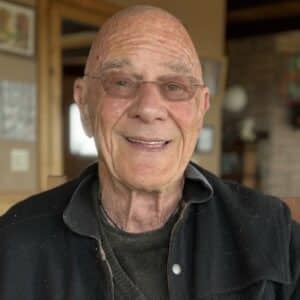
Richard Schwartz, Ph.D.
In this episode of The Psychedelic Podcast, Paul F. Austin welcomes Dr. Richard Schwartz, creator of the Internal Family Systems (IFS) model of psychotherapy. Dick shares how he discovered that psychedelics naturally facilitate access to what IFS calls “Self energy” – the compassionate core within everyone that can heal wounded parts. He explains how medicines like ketamine and MDMA help relax protective parts of our psyche, revealing both Self energy and exiled parts that need healing. Dick reveals his personal journey with psychedelics, including his work with ketamine-assisted IFS therapy, and discusses the relationship between psychedelic experiences and spiritual guides. He emphasizes how reframing “bad trips” as opportunities for exiled parts to be witnessed can transform challenging experiences into profound healing moments.
Dick Schwartz began his career as a family therapist and academic at the University of Illinois at Chicago. There he discovered that family therapy alone did not achieve full symptom relief. His patients became his teachers as they described their inner “parts,” which formed networks resembling the families he had been working with. He found that when patients separated from these parts, they shifted into a state of curiosity, calm, confidence, and compassion—what he called the Self. From these explorations, the Internal Family Systems (IFS) model was born in the early 1980s. Now evidence-based, IFS has become widely used, particularly for trauma work, offering non-pathologizing techniques for individuals, couples, families, corporations, and classrooms. Dick lives with his wife Jeanne near Chicago.
Podcast Highlights
- The natural synergy between psychedelics and IFS therapy
- How psychedelics temporarily quiet protective "manager" parts
- Understanding how there are “no bad parts” of the psyche
- The difference between Self and parts in IFS
- Reconceptualizing "bad trips" as healing opportunities
- IFS and shadow work
- How psychedelics accelerate access to exiled parts
- Moving IFS beyond therapy into leadership and systemic change
- Legacy burdens: healing inherited trauma collectively
Show Links
These show links may contain affiliate links. Third Wave receives a small percentage of the product price if you purchase through the above affiliate links.
Podcast Transcript
00:00:01 Paul F. Austin
Hey folks, welcome back to the Psychedelic Podcast. This is your host, Paul F.
00:00:05 Paul F. Austin
Austin. Internal Family Systems, or the IFS model of psychotherapy, has become familiar to many in the psychedelic world as it offers a framework that seems to naturally align with these profound experiences. Today I'm joined by the creator of IFS himself, Dr. Richard Schwartz, known to many as Dick Schwartz. Dick discovered something remarkable about the synergy between psychedelics and IFS: that medicines like ketamine and MDMA naturally relax our protective parts, allowing access to what IFS calls our "self-energy," the compassionate core within all of us that has the capacity to witness and heal our wounded parts. In Dick's words, what began as a therapeutic model has evolved into a paradigm shift in understanding the human psyche. We dive into his 40-year journey with IFS and discuss the ketamine-assisted IFS workshops he is currently co-leading.
00:00:57 Paul F. Austin
We also explore the spiritual dimensions of psychedelic experiences: Dick's take on "bad trips" from an IFS perspective, and the exciting possibilities for bringing IFS beyond therapy into leadership and systems change. I personally discovered IFS around 2020, and it's been fascinating to witness its rise and prominence in the psychedelic space since then. I've been looking forward to speaking with Dick, particularly about his own perspectives on psychedelics. I hope you enjoy this conversation as much as I did. Before we get into it, here's a quick word from our sponsors.
00:01:32 Paul F. Austin
Hey everyone. Before we dive into today's episode, I want to take a moment to share something really important with you. It's about sourcing microdoses. Here at Third Wave, one of our biggest commitments is helping people to explore the power of psychedelics safely, intentionally, and with the right support systems in place. That's why I'm excited to introduce you to our go-to microdosing partner, Golden Rule Mushrooms, a trusted friend and one of the most respected names in the microdosing space. Golden Rule crafts premium, ethically sourced microdosing and macrodosing products, including psilocybin and LSD options, all designed to support clarity, creativity, emotional healing, and performance. And what really sets them apart is their deep integrity with this work, both honoring traditional plant medicine while embracing modern science to support real and lasting transformation.
00:02:23 Paul F. Austin
Together, Third Wave and Golden Rule are working to make safe, high-quality psychedelic medicine more accessible while ensuring you have the education, tools, and community to feel confident on your journey. If you're curious about microdosing and want to try some of my personal favorites, head over to goldenrulemushrooms.com/thirdwave and use code THERDWAVE, that's one word, THERDWAVE, at checkout for 10% off. And you can use that not just once, but for every future order too. Again, that's goldenrulemushrooms.com/thirdwave and use the code THERDWAVE, one word. Now let's get into the episode. All right, that's it for now. Let's get into my conversation with Dr.
00:03:04 Paul F. Austin
Richard Schwartz.
00:03:37 Paul F. Austin
Dr. Schwartz, it's an honor to have you on the podcast with us today. Thank you so much for joining.
00:03:41 Richard Schwartz
Great to be with you, Paul. And please call me Dick.
00:03:44 Paul F. Austin
All right. Let's do that. So, Dick, I'm curious, like, when you first started hearing that people were bringing IFS into psychedelic journeys, was there a part of you that said, "Wait, they're doing what with my model?" Was this surprising to you?
00:04:03 Richard Schwartz
In some ways it was, yeah. When I first got interested, it must be five or six years ago, Michael Metthoffer, whose name you probably know, is a primary researcher for MAPS, is also an IFS therapist. And he called me all excited because he'd been keeping track of how often with a higher dose of MDMA, people would spontaneously start doing IFS. And he found, like, 80% without any cueing from the facilitators, they would start seeing their parts and start working with them in a compassionate way. And that was intriguing to me. My first reaction was great because that kind of validates that I just stumbled onto something that people naturally know how to do when their protectors go offline or relax. And, you know, I thought, that's nice, but we do fine without that. We don't need it. And a lot of it's illegal. So, you know, I can't be doing MDMA on my own with people. So I didn't really dive in at all.
00:05:24 Richard Schwartz
And then Phil Wolfson showed up at one of my workshops, who's sort of the ketamine maven, and got excited about IFS and invited me to come and co-lead a workshop with him. And this must be five years ago, maybe. And I was kind of amazed at the power of the medicine to sort of put to sleep these, what we call, manager parts. And then when those parts go offline, then you access a lot of what I call self spontaneously. And then that's a big invitation for lots of what we call exile parts to get access and come in. So people would be having contact with parts that might take us 10 sessions to get to in a matter of 15 minutes. And so that really is when I got hooked. And so subsequently, as you mentioned, I've been working with Sonny Strossberg to co-lead ketamine and IFS workshops.
00:06:41 Paul F. Austin
And I'm curious, in your experience, what do these altered states facilitated by ketamine or MDMA or maybe even breathwork meditation, what do these altered states reveal about the soul's hunger for wholeness? Something even beyond trauma and beyond healing?
00:07:01 Richard Schwartz
Well, I think it releases that hunger. You know, I think for these 40 years that I've been on this journey with IFS, maybe two years in, I stumbled onto what I call the self, which is this essence inside of everybody that has all these great, what we call, seaward qualities.
00:07:25 Richard Schwartz
And it includes calm and confidence and curiosity and compassion and creativity, what we call the eight Cs: clarity, creativity, courage, and connectedness. And I just stumbled onto that discovery
00:07:47 Richard Schwartz
and that that's in there, but it gets covered over by these parts and what I call the burdens they carry, which are extreme beliefs and emotions. And so a lot of IFS has been trying to help people access that core essence. And then from that place, they have a natural desire for wholeness. They have a natural desire to reach out to these parts and bring them back home.
00:08:15 Richard Schwartz
And so that is what gets accessed with, you know, I haven't worked with every psychedelic medicine, but the ones I have experience with both personally and in a therapeutic context, that's basically what they do is they help you access that place quickly. And with ketamine, which is what I'm most familiar with, sometimes because you leave your body and you take off and you go into these higher realms, it's what we call the golden hour after you come back that there's a lot of access to self and you can do a lot of important healing work. MDMA, you don't really leave. Your heart gets hugely opened. So you're embodying a lot of self that ordinarily your protective parts keep you from accessing.
00:09:17 Paul F. Austin
Now, just to have a little bit of a linguistic framework for our conversation today, you've talked about, you know, protectors and managers and exiled parts. And I'd love if, just as the opening for the interview today, you could help us with some of this territory.
00:09:37 Paul F. Austin
So just providing a little bit of brief introduction to what are these different parts and how have you defined them through IFS? And just we'll sort of open there and then I'll have some more questions about the individual parts.
00:09:54 Richard Schwartz
As I said, I stumbled into this phenomenon 40 years ago and it was from my clients who started talking this language of parts that, and then I ultimately got very curious about it. And the long story short is that I discovered that I have them too and that everybody seems to have them. And so they aren't a sign that you're pathological. If you have these little autonomous entities inside your mind, it's the natural state of the mind to be multiple in that way and that actually it's good because they're all valuable. They contain qualities and resources we need in our lives. But trauma and it's called attachment injuries or bad parenting, things like that, force them out of their naturally valuable states into states that can be extreme and freeze them in time during the trauma often.
00:10:59 Richard Schwartz
So, Paul, if I had you focus on your critic, for example, and I had you ask how old it thinks you are, often you'll get a single digit because they think you're still five. And they have to protect you in the way that they had to back then. So they get frozen in time and then they get injected with these extreme beliefs and emotions that came into your system during the trauma and that attach to these parts and drive them like a virus. So good parts, valuable parts, forced out of their naturally valuable states by those experiences into these extreme roles often.
00:11:48 Richard Schwartz
And then while they feel like they have to take over in family therapy, we would call them parentified children, that they feel like they have to run things because when you were five, you couldn't protect them. They had to take over. So they don't know really or trust what I'm going to call yourself. So when you get hurt like that, there are parts that ordinarily we would call these delightful inner children that when they're not hurt, provide you lots of liveliness and creativity and desire to connect and openness and so on. But they're the most sensitive parts of us. So when we feel shamed by somebody or when we get traumatized or when we get abandoned or rejected or hurt, they're the ones that take on the big burdens of worthlessness or powerlessness or terror or emotional pain.
00:13:01 Richard Schwartz
And when they get burdened like that and when they're stuck in those scenes, they're not much fun to be around because they have the power to overwhelm us with those feelings and pull us back into those scenes and make it our dysfunction. So we have a natural impulse to lock them away and try to move on from thinking we're just moving on from the memories and the emotions, but not realizing in doing that, we're cutting off our most precious qualities simply because they got hurt. So we call those exiles.
00:13:36 Richard Schwartz
And once you have a bunch of exiles, you feel more delicate, the world seems more dangerous. So many things could trigger them. And if they get triggered, all these flames of raw emotion can explode out of your gut and take you out. So most of us, once we get a lot of exiles, have other parts that are forced to become protectors to keep them contained and to keep them from being triggered.
00:14:08 Richard Schwartz
And so some of the protectors are trying to manage your life so that nothing like that ever happens again. And some of them, to do that, will make sure you don't get close enough to anybody to get hurt like that or will try to get you to look perfect so that nobody rejects you or to achieve at a high level to counter the worthlessness or to take care of everybody, not take care of yourself so that they depend on you. So there's a lot of common what we call manager roles, manager-protector roles. Many of those managers then become these critics because in trying to get you to behave, they don't know what to do but yell at you if you don't listen to them. So a lot of what are thought of in this very negative pejorative way as these inner critics are just these young protectors trying to get you to stay safe.
00:15:12 Richard Schwartz
So those we call manager-protectors, they have in common the desire to control the outside world, to control many things about the way you come across, and to preempt anything that might trigger these exiles. And a lot of the time that includes trying to please everybody. Now, the world still has a way of breaking through those what would ordinarily be called defenses and triggering those exiles. When that happens, it's a big emergency. It feels like you're going to be overwhelmed and
00:15:53 Richard Schwartz
pulled back into that stuff. And so another set of parts become what we call firefighters. So it's like they're the emergency workers in the inner world. When the exiles get triggered, they immediately and impulsively go into some kind of action to get you away from those feelings right now. And we all have our favorite firefighter activities and could include getting you higher than the flames, you know, through drugs or alcohol or dissociating until it burns itself out or distracting you by work or something to get your mind off of it. So there are lots of common firefighter activities, but they all have in common that they're reactive rather than proactive, like the managers. They're kind of dormant until there's this big emergency, and then they have to get you higher than those flames right away or douse them with substantiates. So we all have a bunch of firefighters if we have exiles.
00:17:07 Richard Schwartz
So that's the map. It's actually quite simple. Two classes of protector, manager, and firefighter, both trying to contain and keep from getting triggered these exiles. And then there are lots of other parts that aren't burdened and are just doing what they're naturally supposed to be doing, but we don't run into them because they don't stand out. They don't need attention. But then the big discovery in IFS is that in addition to those parts and just beneath their surface is what I was calling the self earlier.
00:17:46 Richard Schwartz
And I just stumbled onto that because, you know, like once I got hip to the fact that parts aren't what they seem and they deserve to be listened to, maybe I'm trying to get you to listen to your critic and you're doing okay and it's relaxing and telling you why it's so burdened. And then suddenly you're furious with the critic. And it reminded me of family sessions where I'm having two family members that have been polarized try to talk to each other. And it's going okay, but suddenly a third one jumps in and sides with one against the other and it goes south. And we were taught as family therapists to get that third one to step out so that the other two can finish their conversation without interference.
00:18:33 Richard Schwartz
I started thinking maybe the same thing's happening in this inner system. Maybe when I'm trying to get you to talk to your critic, a part who hates the critic has jumped in and is doing the talking. And so I began saying to clients, could you find the one who's just come in and could you get it to relax back until we're done? And to my amazement, clients could do that pretty readily often. And when they did, it was like it released this other person who had those AC word qualities. So instead of being angry or terrified, suddenly they're calm and they're curious, purely curious about the critic. And they even have some compassion for it out of the blue. It wasn't like I told them to do that.
00:19:20 Richard Schwartz
And when they were in that state, whatever part they were talking to would relax enormously and would share its secret history of how it got forced into this role. And we could do a lot. And when I would try the same, get these parts to step back process, it was like the same person would pop out in other clients with those same qualities and would sort of take over and would know how to relate in a healing way to these parts. And I could kind of get out of the way. And when I would ask clients, what part of you is that? They'd say, that's not a part like these others. That's me. That's my self.
00:20:00 Richard Schwartz
So I came to call that the self with a capital S. And now, 40 years later, thousands of clients later, thousands of people using this all over the world, we can safely say that that self is in everybody, can't be damaged. It's just beneath the surface of these parts such that when they open space, it comes out spontaneously and knows how to heal, relates in a healing way both to parts inside and also to people in the outside. So that's really the big deal of IFS. And as it pertains to psychedelics, my take is not always, but often the medicine relaxes these protectors so that those C words just are there. And when you're in that state, a whole lot of healing is possible.
00:20:56 Paul F. Austin
Are you feeling called to do meaningful work in the psychedelic space, but you're just not sure where to start? The demand for skilled professionals in this field is exploding, but the path forward isn't always clear. That's why I've created a free resource called The Top Three Emerging Careers in Psychedelics. It's a concise and actionable guide that cuts through the confusion and shows you concrete opportunities where purpose meets profit. You'll get a clear introduction to potential career paths, insights on legal considerations, and perspective on where your existing skills might fit in this evolving field. Plus, you'll get access to my complimentary video training where I explore why interest in psychedelic support is skyrocketing and share the five essential insights that I've gained from years in the field. Visit psychedeliccoaching.institute. And right there on the homepage, you can download your free copy and take the first step towards work that truly matters. That's psychedeliccoaching.institute to get your free Top Three Emerging Careers ebook.
00:22:00 Paul F. Austin
Yeah, this reminds me of the research that Roland Griffiths carried out at Johns Hopkins back in the day, the sort of initial impetus behind the current psychedelic renaissance where he showed that a high dose of psilocybin occasioned what he called a mystical experience and that by connecting to this source energy, this greater presence of being, that a lot of the issues around depression or addiction or anxiety tended to sort of melt away.
00:22:33 Paul F. Austin
And so one question that comes up now as a follow-up to this, especially as it relates to psychedelics, is something I've heard a lot about is how psychedelics can at time push us past those parts or they can sort of overwhelm the system. And I'd love to hear you talk a little bit about what is this balance between opening parts or accessing parts or working with parts and sort of pushing past the boundaries of what's accessible and what maybe challenge that may lead to when we overwhelm the system and it's too much.
00:23:08 Richard Schwartz
Yeah, so that was a big concern of mine coming into this because I could see how the medicine would make these protectors relax and then people could access these exiles. And in ordinary IFS therapy, when we would bypass protectors without getting permission, there'd be a lot of what we call backlash. They would kind of, the next session or the next week, they would give the client a really hard time, sometimes in scary ways, for having violated their rules. And so I had that expectation. I was worried about that going into it.
00:23:47 Richard Schwartz
And still, we get some of that, very mild compared to what we get without the medicine. And for a long time, I couldn't understand why the difference. And where I've landed now is, yeah, these are a bunch of little child kind of parts. The protectors are adolescent at best. And they're all kind of waiting for some grown-up to come along and take over and say, we've got this. You guys don't have to.
00:24:20 Richard Schwartz
And when the medicine can access so much of that grown-up, that self, somehow they relax more. And so when they wake up and come back and they see there's this adult there who's really handling things, they don't need to backlash as much. So that's one comfort. And we do a lot of soliciting the protectors before the medicine is applied. So there'll be non-medicine sessions leading up to it where we're asking people to check inside and see what kind of fears they have about going on this journey and addressing all those fears in advance and getting permission. And we'll say we're not going to do it without your protectors being on board. And I'm trying to bring that to the psychedelic community, just that Sonny and I are trying to have a crusade about that.
00:25:24 Richard Schwartz
So yeah, that was a big concern. And you know once we do the journey, then we do bring in the protectors to check and see how they're doing and see if they can see the healing that happened and now they don't have to do their jobs as much. So we're still being very solicitous of them. But yeah, that was a big concern. Relative to what you were saying about the research and finding people having these spiritual experiences. So for me, the psychedelics have both purposes, particularly I'm most familiar with ketamine. So I think psilocybin is similar in this sense that one purpose is the healing of these parts, which I've been focused on so far.
00:26:20 Richard Schwartz
But what I find personally and also with many clients is that in the higher dose, you do leave your body, you do enter the non-dual, you feel like you don't have boundaries and that you're connected to everything and that there's something much bigger out there. And there's something about that that's very, I mean, from my point of view, what I'm calling self is a drop of that ocean. Or I love the metaphor from quantum physics of photons are both a particle and a wave. So there's this particlized state of the same substance that is the wave state. And so the medicine, you enter the wave state and during the journey, you're largely in that state. And then as you come back, and the times, many times I've come back, I'm saying, you know, unlike a lot of the people that we work with, I'm talking a lot through the whole thing and jumping around. And I'm saying, I don't want to come back because as you come back and you particlize, oh shit, there's this body again and it keeps me separate from everybody.
00:27:49 Richard Schwartz
And there's this time thing that is such a hassle. And it makes you realize this is a really hard place that we live in. But that there is this other big self, that awareness of that is very comforting just to know that we're just a drop of that big ocean. And it helps you keep a kind of perspective on what it's like to be here. And also, and I'm much more out of the closet about this than I have been for 20 years, we encounter what we call guides in that world, which are not parts. They're, lack of a better word, they're sort of spiritual entities that can be extremely helpful and do have ideas about what you should be doing with your time here. And have made it clear to me that they gave me this model.
00:28:53 Richard Schwartz
It didn't come out of my little brain. And so I can access and have conversations with them when I do it and I don't otherwise. So all of that to say that there is this larger purpose, I think, of the psychedelic renaissance, which is timely because there's a huge need for more access to that kind of wisdom right now to both our ability to embody more self, but also to have more opening to spiritual wisdom
00:29:39 Richard Schwartz
more than ever. We need that now. And so psychedelics can really facilitate that. I mean, we have part of why I know about guides and other things like that is because long before I was doing psychedelics, clients would start to have these kinds of experiences. Once we got their protectors to open a lot of space and then I started to have them. So yeah, the model has moved in a very spiritual direction that way.
00:30:14 Paul F. Austin
Well, and that's sort of where I wanted to navigate next. Because what I hear you talking a little bit about is there's this alchemical phrase, as within, so without, or as above, so below. And a lot of this self energy that we can access inside of ourselves, the sort of quintessential soul or essence of who we are, it also has this tether or connection to something outside of ourselves. And that may be God or source or mystery or oneness.
00:30:47 Paul F. Austin
And something I've also heard talked a lot about with IFS and parts work is that there are no bad parts. And I'd love to hear you talk a little bit about what does that mean that there are no bad parts? Because I think when I first heard about IFS and heard of exiles, if you will, there's a clear distinction between exiles and the sort of no bad parts. Like I almost thought of exiles as bad parts. That's why they're exiled, but that's clearly not the case. So bring us through a little bit more like this frame of no bad parts and how that's woven into the healing and sort of journey of soul emergence.
00:31:30 Richard Schwartz
Yeah, so in the very early days, as clients started talking about parts, I made the mistake of assuming they were what they seemed, which is a mistake that most of the field still makes. And so the critic is some kind of internalized parental voice and the binge. I was working with bulimic kids at the time. The binge is some kind of out of control impulse. And when you think of them that way, you're limited in how you can have your client relate to them. You want them to stand up to the critic or control the binge. And so I was doing that in the early days and things were getting worse and worse.
00:32:10 Richard Schwartz
And long story short, I suddenly at some point realized that was a big mistake and started to just ask why they were in these roles. And they started to teach me that they were desperately trying to protect the client, even if it was a misguided way of protecting, that that was their intention. And so then I shifted and could actually be appreciative of them and extend a lot of compassion to them and have my client do the same. And they would, more and more we did that, the more they would relax and shift away from these extremes and would, once we could heal what they protected, totally transform. They would actually sometimes become the opposite. Like the critic wants to be your cheerleader, for example. So that was wild to see that happen with those kids.
00:33:08 Richard Schwartz
But I thought, what about people who have murdered other people? What about child molesters? What about people that done heinous things? And so I was in a department of psychiatry so I could recruit some of those kinds of clients. And also what about people with horrible, horrible histories like borderline personality and DID and things like that? And so I started working with those kind of clients and also consulted to a treatment center for sex offenders for two years.
00:33:43 Paul F. Austin
Wow.
00:33:44 Richard Schwartz
And we would actively go to the parts that did the offending. And when I got my client to get curious about them, they would reveal their secret histories too of how, for example, when he was being abused as a kid, how this part was desperate to protect him from the abuser and said, who has power in this room? It's this guy doing this to me. I'm going to take his energy in to protect my person from him. And then that part gets stuck with that burden of the desire to hurt vulnerability. And so even it, and then it did, you know, it molested kids, but even it wasn't bad. It was just stuck with that burden and was eager to transform.
00:34:36 Richard Schwartz
So after working with that population, I came to the conclusion there aren't any bad ones. They're just all these good parts that were forced into these extreme states. And then, like you were talking about, some of the exiles, so far we've been talking about the vulnerable parts that get exiled because they get hurt. There are also parts that are extreme protectors that you desperately try to exile because of what they could do potentially. And so there's, we call those protectors in exile to distinguish from the vulnerable parts.
00:35:18 Richard Schwartz
But many people have parts that either could or have committed bad, done bad things that they've desperately worked their lives to lock up and keep locked up. So there's actually a fourth category of protectors in exile.
00:35:42 Paul F. Austin
Yeah, one question that I've heard a lot in relation, and this goes back to what you were talking about with guides a little bit and sort of the frame that all set is somewhat psychedelic in that with a tool like ayahuasca, you know, you have shamans or curanderos or even what they call brujas who work with ayahuasca as a soul medicine, right, to sort of heal the soul sickness.
00:36:10 Paul F. Austin
And we hear a lot about the good and the light around ayahuasca, how it can heal PTSD and depression and addiction. But there's also stories of shamans and curanderos and brujas who use black magic with ayahuasca, who will set spells or do these other things. And so I'm curious to hear your take on, this is going to get a little funky, but I'm kind of excited to go here.
00:36:40 Paul F. Austin
Like, you know, we talked about guides and entities. We could call them, some people call them angels, guides, people from above who are outside of ourselves. And I would imagine if there's guides of the light, there's also, you know, sort of demonic entities, if you will. And so I'd love to hear you talk a little bit about, and I'm so glad you brought up the example of child molesters or serial killers. Like, what is this relationship between, especially in this medicine space, like what we could call demonic entities and bad parts or having no bad parts? How do we sort of, yeah, juxtapose those seemingly paradoxical aspects?
00:37:23 Richard Schwartz
Yeah, so again, I didn't used to talk about this openly, but for years we ran into that phenomena. And I would run into something that did seem demonic inside of somebody and just wanted to hurt them or hurt other people. And because I didn't believe, you know, because I had this idea about no bad parts, I'd spend hours interviewing it to try and find its, you know, positive intention futilely because it didn't really have a positive intention. It just kept saying, no, I just want to hurt, you know?
00:38:01 Richard Schwartz
And so then at some point I started asking, are you a part or something else? And they would, for whatever reason, they don't lie. They'll always say, no, I'm not a part. And then you can even ask how they got into the system and where they came from and so on. Often you'll get answers to that. And so yes, there are these things that we've come to call unattached burdens. So they're just little bundles of nastiness that come into us.
00:38:36 Richard Schwartz
And as I learned about it, self protects you from there. If you're in your body and self, they can't get in. But you find them in people that have been out of their body a lot. So people that have suffered a lot of abuse or had a lot of operations or drug addictions or psychedelics, they have an entry. And so when we're doing the ketamine in IFS, we the facilitators are spending a lot of time holding self energy in the room so that the people that we're doing the journeys are protected from these things.
00:39:24 Richard Schwartz
And so yes, these unattached burdens that other people call entities are a real phenomena. And when they create fear in people, they can have a lot of power. And when they have power, then they make the people do bad things. One of the things I, you know, in trying to figure out how to deal with them, there is a law of inner physics that if you're not afraid of them and you're in self, they have no power.
00:39:58 Richard Schwartz
And that's been a godsend because if I can get all the scared parts into a waiting room so that you're just facing this thing inside of you and I say, how do you feel toward it? Are you afraid of it? And you say, no, I'm not afraid of it. It'll still try to scare you or try to take over and it'll have no power whatsoever. And then we'll just send it out and usually to light. And so they're generally not hard to unload if you can get people in self. And yeah, so that's the deal with that. So I still maintain they're no bad parts because they're not parts.
00:40:45 Paul F. Austin
And just to further that question, like have you had times when you could not get someone into self energy and they have these unattached burdens? And just from a practitioner lens, how does one navigate that? You know, like I would imagine that's quite a sort of sticky situation to be in.
00:41:05 Richard Schwartz
Yeah, I mean, if I can be in self and I'm not afraid of them, I'll talk to it directly and kind of model that for the client. And, you know, there've been times where it's taken a while to convince their scared parts to separate enough that we could do it. But I can't think of a time where we couldn't do it, actually.
00:41:28 Richard Schwartz
There was a guy named Bob Falconer that wrote a book on this topic called.
00:41:34 Paul F. Austin
The Others Within Us.
00:41:36 Richard Schwartz
The Others Within Us, yeah, that's the name. So yeah, so it's a real phenomenon, but it's been overblown, you know? Like you don't need all the paraphernalia to do the exorcism. You just need to get the person in self.
00:41:57 Paul F. Austin
I'm curious what your practices are. I mean, IFS really has blown up in the last, I first heard about it in 2020. I think July 2020 was when I first heard about it. So about five years ago now. And I tend to be on the sort of leading edge of things.
00:42:11 Paul F. Austin
So I feel like about five, six years ago is when it started to generate more prominence and popularity, especially in my circles in the psychedelic space. And, you know, you've been on major podcasts and major media and, you know, the IFS trainings are over, you know, like people can't get into them. Like it's pretty incredible how this has grown over the last five years.
00:42:34 Paul F. Austin
And I'm curious, as you've navigated this new terrain, what are the practices or ways that you stay in self energy, irrespective of the sort of external chaos and distractions that are probably ever more present around you?
00:42:51 Richard Schwartz
That's a good question. So IFS started as psychotherapy, but has become also a life practice and a spiritual practice. So for me, on a daily basis, I'll wake up, I'll check in with my parts. I'll see how the ones I've been working with are doing, if there are new parts that need attention.
00:43:13 Richard Schwartz
And then as I go through the day, I've got markers to notice how much I'm in self versus parts. And I'll just, like before I came on with you, just notice anybody nervous about this, okay, just trust me. Remember, it always goes better if you just step back, just relax.
00:43:35 Richard Schwartz
And then during it, I haven't felt it. I've been pretty much in self, but had I felt anything that I would have just said, okay, just, you know, inside, I would say, okay, I get that. I'll talk to you later, you know, but right now just let me stay. So that practice is actually quite effective.
00:43:55 Richard Schwartz
And there are four goals of IFS. The first we talked about, which is helping these parts transform. The second one is helping them trust self as a leader. And that's part of the life practice is just reminding them. And it works because when I can access those eight seawards, then life is a hell of a lot easier to navigate.
00:44:20 Richard Schwartz
And then the third goal is to help the parts get along and get to know each other differently and work together. And the fourth goal, which is something that I'm really focused on now, is to bring more self leadership to the outside world so that I'm more in self with people and I'm focused. My focus now is to bring it to larger systems and leaders and psychedelics, but in these endeavors, we have a lot of different kinds of projects to not just train therapists, but also bring it to the rest of the world. And so that's keeping me going now in my seventh century, whatever you call this, whatever.
00:45:13 Paul F. Austin
Decade. Decade. You're not Moses level yet.
00:45:16 Richard Schwartz
Right. Seventh decade. So one other thing about psychedelics I wanted to mention quickly is that what are ordinarily thought of as bad trips are generally just these exiles that come in because they have an opening and sometimes come in in very extreme ways because they're terrified or they're really, really could be a protector and exile, really angry, more often terrified or really, really emotionally distraught.
00:45:57 Richard Schwartz
And if you think, oh my God, my client's having a bad trip, then you're going to get scared and you're not going to be in self and that's going to escalate things and your client will have a bad trip. If on the other hand, you think, oh, here's this really young part that's just come in and is terrified and looks like a panic attack, but it's really just this really scared part that's been wanting to come in for years and finally has an opening, then you stay in self and you can get your client to see it that way and to say, how do you feel toward this part that's so terrified?
00:46:42 Richard Schwartz
And then the minute they answer that question, there's some separation. You're helping them unblend from that scared part and then they can begin to help it. And then that becomes a huge healing because it's a part that's been needing healing for years. So what I'm trying to convey to the psychedelic community is that there is a way to not ever think of somebody having a bad trip and instead to help them follow what we call the trailhead to do a big healing.
00:47:17 Paul F. Austin
Yeah, it's like this difference between a bad trip and a challenging experience. And one frame that's come up a lot that I've just reflected on in our conversation is this relationship between the shadow and exiles. You know, Carl Jung talked a lot about the shadow and shadow work.
00:47:38 Paul F. Austin
And I think there's a pretty, from my lens, a pretty clear and distinct relationship. I mean, I'm curious to hear you talk about that in terms of, because oftentimes for these challenging experiences with psychedelics, they bring us into the shadow, these repressed parts of ourselves that we've kept sometimes locked away in the attic of our subconscious or our unconscious. How do you see that relationship between the exiled parts and what Jung would sort of call shadow work generally?
00:48:08 Richard Schwartz
Pretty much synonymous. I mean, what he's calling the shadow are where we've exiled our parts. And he was focused more on what I call protectors in exile than the vulnerable exiles. But yeah, it's really the same phenomenon.
00:48:29 Paul F. Austin
So I have a couple of fun questions to wrap us up today. One is, the first one is, what's a part of you that you've only recently met or perhaps one that surprised you the most?
00:48:42 Richard Schwartz
Okay. So I recently had my first ayahuasca journey. And
00:48:52 Richard Schwartz
I don't know if it was the medicine guide or one of my guides, but it was clearly pointing to this part that blocks my heart. And it was reviewing how it got into that role and was showing me scenes from my father. And then it was showing me how this part hates that job, but still feels the need to do it sometimes because my wife can get mad at me in a similar way. And so it really made a big point of getting me to focus on that wall.
00:49:30 Richard Schwartz
And I did during the ayahuasca trip and actually my body was moving a lot, which is indicative of me unburdening. And subsequently, people have seen a difference
00:49:48 Richard Schwartz
in terms of sensing more heart in me. And so that was surprising, actually, yeah. But, you know, I've been doing this 40 years and I still run into parts that I need to heal.
00:50:04 Paul F. Austin
I mean, are there like unlimited parts? I remember I did parts work a couple of years ago and we worked with eight parts over about six months. And so is it just like I think of there's like this notion in Hindu mythology, it's turtles all the way down. Is there sort of an infinite number of parts within us or do people tend to have a certain number or, you know, a dozen or 20 or five or kind of how does that work?
00:50:35 Richard Schwartz
I don't really know. You know, when I'm working with somebody, we wind up usually working with 30 or so, you know, at least. But I don't know if there's a finite number. I was once presenting in a context where there was a Buddhist monk presenting somewhere else. And somebody in my presentation went over and asked him of how many parts there were. He said 53. So who knows?
00:51:09 Paul F. Austin
All right. So this is the second fun question and then we'll have a third and final. If you could sit down with Sigmund Freud and Carl Jung and Gabor Maté in an IFS style circle, what part of you would you bring into that conversation?
00:51:29 Richard Schwartz
Well, I have done it with Gabor many times.
00:51:36 Richard Schwartz
You know, Gabor and I are good friends and we have very respectful conversations. So I can stay in self pretty well with him. With Freud, I'd have a lot of difference. And so it'd be more of a challenge. You know, I would have parts that would want to let him know where he went wrong and parts that would want to help him work with the fear that made him back away from seeing or talking about the sex abuse he was running into and things like that. So I would have parts that would really want to change him that I would have to step back.
00:52:16 Richard Schwartz
With Jung, I don't really know what he was like personally, but so much of what he discovered, I kind of rediscovered, but applied a lot of systems thinking too. And that, you know, I still have some differences with him, but
00:52:37 Richard Schwartz
I would be really respectful, I think similar to Gabor in our conversations and would want to honor what he did. As well as, you know, one of the big differences is he ran into what I call self, but he, like most Eastern religion, saw it as a kind of passive witness state versus an active leader. And so that's a sizable difference. And so I would have a conversation with him about that.
00:53:13 Paul F. Austin
Can you talk a little bit about that distinction, the passive versus the active when it relates to self energy?
00:53:19 Richard Schwartz
Yeah. So I mean, one way to think about it is mindfulness is so popular. And so you notice your thoughts and emotions and you get some separation from them and you feel some of those seaward qualities because it's one way to unblend from these parts. So you have access to that witness state. But that's a good first step.
00:53:45 Richard Schwartz
But for me, it's not compassionate to watch these suffering beings parade by, which is what you're doing when you're meditating that way. Because you're noticing these parts, but you're not coming to them with any kind of compassion or love or appreciation. And so that would be the step that IFS takes, that you become an active inner parent or attachment figure to all these parts versus just a passive witness.
00:54:18 Paul F. Austin
Okay. So final fun question and then we'll have a brief closing. What do you think your earliest parts imagined your legacy would be and how different is that from how things have unfolded?
00:54:33 Richard Schwartz
That's a good question. So when I first stumbled into this phenomenon, particularly when I started to get hip to the fact that there are no bad parts and also that everybody has this self, I was maybe, let me think, 35 maybe, 35, 36, probably your age.
00:54:57 Paul F. Austin
I'm 34.
00:54:58 Richard Schwartz
Okay. And I was kind of an idiot. You know, I had ADD, I think ADHD, and, you know, I'd done okay in career, but I also still had a lot of very immature parts. And so I thought, this is amazing and wouldn't it be great if the world knew about this? But I'm just a little punk. So I hope the person comes along who can take it where it's supposed to go. But that person never really came along. And so I had to kind of grow into that role. And, you know, when I asked my guides why it took so long, they said, because I wasn't ready.
00:55:46 Richard Schwartz
But I needed to do certain amounts of work on certain parts of me so I could be a good leader when it got really big. And so I took that seriously and I did a lot of work on myself. And so, you know, basically right on time, they said, it'll happen, but you have to do this work. So what I'm trying to say is I got the vision of the possibility very early and then was frustrated for 30 years or so by why doesn't everybody get this? As I labored in relative obscurity.
00:56:22 Richard Schwartz
And now it's very gratifying that it's had so much popularity and, you know, the vision of what ultimately is possible because it's really a totally different paradigm for understanding the human mind. And if everybody got it and knew when you get hurt, go to those parts and embrace them and help them unburden in the spot and knew how to lead from self and knew how to bring that to their organizations, to their politics, it would be a different world. And so that's still what keeps me going is we've gotten farther than I ever thought that I would in my lifetime. And there's still miles to go.
00:57:12 Paul F. Austin
Well, and that was going to be my final question because the way IFS has largely been utilized and the way that many in my community and our practitioner community look at it is from a therapeutic lens. And yet what I've heard you talk more and more about today is this broader systemic possibility for leaders.
00:57:32 Paul F. Austin
And I'd love to hear you talk a little bit about in these next three to five years, how do you see the emergence of parts work and of IFS coming into it could be a business environment or political environment or what do you think the possibility is there? And I'd be curious to hear you talk a little bit about kind of what are your goals and dreams that you hope to achieve in that way.
00:57:54 Richard Schwartz
Yeah. And, you know, on a small scale, I'm working with social activists and other kinds of political leaders whose names you would know to help them do their work from self rather than from their righteous parts or to help them with the traumas that got them into this work so they don't burn out. And so they, yeah.
00:58:21 Richard Schwartz
And I want to bring more of that to larger systems. And so we're running trainings for coaches now and particularly executive coaches who bring it to their corporate leaders. And I'm also very interested in what we call legacy burden unburdening. So we didn't talk about that concept yet, but in addition to these burdens that came into you from your personal experience in life, we all inherited a bunch of burdens from our ancestors or our ethnic groups that were related to traumas that happened decades or centuries earlier, but also really affect how we see the world, how much we other people and so on.
00:59:13 Richard Schwartz
And there's a way to unload those. And we have experimented with doing those collectively in large groups. And so one vision is to have a lot of IFS therapists out there running these large group collective unburdenings and thereby accessing more self, which then also opens much more portals to spiritual wisdom and ancestors. Because when we do the legacy stuff, we often invite ancestors to come in as well. So anyway.
00:59:50 Paul F. Austin
Yeah, that transpersonal lens as Groff, I think Groff is in the modern day at least the popularizer of it through holotropic breathwork, but really, you know, they've even done clinical research, Rachel Yehuda on MDMA-assisted psychotherapy from an epigenetic perspective and especially from people who have had ancestors who went through the Holocaust, Jewish people, it's actually helped to heal this epigenetic trauma that literally lives in the genes.
01:00:21 Richard Schwartz
Yeah, that's what we're doing. You know, epigenetics is one source of it, but I've explored a lot of the ways that these things get transferred into us. And it's not just through genes, but yeah.
01:00:38 Paul F. Austin
Well, I'd like to invite you with any, you know, parting words of wisdom for those who are practitioners within the psychedelic community, for those who have navigated their own parts through IFS, any, you know, any parting words that you'd like to share before we close this podcast today?
01:00:59 Richard Schwartz
You know, I'm excited that IFS is considered a way to help with psychedelics and I encourage people to get some sort of training before they try it out. And it's an amazing combination. I mean, I keep doing these ketamine and IFS workshops because that's the legal one. And continue to be just totally amazed at not only the healing, but also the spiritual experiences. You know, I think that's partly why psilocybin and ketamine are used for end of life because it's so comforting to know that it's just a transition and that there is this much, much bigger place that you're headed for. And so, yeah, just I think, you know, I had this, like I said, this big vision for IFS early on and psychedelics has really escalated things.
01:02:08 Paul F. Austin
Amplified it.
01:02:08 Richard Schwartz
Amplified, that's the word, yeah.
01:02:10 Paul F. Austin
Yeah. It's been a massive amplifier for it and it just, they seem to, it's like key and lock. They just seem to fit so well together. And one thing we didn't talk a lot about today, but I think is also relevant to this conversation is somatic experiencing or hachomi or some sort of somatic work. I've noticed also psychedelics, kind of IFS parts work and the experience of the body and, you know, moving, as you said, these burdens through, that there seems to be a trifecta there that's very potent and powerful for people who are navigating healing.
01:02:49 Richard Schwartz
Yeah, the very early days, this guy Ron Kurtz who developed hachomi got interested. And so I did a series of workshops with him. And I borrowed a bunch of hachomi techniques and they're still a big part of the work. So I'm very grateful to the hachomi community.
01:03:14 Paul F. Austin
Beautiful. Well, Dick, thank you. Thank you for taking the time. Thank you for joining us for the Psychedelic Podcast. If folks want to learn more about your work, I mean, you have a social media presence, but is there a website, maybe the IFS Institute or another platform that you'd point folks to if they want to learn more about IFS and your trainings?
01:03:34 Richard Schwartz
Yeah, the IFS, it's ifs-institute.com is where most of the stuff is posted and we have our annual conference coming up in September in person in Chicago area. If people are interested in the sort of entry book is probably no bad parts if people want to know more.
01:04:02 Paul F. Austin
Well, Dick, thank you again for your patience and seeing this through. I imagine that frustrated part for 30 years, is grateful that you stuck it out and continued to persevere and devote yourself to this practice and this work. You've, you know, made an indelible impact on the world around you, especially, you know, the therapeutic world and those of us who have been transformed through IFS and parts work. So I just want to end today with a deep note of gratitude and appreciation for you and all your parts.
01:04:40 Richard Schwartz
Thank you, Paul. It means a lot. Yeah, I really enjoyed talking to you and getting to know you. So hopefully our paths will keep crossing.
01:04:48 Paul F. Austin
I hope so as well. Thank you.
01:04:59 Paul F. Austin
Hey listeners, Paul here. A quick reminder to head to the link in the description of this episode to see the full show notes and any of the links that we mentioned in this episode. And if you enjoyed today's conversation, be sure to check out episode 232 with Sunny Strasberg, who shares her experience facilitating ketamine-assisted psychotherapy retreats with Dick Schwartz.
01:05:18 Paul F. Austin
Also, we'd love to know what you thought of the conversation and you can let us know in Third Wave's community, our free platform where you'll find support discussions as well as educational resources. Sign up for free at community.thethiardwave.co. Make sure to follow the Psychedelic Podcast wherever you get your podcasts so you never miss an episode. And if you found this episode to be inspiring or helpful, please consider sharing it with a friend. Thanks for tuning in and we'll see you next week.