
Episode 380
Garnet Dupuis
In this episode of The Psychedelic Podcast, Paul F. Austin welcomes Garnet Dupuis, founder of NeuroVIZR, a light and sound device designed to shift brain states without pharmacology. Drawing on five decades across integrated health care, biotechnology, and neuroplasticity, Garnet traces our sensitivity to flickering light back to firelight on cave walls, and explains why he believes the brain is innately psychedelic.
Paul and Garnet explore a biophysical view of why microdosing works, from hormesis and predictive coding to the idea of the brain as a building whose elevator sometimes gets stuck. Their conversation also covers integration after a high-dose journey, why adaptability is a sign of a healthy brain, and Lucid Microdosing, the collection Third Wave created with NeuroVIZR.
Get 10% off NeuroVIZR with code THIRDWAVE at neurovizr.com/pages/third-wave.
*The Lucid Microdosing collection is available only to Third Wave customers: after your purchase, email [email protected] with your order number to get access.
Garnet Dupuis is a Canadian-born innovator based in Chiang Mai, Thailand, and the founder and Chief Development Officer of NeuroVIZR, a light and sound technology designed to support brain wellness and consciousness exploration. For more than five decades, he has worked across integrated health care, biotechnology, neurological science, and neuroplasticity, with a long-standing interest in psychedelics, meditative traditions, and brain signal variability. Garnet calls his approach biophilic technology: tools that work with the brain’s natural capacity to adapt, using biophysical stimulation such as light and sound alongside biochemical approaches rather than in place of them. He has spent the past ten years developing NeuroVIZR, grounding its design in predictive coding and the principle of hormesis. Garnet is a TEDx speaker and a frequent presenter at international conferences and on podcasts. His papers, talks, and past interviews are at garnetdupuis.com.
Podcast Highlights
- How firelight and cave art shaped our response to flickering light
- Why Garnet sees no real line between technique and technology
- What recent flickering light research suggests about the brain
- Why the brain may be innately psychedelic
- The brain as a building with an elevator that can get stuck
- Hormesis and the small stress that drives adaptation
- Pairing light and sound with a lower dose of a compound
- How light and sound may support integration after a journey
- State shifts, trait shaping, and the rhythm of lasting change
- Why adaptability is the mark of a healthy brain
Show Links
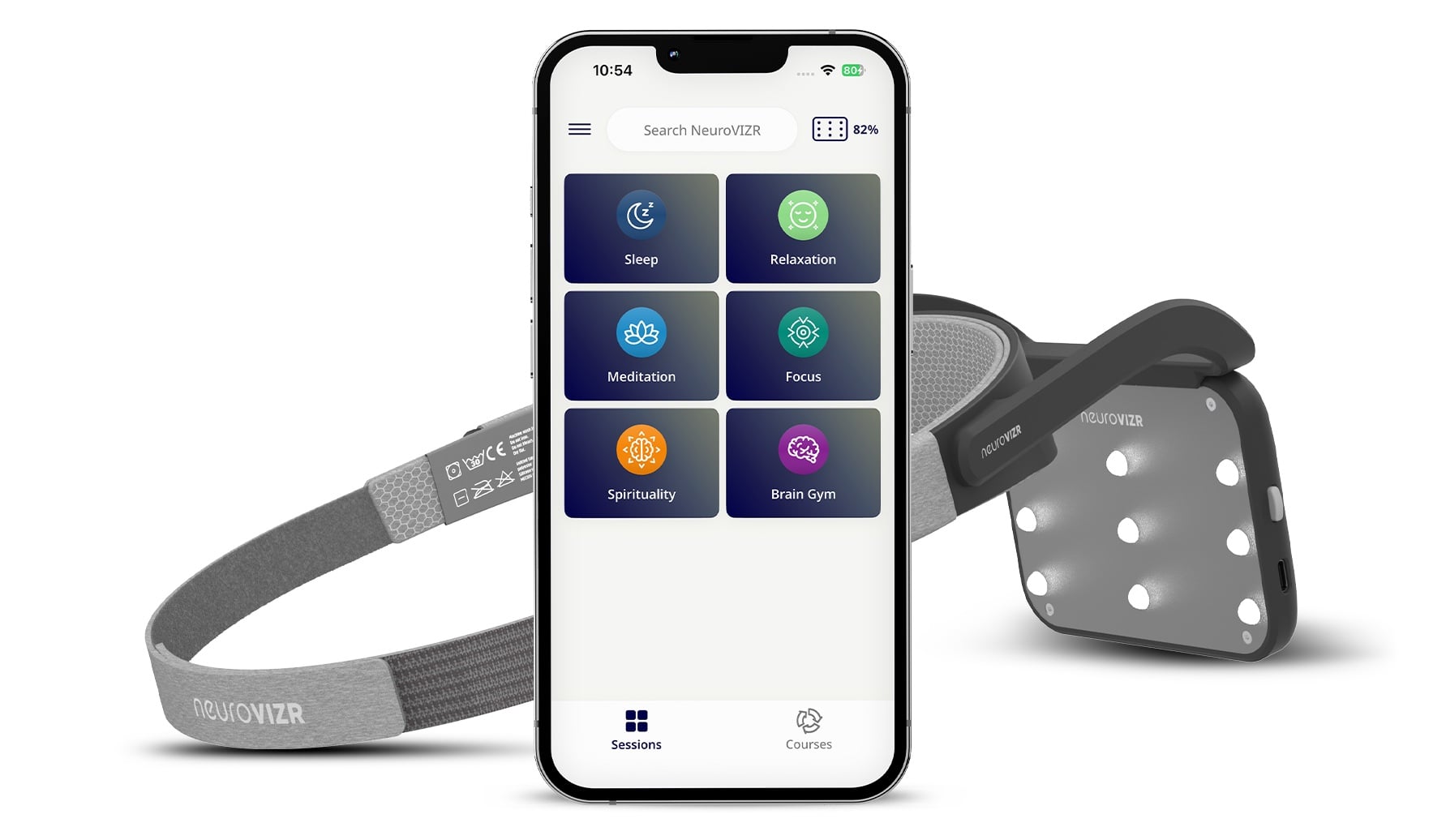 This episode is sponsored by NeuroVIZR's new Lucid Microdosing Collection: the shift of a microdose, delivered through light and sound, with no substances at all. These short sessions use patterned light and immersive sound to gently open a clearer, more creative state, a little like a microdosing day without anything to swallow. Put on the headset, close your eyes, and let your brain do the rest. Get 10% off by using coupon code THIRDWAVE at checkout.
 Learn to support psychedelic preparation and integration while respecting the boundaries between coaching and therapy. Our Psychedelic Practitioner Certification helps you build the skills to work ethically and recognize when a client needs clinical support. We're starting on January 20th. Click here to read more about the Program.
Podcast Transcript
00:00:01 Paul Austin
Long before strobe lights and research labs, our ancestors sat in caves and watched firelight flicker across painted walls. Today's guest believes that flicker was doing something real to their brains, and that that same principle helps to explain why microdosing works. So what do firelight, a wait room, and a microdose have in common?
00:00:24 Paul Austin
Welcome to The Psychedelic Podcast. I'm your host, Paul Austin, and today we're joined by Garnet Dupuis, the inventor of NeuroVIZR, a light and sound device designed to shift brain states without pharmacology. He and I have been in conversation for a few years now, and over the past several months, our teams have been building something together: Lucid Microdosing, a custom collection of NeuroVIZR light and sound sessions designed to pair with a microdosing practice and to use during integration. I've been using my own NeuroVIZR for years for energy, creativity, and deeper meditative states, and with the collection now rolling out, it felt like the right time to finally bring Garnet on the show.
00:01:03 Paul Austin
In our conversation, he makes the case for what he calls a biophysical view of the brain, one where a few minutes of flickering light, a breath, and a small dose of a compound are all ways of nudging the same adaptive system. We talk about hormesis, the small, well-timed stress that drives adaptation, why he believes the brain is innately psychedelic, and how light and sound might support the integration period after a high-dose journey.
00:01:31 Paul Austin
Garnet Dupuis is a Canadian-born innovator based in Chiang Mai, Thailand, and the founder of NeuroVIZR. For more than 5 decades, he has worked across integrated healthcare, biotechnology, neurological science, and neuroplasticity, with a long interest in psychedelics and meditative traditions. He has spent the past 10 years developing NeuroVIZR, grounding its design in predictive coding and the principle of hormesis. Garnet is a TEDx speaker and a frequent presenter at international conferences and on podcasts.
00:02:01 Paul Austin
Most of us who microdose know it works, but when we try to explain why, the answer usually comes back to chemistry: molecules, receptors, and doses. Garnet comes at it from the other direction. To him, the brain is electrochemical, and a microdose of breath and a few minutes of flickering light are all different ways of giving it the same small nudge, just a little past comfortable so it has a reason to adapt.
00:02:25 Paul Austin
Somewhere in the middle of this, it started to sound like microdosing might be a kind of bridge between a full therapeutic dose and a tool like NeuroVIZR. We also got practical. A lot of you are coaches, clinicians, and guides, so I asked Garnet how light and sound could support someone in the weeks after a big journey, when the real work of follow-through starts. And if you've been curious about psychedelics but hesitant, he makes the case for this as a way to get a feel for a shifted state first.
00:02:51 Paul Austin
All right, folks, before we dive into the conversation, let's hear a quick word from our sponsors.
00:02:58 Paul Austin
Most psychedelic training programs are built around clinical, therapeutic, and medical applications, but the potential of psychedelics reaches far beyond the medical model. That's why we created the Psychedelic Practitioner Certification. It's a 7-month, fully online program for coaches and practitioners working where human potential, peak performance, and holistic well-being meet.
00:03:19 Paul Austin
You'll master our 5 key elements of a successful psychedelic experience: assessment, preparation, facilitation, integration, and microdosing, and you'll also build the legal, ethical, and business foundations that you need for a sustainable practice. Along the way, you'll learn from guest experts like Dr. Robin Carr Harris, Dr. David Rabin, and Dr. Dick Schwartz, the creator of Internal Family Systems. Imagine helping your clients create deeper, more lasting transformation and building a practice that feels as meaningful as the work itself.
00:03:47 Paul Austin
If you already have a coaching foundation and you're ready to bring psychedelics into your work with integrity, we'd love to hear from you. Learn more and apply at psychedeliccoaching.institute. Again, that's psychedeliccoaching.institute, or check the link in the description.
00:04:03 Paul Austin
All right, folks, that's it for today.
00:04:05 Paul Austin
Without further ado, I bring you Garnet Dupuis.
00:04:32 Paul Austin
Garnet, we've been in conversation now for a few years, so it's good to finally have you on the podcast.
00:04:38 Garnet Dupuis
I can say with honesty and sincerity I'm really honored. I follow your work. I consider you one of the good guys, and I think you're not afraid to grab the bone and just go for it. So thank you for having me. Let's see what we can do for the next hour, okay?
00:04:56 Paul Austin
It's good to have you on.
00:04:58 Paul Austin
So this is my second NeuroVIZR. I'm holding it up for folks so they can see it. It arrived in, I'm in Malaysia at the moment, so I also had one back in the States.
00:05:06 Paul Austin
And so it's, it's, it's what I love about the NeuroVIZR. It's, it's small, it's, it's easy to, to carry around, it's very light, and, and, and yet it's a powerful, it's a powerful machine.
00:05:16 Paul Austin
And so I'd, I'd love to start a little bit with, with the origin story, because what the NeuroVIZR does, flickering light, or there's a more technical term that we'll get into which, which I'll let you explain at length, is in a way unique and novel and in many ways is, is, is very ancient. This is why I think we're also attracted to raves and strobe lights and, and things like that.
00:05:41 Paul Austin
So, so talk to us a little bit about the origins behind the NeuroVIZR as an inventor. What, what sort of led to the, you know, what's the story that led to the, the creation of the Frankenstein?
00:05:55 Garnet Dupuis
Paul, let's see what, what version of the story we, we go for today.
00:06:01 Garnet Dupuis
The I'm, like many of us, I think within this domain, I'm perpetually interested in consciousness, and I've spent my life pursuing it in one way or another.
00:06:15 Garnet Dupuis
And I've certainly had a wonderful psychedelic phase, not so much now as compared to earlier on, a little bit older than you. So, you know I was there for, like, just the bridge between first and second wave, so here we are at third wave.
00:06:32 Garnet Dupuis
And but I'm also conservative in the sense that I'm trying, I don't know if it's conservative, but trying to appreciate what has come before us. So traditional yogic or meditative spiritual practices the, you know, the, the last full dose of acid I took on a rooftop in Isfahan, Iran a long, long time ago..
00:07:00 Garnet Dupuis
I don't see much of a difference between techniques and technology. I mean, a shaman's drum, leather over a wood frame is, is a kind of technology. So I, I pursue what I'll call biophilic technology, life-loving, not biophobic. Everybody gets freaked out with techno, not everybody. You, you can easily get freaked out with technology to think that it's not natural. I'm not sure what natural means, but we only have one brain, as far as I can tell, and the brain is responsive to a very wide range of principle-bound experiences, which is why also with the NeuroVIZR, I'm looking at a more biophysical approach to the brain and not so much a biochemical approach.
00:07:57 Garnet Dupuis
And you know, we are highly oriented towards molecular concepts and biochemistry and pharmacology, and of course, all of the psychedelic compounds or medicines are in that domain. And yet you have the whole range of yogic techniques and breathwork and thermal processes, light, sound that are, we could say, energetic or biophysical. So I've worked in this range throughout my whole life. I have an interesting academic background, mostly as an outsider, not an inside, so I'm not, I'm not a priest in the religion, if you know what I mean but quite sincere.
00:08:41 Garnet Dupuis
So the thing that brought me back into it, I am in Chiang Mai, I'm in Thailand, mountain house, the whole thing, and I've worked with technologies in the past. Neuroplasticity woke me up because we've known that things like light and sound, to be a little bit more specific, have effects on psycho-emotional states. Now we know that they also have effects on a neurological or physical state. So that's a big shift.
00:09:19 Garnet Dupuis
I'll, I'll use one thing as a reference, and then we'll sort of jump off, like, where did it come from? There's a monstrous thing that has happened, in my opinion, in neuroscience in the past few years. Most people have heard about it in different ways. MIT, one of the maybe 10 best research institutes in the world, have found that they can modify the demented brain physically by just using flickering light and, in some cases, also pulse sound, the 40 Hertz thing.
00:09:55 Garnet Dupuis
And it's like, oh, hey, wait a minute. The, you know, the brain is massively complicated. We've been trying to figure out things about this dementia, degrading Alzheimer's thing, all kinds of pharmacology, frankly, not very successful so far. And somebody comes along with a flickering light, and they just, of course, it was wrote it, now it's replicated human pretty well. Just doing that, and not only did it change the mood of the person, it actually modified the neurology and chemistry of the brain.
00:10:32 Garnet Dupuis
You think, well, whoa, whoa, wait a minute. St, you know, a whole, what, stop the presses. What do you mean, just flickering light can do that? And the answer is, well, there you go.
00:10:46 Garnet Dupuis
And just to round it off, I have, I'm very lucky to have a, you know, friendly conversation with another MIT research team right now down the hall from the 40 Hertz. They've just finished, you know, significant research using 60 Hertz in a way of modifying what's called the perineural net. So this is a real big deal from my point of view, that we can go, there's nothing wrong with biochemistry, I mean, it's fantastic.
00:11:18 Garnet Dupuis
However, we can also go biophysical. We can, let's be real here, our brain is electrochemical. It's stupid to separate them, you know, but that we can use non-invasive, safe, relatively inexpensive, even personal technology to have significant effects upon our neurology. That's awesome.
00:11:41 Garnet Dupuis
And then when you bring in psychedelics and third wave, you bring in microdosing, and I, I believe if we have the time today, I can give you a, a reasonable rationale of the biophysical reasons why microdosing works, because it works.
00:12:00 Paul Austin
Mm-hmm.
00:12:01 Garnet Dupuis
It won't be the biochemical, but there is a sound skeletal principle of incremental low-dose hormetic neuroplastic change. It's the same way that when you go to the gym, how you train a muscle. Well, it's the same principle. So I don't know if that's the origin story. I'll, I'll skip off the early days of acid and strobe lights, but here we are, and you know, let's go. I'm good.
00:12:36 Paul Austin
What, I'm, I, you know, I'm curious what the, and maybe you've hinted at this, but just to hit it a little bit more on the nose.
00:12:44 Garnet Dupuis
Sure.
00:12:44 Paul Austin
What's sort of the, the ancient technology equivalent of the modern-day NeuroVIZR? You know, one thing I often talk about in the podcast is how psychedelics are Lindy. And what I mean by the, the, the phrase Lindy is you know, this, this is a concept that comes from Nassim Taleb's work, Black Swan, Antifragile.
00:13:03 Garnet Dupuis
Mm-hmm.
00:13:04 Paul Austin
And, and the idea of something being Lindy is that it's, it's an idea or technology that has been around a long time.
00:13:09 Garnet Dupuis
Sure.
00:13:10 Paul Austin
And that its.
00:13:10 Garnet Dupuis
Sure.
00:13:11 Paul Austin
Utility over a long period of time is or its use over a long period of time is proof of its utility. And so psychedelics have been used for tens of thousands of years.
00:13:21 Garnet Dupuis
Yeah.
00:13:22 Paul Austin
Which is why I think they're preferable to SSRIs, which have only been around for 40 years for, for many other reasons. So, so talk to us a little bit about, you know, what, what, what is the NeuroVIZR in, in sort of modern technological form mimicking or, or building on in terms of what we have had access to as humans for maybe thousands of years?
00:13:42 Garnet Dupuis
Let's go storytelling time, because I don't remember being there, but let's go back kind of like Neolithic times even before that. I think that, you know, life happens, things grow, and inevitably things have proximity. When they're in proximity, they have interaction. When they have interaction, there's communication.
00:14:02 Garnet Dupuis
Communication needs a language. What was the first language? I think the first language is a combination of mechanical vibration and electromagnetic radiation. 'cause you need a medium to vibrate. That's sound. And radiation can cross a vacuum. That's light.
00:14:21 Garnet Dupuis
I think the, the, the, the foundation of the first language is sound and light. That's what I think. Okay.
00:14:30 Garnet Dupuis
Behind me, by chance is a painting replica of a cave drawing found in Kazakhstan. It's dated to be around 4,000 years ago. So I'm gonna set a stage..
00:14:48 Garnet Dupuis
Firelight flickers, if you've noticed, if you've ever had the chance, campfire, fireplace, whatever, and shelter in caves. They make drawings like this, or paintings, I'm not sure how, but, and when you look at a fire, depending on the fuel source, it burns hot and a little less hot and then a little less hot. So it goes blue, yellow, red. And it turns out that this is well within the visual frequency rate.
00:15:27 Garnet Dupuis
So that's, it's entrancing, it's intriguing that if you just, and by the way, if it's totally dark and it's winter, you're gonna be a lot of time in the cave with a fire, I hope. And so what do you do? I mean, what do you look at? And so the flickering light in, in of itself is a quote unquote NeuroVIZR type technology.
00:15:52 Garnet Dupuis
Then if you get in the cave and you have psychoacoustics, and then if you do something like this on the wall, what's that gonna look like if you turn and look at the cave wall with the flickering light? It animates it. And assuming either by deprivation, cold starvation, or mushrooms or whatever, that you have these experiences, I think there was very little separation between what we call inside and outside psychologically.
00:16:31 Garnet Dupuis
So there is this premise in my mind that the mezzoleithic, the mezzoleithic mind there is a, a neuroanthropologist have explored this quite a lot, that there is a, a fundamental evolutionary sensitivity that we have to light that flickers and sounds that pulsate and that we've, that's, we've just joined the natural world like that. Then you go into things like dark retreats or sky gazing in traditions that I practice. And then you have fire pujas, and then there, there's a whole range of naturalistic, low-tech, no-tech, low-tech processes that, to me, it's like you just grab this, the rope or thread, rope, and it's not that difficult to follow it back. It's not that difficult to follow it back.
00:17:37 Garnet Dupuis
So I think that the NeuroVIZR in and of itself is just an instrument. It's just a thing, like a piano is an instrument. Then there's the signaling that you do with it. And this is incredibly important, that don't get overly ro-romantic about the fact that this thing makes flickering light and pulsing sound. The question is, what kind of flickering? How is it flickering? What kind of sounds?
00:18:08 Garnet Dupuis
Because I can bang on a piano like a chimp, and I wouldn't call that Tchaikovsky, but it's the same piano. So I, I believe that this is born into us. I'll say one last thing Hunt, you know, Heinrich Klüver, if you people know who it is, was around the same time as Hans Berger is finding out brain waves.
00:18:31 Garnet Dupuis
Hans Klüver, University of Minnesota, working with Mesquelaine, by the way, first wave, said across all patterns that there are these four categories of geometrics, radial, checkerboard, spiral, funnel, tunnel, that seem to be consistent across all experience, same brain, and you can go back into cave art, psychedelic art. You know, wait a minute, there's just one thing happening here, as far as I can tell, and it depends on which door of the room that you enter. I use, I, we, you know, you can enter with light and sound.
00:19:16 Garnet Dupuis
Same brain. That's why I, I see in a full-on proven biophysical real understanding of how microdosing works, because it does work. It just depends on what psychoactive agent you use in the process.
00:19:38 Paul Austin
Okay. So I wanna, I wanna unpack this further and, and.
00:19:41 Garnet Dupuis
Sure.
00:19:41 Paul Austin
And get a little bit deeper into kind of psychedelics versus light and sound.
00:19:46 Garnet Dupuis
Sure.
00:19:47 Paul Austin
And, and it almost sounds like microdosing psychedelics is, in some ways, a biophysical bridge between therapeutic dosing and the, the NeuroVIZR. And I, I think you're gonna help to, to sort of weave this together for us, because a lot of our listeners are aware that, you know, if I take a high dose of mushrooms, say 5 grams of, of Golden Teachers, the, the classic sort of heroic dose that McKenna spoke about there's gonna be pretty substantive changes to my psychological field, to my subjective experience, to maybe my visual cortex.
00:20:27 Garnet Dupuis
I would say for sure.
00:20:29 Paul Austin
And, and, and for a few weeks after, I think, and this is most relevant here, there's gonna be what's called a critical learning period that opens up.
00:20:39 Garnet Dupuis
Mm-hmm.
00:20:39 Paul Austin
Where my brain is in a more neuroplastic state, and as Michael Pollan wrote about in How to Change Your Mind, it will be easier to create new ski runs down the proverbial ski hill in, in the brain. So there's this relationship between high doses of psychedelics, this reopening of a neuroplastic window, what's called the critical learning period, and the capacity to make behavioral changes and, and maybe heal attachment wounds and, and things like that.
00:21:12 Paul Austin
Microdosing is a little bit different, right? 'Cause we're taking these low doses consistently.
00:21:16 Garnet Dupuis
Mm-hmm.
00:21:16 Paul Austin
As, as you said, it's, it's, it's a bit of a stimulus, but it's not nearly as big of a stimulus as, as high doses. Whereas it feels like the NeuroVIZR is, it's doing something similar, but it's also doing something very different. Like, I've heard you talk about it in terms of I think the, the phrase you used was annealing.
00:21:35 Garnet Dupuis
Yeah.
00:21:36 Paul Austin
There's, there's annealing going on with the brain, which, which was, when you, when you mentioned it to me, it was a very, it was a new term. I was like, oh, what's this annealing?
00:21:43 Garnet Dupuis
Mm-hmm.
00:21:44 Paul Austin
It's, it's, it's interesting. So.
00:21:45 Garnet Dupuis
Ask any ask any blacksmith, but yeah.
00:21:48 Paul Austin
Yeah. So let's get into the, the sort of a little bit more of the technical side of, of.
00:21:52 Garnet Dupuis
Okay.
00:21:53 Paul Austin
Light and sign and the NeuroVIZR, right? If psychedelics are these neuroplastic agents that reopen the critical learning period, make it easier to change ingrained behaviors, what is it that the NeuroVIZR is doing from a sort of neurological.
00:22:07 Garnet Dupuis
Okay.
00:22:07 Paul Austin
Perspective?
00:22:09 Garnet Dupuis
Okay. That's juicy. Thank you..
00:22:11 Paul Austin
Mm-hmm.
00:22:12 Garnet Dupuis
I'm gonna introduce a term. I'm, it's not an uncommon term, but I'm gonna frame the term. Psychoactive agent. A psychoactive agent, in my terminology, is any aspect of stimulation that can stimulate the brain to move into a different adaptive state. It's a psychoactive agent. All psychedelic compounds are psychoactive agents, but not all psychoactive agents are psychedelic compounds.
00:22:48 Garnet Dupuis
So that's the first thing from my point of view, is that our brain is sensitive to adaptive challenges. And there are different ways of mobilizing it to make that kind of shift in perspective. For anybody that's done, you know, I've spent my life doing different meditative techniques. I'm no big yogi, but, you know, I've done my best. And I've also had a, you know, a, a very positive kind of righteous psychedelic phase in my life. So there's something there. It's like, wait a minute, but there's only one brain.
00:23:26 Garnet Dupuis
So I think, I'll say that I believe our brain is innately psychedelic, that, that I don't like terms like altered states. It sounds like something went wrong. To me, we have ordinary states, and then by degree, and then we have extraordinary states, but they're all normal. They're all natural. Just because something is uncommon doesn't make it unnatural. That's the first thing.
00:23:56 Garnet Dupuis
So the, the NeuroVIZR premise is based on predictive brain coding as a theory, as a brain model, predictive coding. And predictive coding is basically, you know, the most current and accepted brain model. Friston calls it the free energy principle. He and Carhart-Harris with their entropic brain is the thing that our brain really likes to know what the hell is happening, and it will try to shape experience into that. However, when it's surprised enough, when novelty strikes, the brain can shift out of this stable, habituated state into a highly flexible state of discovery and exploration.
00:24:43 Garnet Dupuis
You know, I, you may have bumped into, I won't belabor it, but I, I think of the brain as an analogy as a 20-story building. The bottom floors are devoted to stability, habituation, learning. The higher floors are dedicated to flexibility, discovery, exploration. Every floor is a good floor. There are no bad floors. I mean, you can get shot in the head, and that's not good, or you can have, you know, mental illness. But generally speaking, every floor is a good floor.
00:25:14 Garnet Dupuis
And fortunately, this thing we'll call the mind, mixed analogy, there's this thing called an elevator that can move up and down. And there are times when, like right now, we're using English. It's really good that we know the language, and I don't wanna suddenly start to forget how to speak English. But there are times when you need to shift. And to me, whether it's an inhalation, an exhalation, whether it's flickering light, whether it's a mushroom, there are ways to excite or mobilize the brain to move up into less habituated, more novel exploration.
00:25:56 Garnet Dupuis
It's a high-energy state. Usually, you can't stay there for a long time. Lower floors are more conservative. Higher floors are more liberal. So the, I see that 'cause, you know, I mean, whether it's, you know, I'm more old school. I wasn't around, you know, doing things when there's so many choices, but it was either acid, mescaline, or maybe mushrooms if you had a chance. And they all have their own personality. They're different, but what are they, what, what's the same is they, they can mobilize out of habituation.
00:26:29 Garnet Dupuis
So I see psychoactive agency as being a collection of tools that permit the elevator to move up when it needs to move up and then settle back down and hopefully soothe the process of integration. You know, I don't think we'll get to it today, but the, the neuroscience around neuroplastic processes is pretty well understood. You know, stimulation, modulation, relaxation, differentiation. I mean, I could, it's all there. It's all there. Then it's just a question of how do I, how do I do it?
00:27:12 Garnet Dupuis
And, you know, I mean, other than, say, DMT or something, but, you know, you pretty much have to stay in the saddle for a number of hours once you've done a dose of ABC, XYZ. And the, the beauty, oh, it's a beauty, the, the characteristic of something like a technology that you can turn on and off and work by degree is, is very attractive to me. So I'm kind of like spaghetti on the wall right now, but fundamentally, the brain is psychedelic. I'll, I'll say that, meaning it has a natural capacity to move into extraordinary states for periods of time.
00:27:54 Garnet Dupuis
And how you engender that can vary. I, I, you know, with like what we've put together, lucid microdosing, I'm really happy that we've come that far to look at some biophysical possibilities, knowing that you can stack it. You know, I, I stacked when I was first exploring the whole thing, I did a, you know, microdose of some mescaline and, and another little, another time with some mushroom psilocybin. It's like, okay, you know, I've done it. What do I feel? Well, nothing ish.
00:28:26 Garnet Dupuis
And then I do NeuroVIZR, and I'm quite acclimated to what to expect. I mean, I've done it for 10 years. I made the damn thing. And I can say that the, the richness, to quote Carhart-Harris, increased 30 to 40%. So I, it was my proving to myself in my own world, yeah, microdosing at a low level of hormesis, low-dose stimulation, the, the chick sent me high 2, 3% thing is real.
00:28:57 Garnet Dupuis
And then, you know, in the research, if you go back 1950, what are the guy's names? Wheatley and Schuler, or Schumer-Schuler University of Iowa. They were experimenting with what they called subclinical doses of mescaline as it relates to flickering photonic stimulation. And they came up with the same thing. I mean, the research is there. You know, if anybody wants to know, it's like, I'm not making this shit up. You know, the, the stuff is all there, and it's just putting the pieces together.
00:29:31 Garnet Dupuis
So hormesis is the trick. Hormesis is that little bit of marginal demand. You know, sometimes it's called irritation or insult. That sounds like a bad thing, but when you lift a weight, you can lift, you know, 20 kilos. I'm in Asia, kilos, not pounds. Kilo, at 20 kilos, and then I go to lift 22 kilos, my muscles are surprised. It's a prediction error. I wasn't quote unquote expecting that. So then my attention goes there.
00:30:03 Garnet Dupuis
What do the muscles do? Well, they say, I don't wanna have that happen again. They're hypertrophy. And, you know, in an organism, when you give it a little bit of stress or larger stress occasionally, it wants to survive. I'm all neo-Darwinian now, but the idea is, of course, the organism is going to adapt to marginal stress, especially if it's cyclical as exercise is. Well, I sometimes say that the NeuroVIZR is like exercise for your brain or yoga for your brain.
00:30:37 Paul Austin
Mm-hmm.
00:30:38 Garnet Dupuis
It's, it's not that complicated, really. So prediction, prediction error, psychoactive agent, make sure your elevator moves up and down.
00:30:51 Garnet Dupuis
To me, one of the things that psychedelics do quite evidently is they help to unstick a stuck brain, a brain where, by analogy, the elevator is overly habituated to repetition and, and habituation. And the elevator, when you, like, it's stuck.
00:31:12 Garnet Dupuis
So, you know, you know, the, the psychedelic, or maybe the NeuroVIZR, I call them the elevator repairman. They, they don't.
00:31:21 Paul Austin
Mm-hmm.
00:31:21 Garnet Dupuis
They don't make that floor exist in the brain. That floor exists. How do you get there?
00:31:31 Paul Austin
With an elevator that works.
00:31:32 Garnet Dupuis
With an elevator that works. So I like, you know, I, I say, you know, well, you know, the first thing to do is understand that there's probably nothing wrong. It's just you're kind of stuck by habituation. And what does neuroplasticity say? Even old dogs can learn new tricks.
00:31:50 Paul Austin
So this, this, this brings up, I think, an important question for me Garnett, which is.
00:31:55 Garnet Dupuis
Sure.
00:31:56 Paul Austin
You know, my interest in the NeuroVIZR, I, I would, I, I, I even believe your interest in the NeuroVIZR is not so much clinical or, or to help out with pathology, but it's much more in the sort of open expansion, awareness, curiosity lens.
00:32:11 Garnet Dupuis
Mm-hmm.
00:32:11 Paul Austin
Yet, you know, we, we are at a point in time, at least in the US, where the FDA is about to approve psilocybin and, and fairly soon LSD for treatment-resistant depression and major depressive disorder.
00:32:25 Garnet Dupuis
Yeah.
00:32:26 Paul Austin
And, and before we went live, we were talking about this new training that we're doing.
00:32:30 Garnet Dupuis
Mm-hmm.
00:32:30 Paul Austin
With the Institute about deprescribing SSRIs and psychedelic readiness. So, you know, I think a question that's coming up for me is, you know, there's a lot of clinics now that are working with Spravato, which is this intranasal ketamine spray, right?
00:32:43 Garnet Dupuis
Yep.
00:32:43 Paul Austin
In these same clinics, what are, what are called interventional psychiatric clinics are looking to integrate psilocybin. You know, they also have TMS, transcranial magnetic stimulation. I'm.
00:32:55 Garnet Dupuis
That's.
00:32:55 Paul Austin
You know, I, I started to get curious about, like, how might the NeuroVIZR also be useful for folks who maybe struggle with depression or low mood, and especially in combination with a psychedelic, you know, for preparation and for.
00:33:10 Garnet Dupuis
Yeah.
00:33:10 Paul Austin
For integration.
00:33:11 Garnet Dupuis
Well, I, I think it, it's the answer there is self-evident at least to me, that there's great potential there. It's a dance between wellness and medical. We all know the uh-oh about that.
00:33:27 Paul Austin
Medical claims are tricky to me.
00:33:29 Garnet Dupuis
Yeah, I get that. I would say no shit, Sherlock. But anyway, yeah we've had that one. So I'm gonna go back and reference to something I said earlier personally and also that Wheatley study that.
00:33:44 Garnet Dupuis
Here's my, here's a hypothesis that you can take a substantially lower dose of a compound and combine it with a biophysical stimulation that will exponentially where 1 plus 1 equals 3. And to me, well, as we said, our brain is electrochemical. It is chemical and physical or energetic at the same time.
00:34:16 Garnet Dupuis
So it's reasonable to me that there could be a, a, a love affair, a, a match between combinations of biophysical stimulation and biochemical stimulation. It's just like you don't have to use much of either to get the most out of both. And that is to, well, to me, it's already proven itself, at least at the level of my own thinking, that that's a great way to go. Why not?
00:34:49 Garnet Dupuis
And the, you know, the, the, this principle, you know, everybody talks these days about, well, you know, the trip is, you know, great. So you had tea with Jesus. Now what? That the, this process of the, of the what therefore, the integration period and how you manage that.
00:35:08 Garnet Dupuis
Well I would say we've learned so much in sports medicine about how to optimize somatic performance. The things that we've learned there, hey, guess what? Big news. The brain is physical. You know, I don't know about the mind, but it's physical. It's like your heart, your spine, your hamstring muscle.
00:35:29 Garnet Dupuis
So what we've been learning somatically, we can expect 80% of that to apply to the brain. Why? Because it's the same body. Even separating them is kind of stupid.
00:35:42 Garnet Dupuis
So right now, we have a good number of clinical users that take the NeuroVIZR into their domain and work with an integrated process. Of course, we get a lot of anecdotal reports back about people, you know, achieving this and achieving that.
00:36:05 Garnet Dupuis
I think working within the realm of exercising the brain to be more adaptive to change is a real solid tree to sit in a, as an approach that, you know, I have a, a saying that a brain that can change when change is required, that's a healthy brain. That's a healthy brain.
00:36:35 Paul Austin
Adaptability.
00:36:36 Garnet Dupuis
It's adaptability.
00:36:36 Paul Austin
To be adaptive.
00:36:37 Garnet Dupuis
It's to be adaptive. So you know, the, the NeuroVIZR and other processes, whether it's, you know, holotropic breathing or, I mean, there's so many things right now, and I think they're seeking some kind of principle because, you know, there, there are only probably two or three principles in the universe. I, I mean, I'm making that up. I don't know.
00:36:59 Garnet Dupuis
But the, the idea is that, hey, you know, stop being reductionistic and, and, and mechanistic and stop separating things and then wondering how they fit back together again. You know, they're not separate. I mean, you know, relax. It's okay.
00:37:18 Garnet Dupuis
So I think right now, the. You know, this, I'll go back to that one word, hormesis. Hormesis, for people that don't know the word, not hermetic like, you know, Hermes, H-O-R, hormesis is a principle. This comes back to Hans Shalyeh and U stress and so on, that a hormesis is, here you have a, a level of stable, you know, homeostatic happiness, and then something comes along and it's just a little bit above it.
00:37:52 Garnet Dupuis
You know, again, chick sent me high flow state. I mean, this, that, that 2 to 3% that goes, hey, and for predictive brain coding, that's a prediction error. Hey, what's that? You know, a violation of expectation. That little thing in any system alerts the system. You know, it's this incredible cognitive state called attention. It gets your attention.
00:38:16 Garnet Dupuis
Well, what, what's the value of attention? Well, it's pretty valuable, apparently, because, you know, it's in biofeedback, it's in qigong, it's in e-everything, this thing called attention. So hormesis is, to me, I mean, the underlying principle of conventional compound microdosing, a low-dose provocateur. You know, they say insult or irritation. Again, it sounds negative, but it's just a tad beyond comfy.
00:38:51 Garnet Dupuis
Something goes, hey, what's that? And when that low dose reappears in, in an oscillatory regularity, then you know what's gonna happen. The organism is going to get its, I was gonna say shit together. It's gonna get its, its mobilize its resources, and it's going to shift up and adapt to that. And should that be a surprise? Well, no, everything is like that.
00:39:19 Garnet Dupuis
You know, so low do whether, you know, whatever the psychoactive agent is, I think there's a variable there. You know, I mean, people microdose with acid, they microdose with mushrooms, they mic, they like, I don't know, microdose with vodka. There are all of these experiments of which you're the leading expert, but that the issue is, I mean, this comes from Shalyeh, Hans Shalyeh, the stress guy.
00:39:42 Garnet Dupuis
You know, he coined, we think, we say stress is bad. You know, he said, no, no, no, it's just stimulation. And without stimulation, you're bye-bye. I mean, you're, you're dead as a, what do they say? Dead as a doorknob? Or anyway.
00:39:55 Paul Austin
Dead as a doorknob.
00:39:56 Garnet Dupuis
Dead, I don't even know what that means. But anyway, the, the idea is that there is a U stress, E-U like euphoria, and a distress. U stress is what we need. It's stimulation that creates adaptation and guides you to being better. Little bits of U stress.
00:40:18 Garnet Dupuis
So that's the principle in hormesis is that, and, and when you come in at that, like, not too much, it's a Goldilocks. You know, it's the inverted U principle, the power law of U inverted U. Not enough is not enough. Just enough is enough, and then too much is too much.
00:40:38 Garnet Dupuis
It's like, that doesn't sound that unreliable. But that how, however you tickle slightly above marginal demand is gonna guide training and integration. It's just the way things work.
00:40:57 Garnet Dupuis
It's why 100-year-old ginseng is so valuable because cultivated ginseng might have 12 ginsenosides, and the 100-year-old in the forest, the wild one, has had hormetic hormesis, hormetic stimulation for hundreds of years. An insect came along a deer stepped on it, you know, the weather changed. So you might have, instead of 12 ginsenosides, you may have 100 ginsenosides in that root.
00:41:23 Paul Austin
The same with tea.
00:41:24 Garnet Dupuis
So there you go. There you go. So to me, it's not mysterious. It's just a question of recognition and application.
00:41:35 Paul Austin
Mm.
00:41:36 Garnet Dupuis
Yeah.
00:41:36 Paul Austin
So let's, let's, let's go a little practical. And, and, you know, we, we have a lot of, I, I suppose even more practical..
00:41:44 Garnet Dupuis
Sure.
00:41:45 Paul Austin
Because we do, we do have a lot of practitioners, coaches, doctors.
00:41:49 Garnet Dupuis
Yeah.
00:41:49 Paul Austin
Clinicians, guides who listen to this podcast. And I, I think, you know, practically speaking, why is it that NeuroVIZR can be such a useful tool in the integration phase after a journey? Like, what, what is it?
00:42:03 Garnet Dupuis
Yeah.
00:42:03 Paul Austin
Or, or how can it be utilized to help someone with that adaptive phase when they are making maybe big changes and, and they need some support and, and, and following through on some of the insights from that high-dose journey? How is it that the NeuroVIZR can, can support that process?
00:42:20 Garnet Dupuis
Well, I think I'll go bookends. I'll, I'll, I'll get to what you just said second. First is for, for newbies, for people that haven't had the opportunity to experience psychedelics in set and setting, the NeuroVIZR is a way of feeling state shifts, of having remarkable, extraordinary experiences at controllable levels. So it's a little bit of a taste of what it's like to not be in your ordinary mind. And I think that's really good because there are a lot of people out there, again, I'm speaking for you, which is horrible, but I mean, it's 'cause, you know, I, you're, you're doing this thing, man. There are so many people out there that are considering options with psychedelics that never would've considered them before, but they only hear stories. So one thing is to help them, you know, get in the elevator, move up a few floors for a few minutes, and, you know, kind of get a feel for that.
00:43:22 Garnet Dupuis
And you're gonna see colors and geometrics, and you're gonna feel different. So that's very cool. The the other thing, and there's more to be said about that, you know the other is there are people that are freaked about right or wrong, legality, purity of the substance, quality.
00:43:40 Garnet Dupuis
I don't know. My friend gave it to me. I think it's mushrooms. You know, that, that whole world where there's trepidation, realistic trepidation. Some people are, you know, they don't wanna break the law if it's not legal where they live, or they don't know the stuff that they're getting or how much do I take and all of that. So to me, there is a biophysical element of control and taste testing that's helpful.
00:44:06 Garnet Dupuis
Okay. Then there's the, the, the, you know I, I say it, and I don't mean it. It's meant to be a little bit of a joke. You know, I've had tea with Jesus. I've tripped very well, and I, I kind of, like, I get it quite nicely. But then there's the so what after. And the good news is that in the neurobiology of neuroplastic change, there's a pretty good idea of the sequencing of processes.
00:44:38 Garnet Dupuis
So it, again, it's the same brain, it's the same elevator, it's the same top floor. Then what do you do about it? Well, there are fundamental principles involved here, whether you call it neuroplasticity, whether you call it microdosing, whether you call it NeuroVIZR, whether you call it, you know, high-dose therapeutic psychedelics, whatever it is, that the brain is gonna behave in ways that are generally predictable. We don't understand enough, but we're understanding more. So there is a, a rhythm. There's a period of adaptive responses. And these adaptive responses, it should be no surprise, are baked right into circadian cycles.
00:45:31 Garnet Dupuis
And we hear it all the time. How important sleep is. Well, it isn't just that sleep is important, that the process of stimulation, modulation, that happens basically when, when the it happens, you've got a period of up to around two hours. That is the combination of stimulation and modulation. I mean, you know, for most psychedelics, that eight hours is kind of that, that zone. Even without psychedelics, when there is provocative stimulation, you've got the stimulation, which is like for the first couple of hours, that's the hyperplastic period, well known with the NeuroVIZR and other things, if you pay attention. Then you've got up to around eight hours of what's called the modulation, where you're getting responses to the stimulation.
00:46:33 Garnet Dupuis
Then it's gonna jump. So it takes about the next cycle, the next day for what's called the relaxation and differentiation. There, that, that is conventional. That's why even with, like, DOMS, you know, delayed onset muscle soreness, there is a 24 to 48-hour cycle. Even our muscles, when our, we're training, have that kind of cyclical nature. And then you have rest, and then you repeat again. And that way, you can train your body, and you can train your brain.
00:47:12 Garnet Dupuis
So from my point of view, you know, experienced, well-informed, but it's not my specialty. The people you work with, it is their specialty on that integration period because there is a, a, a principle-based wisdom of how often to reinforce. And if you come in too hard and heavy, you know, the no pain, no gain, well, muscles got stronger and then weaker. What the hell's happening? So we know that incremental, what I'll call micro to meso dose stimulation, and I don't mean chemically necessarily, but when you come in, you're like, I was to, you know, work with a lot of athletes, world-class and Olympic. This is an example of a week. They'd have two hard days, three easy days, two off days.
00:48:05 Garnet Dupuis
So there, there is a kind of a, there's a rhythm, an adaptive integration rhythm. And in relation to the NeuroVIZR, to try to keep it on track, I see in principle that people would get that hormetic stimulation, under controlled processes without having to do more compound by moving the elevator every two to three days along that path. I think it's extremely reasonable in principle because if you don't look at the psychoactive agent, you don't look at any of that, you just look as best as you can as how does the brain respond to adaptive change? What is this neuroplastic thing? There's functional, which is like minutes to hours. Then you've got synaptic, that's days to weeks. Then you've got neuronal, which is months, and then you've got systemic, which is years.
00:49:17 Garnet Dupuis
These things have short-term, almost formulas and long-term applications. So what you do is you work with short-term state shifting, and you repeat it to create long-term trait shaping. State shift, trait shape. And the way that you shape the trait is by returning to the short-term state shifting incrementally, incrementally. It's exactly the way that you make a muscle stronger. I mean, at, at a fundamental level, it's the same thing.
00:49:56 Garnet Dupuis
So I think having. Having, you know, an integration, top-down cognitive psychological processes combined with bottom-up sensory processes are a perfect combination in the process of integration because we think a lot. We have emotional states in psychology, and we also have organic biophysical responses. So, you know it, I keep on returning. I say it, I hope to not, you know, make it sound, I don't know, dumb, but we've only got one brain, and there are just different ways of working, but the brain has, has a limited set of principles. And I think fundamentally, that 20-story building, our brain likes to collect experiences that work well. And then when things don't work well, it will move up into a range of exploration.
00:51:04 Garnet Dupuis
Have some discovery, return back down to the lower floors, and try to quote unquote make sense of it. And that ability to go from stability to flexibility, from low brain signal variability to higher levels of brain signal variability is. Is just the way that things work when they work well.
00:51:28 Garnet Dupuis
And I, I think that, that the pro, I think the biggest problem, I think, is getting stuck 'cause there's no one floor that does everything.
00:51:36 Garnet Dupuis
I don't believe in idealized states. I don't believe in this magic frequency stuff. I don't believe that at all. Nature just doesn't work like that.
00:51:44 Paul Austin
Yeah. Stagnancy, I mean, this is in Chinese medicine as well.
00:51:49 Garnet Dupuis
Yep. Yep.
00:51:49 Paul Austin
Right. Stagnancy is then a sign of disease.
00:51:52 Garnet Dupuis
Yeah.
00:51:53 Paul Austin
You know, it's, it's very much related to disease. And, and as you're talking about, you know, the, the sort of the always sort of shifting and adapting, say, to the brain, it also reminds me in, in some of the conversations we've had around the nervous system that you, you don't want a nervous system that is always obviously in, in a sympathetic state, this sort of fight or flight state, but at times it's needed.
00:52:19 Garnet Dupuis
Yeah.
00:52:20 Paul Austin
You know, you also don't want a nervous system that's only in a parasympathetic state, although more people could benefit from spending more time in a parasympathetic state.
00:52:29 Garnet Dupuis
Yeah. Yeah.
00:52:30 Paul Austin
In fact, the, the sort of one of the main things you wanna avoid with the nervous system is, is one that's stuck in, in, in freeze, which is exactly what you're saying 'cause freeze is related to, to stagnancy. So you wanna have a nervous system that can adapt based on the circumstances that arise rather than feeling like it's sort of chronically stuck in a state of fight, flight, freeze, constriction, whatever it might be.
00:52:54 Garnet Dupuis
No, no, there's, there's no right now, if I told you, don't move your body, don't move, don't, no, don't move your head, don't move anything, don't move your eyes, and don't smile, right? You know, that posture might've been good a few seconds ago, but if I don't let you move, it gets bad fast. It's weird. You know, the, okay, I mentioned.
00:53:16 Paul Austin
You should tell that to Goenka, darn it, who.
00:53:20 Garnet Dupuis
Hey, I know my brother.
00:53:22 Paul Austin
That's a positive joke, but.
00:53:23 Garnet Dupuis
Yeah, yeah, yeah, yeah. That's cool. The I said brain signal variability. Let's go to another one you know, in the acronyms these days, HRV. Everybody's hot all about HRV now. So we know, you know, but if I said to somebody old school, my heartbeat is 60 beats per minute, the assumption would be, well, that must be one per second because there's 60 seconds in a minute. So 60 must mean one per second.
00:53:52 Garnet Dupuis
And you know, we all know now that that's true. I mean, that person, I would be on the verge of a heart attack. That HRV reflecting the autonomic nervous system shows that there must be variability between the period between each beat. So HRV is showing that this fluttering adaptability in microseconds is a cornerstone of regulation and wellbeing.
00:54:26 Garnet Dupuis
The same thing is true about brain signal variability. There's a lot of misunderstanding about brain waves and, oh, I'm an alpha, and all this kind of silliness where the brain is incredibly complex. The majority of all the voltage signals are aperiodic. They, they don't sustain. Algorithms go looking and say, well, I'll average this out. That the, the brain is a flutter of adaptive responses in, you know, pro, I don't know, trillions. I don't even know what trillion means, but there are all of these things going on.
00:55:02 Garnet Dupuis
And you see, you know, look, Carhart-Harris again, you can see the amount of connectivity in an ordinary state, and you can see entropically the massive increase in connectivity. Well, that's just getting in the elevator and going up in your building for a while where all these things can communicate for a period of time, and hopefully there is some discovery there of relevance, and then brings it back home again. The hero's journey, if nothing else.
00:55:33 Garnet Dupuis
So the, the, this principle of sensitive adaptation, not overly excited, not underperforming, right in that, that what's the Goldilocks zone of the ability to be responsive. 'Cause, you know, when you, if you spin around and around and around you know, maybe people, I don't know, Sufis like it, but the basically, it's like, wow, but you also wanna find home again. So, you know, that's like the inhalation and exhalation of just information processing.
00:56:10 Garnet Dupuis
You know, I, I mentioned I use predictive brain coding and Carhart's entropic brain. I also use Batsonian information theory, but Gregory Batson, a brilliant guy. Two things that changed my whole approach and are embedded into what I think about consciousness, the brain, and certainly the NeuroVIZR. He says, what is information? You know, I tried the Claude Shannon and Wiener and those guys, cybernetics. I was like, ah, Batson and two bumper stickers.
00:56:38 Garnet Dupuis
He said, information is news of change. If you inverse that, no change, no news, no information. So information is news of change. Then he got a little bit more elegant. Information is a difference that makes a difference. So not every difference, not every change is as meaningful or significant.
00:57:03 Garnet Dupuis
So this is predictive brain coding where, you know, whatever works is working until it doesn't work, and you get a, huh, what's that? That's the surprise, that's the novelty, that's the prediction error. It, the brain always wants to make signal out of noise. It wants to make sense out of nonsense. And that's built in.
00:57:26 Garnet Dupuis
That's why I call the NeuroVIZR thing brain engagement, not brain entrainment. That's another rant that we'll save for another day. You know, I don't know about that, but engagement, why? Because in order to make change, that there's a saying, the brain changes what matters. If it doesn't matter, it's not gonna change.
00:57:49 Garnet Dupuis
You know, if it's working, don't fix what's not broken. But when something doesn't work, oh, what's happening here? And that, that's the, the thing of how to engage the brain to pay attention to make a change. And, you know, I mean, psychedelics are the royal road, but it's a capacity that the brain has.
00:58:17 Paul Austin
Right.
00:58:18 Garnet Dupuis
It's just.
00:58:18 Paul Austin
As you said, it's, it's a natural state already.
00:58:22 Garnet Dupuis
Yeah. Just because it's uncommon doesn't mean it's unnatural.
00:58:26 Paul Austin
Right. Right. Exactly. Exactly.
00:58:29 Garnet Dupuis
I mean, you know, just loosen up a little bit here.
00:58:32 Paul Austin
Yeah. That's it. That's it. That's all you gotta do. Well, Garnett. It's been, it's been a real pleasure to to have you on the show. NeuroVIZR. So folks, that's neuro, like neuroscience, N-E-U-R-O. Vizr is V-I-Z-R. So NeuroVIZR.
00:58:48 Garnet Dupuis
Yeah.
00:58:49 Paul Austin
V-I-Z-R.com.
00:58:51 Garnet Dupuis
Yeah.
00:58:51 Paul Austin
I'm sure we'll have a show as well.
00:58:55 Garnet Dupuis
Hey, Paul, I, I want, I wanna give you a compliment for what.
00:58:59 Paul Austin
Okay.
00:58:59 Garnet Dupuis
For I mean, and, and I'm being sincere here for, you know, an open-mindedness to even consider because, I mean, the, the biochemistry of what you're doing is complicated stuff, and it is 98% of all the research is in the biochemical.
00:59:21 Garnet Dupuis
To be open-minded and willing to explore parallel biophysical processes to me is it's, it's a sign of your ongoing, like, maturity in your exploration. And I, I want to, to thank you for that.
00:59:41 Garnet Dupuis
I feel, you know, I feel, I, I really feel good about lucid microdosing, the idea of helping your people, and you have a lot of them, you know, sort of keep growing and understanding things. So I wanna thank you for that with sincerity.
01:00:02 Garnet Dupuis
You're very cool.
01:00:03 Garnet Dupuis
And at this point in my life, I, I've, I've come down to, to like, how do you live life? I think it's in two things, and you're doing them. One is be cool, do good. So.
01:00:19 Paul Austin
That's it. It's very simple. It's very simple. Well, and, and I'm glad you mentioned the lucid microdosing. We, we brought it up a couple times, but we're rolling out a, a sort of special custom collection with NeuroVIZR.
01:00:31 Garnet Dupuis
Yeah. Yeah.
01:00:32 Paul Austin
To, to combine with, with, with microdosing and to utilize in the integration phase as well.
01:00:38 Garnet Dupuis
Yeah. Well, you know, the to be, to me, it's not a, a promo, but the lucid microdosing collection is a collaboration between Paul and myself and our teams, and it will be available only through you to your users.
01:00:54 Garnet Dupuis
Anybody can have the NeuroVIZR and get whatever they get in terms of sessions, but if they want to get what you do combined with what I do Paul and Third Wave is the access and the vehicle for that.
01:01:10 Garnet Dupuis
So I'm I'm made proud. Thank you for you know, taking a walk with me like this. Beautiful.
01:01:17 Paul Austin
Yeah. Yeah. And thanks for your persistence and, and making sure it happens.
01:01:22 Garnet Dupuis
Well, Canadian f- Canadian farm boy, you know, there's one thing about us is we're stubborn, so.
01:01:28 Paul Austin
Yeah. Yeah.
01:01:30 Paul Austin
So, so folks, NeuroVIZR.com, V-I-Z-R. Garnett, thank you so much for inventing this, this, this, this, this incredible tool and and for sharing it with the world. I, I think, you know, folks check it out. I've been using mine for years now. It is fantastic for energy, mood, relieving brain fog. If I haven't slept a lot, it helps to, to, to bring more clarity to the brain. It can help with creativity, brainstorming, deep meditative state.
01:02:01 Paul Austin
Sometimes I use it before I go to sleep. It helps with sleep. So it, it, it really is a, a fantastic tool to have. You know, I know we've talked about the Apollo. I know we've talked about you know, various other sort of.
01:02:14 Garnet Dupuis
Yeah.
01:02:15 Paul Austin
Non-intervening tools, and, and the light and sound with the NeuroVIZR really is fantastic. So I, I strongly encourage folks to check it out.
01:02:21 Garnet Dupuis
Okay. Last goldfish in the bowl. I have a website, garnettdupree.com which is big and fat and full of podcasts, and Paul will join us there, and papers, all kinds of things that don't fit into the NeuroVIZR.com web portal. So if you, you know, if you wanna sit around the campfire with me, that's where you can find me.
01:02:46 Paul Austin
Great. And so that will be all of probably we're all of Garnett's mad scientist.
01:02:51 Garnet Dupuis
Yeah.
01:02:52 Paul Austin
Sort of research and, and deeper dives into.
01:02:54 Garnet Dupuis
Yeah. Yeah, yeah, yeah. Yeah.
01:02:56 Paul Austin
The technical, scientific, and nerdy side of things, I think, is.
01:03:00 Garnet Dupuis
Well, I just say it's the beautiful side of.
01:03:03 Paul Austin
Right. Yeah.
01:03:03 Garnet Dupuis
It all, you know.
01:03:04 Paul Austin
Yeah.
01:03:05 Garnet Dupuis
Okay, Paul be cool, do good, you are, keep it up. Thank you.
01:03:11 Paul Austin
Thank you, Garnett. It's been good to have you on. All right.
01:03:15 Paul Austin
So if you want to try NeuroVIZR for yourself, use code Third Wave for 10% off, and you'll also get access to Lucid Microdosing, the custom collection that we built with Garnett and his team. You'll find the link in the show notes and the episode description.
01:03:30 Paul Austin
To go deeper into Garnett's research papers and past interviews, visit garnettdupree.com.
01:03:36 Paul Austin
Like, follow, rate, review, and share the Psychedelic Podcast, Spotify, iTunes, or wherever you listen to podcasts. You can subscribe to Third Wave on YouTube for full video conversations and find me on social.
01:03:48 Paul Austin
I'm on Instagram, LinkedIn, and X. Just search for Paul Austin, and you should be able to find me there.