
Episode 368
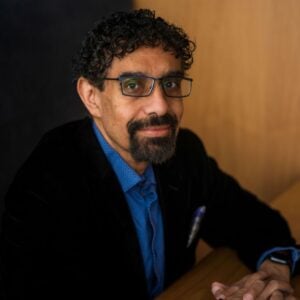
Richard Louis Miller, M.A., Ph.D
In this episode of The Psychedelic Podcast, Paul F. Austin speaks with Dr. Richard Louis Miller about what psychedelic medicine must get right as it moves toward broader acceptance. Richard explains why transparent reporting of adverse effects is essential to informed choice, where research still leaves important gaps, and how commercialization could shape access and treatment.
They examine 5-MeO-DMT, group therapy, and the limits of one-to-one care. Richard also shares his approach to aging through exercise, real food, rest, and human connection.
Dr. Richard Louis Miller is a clinical psychologist, author, and broadcaster with over 65 years of clinical experience in mind-body health. At 87, he continues to practice, teach, and share the tools that have helped thousands of people master anxiety, overthinking, and negative self-talk.
He founded the Cokenders Alcohol and Drug Program, which detoxified over 1,500 people without medication, and created the Health Sanctuary at Wilbur Hot Springs, which he directed for 48 years. His work has appeared in Time, Newsweek, NBC News, and CBS News. He has also served as a consultant to the President’s Commission on Mental Health and the U.S. Department of Justice.
Podcast Highlights
- Why psychedelic science needs full transparency
- Balancing potential benefits against real risks
- Who psychedelic research frequently leaves out
- Illegality as an overlooked adverse effect
- 5-MeO-DMT and the pharmaceutical model
- Making psychedelic care more accessible
- Aging as a practice of maintenance
- Real connection over longevity trends
Show Links
- Dr. Miller’s website
- Mind Body Health & Politics
- Instagram: @drrichardlouismiller
- Dr. Miller’s book, The Adverse Effects & Therapeutic Potential of Psychedelic Medicines
- Episode 42 – Can Psychedelics Influence Physical Healing? with Dr. Richard Louis Miller
- Maintenance: Of Everything by Stewart Brand
These show links may contain affiliate links. Third Wave receives a small percentage of the product price if you purchase through the above affiliate links.
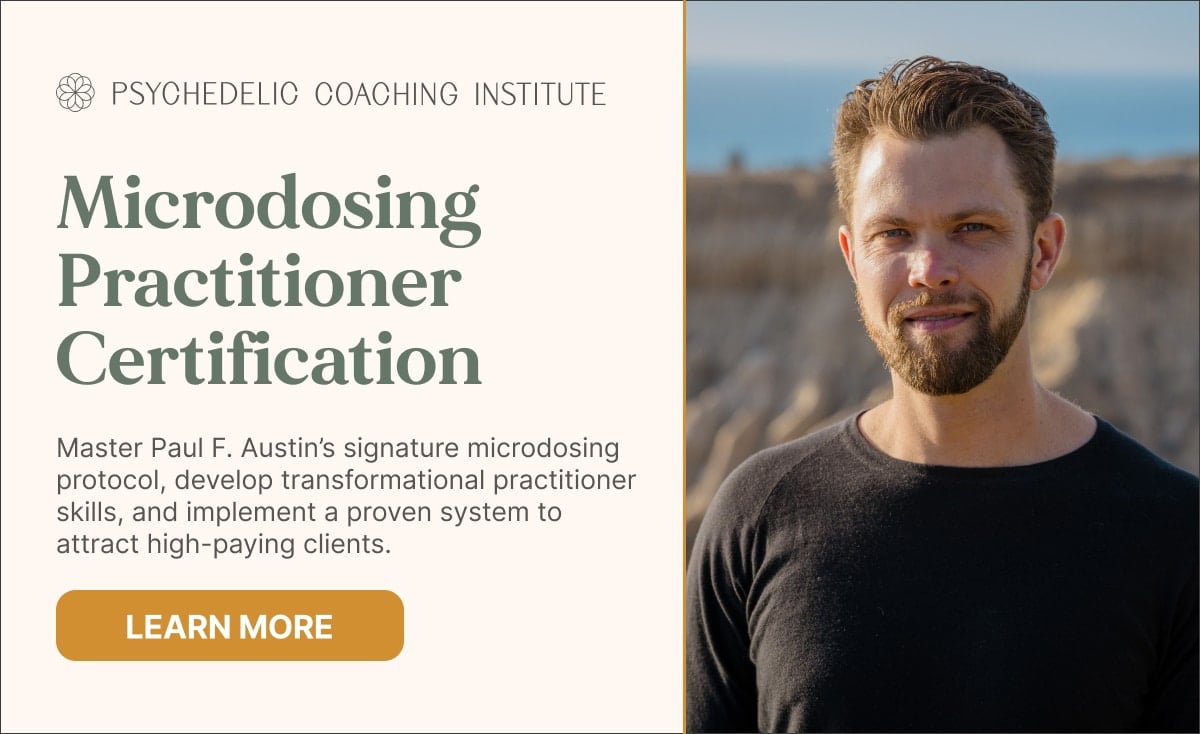
The Microdosing Practitioner Certification empowers you to launch a sustainable practice built on integrity, science, and results. Learn Paul F. Austin’s signature San Pedro Microdosing Protocol, master somatic coaching skills, and confidently guide clients toward lasting transformation. Click here to learn more and apply.
Third Wave occasionally partners with or shares information about other people, companies, and/or providers. While we work hard to only share information about ethical and responsible third parties, we can’t and don't control the behavior of, products and services offered by, or the statements made by people, companies, or providers other than Third Wave. Accordingly, we encourage you to research for yourself, and consult a medical, legal, or financial professional before making decisions in those areas. Third Wave isn’t responsible for the statements, conduct, services, or products of third parties.
Podcast Transcript
00:00:01 Paul F. Austin
When you hear about psychedelics, the focus is usually on the benefits: the breakthroughs, the healing potential, and the promise of what these substances make possible. But if psychedelics are going to become part of mainstream healthcare, we also need to talk openly about the risks, the gaps in the research, and people that these studies have largely left out. Welcome to the Psychedelic Podcast.
00:00:21 Paul F. Austin
I'm your host, Paul Austin, and my guest today—first joined me nearly a decade ago on this podcast, believe it or not—when much of our conversation focused on the therapeutic promise of psychedelics. Now he returns at a very different moment with a new book exploring what informed choice actually requires as these medicines enter larger clinical and commercial systems. Now, his position is not anti-psychedelic; it's simply that we earn public trust by being willing to tell the whole story.
00:00:49 Paul F. Austin
My guest today is Dr. Richard Louis Miller, a clinical psychologist, author, and broadcaster with over 65 years of experience in mind-body health. He founded the Coke, Enders, Alcohol and Drug Program, which detoxified more than 1,500 people without medication, helped create the Health Sanctuary at Wilbur Hot Springs, which he directed for 48 years. And Richard has appeared in Time, Newsweek, NBC News, and CBS News, and has even consulted for the President's Commission on Mental Health.
00:01:16 Paul F. Austin
Now, Richard is 87, but he continues to see patients, write books, and host mind-body health and politics. In our conversation, we explore what true transparency around psychedelic risk looks like, what research cannot tell us about populations excluded from clinical trials, Richard's concerns about 5-MeO-DMT and pharmaceutical commercialization, why the current model of psychedelic therapy may remain out of reach for so many people, and what decades of clinical work have taught Richard about maintaining vitality and connection.
00:01:47 Paul F. Austin
I've known Richard for many years. We met for the first time at the MAPS conference last year. When I first saw him, I was like, "Oh my gosh, you are so tall." This man is 6 foot 5, 87 years old, still healthy and strong as a bull. It was good to be able to drop in with him. He is on a publishing spree right now. I feel like he's had 3 or 4 books that have come out in the last few years, so a lot of wisdom here. Follow him on Instagram. He's pretty active on Instagram still.
00:02:14 Paul F. Austin
And before we get into the conversation, we'll first hear a word from our sponsors.
00:02:21 Paul F. Austin
Third wave sometimes shares or partners with outside providers, but we don't control and aren't responsible for their statements, conduct, products, or services. We encourage you to do your own research and consult appropriate professionals.
00:02:33 Paul F. Austin
Hey everyone, I want to take a moment to share something important with you. At Third Wave, one of our biggest commitments is helping people to explore the power of microdosing safely, intentionally, and with the right support systems in place. That's why I'm excited to introduce you to our go-to company, Golden Rule, one of the most respected names in the microdosing space.
00:02:52 Paul F. Austin
Golden Rule crafts premium, ethically sourced microdosing products, including psilocybin single strain and blends, San Pedro, and LSD options, all designed to support clarity, creativity, emotional healing, and performance. What really sets them apart is their integrity, honoring traditional plant wisdom while embracing modern science to support real and lasting transformation.
00:03:14 Paul F. Austin
Together, Third Wave and Golden Rule are working to make safe, high-quality microdoses more accessible while ensuring you have the education, tools, and community to feel confident on your journey. If you're curious about microdosing and want to try some of my personal favorites, head over to goldenrulemushrooms.com/thirdwave and use code THERDWAVE at checkout for 10% off. Not just once, but for every future order too. Again, that's goldenrulemushrooms.com/thirdwave and use code THERDWAVE for a lifetime discount of 10% off.
00:03:47 Paul F. Austin
All right, folks, that's it. Let's get into this conversation today with Dr. Richard Louis Miller.
00:04:14 Paul F. Austin
So, Dr. Richard Louis Miller, it's great to have you back on the show. Thank you for joining us.
00:04:19 Dr. Richard Louis Miller
Thank you so much for having me again, Paul.
00:04:23 Paul F. Austin
You know, I think what's so interesting about this episode is when I had you on the podcast last, about maybe 8 years ago now, the focus was on, you know, the benefits of psychedelics. We talked about how they could be helpful for mental and physical health.
00:04:38 Paul F. Austin
And we're now at a point in a stage where psychedelics are legal in two states. You know, the FDA is on the verge of potentially approving these. And so you've really come out with a book that takes a little bit of a different perspective, saying, "We really need to get out in front of this and talk about the adverse effects."
00:04:55 Paul F. Austin
And so I just want to start there. Why is it that your new book is a warning more so than sort of an advocacy for these medicines?
00:05:07 Dr. Richard Louis Miller
Thank you, Paul, and great to be back with you. We have a long history together.
00:05:11 Paul F. Austin
We do.
00:05:12 Dr. Richard Louis Miller
You just mentioned that I was on your show about 8 years ago. You were on my show even longer than 8 years ago when you were first starting with the Third Wave. I remember that. And you told a great story, which I'm going to tell about sometime during this interview, but right now I'm going to answer your question about why I did this book on adverse effects.
00:05:36 Dr. Richard Louis Miller
And several reasons, Paul. One is big pharma does not reveal all of their adverse effects. They hide a lot of their adverse effects. In the same way that the presidents of the major cigarette companies in the United States got up before Congress, and we have this on videotape, they got up before Congress and they swore with their hands up that nicotine in cigarettes was not addictive. It was one of the biggest lies that has ever been told directly to Congress. And more recently, medical doctors went to Congress and told them that OxyContin was not addictive. This was before the national epidemic of OxyContin and hydrocodone. They lied directly.
00:06:42 Dr. Richard Louis Miller
And it is well known that big pharma has hired people as high up as Harvard University to cover their tracks with regard to adverse effects and also to come up with new diagnoses in order to sell new medicines. Basically, what this has done is it made big pharma not trustworthy to the American public, which is a terrible place to be because we need to trust big pharma. We need so many of these medicines. Hundreds of millions of people need them. And if you cannot trust the manufacturers, we've got a serious problem. And the problem is so large, it's so large, Paul, we have companies like CVS Pharmacy, which turns out to be both a pharmaceutical manufacturer, a research firm, and a retail sales firm. In other words, they control everything from the research to the pharmacy to the sales to the public. And we need to hold them to being honest.
00:08:08 Dr. Richard Louis Miller
And what my book, The Adverse Effects and Therapeutic Potential of Psychedelic Medicine, is both revealing the adverse effects of some of the psychedelic medicines, but it's also screaming out to everyone that psychedelic science is going to take a different tack and we're going to be honest. We're going to tell all of the information to the public so that the public can make informed choices of what they do based on the risk-reward, not based on some public relations and advertising nonsense, which is what goes on right now. The public is a smart public and they have a right to know what's going on.
00:08:59 Dr. Richard Louis Miller
Now, the words you used when you introduced this topic was to say that I was issuing a warning. No, I'm not issuing a warning, if you don't mind me correcting you. I'm not issuing a warning. What I'm saying is everything that we take is liable to have some adverse effect. And it's in our interests as those who ingest these substances to know what the adverse effects might be in advance so that we can decide, is the benefit I'm going to get worth the particular risk?
00:09:44 Dr. Richard Louis Miller
For example, my wife has breast cancer. She is taking a medicine. The medicine causes terrible adverse effects. However, in her case, we're talking about the risk of saving a life versus the risk of an adverse effect. So a lot of the patients say, "Okay, I'll risk the adverse effect to try to save my life." That's pretty clear. But when it comes to psychedelic medicines, we have much more electiveness to deal with. They're not necessarily saving lives, although they could be helping lives very much. But the patients who are liable to take these medicines can still give it deep thought. Am I going to get help with my anxiety? Am I going to get help with my depression?
00:10:49 Dr. Richard Louis Miller
But wait a minute, this guy Miller is telling us that if I have cardiovascular issues, these medicines can raise the heart rate and could raise the blood pressure and could possibly cause a tachycardia and cause an AFib. Maybe I don't want to take this medicine for this particular, maybe I want to try and go another route. Another person might say, "I'm a very healthy person. I don't have any heart trouble. I don't have any kind of trouble. I want to take these medicines for creativity, but also to deal with a slight depression. I'm a great candidate." And that person is a great candidate.
00:11:31 Dr. Richard Louis Miller
The adverse effects can be widespread and they can happen in various percentages. What I mean by various percentages is some adverse effects might come to 40% of the people. Some adverse effects might come to 2% of the people. If you're looking at adverse effects that comes to 2%, it's sort of a no-brainer. I'm not worried about that. But if I read about an adverse effect that's going to happen at 30 or 40%, I might decide, "Hey, that's too much of a risk for me."
00:12:10 Dr. Richard Louis Miller
And then in addition to the most obvious ones with psychedelics, namely the cardiovascular, there are also concerns about other kinds of potential users. For example, we are uncertain about the effects of psychedelic medicine on people who have pre-existing serious psychological conditions. I'm not telling you at this point, Paul, that the psychedelics won't help them. I'm saying we don't know yet because when we do research, we weed out people who are liable to get in trouble with the substance that we're giving them that we're researching. We weed them out, weed them out, weed them out. And we try to get healthy subjects or if we're doing research on depression, we would get basically healthy people who are depressed so that we're basically dealing with the healthy ones who are suffering from some particular psychological condition.
00:13:30 Dr. Richard Louis Miller
However, the fact that we weed it out means that we don't know a great deal about those people we weed it out. We don't know what will happen to them if they take psychedelics. We don't know what will happen to a person who has had schizophrenia. We don't know what will happen to a person who's had obsessive-compulsive disorder. We don't know what will happen to a person who has bipolar. We don't know what will happen to a person who has borderline personality disorder because we haven't studied them yet. We will, Paul, but we haven't studied them yet. And so those people all need to be cautioned, cautioned about these things.
00:14:20 Paul F. Austin
If you've been wanting to turn your passion for psychedelics into a meaningful and profitable practice, then check this out. Enrollment is now open for our microdosing practitioner certification program. And in just 18 weeks, you'll become a certified microdosing practitioner, mastering my signature San Pedro microdosing protocol for nervous system regulation while developing the somatic coaching and business skills to launch or expand your practice.
00:14:45 Paul F. Austin
This isn't just another theoretical course. It's hands-on, high-touch training that helps you integrate our microdosing protocol, refine your practitioner presence, and graduate ready to start enrolling clients right away. If you're ready to help others move from dysregulation to balance and build a thriving business doing work that matters, I'd love to see you in our next microdosing practitioner cohort. Just follow the link in the episode description or visit psychedeliccoaching.institute to learn more and apply.
00:15:16 Paul F. Austin
You know, just to help land this a little bit more because I think some of these particular details are, you know, they're helpful. But there's a comparison that you make in your book to Vioxx. And in some ways, you're comparing what's building around psychedelics right now to Vioxx or Vioxx, please correct me with the pronunciation.
00:15:35 Paul F. Austin
Vioxx was a Merck blockbuster in the late '90s that had suppressed cardiac risk data, tens of thousands of deaths. It was pulled off the market in 2004. It was aggressively marketed. It took, you know, trust took a century to build and five years to destroy because of this. And it's just like one of the most sort of concrete examples of pharmaceutical companies sort of covering up potential problematic data as a way to get something approved for profit share.
00:16:03 Dr. Richard Louis Miller
Are you suggesting the possibility that we'll run into this again? Because if you are, there's no concern. We already have hundreds, if not thousands, of research protocols on LSD, psilocybin, and certainly on marijuana. We have a great deal of information about MDMA, although it's not classically a psychedelic. We have a lot less information about ayahuasca. And that's something that people need to know about. We have a lot less information. We're getting it. It's coming. But we have less information on ayahuasca and ibogaine. And so a prudent person wants to be prudent and be careful.
00:17:00 Dr. Richard Louis Miller
Now, I want to mention at this point that all the adverse effects that I'm talking about and I talk about in the book are pretty much associated with standard doses of psychedelics. I'm saying that because you have been championing the cause of a different dose of psychedelics that's extremely important. And that is microdosing. And the reason I'm underlining your work with microdosing is because microdosing brings minimal, if not nonexistent, adverse effects.
00:17:50 Dr. Richard Louis Miller
The only adverse effect that I can name for microdosing with LSD is an adverse effect that I have experienced with LSD, but it had nothing to do with the size of the dose. And here's the story. You know, you saw my background. I've been a psychologist. I've been a college professor. I've been a clinician, et cetera, et cetera. I live a pretty straight-up life. I'm a good citizen. I think I pay my taxes. I think of myself as an honest citizen. When I started taking psychedelics and marijuana over 50 years ago, I was critically aware that I was breaking the law. And I was therefore in the eyes of the law a criminal.
00:18:45 Dr. Richard Louis Miller
If I had, if in 50 years ago, if I had a vial of LSD with me, I could go to jail for a very long time. 50 years ago, if I was caught with even marijuana, I could go to jail. And after MDMA was scheduled in 1985, as you've mentioned, I was able to take it before while it was still legal. But after 1985, it was illegal. And what that meant was myself and every other psychologist and psychiatrist in the United States who were experimenting with these psychedelics, and there were many of us, were all doing illegal activity.
00:19:31 Dr. Richard Louis Miller
And I'll tell you the adverse effect, Paul. It created a kind of paranoia in me. I was always a little nervous about the possibility that I would get in trouble and lose my license. That is an adverse effect. That is a very powerful adverse effect. And that applies to people now all over the United States, except for the two states that you mentioned where these things are legal.
00:20:05 Dr. Richard Louis Miller
So that's a different kind of adverse effect. The kind of adverse effect we're used to is the adverse effect of ingesting something and then something physiological or psychological happens that's unpleasant. But I'm telling you about another adverse effect that was very unpleasant, which was not related to eating it. It was related to the fact that the government has made these medicines illegal.
00:20:36 Paul F. Austin
Which has no matter.
00:20:38 Dr. Richard Louis Miller
And there may be many people listening to understand what I'm saying here about that uncomfortable feeling of doing something illegal. Getting back to your microdosing, however, I want to champion that cause and I want to tell a little story, if I may, about you.
00:20:55 Paul F. Austin
Please. Please.
00:20:57 Dr. Richard Louis Miller
When I interviewed you on my program, Mind, Body, Health and Politics, more than eight years ago, I don't know how many, it was many more than eight. Wait, do you remember what year you started the Third Wave?
00:21:11 Paul F. Austin
2015. You probably interviewed me in 2017. I think it was 2017.
00:21:15 Dr. Richard Louis Miller
Okay. Because I had you on right after you started, right when you were beginning.
00:21:20 Paul F. Austin
Yeah.
00:21:21 Dr. Richard Louis Miller
It was right when you were beginning the Third Wave. And you told me this story about how you courageously took a microdose for three solid months. And you told me the positive effect that it had on you, that it had on your personality, that it had on your sociability. And you told me how it made you much more accessible and much more transparent as a human being. Very positive effects. And therefore you went on to create the Third Wave to share this with so many people. And I want to point out that you're doing that.
00:22:05 Dr. Richard Louis Miller
Your self-experimenting was in the tradition of science going back thousands of years. Because until scientists were allowed to experiment on human beings, which is only recent, scientists were only allowed to experiment on themselves and on cadavers. So you are in that tradition, as so am I, of self-experimenters.
00:22:32 Dr. Richard Louis Miller
So again, to point out to the public that my book on the adverse effects has little if anything to say about microdosing because of the safety of microdosing, because of the size of the dose.
00:22:48 Paul F. Austin
Which brings me to my next question because, you know, just a couple weeks ago, there was a big announcement about Eli Lilly, the world's largest pharmaceutical company, acquiring Atai Beckley, which was bringing or is bringing 5-MeO-DMT, intranasal 5-MeO-DMT through clinical trials.
00:23:10 Paul F. Austin
So we have the world's biggest pharmaceutical company now owning the world's most potent psychedelic. And I'm curious to sort of hear your analysis or your perspective on that.
00:23:21 Paul F. Austin
What are maybe some problematic things or some things that we have to be mindful of with a company like Eli Lilly now owning 5-MeO-DMT, the patented version of that for depression and medicalization?
00:23:37 Dr. Richard Louis Miller
Well, what I love about psilocybin is that almost anybody can grow it in their kitchen. Why am I mentioning this? Because I'm basically skeptical of all these large companies because I don't trust them to really, at the bottom line, care more about the patients than they do about money and earning money for their investors. If Eli Lilly made an investment of this size, they are going to want to charge in order to make their money back. And they're going to potentially milk the American public and get the money back. Just like some of the companies that have already have psilocybin spray that you can spray, and they're charging ridiculous amounts of money for it.
00:24:41 Dr. Richard Louis Miller
And we are seeing the same thing, unfortunately, around the United States with regard to guides. It's not the guide's fault, but it's built into the nature of the treatment that it's terribly expensive, which means it's not going to be readily available to the American public, Paul. And what I mean by it's not the guide's fault, if you're with somebody for 20 hours, you know, even at the rate of $100 an hour, it's $2,000. And many, you know, doctoral level people charge a lot more than $100 an hour. They might charge $200, $300, $400. So we're talking about short therapy sessions, namely a three-day weekend, costing people $3,000, $5,000, $8,000, $10,000.
00:25:45 Dr. Richard Louis Miller
You don't have to deal with that with microdosing, fortunately, because microdosing is very inexpensive and therefore it's going to be very available to hundreds of millions of people. And you don't need a guide when you microdose, although you could use one occasionally, and you can certainly use microdosing as an adjunct to your own personal therapy. But it's usable as a personal therapy, as you know more than anyone, you know, without much fanfare, which means the tremendous advantage of cost availability. And this is my biggest concern, and it relates to your question about Eli Lilly and 5-MeO-DMT. You know, what are they going to end up charging us for it?
00:26:35 Dr. Richard Louis Miller
And my second issue about it, Paul, is I'm not convinced that 5-MeO-DMT is a great drug for therapy. I think we need a lot more research on it. My experience with psychedelics that take us from normal to the cosmos in seconds is that it's very difficult to bring the information that we learn back with us. When you take LSD and it lasts six, eight, ten hours, you've got a lot of time to incorporate the information. You can take notes, you could put on a recorder, you could even video it. You know, there's ample time with that. The same with MDMA, the same with psilocybin, and the same with ayahuasca. But with 5-MeO-DMT, it's like rocket ship to the moon and then you're back. So I have my eyebrows up. It's a wait and see attitude about, you know, 5-MeO.
00:27:47 Paul F. Austin
Well, that's a really important perspective because when I look at why Eli Lilly, for example, is so excited about 5-MeO, it's because it fits within that two-hour clinical window. And we've seen the success of Spravato, which is a patented form of ketamine from J&J. You know, people have to keep coming back again and again and again for the drug.
00:28:11 Paul F. Austin
And so I think the hope with 5-MeO is it'll boost your mood for sure, temporarily. But like you said, it doesn't really allow this sort of spaciousness for psychoanalysis or wrestling with your demons or really committing or having the courage to face something deeper. You're in it. You can navigate through it. You come out, you feel much better, right?
00:28:33 Paul F. Austin
And then maybe in another month or two or three months, you come back in and you get the same treatment again. And for years and years and years, you're just coming in for your monthly 5-MeO-DMT, you know, nasal spray. And that's it.
00:28:47 Paul F. Austin
And I think that to me is what's problematic about the biomedicalization model is it doesn't necessarily lend itself to a lot of depth and transformation. It's much more surface level, unfortunately, which is why we have the mental health crisis that we have, because a lot of our approaches are surface level. They don't really address the human at the soul, at the real psyche level, not psychological level, but the real psyche level, the real soul level.
00:29:17 Dr. Richard Louis Miller
I agree with you totally. You know, up here in the Bay Area, they're selling vape pens that have 5-MeO-DMT in it. Did you know that?
00:29:28 Paul F. Austin
Oh yeah. Oh yeah, for sure. Yeah.
00:29:30 Dr. Richard Louis Miller
So, you know, it's not like Eli Lilly is onto anything new. The manufacturer's way ahead of them.
00:29:36 Paul F. Austin
Exactly. And the vape pens will remain way cheaper. And I think you bring up a great point. We don't know if insurance is going to cover this. We don't know to what degree insurance will cover this. We also know there's a pretty distinct and direct relationship between socioeconomic status and mental health. And so we don't know if something like Medicare is going to cover this either. There's a lot of questions, you know?
00:29:58 Paul F. Austin
And I think to your point, right, this one-to-one model where a guide gets paid $200 an hour, I also don't see that as scalable. I think for me, I look at how psychedelics have been used for thousands of years. They've been used in groups. They've been used in rituals. They've been used in ceremonies. And, you know, from my perspective, I think we need to keep that at the center, the communitas around psychedelics is important.
00:30:24 Paul F. Austin
I mean, I even look at Wilbur Hotsprings and I go, man, my ideal center would be a place in California with a bunch of hot springs where I could take acid with friends. If I got that, then I have everything. That's sort of been my way of thinking of things, you know?
00:30:40 Dr. Richard Louis Miller
Well, tens of thousands of people have done exactly that at Wilbur Hotsprings in my time, and no question, including myself.
00:30:52 Dr. Richard Louis Miller
This is the scalable issue that you talked about is critical, Paul. And the future that I see is group therapy. Because if you put 12 people or 14 people in a group, maybe 16 at the most, you put them in a group and they take psychedelics, and if they're all paying a reasonable sum, it doesn't have to be a real lot, but you multiply it by 12, then you get enough money to pay the guide. And each of the people, you know, isn't put out that much. It could be the cost of an expensive meal. And I think we have to look towards group therapy in the future.
00:31:32 Dr. Richard Louis Miller
I think the other thing that's going to happen, Paul, over time, but I don't know how long, is that more and more people will learn how to guide each other. So friends will guide friends and family members will guide people. And people in the neighborhood, it'll be more like caretakers or caregivers. And people will be trained to do that. And I'm hoping, you know, that that'll make things readily available.
00:32:04 Dr. Richard Louis Miller
You know, we have a little time left, and I'd like to talk a bit about my forthcoming book because I'm excited about it.
00:32:15 Paul F. Austin
Please. Can we do
00:32:15 Dr. Richard Louis Miller
that?
00:32:16 Paul F. Austin
Sure. What is it?
00:32:18 Dr. Richard Louis Miller
It's called The 10 Commitments: Aging with Grace, Purpose, and Vitality. And in the 10 commitments, I talk about what I have personally done to be living a full life, working, seeing patients, writing books, doing my internet radio show, Mind, Body, Health and Politics. What I have done in order to, at age 87 now, be living the same way I've lived pretty much when I was your age. In other words, I haven't changed my lifestyle as a function of my aging. And most people do change their lifestyle as a function of their aging.
00:33:22 Dr. Richard Louis Miller
And I think we're taught in our culture, I don't think we're taught, I know we're taught in our culture to change that we change our lifestyle over the period of developmental years as we age. And I think one of the dangers, Paul, is that people act their age. And what I'm saying is acting your age is dangerous. Acting your age is dangerous at any age.
00:33:59 Dr. Richard Louis Miller
You know, when I was less than four years old, I was able to read The New York Times. Now, nobody would talk to me about it because I was so little. In other words, they were ages. I mean, like, what can this kid know about what he read? Except for a few people, you know, my mother, who was a teacher, she talked to me. Now I'm at the other end of the continuum, and people have ideas about what an 87-year-old can do and cannot do. But they're wrong. We can do what we've always done.
00:34:45 Dr. Richard Louis Miller
So, for example, Paul, I lift weights three times a week, and I do aerobic exercise seven days a week for between 30 and 60 minutes. Now, that's a big commitment. It's about 10 hours a week. Why do I put 10 hours a week into that when I could be seeing patients, writing books, you know, doing my other work? And the answer is part of living to 87 and doing so robustly with vitality requires maintenance.
00:35:27 Dr. Richard Louis Miller
It requires more maintenance than we require at 20, 30, and 40. And so if we do the maintenance, we maintain our strength. But if we do not do the maintenance, we start to wither away. And what our colleagues who do the science on this tell us, Paul, is that starting somewhere around 45 or 50, human beings start to lose about 1 to 3% of their muscle mass every single year. Every year.
00:36:12 Paul F. Austin
Every year.
00:36:14 Dr. Richard Louis Miller
Yes. And what that means is, how old are you now?
00:36:17 Paul F. Austin
I'm 35.
00:36:19 Dr. Richard Louis Miller
You're 35? Okay. You've got time.
00:36:22 Paul F. Austin
I still have a little time.
00:36:24 Dr. Richard Louis Miller
You've got a little time.
00:36:24 Paul F. Austin
I can do weights three times a week.
00:36:26 Dr. Richard Louis Miller
But I would say by the time you're 40 or 45, you want to have a routine that you set in. And here's why. If you start losing this muscle mass, 1 to 3%, at age 45, by the time you're 65, if you're a 1%-er, you've lost 20% of your muscle mass. What happens if you happen to be in the 3% category? 20 years, you lose 50, 60, you lose your muscle mass. Is it any wonder that you look around the world and you see old people leaning forward and walking slowly? It's not because they're old, Paul. It's because they don't have the strength to hold their skeletal system up because they've lost so much muscle mass.
00:37:21 Dr. Richard Louis Miller
So a lot of what aging and anti-aging is about, it's not about taking breaks from eating, and it's not about all these getting an ice water and all these trends. It's about maintenance. It's about maintenance. And part of the maintenance is about fuel. People have a car, and the car says, put high test in. When they go to the gas station, they don't put the low test in. Most people know to put high test in. If you drive a diesel, you go to the station, you don't put gasoline in, you'll kill it. You put diesel fuel in.
00:38:09 Dr. Richard Louis Miller
But people don't take the same attitude about the fuel that they put in their bodies. We're all running around with a Rolls-Royce, and we're pissing in the gas tank. We're putting in junk fuel. It's like going in with your car, your car says high test, and you put the lowest fuel in. It ain't going to work well. It's the same thing with this. It's about maintenance.
00:38:37 Dr. Richard Louis Miller
So you have to maintain it physically with exercise. You've got to put the right fuel in. And then there are other things of those 10 commitments that I list in the book. Namely, it's about how do you maintain yourself so that if you are lucky enough to be 87 or 90 or 95, you're still functioning like a regular person. You're still going out. I was out for a three-hour tricycle ride along the ocean the other day. I love it. I can get in the pool and swim for an hour doing laps. I love it. Why? Because I'm doing the maintenance. And that's what the 10 commitments are about. It's about committing oneself to a lifestyle of maintenance if you want to age with grace and purpose, and particularly with vitality.
00:39:39 Paul F. Austin
Well, it's funny that you bring up maintenance because one of my favorite books that I've read recently is by a guy named Stuart Brand. Do you know who Stuart Brand is?
00:39:49 Dr. Richard Louis Miller
I know Stuart.
00:39:50 Paul F. Austin
You know Stuart. So Stuart is an OG, and he just published a book called Maintenance, The Maintenance of Everything.
00:39:59 Dr. Richard Louis Miller
Really?
00:39:59 Paul F. Austin
And it's a fantastic read. And he talks about the maintenance of sailboats, and he talks about the maintenance of machine guns, and he talks about the maintenance of cars, and this really in-depth look into why is it that maintenance is so important. And he's actually coming out with a second version sometime soon, you know?
00:40:19 Paul F. Austin
And so I think, you know, the most important thing is, of course, maintenance of the human body. And I'm glad you brought up, you know, the difference between foundational practices and trends.
00:40:31 Paul F. Austin
And I'm curious to hear what you make of all of the hoopla around these longevity practices these days. You know, someone like Brian Johnson who wants to live forever, the talk of, you know, folks say we're going to solve aging and, you know, transcend death.
00:40:49 Paul F. Austin
What do you make of this sort of cultural obsession that we have with wanting to live, you know, to 120 or 150? What is it about that, you know, about our culture right now? What's going on?
00:41:04 Dr. Richard Louis Miller
My challenge to Brian Johnson and Peter Attia and all these other guys, let's see if you can live as long as I have. That's the challenge. Put your life where your words are. All these things that they're coming up with, you know, Brian Johnson, I love what he did. I think hiring all those scientists in your house because you can afford it and doing all those experiments on yourself, I love every single bit of it. However, in the back of my mind, I was always asking the question, when is he going to come out with the products he's going to sell us based on this? And I feel the same way about Attia. I understand he's a little more scientific with the telomeres and so on, but I need to see what actually works, not speculation.
00:42:03 Dr. Richard Louis Miller
This whole business of intermittent fasting, you know, I've been intermittent fasting all my life. It's called sleeping at night. I don't eat while I sleep, but I don't need to extend it because of some trend. And I don't need supplements. Supplements are one of the biggest rackets on the planet. People spending hundreds of millions of dollars on supplements. A supplement is something you add. Well, how about just eating a balanced diet and then not having to add any supplements? It's called real food.
00:42:43 Dr. Richard Louis Miller
Not food that comes in cans, not food that comes in packages, not food that comes in jars, food that comes off a shelf like broccoli. Did you ever open up your television and see an ad for broccoli? I don't think so. If you ever open up your TV and see an ad for cauliflower, I don't think so. Lettuce? Real food does not require packaging. And when you buy packaged food, you're paying for the glass, for the plastic, for the wrapper, for the writing on the wrapper. Every single thing you're paying for in addition to what you're going to get to eat. It's one of the biggest rackets going, charging people for the bottle.
00:43:36 Dr. Richard Louis Miller
And then, you know what's going on now, Paul? They're coming out with fancier and fancier bottles of water, heavy bottles, square bottles, round bottles, you name it. There's some kind of a bottle for water? Are you kidding me? That's what they're charging, and people are buying it like crazy. And then all these other drinks, these so-called yuppie health drinks, it's a bunch of nonsense. Total nonsense.
00:44:08 Dr. Richard Louis Miller
So that's how I feel about all these trends are trends. Just like some sneakers are trends and some t-shirts and some hats. Everybody in the United States now wearing little baseball hats. We'll see how long that lasts. Okay, it's a trend, but it's not hurting anybody. But these trends selling people things that they swallow and promising them some benefit, that's not nice. That's not nice. And that's what's going on with the supplements and with a lot of these bottled, all these bottled drinks that are going on. They're just scamming the public like crazy.
00:44:51 Dr. Richard Louis Miller
So the 10 commitments, they're very simple, very basic. Real food, real exercise, normal rest, real socialization with real people. Not texting on a little piece of something called a phone as a way of having a social relationship. A social relationship is sitting with another person at minimum on Zoom like where you and I are, but best, of course, in person.
00:45:29 Dr. Richard Louis Miller
And I'm advocating, Paul, for people to start calling one another on the telephone again. Why? To hear each other's voices. The voice brings so much information about the soul. Instead of reading these little fonts on a phone called a text, I'm hearing now that people are texting more than they're calling, and I'm trying to reverse it, Paul.
00:45:56 Paul F. Austin
There we go.
00:45:57 Dr. Richard Louis Miller
I'm trying to reverse it and get people to call each other. Make a call once a week. Call a friend and say hello. Let the texting be for technical things. So that's what the 10 commitments are about. They're about commitments to a basic common sense lifestyle. Something your grandmother would have been proud of without any fancy, any fancy bubbles on it.
00:46:29 Paul F. Austin
Dr. Richard Louis Miller, recent book from Park Street Press is out called The Adverse Effects and Therapeutic Potential of Psychedelic Medicines. We'll drop a link to that in the show notes. I would encourage folks to check that out.
00:46:41 Paul F. Austin
Richard doesn't hold anything back. Shoots it straight, which I always appreciate. And it's good to do this again with you.
00:46:50 Paul F. Austin
I feel like we've done this probably a dozen times now, one way or another. So I'm happy to be back and talking with you. And, you know, I wish you all the best with everything, including your prolific output as of late with all the books that you've had coming out.
00:47:07 Dr. Richard Louis Miller
Thank you, Paul. And I look forward to having you on my program again soon, Mind, Body, Health and Politics, because I want you to tell me and my listening audience what's happening with the third wave. I want to know details about it, and I want to talk about it, okay?
00:47:25 Paul F. Austin
I would love that. All right. Thank you, Richard.
00:47:27 Dr. Richard Louis Miller
Thank you, Paul. Bye-bye.
00:47:30 Paul F. Austin
Okay. Like, follow, rate, review, and share the Psychedelic Podcast on Spotify, on Apple, wherever you listen to your podcast. If you enjoyed this episode, please share it with a friend or family member.
00:47:41 Paul F. Austin
You can also subscribe to Third Wave on YouTube for full video conversations and track me down on social, Paul Austin 3W. I'm pretty active on LinkedIn and X and every now and then on Instagram.
00:47:53 Paul F. Austin
All right. Thanks for tuning in, folks, and we'll see you next week.