

Episode 343
Justin Wolf
In this episode of The Psychedelic Podcast, Paul F. Austin speaks with Justin Wolf, co-founder and CEO of New Brew, about plant-based alternatives to alcohol and how social drinking culture may be shifting.
Justin shares how exploring kava and kratom traditions in Mexico shaped New Brew’s approach to formulation, emphasizing reliable dosing, transparency, and harm reduction. Together, they discuss why alcohol became the default social drug, the limits of most “functional beverages,” and the nuance behind terms like “Cali sober.”
The conversation also explores dependency risk, intention, moderation, and why plant-based alternatives are not positioned for those pursuing full abstinence. At its core, this episode is about expanding optionality and building new social rituals responsibly.
Justin Wolf is the co-founder and CEO of New Brew, a plant-powered social tonic designed as an alternative to alcohol. Prior to launching New Brew, Justin spent five years leading Global Partnerships at Google and helped launch DripDrop, an electrolyte hydration brand now sold nationwide. Inspired by kava and kratom traditions he encountered in Mexico, he founded New Brew with a focus on transparency, education, and harm reduction. He is also an early investor and advisor in the psychedelic medicine
Podcast Highlights
- Why alcohol became the default social drug
- The limits of “functional” beverages
- Discovering kava and kratom in Mexico
- Harm reduction through formulation and dosing
- Intention over abstinence or excess
- The nuance behind “Cali sober”
- Building new social rituals responsibly
Show Links
The Microdosing Practitioner Certification empowers you to launch a sustainable practice built on integrity, science, and results. Learn Paul F. Austin’s signature San Pedro Microdosing Protocol, master somatic coaching skills, and confidently guide clients toward lasting transformation. Click here to learn more and apply.

This episode is brought to you by The Practitioner Certification Program by Third Wave’s Psychedelic Coaching Institute. To learn more about our flagship 6-month training program for coaches who want to integrate psychedelic modalities into their practice, click here.
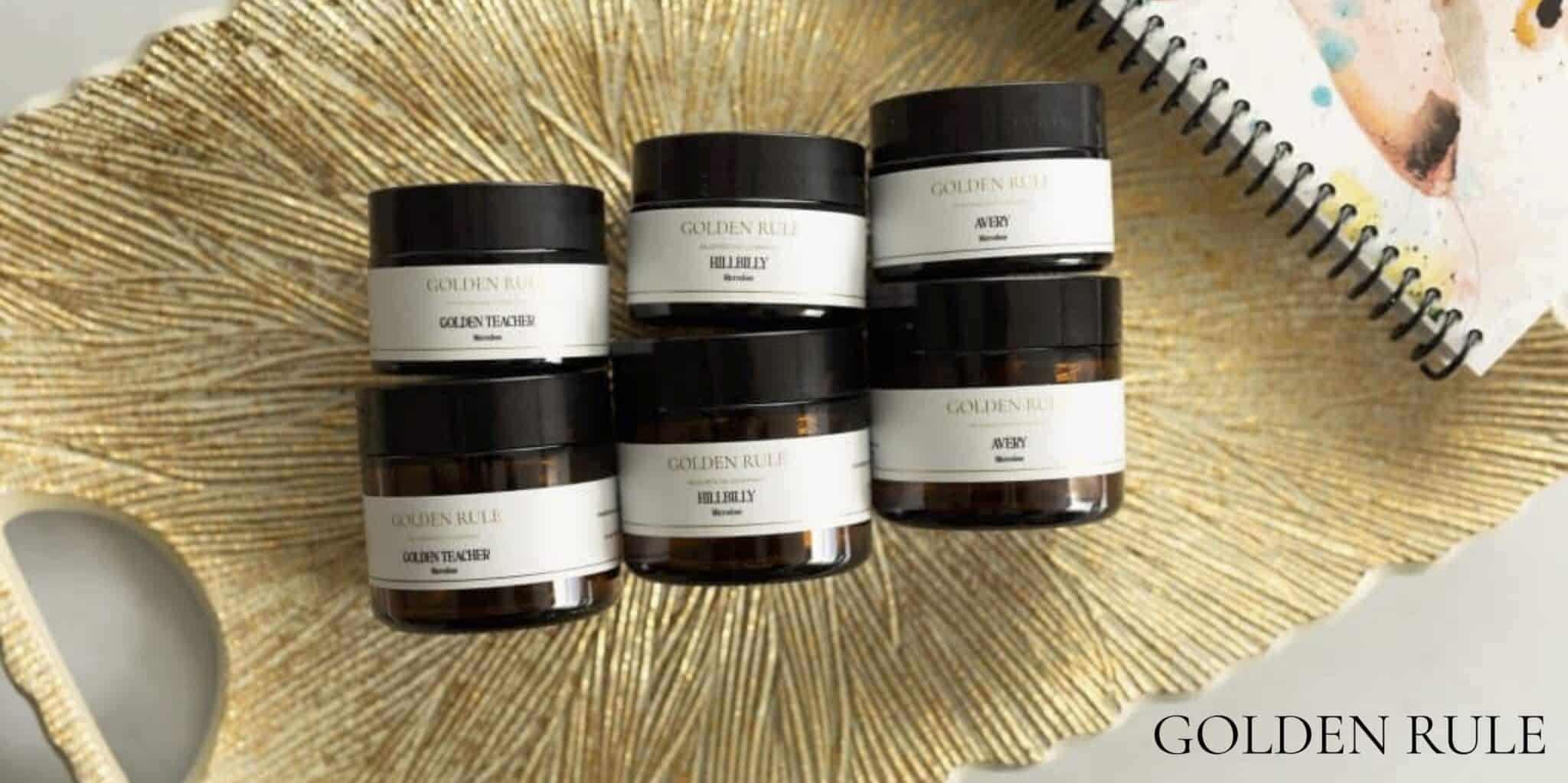
We’re excited to feature Golden Rule — our trusted resource for premium microdosing products designed to support clarity, creativity, and emotional well-being. From Psilocybin blends to LSD microdosing options, each formula is crafted with care, backed by science, and trusted by the Third Wave community.
Safe, intentional, and transformative — Golden Rule helps you feel more focused, connected, and aligned in your everyday life.
Want to experience the difference? Try Paul’s favorite microdosing picks — hand-selected for performance, mood, and daily flow.
Get a lifetime discount of 10% with code THIRDWAVE at checkout.
Third Wave occasionally partners with or shares information about other people, companies, and/or providers. While we work hard to only share information about ethical and responsible third parties, we can’t and don't control the behavior of, products and services offered by, or the statements made by people, companies, or providers other than Third Wave. Accordingly, we encourage you to research for yourself, and consult a medical, legal, or financial professional before making decisions in those areas. Third Wave isn’t responsible for the statements, conduct, services, or products of third parties. If we share a coupon code, we may receive a commission from sales arising from customers who use our coupon code. No one is required to use our coupon codes.
Podcast Transcript
00:00:01 Paul F. Austin
What happens when alcohol is no longer the default social drug? In this episode of the Psychedelic Podcast, I sat down with Justin Wolf, co-founder and CEO of New Brew, about the cultural shift away from alcohol and the emergence of plant-based alternatives designed for social connection. Justin shares how quitting alcohol led him to explore kava and kratom, and why he became frustrated with functional beverages that failed to deliver meaningful effects. That experience eventually led him to launch New Brew, a plant-powered social tonic intended to offer adults another option alongside alcohol, not as a replacement, but as an alternative.
00:00:40 Paul F. Austin
Together, we examine the broader implications of alcohol's dominance in modern culture, the importance of intention and moderation with any psychoactive substance, and the role of harm reduction in responsible formulation. We also explore the nuance behind terms like California sober and why alcohol's dominance in social rituals deserves to be challenged, not simply replaced. Our conversation also examines the risks of dependency, gender differences, and subjective effects, and why New Brew is explicitly not positioned for people in recovery. At its core, this episode is about optionality, expanding cultural rituals around connection, presence, and altered states without repeating the mistakes of the past.
00:01:18 Paul F. Austin
Justin Wolf is the co-founder and CEO of New Brew, a plant-based social tonic designed as an alternative to alcohol. Before launching New Brew, Justin spent five years leading global partnerships at Google and helped launch Drip Drop, an electrolyte hydration brand now sold nationwide.
00:01:32 Paul F. Austin
All right, Justin's been a friend for a few years. I've enjoyed New Brew myself, although I do have a somewhat tenuous relationship with kava/kratom at this point. But New Brew, when I'm exploring this, New Brew is definitely my favorite go-to, so I think you'll really enjoy this deep dive with Justin.
00:01:48 Paul F. Austin
All right, folks, now let's hear from our sponsor.
00:01:51 Paul F. Austin
If you've been wanting to turn your passion for psychedelics into a meaningful and profitable practice, then check this out. Enrollment is now open for our microdosing practitioner certification program, and in just 18 weeks, you'll become a certified microdosing practitioner, mastering my signature San Pedro microdosing protocol for nervous system regulation while developing the somatic coaching and business skills to launch or expand your practice. This isn't just another theoretical course; it's hands-on, high-touch training that helps you integrate our microdosing protocol, refine your practitioner presence, and graduate ready to start enrolling clients right away. If you're ready to help others move from dysregulation to balance and build a thriving business doing work that matters, I'd love to see you in our next microdosing practitioner cohort. Just follow the link in the episode description or visit psychedeliccoaching.institute to learn more and apply.
00:02:47 Paul F. Austin
Third Wave sometimes shares or partners with outside providers, but we don't control and aren't responsible for their statements, conduct, products, or services. We encourage you to do your own research and consult appropriate professionals.
00:02:59 Paul F. Austin
Hey, everyone, I want to take a moment to share something important with you. At Third Wave, one of our biggest commitments is helping people to explore the power of microdosing safely, intentionally, and with the right support systems in place. That's why I'm excited to introduce you to our go-to company, Golden Rule, one of the most respected names in the microdosing space. Golden Rule crafts premium, ethically sourced microdosing products, including psilocybin, single-strain, and blends, San Pedro, and LSD options, all designed to support clarity, creativity, emotional healing, and performance. What really sets them apart is their integrity, honoring traditional plant wisdom while embracing modern science to support real and lasting transformation. Together, Third Wave and Golden Rule are working to make safe, high-quality microdoses more accessible while ensuring you have the education, tools, and community to feel confident on your journey.
00:03:51 Paul F. Austin
If you're curious about microdosing and want to try some of my personal favorites, head over to goldenrulemushrooms.com/thirdwave and use code THIRDWAVE at checkout for 10% off, not just once, but for every future order too. Again, that's goldenrulemushrooms.com/thirdwave and use code THIRDWAVE for a lifetime discount of 10% off.
00:04:14 Paul F. Austin
Okay, without further ado, we bring you Justin Wolf.
00:04:39 Paul F. Austin
Okay, it is with great pleasure that we welcome to the parlor of psychedelic discourse Mr. Justin Wolf, a gentleman of rare discernment and audacious vision, co-founder of New Brew that most singular adventures wherein ancient ritual meets modern alchemy. Hailing from the gilded salons of entrepreneurial daring, Mr. Wolf has dedicated his noble energies to the revival of plant-based elixirs designed not merely to tantalize the senses, but to awaken the soul. With the meticulousness of an apothecary and the flair of a modern-day Merlin, he has set his sights on reshaping our cultural communion with altered states, casting aside the crude and the synthetic in favor of the sacred and the botanical. New Brew, under his watchful eye, has emerged as both chalice and catalyst, offering the discerning public a taste of the ineffable wrapped in the garb of civility. In a world weary of nihilism and numbness, Mr. Wolf dares to toast to presence, to spirit, and to the slow, deliberate intoxication of the divine. What'd you think about the intro?
00:05:37 Justin Wolf
That was excellent. That's the best intro I've ever gotten, that's for sure.
00:05:41 Paul F. Austin
So I had prompted ChatGPT for this intro. Typically, I would do this prompt leading up, but I did a slight twist this time, which was to make it in slightly dramatic tone with 19th-century English aristocratic tones.
00:05:56 Justin Wolf
Well done.
00:05:57 Paul F. Austin
Did that resonate? Of that opening, of that intro, what kind of hit home for you, or what really resonated with your own story? And where do you find yourself with New Brew at this point in time?
00:06:09 Justin Wolf
I think it connected well to the broader mission that we're on with New Brew, which is really to help reimagine the way people share drinks, and help introduce another option that's a plant-powered option for those who maybe don't do well with alcohol like myself, or even just want to take a night off of it or a week off, a month off, whatever.
00:06:37 Justin Wolf
Obviously, we get caught up in the day-to-day, but the broader vision is always intact, which is to really have that kind of impact on our social rituals as human beings. I know that sounds like really lofty, not as lofty as what ChatGPT just said, but I think we're at the beginning stages of doing just that, along with other brands and other innovators in this space.
00:07:04 Justin Wolf
We live in a world where alcohol has really had this stranglehold over all of our social rituals for a very long time. That wasn't always the case throughout human history. People were consuming other psychoactive or mind-altering compounds in the beverage format, but it's been the case for a long time in this country and around the world, and it's ripe for some kind of disruption because alcohol itself can be a very destructive force.
00:07:36 Justin Wolf
It's not in itself inherently bad by any means, but I think what is bad is alcohol being the only option available to people. So just to put it really simply, we're trying to give people another option, and New Brew is not right for everyone either. Kratom isn't right for everyone. Kava is not right for everyone, but it gives informed adults a chance to learn about something new and maybe build it into their life that perhaps gives them a better quality of living or helps them move away from other things that have been really harmful for them.
00:08:07 Justin Wolf
So I'm really excited about that, and it does cross my mind every day and I think fuel the way I approach every meeting I'm in, especially when things get really tiring and difficult, which they do frequently in the beverage world. That's what kind of keeps me going because I'm seeing that unfold, and the further we go, the more I see that message connect with our community that we're building around this product and this brand. So I'm very grateful for it. And yeah, I may need to have you send me that ChatGPT answer.
00:08:47 Paul F. Austin
Put it on a vision board.
00:08:48 Justin Wolf
That was pretty sweet.
00:08:49 Paul F. Austin
Make a vision board out of it. Yeah.
00:08:51 Justin Wolf
This sort of notion of new social tonics is pretty fascinating. I read a tweet the other day from, I believe it was from Bloomberg, the source is Bloomberg, that alcohol use is in permanent decline. And so especially as more health and wellness influencers like Joe Rogan, Andrew Huberman, Tim Ferriss talk about the sort of toxic effects of alcohol, there are some people who are even saying no amount of alcohol is healthy. Even a little bit is toxic. Whereas we've had this other research before that say, okay, a glass of red wine is healthy and it has these different flavonoids and whatnot.
00:09:32 Paul F. Austin
Antioxidants.
00:09:33 Justin Wolf
Antioxidants. But I will say I think both are maybe off. There's missing some nuance. If the alcohol is good and you enjoy it and you're with friends and in a social community and it's on the occasional basis, I find there to be no sort of detrimental or negative impacts. I think a lot of it comes from the people drinking it too much and too often. And I think that's also a risk and concern with kava and kratom in many ways. And so I'd love how you could speak to that.
00:10:03 Justin Wolf
So as people are really looking to move to these botanical, even mind-altering, this New Brew is mind-altering to some degree. How do we discern the sort of distinction between the dependency we had with alcohol and the potential addiction capacity of things like kratom, for example? Kava is much more, it's not nearly, it doesn't have that addiction profile necessarily.
00:10:29 Paul F. Austin
No, it doesn't have that. Kava doesn't have the same stigma attached to it. It's possible to become addicted to anything that makes you feel good or that has any kind of psychoactive effect, but it doesn't occur as frequently with kava as it does with kratom. By the way, I say kratom, you say kratom, all good. They're both wrong, actually.
00:10:54 Justin Wolf
Are they?
00:10:54 Paul F. Austin
Yeah. It's a Southeast Asian word. It's closer to kratom, which I feel silly saying it that way. But yeah, I mean, you're right. I don't think that any substance or compound is inherently good or bad. And that includes alcohol. It's really about, and you know this as well as anyone as someone who works with psychedelic compounds, it's kind of a set and setting thing. If you really boil it down, it's about the intention behind that consumption. It's about the relationship that you build with that substance more than anything.
00:11:34 Paul F. Austin
There are many people who can have a healthy relationship with alcohol. It's still a poison. It's a toxin. It's not good for anyone. And I think the things that we're hearing from people like Huberman are correct. And the studies that show that alcohol could improve your health are probably for the most part, I think they were funded by the alcohol industry.
00:11:53 Justin Wolf
That's correct.
00:11:54 Paul F. Austin
Yeah. But look, people get a lot of benefit out of alcohol too, socially. And even myself, I don't drink, I quit drinking alcohol almost four years ago now, but I built so many friendships and relationships in contexts that were kind of fueled by alcohol that are a huge part of my life and some of the things I cherish most. And I think a lot of people could share in that. So it's kind of a cost-benefit thing that everyone has to do for themselves. But it can, with something like alcohol, really go off the rails and people can lose control and that relationship can become really negative and harmful. And we see that quite a lot. Alcohol is a tough one.
00:12:38 Justin Wolf
Alcohol is a tough one.
00:12:39 Paul F. Austin
It really is. I can't imagine a worse substance for us to have normalized to the extent we have in our culture because it is really tough on the body. The downside that I connect to most, because it was the one that I experienced the most, is it has this really toxic impact on one's behavior and judgment. Whereas something like New Brew and these plants does not. Alcohol really disconnects you from yourself and it can really harm or destroy relationships between human beings. It can cause people to exhibit behavior that puts themselves and others in great harm. And if you just Google the societal impact of alcohol, even from an economical standpoint, the numbers are staggering.
00:13:31 Paul F. Austin
But even then, absolutely something that adults 21 and up should have access to. I believe that all adults should have the right to choose how much they poison themselves for fun.
00:13:46 Justin Wolf
Totally.
00:13:46 Paul F. Austin
100%. It doesn't work for me. I had to make that calculation. And so I left it behind. But I don't ever go out alcohol bashing anytime I talk, even as we present the world with this other option. The vision for New Brew is that it becomes available alongside alcohol, not replacing alcohol, but again, just providing this other kind of selection for people.
00:14:15 Paul F. Austin
When it comes to New Brew and the plants that we have leveraged here in our formulation, kratom leaf and kava root, which we can get a little deeper into, I think because these ingredients are new to the vast majority of people, we have this really cool opportunity to educate and to provide recommendations for how one can build a healthy relationship with these plants. We're way past that with alcohol. The second that you're born into this world, everyone around you is consuming it, your parents. It's on every menu. It's served at every function where humans come together. And it has been that way for so long that I don't think people really take the time to really learn about alcohol even. We have a different opportunity here.
00:15:11 Paul F. Austin
And that's how we've approached our brand and how we built it and how we show up in the world is education is first. We want people to understand what New Brew is and what's in it. We've taken this radically transparent approach, which really differs from how most kratom brands have done things before us. The goal and the ethos is not, hey, everybody come try this. Everybody go drink New Brew. It's this panacea. It's come learn about this. And then as an informed adult, see if it seems like something that could be a good option for you. But there's sort of this blank slate for the most part. On the other hand, the small percentage of people who do know about kratom often don't think very highly of it.
00:16:09 Justin Wolf
That's been my experience as well. When I talk about how I've been doing it, I hear a lot of the horror stories and there are people who have very difficult addiction withdrawal stories with kratom.
00:16:22 Paul F. Austin
Absolutely. And it's one of the greatest challenges that we face as a business. It's not just that that small percentage of people may have heard something controversial or heard about a negative sort of story of someone they know or someone they knew. If you go ahead and Google it, you're going to find really negative results as you would have if you Googled psilocybin like 10 years ago.
00:16:50 Justin Wolf
Or LSD.
00:16:51 Paul F. Austin
Or LSD. And that's shifted.
00:16:55 Justin Wolf
Somewhat, although it seems to be shifting back a bit again in terms of search results, but it's shifted overall in terms of the media conversation and.
00:17:02 Paul F. Austin
You'll find with searching for cannabis or psilocybin, LSD, in the first page, I would imagine you will find results other than Mayo Clinic, CDC, FDA saying this is like some illicit, dangerous drug that has no medical purpose whatsoever. And that wasn't the case if you had Googled them 10 years ago. And so we're kind of like at an earlier stage in that trajectory with kratom where when you Google it, you get a really unbalanced picture. And the reason for that, a big reason for that is that since the plant really became popularized to the extent that it has been in the US, it's 25, 30 years ago or so, it's been an unregulated market and it's been.
00:17:50 Justin Wolf
It's a very strong extract.
00:17:51 Paul F. Austin
Very strong extracts. It's been kind of relegated to the smoke shop environment. And in that environment, people have created ultra high dose, super potent products that have no information on their labeling. There is no opportunity for people to really learn what it is. The label itself doesn't accurately show what's inside or what to expect. How many of these should I consume? There's no disclosure there. And so as you can imagine, people have had negative health outcomes. People have kind of unknowingly stepped into a really harmful experience with the plant without having any kind of forewarning.
00:18:40 Paul F. Austin
And it goes back to what we were talking about. It really is about having that information and having the intention of using this as a tool rather than as some kind of crutch or just some kind of mindless consumption where you're just, yeah, it's something from a smoke shop. I'm not going to really worry about it. We're trying to break against that. So yeah, that's where most of that stigma comes from.
00:19:04 Paul F. Austin
Kratom, even when it's sold or manufactured or marketed responsibly, it does have habit-forming potential for sure. Even in this ultra low small serving size that we have in New Brew, that can happen. And so we're very upfront about that too on the label and everything. And we try to just give people everything out of the gate. But that hasn't been the case. And so you have seen the reaction to those negative outcomes online. And obviously those stories, which even with everything I'm saying are pretty few and far between in the grand scheme of things because this is a plant that as clinical research continues to ramp up, it's being shown to be tolerated really well by human beings.
00:19:59 Paul F. Austin
People are going to have the reaction they're going to have to that. And certainly the media, and I don't want to get too conspiratorial here, but the truth is big pharma is not a fan of natural alternatives. Another thing that you're very familiar with. And there are some powers that be that help elevate those infrequent cases where this does cause some damage. So that's what you're going to find first. It's very difficult. You have to search in a way that most people won't online to find the many stories of this plant really improving someone's quality of living, helping them move away, saving lives in some cases as a harm reduction tool, helping people be active and get outside. And that's not as exciting. You're just not going to see headlines about that.
00:20:53 Paul F. Austin
So we have to work through all of that as a brand when it comes to working with retailers, distributors, raising money, obviously all the way through, there's this burden of education that we take really seriously. And we also have taken it a few steps beyond what anyone had done before in terms of the language on our label. Like I said, we show people like, yes, this can be habit.
00:21:22 Justin Wolf
I'll read it. Warning. Anything that feels good can be habit-forming, including New Brew. Consume mindfully. This is bolded and italicized. Consume mindfully and don't drink it every day. Avoid if you are sober or in recovery from substance abuse. Do not drink more than two at a time. Do not drink if you are pregnant or breastfeeding. Keep out of reach of children.
00:21:41 Justin Wolf
And these statements have not been evaluated by the Food and Drug Administration. This product is not intended to diagnose, treat, or cure, or prevent any disease, which are more standard. The stuff above in the warning is the more.
00:21:53 Paul F. Austin
Totally.
00:21:54 Justin Wolf
Euphoric seltzer.
00:21:57 Paul F. Austin
That's right. And it does what it says it's going to do. It puts you in a good place.
00:22:03 Justin Wolf
As psychedelics move into the mainstream, we need trained and ethical professionals who can guide others through these powerful experiences with care, skill, and integrity. And that's what our practitioner certification program is all about. Over six months, you'll learn how to coach at the leading edge, combining neuroscience, integration frameworks, and trauma-informed practices. This program also includes a transformational in-person intensive in Costa Rica where you'll get hands-on experience with psilocybin mushrooms and connect deeply with a cohort of fellow visionaries. If you feel called to lead in this space, we'd love to support your path. Learn more and apply today at psychedeliccoaching.institute or you can find the link in the description.
00:22:48 Justin Wolf
And it has some caffeine. It has some tea. Talk to me a little bit about what you use, your ingredients. You have Earl Grey black tea. You have Piper methysticum. How do you pronounce that?
00:23:00 Paul F. Austin
That's pretty good. Yeah.
00:23:01 Justin Wolf
Kava.
00:23:02 Paul F. Austin
That's kava.
00:23:02 Justin Wolf
The kava extract. So there's a kava extract. And then you also have the Mitragina speciosa.
00:23:11 Paul F. Austin
Well done.
00:23:12 Justin Wolf
Extract, which is the Kratom extract. Why is it that you use extracts in New Brew? Especially maybe from a harm reduction lens. Talk to me about why is it that extracts are used.
00:23:25 Paul F. Austin
Yeah, absolutely. For one, extracts are much easier to fit into a beverage formulation. When you're dealing with raw plant matter, it's very difficult.
00:23:41 Justin Wolf
Can you pass me that usage?
00:23:43 Paul F. Austin
Of course. It's very difficult to have that blend well into a beverage. The extracts are much easier to work with. Extracts kind of get a bad name. They get a bad rap.
00:23:57 Justin Wolf
Well, they get a bad rap probably for what we were talking about before in that they've been sold at head traps. They've been sold at super high potencies.
00:24:04 Paul F. Austin
100%.
00:24:04 Justin Wolf
They're not the real plant. They don't have the alkaloids. That's also the concern I would imagine.
00:24:08 Paul F. Austin
There are plant purists who like to say, well, extracts are more dangerous. It's absolutely untrue. What's dangerous, what can be dangerous about extracts is that they allow for more high potency products.
00:24:20 Justin Wolf
Which is why I love New Brew, the seltzer.
00:24:23 Paul F. Austin
Exactly. It allows for people to take the mitragenine, which is the primary alkaloid. Yeah, but you were saying the Latin name, which is Mitragina speciosa, which is correct actually. But the alkaloid is mitragenine. And of course, extracting that through a solvent will actually allow someone to put 10, 20 times the amount of the active compound into a product from what you would find in a New Brew. So it creates the possibility of that.
00:24:52 Paul F. Austin
But it's actually, in my opinion, a much safer way to manufacture and market this ingredient. It allows for much more reliable dosing. It's very difficult when you're dealing with the plant itself, which has a whole array of 50, 100 alkaloids. I don't even know if they found all of them at this point to have the same serving size, beverage to beverage, capsule to capsule, whatever the product format might be.
00:25:23 Paul F. Austin
The body can tolerate an extract much more easily, the digestive tract and just the way that it interacts with our biochemistry, in my experience at least and many others, it just sort of is absorbed much more easily and you don't have to use quite as much of it. So I think there's a bit of a misunderstanding around extracts and they're painted in this kind of negative light.
00:25:48 Paul F. Austin
Another reason for that, by the way, is that there are, especially over the last couple of years, some ultra, ultra high potency products that are not even really kratom at all, but there's a connection to them with kratom that are synthetic versions of kratom that get conflated with extracts. The extracts that we and many, many kratom brands use can be tolerated really well, reliable sort of serving sizes, like I said. But there is this trend with 7-hydroxy mitragenine.
00:26:24 Justin Wolf
Is this like this is actually.
00:26:27 Paul F. Austin
Delta 9 sort of in the.
00:26:29 Justin Wolf
It is sort of similar to that, a lot more dangerous.
00:26:33 Paul F. Austin
Interesting.
00:26:34 Justin Wolf
7-OH, as people call it, is a metabolite that does exist in the natural plant in trace amounts, really, really small amounts in any kratom product that you would purchase unless it's taken out. That is the most potent part of the plant by far. It's not even an alkaloid technically. It's a metabolite that's produced upon consumption. But that in itself is a very potent opioid-like compound.
00:27:02 Paul F. Austin
And this is sold in smoke shops.
00:27:03 Justin Wolf
Over the last couple of years, brands have begun to isolate the 7-hydroxy mitragenine, the 7, and concentrate pure forms of that through a synthetic process into products that are just 7-OH.
00:27:17 Paul F. Austin
Interesting.
00:27:19 Justin Wolf
And it's scary to see, honestly, because smoke shops are making a ton of money off of it. Those brands are, it's a huge cash grab, but it is definitely not safe, first of all. I think it has great medical potential as like a pharmaceutical modality potentially, but as a smoke shop product, it's very dangerous.
00:27:41 Justin Wolf
And it also, again, like it has this conflation with kratom and we're already up against it trying to protect this plant medicine. You know how that goes, right? Trying to put forward common sense regulations, help people understand, educate lawmakers. And then this thing comes kind of out of nowhere and gets confused in the mix of everything and we can't vouch for that. It really is something dangerous.
00:28:05 Justin Wolf
So anyways, we, along with our trade organizations that we work with in the world of kratom, are trying to put restrictions out there through common sense regulations and cap the amount of 7-hydroxy that can be present in any product. But yeah, it's a whole nother thing that's developed over the last couple of years.
00:28:24 Paul F. Austin
It sounds a little bit like in the microdosing space, there's this tension between the psilocybin alkaloid and 4ACODMT, which is called psilocidin, where a lot of these black market, because psilocybin is scheduled, it's schedule one. So illegal chocolate companies or gummies are saying, oh, this is psilocybin when it's really psilocidin.
00:28:50 Justin Wolf
Yes.
00:28:50 Paul F. Austin
4ACODMT.
00:28:51 Justin Wolf
And smoke shops are selling those as well, right?
00:28:53 Paul F. Austin
Correct. However, I think the distinction in this part is the 4ACODMT is not necessarily, in my opinion, it's not necessarily more dangerous than psilocybin as an alkaloid. I think that's a distinction because it doesn't have the opiate properties necessarily.
00:29:07 Paul F. Austin
You can put more in with it just being 4ACODMT, but most places don't do that. They're still putting a reasonable amount of this psilocidin. And then the reason they do it is because it's much cheaper. They save a lot of money and no one knows the difference because again, this is not a regulated market.
00:29:23 Paul F. Austin
It's why we started the Microdosing Collective as a nonprofit to figure out how do we create a regulated market for most importantly, third-party tested consumer brand and transparency. And I think that's also what I'm hearing you talk about. So I'm curious when it comes to that form of regulation, consumer brand outward, there are now, there's New Brew, there's Feel Free as another major one. There's at least one or two others that are quite prominent.
00:29:58 Paul F. Austin
What conversations are going on in terms of the communication, the labeling? Because this is much more transparent than these smoke shops that are just selling schedule one substances. There's something that you're doing that they're not able to. You've raised money for this. It's legal in many places. You can walk into a store and buy it. You can also do that with psilocybin. But again, it's a schedule one substance. This is not.
00:30:24 Justin Wolf
Yeah, it's unregulated at the federal level. It's legal for sale in all but six states in the US.
00:30:30 Paul F. Austin
What are those six states?
00:30:32 Justin Wolf
So it's Alabama, Arkansas, Wisconsin, Indiana, and Louisiana.
00:30:40 Paul F. Austin
Yeah, it sounds about right.
00:30:41 Justin Wolf
Rhode Island did have a ban that was just reversed like a few weeks ago actually. So there's this ongoing effort through two key trade organizations that represent the kratom industry to put forth common sense regulations rather than a state never learning about this and then just banning it, which has happened. Really, all those bans went into place 10 years ago at the same time.
00:31:08 Justin Wolf
There's this effort to educate and help people contextualize this and see the whole balanced picture. And on balance, just like I said about alcohol, this is a plant that should absolutely be accessible, available to informed adults. We just need to help people understand it. It's new to them.
00:31:27 Justin Wolf
So there's this legislation that has gone into law in 15 states now, might be 16. And there are different, it varies a little bit state to state, but it's called the Kratom Consumer Protection Act, the KCPA. And within this framework, you see a 21 and up restriction. So it's for adults only.
00:31:49 Justin Wolf
You see standards for labeling so that there has to be transparency around how much of the active alkaloids are present in the product, GMP manufacturing standards. So this has to be made in a real manufacturing facility and dosage restrictions and ideally in most cases, restrictions on the amount of 7-OH like we talked about so that we keep consumers safe and help protect the future of accessibility for this plant.
00:32:17 Justin Wolf
And there's sometimes the different parts of the industry aren't totally aligned on the specifics of what should be in there. And that can be a challenge. But for the most part, people who are trying to do this responsibly are aligned with those basic kind of tenets. And we've made incredible progress over the last 10, 15 years in helping lawmakers understand this, helping politicians understand this. And there's a real potential that we can get a version of the KCPA passed at the federal level in the near future. I mean, that's like the really kind of lofty goal. But I think it could really happen.
00:32:56 Paul F. Austin
Is the current administration open to that like they are to psychedelic medicine?
00:32:59 Justin Wolf
I think so. Yeah, I think that they are. I know that they're at least listening from what I hear. I'm not the one talking to them. But yeah, I feel hopeful about it. And I know that as a broader kind of society, we are beginning to embrace plant medicines. There's a lot of momentum, although it's two steps forward and one step back.
00:33:22 Paul F. Austin
A little bit.
00:33:23 Justin Wolf
Things like psilocybin with MDMA. People have been undoing the kind of understanding, the misunderstanding that came with the war on drugs, that came with
00:33:39 Justin Wolf
the, what was the act in like 1960 that banned all psychedelics? I think it was like a Nixon.
00:33:47 Paul F. Austin
Well, there was the, yeah, I mean, the Controlled Substances Act.
00:33:51 Justin Wolf
Yeah, yeah, yeah. I think that might have been it. Those types of messages that come from the government end up being really deeply ingrained in people's worldviews and how they understand substances generally. And that's kind of passed down from generation to generation. And I think that the narrative has really shifted on that recently. When you talk about younger generations, Gen Z, they are really moving away from things like alcohol and embracing psychedelics.
00:34:25 Paul F. Austin
Microdosing.
00:34:26 Justin Wolf
Yeah, cannabis has become much more popular. So I think that's a really positive shift overall to have a more diverse set of options and things that New Brew doesn't really fit into this bucket necessarily, but things that can help people heal, that can expand one's mind. I think New Brew does it, while it's not a therapeutic medicine like a psilocybin, it can definitely really help people. It can help you.
00:34:55 Paul F. Austin
To open up.
00:34:56 Justin Wolf
Yeah, yeah.
00:34:57 Paul F. Austin
To not be in your shell.
00:34:57 Justin Wolf
Exactly. Yeah. I mean, we haven't really talked that much about New Brew's effects. So we could go into that a little bit.
00:35:05 Paul F. Austin
Well, yeah, I was actually going to get into that next, but I have a particular question for you to sort of explore this through, which is I've been drinking Kava Kratom now since November 2022, I believe. And I drink it on and off. So sometimes I'll drink it every day. Sometimes it'll be once or twice a week. Sometimes I'll go months without drinking it, but I do enjoy it.
00:35:30 Paul F. Austin
Yeah, and I've noticed like it is, I'll talk about my own experience a little bit. I find it to be euphoric. I find it to be helpful with podcast conversations like this. I drink it every now and then going out and it just makes me feel a little bit more like I can just talk freely. I don't overthink or overanalyze what I'm going to say. There's no hangover or anything.
00:35:56 Paul F. Austin
One thing I have noticed though, more so with Feel Free, which is a much more sort of in a way potent or it's the full body kratom. So it feels differently in the liver and the body. My mood gets a little edgy. I can be a little bit more sharp or a little less patient at times is what I've noticed.
00:36:16 Paul F. Austin
I think that's partly because in times when I've done it consistently, it's leading to that. When I do it here and then, I don't have that same effect on my mood overall, the sort of edginess or the impatience. And I've also noticed that, and this could just be a me thing, but I'm curious to hear your thoughts on this. A lot of the men in my life who I've told about this really enjoy it. Even if they only try it a couple of times, they like the New Brew. They like the Feel Free. They're like, oh, this is cool. This is enjoyable. I found a lot of the women do not.
00:36:46 Justin Wolf
Interesting.
00:36:48 Paul F. Austin
And that was more with Feel Free than New Brew. I actually have seen that women like New Brew a little bit more because it tastes better.
00:36:58 Justin Wolf
It does.
00:36:59 Paul F. Austin
And Feel Free has a really distinct sort of hard taste.
00:37:02 Justin Wolf
Yeah. Tastes more like a medicine.
00:37:04 Paul F. Austin
Yeah, Feel Free has, so they'll maybe drink a half or something like that. Have you noticed anything gender-wise? I'm curious what you've noticed gender-wise. I'm curious what you've noticed age-wise. And especially in the sort of vein of Cali sober. Why are people being drawn to New Brew as they look to different, as we've talked about, botanicals or substances to be social and extroverted and have a good time?
00:37:31 Justin Wolf
Yeah. So we did a customer survey. This is about a year ago. So we're planning to do another one soon. But our customer base actually skews a little bit female.
00:37:41 Paul F. Austin
I could see that.
00:37:42 Justin Wolf
Yeah. It was like 55% female, I think. The age was also kind of interesting. It skewed even older than I thought it would. When we launched New Brew, I mean, we kind of assumed that hip young people who are into psychedelics and on the east side of LA and Silver Lake.
00:38:04 Paul F. Austin
Yeah, like our brand.
00:38:05 Justin Wolf
Yeah. They would be the early adopters and they were.
00:38:08 Paul F. Austin
And I was to in large degree personally on a personal level. We got it out at a lot of parties. We got it out at a lot of spots.
00:38:17 Justin Wolf
And we definitely donated product to events like that. And we've never really had a robust marketing budget or strategy with New Brew. But to the extent that we did, we were engaging with people kind of in that demographic. Very quickly, we saw Facebook groups being created of soccer moms. The Facebook groups are about New Brew. And we saw parents especially gravitating towards the product. And they'd kind of figured this out on their own. It's just word of mouth, organic sort of growth that we experience.
00:38:54 Justin Wolf
Parents who wanted to have some kind of beverage to relax at the end of the day, but still be able to go to their kid's soccer game, still be able to cook dinner, get a workout in. You can't do those things if you're drinking a Pinot Grigio at 4:00 PM. So it was a huge utility, like a tool for parents. And that has really snowballed. The parent community has become a huge part of our customer base.
00:39:21 Justin Wolf
Elderly people, I mean, people who are like 60 and up, there was like a bigger percentage than I expected there who just understood the message and really at that point are a little more concerned about their health and wanted to remove alcohol from their lives. Athletes are a big part of it. People who are really into fitness, even professional athletes, we have them reaching out all the time. And one of our investors and brand ambassadors is Max Holloway, the UFC fighter.
00:39:50 Paul F. Austin
Oh, wow.
00:39:51 Justin Wolf
Who loves the product. That's how we first got connected. He just loved the product.
00:39:56 Paul F. Austin
It's always the best when that happens. I'm noticing a trend with your sort of picking up and reading between the lines in the entrepreneurial story. And it's something I want to come back to, but keep going.
00:40:04 Justin Wolf
Yeah. I mean, I guess what we see is it's a very diverse set of consumers. There's a through line or maybe multiple through lines that you could look at, but it's really just adults. It's kind of a universally lovable set of effects. And I think we've, to our own credit, built a brand that doesn't kind of stiff arm anyone out. It kind of invites people in to learn about it.
00:40:30 Justin Wolf
And I think because of all the stuff we talked about where we have this radical transparency where we really take the time to try to teach people about the plants, we've built a really cool kind of trust and loyalty with the people who consume New Brew. And then they feel that much more comfortable telling people they know about it because they know that it's all on there. They're not hiding anything. And we genuinely want them to learn and kind of become part of the community and to build a healthy relationship with it. Like what you just described. You'll have it here and there. You might drink it for a couple of months, take time off. I think that's beautiful. And everyone has their own version of that.
00:41:12 Paul F. Austin
So let's talk about you and your entrepreneurial background. We're about the same age. I'm 34. You're 36, I think.
00:41:20 Justin Wolf
35. Yeah.
00:41:20 Paul F. Austin
35.
00:41:21 Justin Wolf
Don't age me, dude.
00:41:26 Paul F. Austin
You started New Brew three years ago, more or less.
00:41:30 Justin Wolf
Yeah. We launched like two and a half years ago. We were working on it for a while before.
00:41:33 Paul F. Austin
Right. Yeah. So three, four years ago, why'd you do this? I mean, you've touched on it a little bit, but to get to the heart of it, what really motivates you to wake up every day and do this work? Why is it that you chose New Brew?
00:41:46 Paul F. Austin
From a business perspective, strictly business, I'm like, it's such a killer idea. I mean, Feel Free was doing, I don't know the current numbers, but north of $20 million a month in revenue. So there's clearly a massive market available for alcohol replacement, specifically with Kava Kratom. So I think that side I'm clear on. But personally,
00:42:14 Paul F. Austin
this could be like a 20-year vision for you. What's going to keep you up every day for the next 20 years building this out and seeing it through? Yeah. Or maybe it's 7 or 10, but you're going to be doing this for a while.
00:42:25 Justin Wolf
Definitely. Yeah, I hope so. The inspiration for New Brew really came out of my personal life and my story and really my relationship with alcohol. I built a very toxic relationship with alcohol over a long period of time. I mean, I started drinking at a pretty young age.
00:42:45 Paul F. Austin
How old?
00:42:46 Justin Wolf
12.
00:42:47 Paul F. Austin
That's young.
00:42:47 Justin Wolf
Yeah. And I definitely was one of those people where that within the course of a couple of years escalated into pretty kind of binge drinking, not like every day, but that was the way I learned to drink at a really young age. And I did that throughout high school and throughout college. And it felt like it was just really fun at the time. It's only in retrospect that I realized I was definitely self-medicating to a degree too because I started to deal with clinical depression around the age of 13, 14, probably earlier than that. But that's when I kind of named it. And I was definitely trying to numb away some emotions that were really difficult for me to grapple with.
00:43:34 Justin Wolf
So yeah, I kind of lived that way throughout my teens and 20s. And luckily, I was able to be high functioning and build a successful early career in spite of that. I was really suffering though in the background. And I came to kind of understand and then accept that I had this really negative relationship with alcohol throughout the course of those years. And there were so many signs and things that I ignored and just a lot of cognitive dissonance for sure.
00:44:11 Justin Wolf
But by the time I got to 30, I had accepted for myself like, okay, this is probably something I'm going to have to just cut off. I tried the whole no hard liquor thing for a year or two, beer and wine only. And then I just drank more beer and wine. You know what I mean? It's like I have a drinking problem. So I had been in therapy for many, many years and
00:44:36 Justin Wolf
I think it was successful or helpful to me in moments. Still do it. But I needed to do something a little deeper than that to shift my perspective. And that's when I became aware of psychedelics as a therapeutic modality.
00:44:54 Justin Wolf
I had recreationally fallen in love with LSD and psilocybin also in my teens, honestly, growing up in San Francisco. And even in some of those experiences, I understood their power. And I could kind of intuitively see how they might be helping me. It was more than just a fun thing.
00:45:15 Justin Wolf
So when I started reading about that in the news, like this was like five, six years ago, it made perfect sense. Like, okay, people are waking up to this. I would love to start walking that path or exploring it. And I began doing work with psilocybin. I actually began doing ketamine therapy in a clinic in Los Angeles. And that's when I really started to feel things.
00:45:35 Paul F. Austin
Which clinic did you go to? Do you remember?
00:45:37 Justin Wolf
Man, I wish I could name drop them. They're in Larchmont, California Psychedelics something. They were the best though.
00:45:45 Paul F. Austin
Awesome.
00:45:46 Justin Wolf
Truly the best. And the person I worked with there was Ashley Booth.
00:45:50 Paul F. Austin
Oh, Ashley. Okay. I know the spot. Yeah, Ashley's a good friend. Shout out to Ashley.
00:45:54 Justin Wolf
Yeah. I don't think she is. We just had her on the podcast again. I saw her at the MAPS conference just now. Yeah, we've been friends for years and years. It's funny. I worked with her. We did like 10 sessions together and she's mostly overseeing it. But then we had great conversation afterwards and we just kind of hit it off.
00:46:11 Justin Wolf
And then I don't know, four or five years later, like last year, I went to go do an ayahuasca retreat and I was sitting in the circle and they started to introduce all of the guardians and people who were helping facilitate. And I heard this really familiar voice and I turned around and Ashley and I locked eyes, but we couldn't quite figure out how we knew each other. Like 30 minutes later, we realized we had done all of these sessions together.
00:46:40 Paul F. Austin
Oh, wow.
00:46:40 Justin Wolf
It's a pretty cool serendipitous moment.
00:46:43 Paul F. Austin
That's very serendipitous.
00:46:44 Justin Wolf
Yeah. I started doing that work and it really was the ketamine treatments where I started to feel something really shift specifically around my relationship to alcohol. I could suddenly connect without any disruption to the pain that it was causing me and especially causing the people around me and my loved ones.
00:47:08 Justin Wolf
It was for, I think, people who struggle with alcohol or other substances can kind of probably relate to this where you kind of know on one level, but it's really easy to shoo that away, that feeling away and to delude yourself ultimately. And I had been doing that and that was no longer possible because I had seen it. And so that was the beginning of the end in terms of my drinking.
00:47:30 Justin Wolf
And it was probably six months after that that I left alcohol behind and had really fallen in love with the world of psychedelics and plant medicines. And I was in the tech space. I was working at Google at the time for probably five years before this. And I knew in the back of my mind, I want to find a way to go work in that world.
00:47:52 Justin Wolf
And in the six months or so after I quit drinking, I became really also curious about the non-alcoholic beverage market. And living in LA, there's a lot of those products. And around that time, three, four years ago, you started to see entire sections of an aisle or even an entire aisle at the grocery store dedicated to this new set of beverages that are functional, often kind of clearly positioned as alternative.
00:48:17 Paul F. Austin
Especially at Sprouts, Jimbos, one here in San Diego, Erewhon.
00:48:22 Justin Wolf
Totally. Yeah. They understood the trend a little before others for sure. So I got really excited about that and I was still going out and trying to be a social person and was no longer drinking. So I would buy one of each product and continued to try them out. And I really started to love non-alcoholic beer. It's amazing what's been done in that category and how perfectly they've nailed the flavor profile of beer without alcohol. And even totally benign beverages that just look like alcohol, like a liquid death. I found some use for that too. But all of the functional products that said that they were going to help me feel relaxed or boost my mood or whatever it was, I didn't really feel anything.
00:49:08 Paul F. Austin
They barely moved the needle.
00:49:09 Justin Wolf
Yeah. I could feel it was pretty much just placebo for the most part, which makes sense because those are very healthy ingredients and they can certainly have an impact if you consume them as a supplement every day for a couple of months.
00:49:23 Paul F. Austin
But they're not psychoactive.
00:49:24 Justin Wolf
They're not psychoactive. Even in really high doses, for the most part, they're not going to create any kind of experience. So it was
00:49:34 Justin Wolf
innovation in response to a very real demand and a really very real trend, which is people are moving away from alcohol. They want other stuff. But it was kind of just like a marketing ploy in many cases to help people feel like they're going to feel something and maybe they can convince themselves that they did. But yeah, I felt like people were missing the mark there.
00:49:55 Justin Wolf
And I started just in the back of my mind to have this idea. I mean, what if we really, there's an entire world of species of plants and many of them have been consumed in beverage format throughout history. We just don't have them here. There's got to be a way to put together a non-alcoholic beverage that really does deliver on a set of effects and an experience that's not only tangible, but additive in a social use case that does help you feel a little bit relaxed and kind of engaged with the people around you. So that was just sort of floating around my mind.
00:50:27 Justin Wolf
And then a couple of months later, I went down to Mexico and stumbled into a cava bar. They have one down in Tulum. And there's a big kind of sober-ish community down there. And they're like, you got to go try this out. So I went in there and they served me a mixture of cratom and cava for the first time. That's just what was recommended to me in a coconut shell. Didn't taste very good. But yeah, that's where the light bulb went off.
00:50:57 Justin Wolf
I mean, I felt that symphony of effects where you feel a little bit of a mood lift, you feel calm, but you're very focused and dialed in, a little energized. It's sort of this array of effects and you feel all of that without feeling sloppy or disconnected from yourself. You're really dialed in. You're centered, you're balanced. And I just couldn't believe that this hadn't found its way into a great tasting, ready-to-drink beverage within the context of this kind of movement away from alcohol, which is like a non-alc renaissance happening.
00:51:34 Justin Wolf
So went home, told my brothers about this, brought some of the plants home with me in their raw form, and we started experimenting. And the idea kind of generated really quickly from there and we began a formulation process. And that took the better part of a year to nail it. These are very bitter plants. And there's a lot to learn about them and how they work in combination with one another, how they're responsibly and ethically sourced and everything. So that took, I think, nine months doing this in the background, still had day jobs. And we had something that really became new brew after those nine months.
00:52:15 Justin Wolf
So we decided to do a pilot run. We made like a thousand cans and started giving it out to friends and family. Everyone had the same kind of positive response. I think literally everyone. It's like, how can I get more of this? What is this? And we knew we had something. So yeah, it took the leap a few months later and left the tech world behind. And yeah.
00:52:40 Paul F. Austin
And who'd you start this with? I think that's an important aspect of this.
00:52:43 Justin Wolf
With my two brothers. Yeah. We're the three founders of New Brew. And in the early days, when I brought the plants home, I think they were, I mean, one, they were so proud of me for leaving alcohol behind because they were a couple of the people who were being hurt by my drinking for all of those years. And they were kind of doing it in support of me before they even really got it. And then once we had the thing, the tangible drink, we all realized the same thing. This could be huge. Yeah.
00:53:15 Justin Wolf
So yeah, the three of us launched it. It's really my younger brother, Adam, and I who have been running the company. Older brother's not as involved in the day-to-day, but he's more of like an advisor. And Adam and I started to sell it out of our own trunks around LA and it took off pretty quickly. We were able to get shelf space and with real, very, very limited budget.
00:53:40 Justin Wolf
I think the ethos of the brand or its appearance, like the branding and the can itself are a big reason for that. It kind of pops off the shelf. It grabs people's attention or just creates intrigue. And certainly when you put 21 and up next to non-alcoholic, people kind of have to grab the can and spin it around and learn a little bit more because it's just weird. It's new. It's novel.
00:54:05 Justin Wolf
But yeah, it took off quickly and ended up signing with a distributor in LA. And yeah, we're very well developed in Southern California and Texas and New York and a couple of other markets at this point.
00:54:19 Paul F. Austin
What are the markets that you're most excited about potentially expanding into next?
00:54:24 Justin Wolf
I think Las Vegas could be a really interesting one. It's a tough one to crack into. Certainly.
00:54:30 Paul F. Austin
Miami?
00:54:31 Justin Wolf
Miami would be great. Yep. We've done some light distribution there. I think New York is in some ways like the perfect market.
00:54:39 Paul F. Austin
New York is the ideal.
00:54:41 Justin Wolf
The bodega setting just as kind of a grab-and-go product. We just launched there six months ago, but it's happening in a real way. So I'm really excited about that. We're trying to stay disciplined and not go too wide. We want to make sure that we really go deep into these markets, get tapped into the community and take the time to help people, to build community around the product, help people understand it, position ourselves with really cool events and tastemakers rather than just going far and wide and just kind of spraying and praying and hoping people get it. So that's the strategy we've been employing. And yeah, it's been working.
00:55:21 Justin Wolf
I mean, with so many hiccups and challenges, it's hard. The beverage world is hard as it is. And then when you add in a couple of plants, especially cratom, which can be controversial and requires that a lot of education and regulatory work. Yeah, it's a lot. It's a huge endeavor in that way with a really small team as of now.
00:55:41 Paul F. Austin
So talk to me a little bit about five-year vision, keeping that entrepreneur hat on in terms of what you're excited about. How do you sort of see the growth and expansion of this? Is the intention an acquisition and an exit? Is this something that you could see growing beyond just a functional beverage into a lifestyle brand itself? Tell me a little bit about where you're at from a vision perspective and what your long-term hope, goal, objective is with New Brew as an entrepreneur.
00:56:09 Justin Wolf
Definitely.
00:56:14 Justin Wolf
We are still really in the early stages of acting on the mission I stated earlier, which is to kind of put this new option out for people. And so there's the continuation of just expanding, educating, kind of integrating this into society in the right way, in a responsible way. I think it's going to take some time. These things don't happen overnight.
00:56:42 Justin Wolf
New Brew from the very beginning was never a cratom company or a cava company. The idea with New Brew is that we are bringing botanical ingredients that you can feel into the ceremony of drinking broadly. And so we've done a lot of formulation work already on future products that don't include the same mix of ingredients.
00:57:07 Justin Wolf
One really fun part of this endeavor is being able to experiment and go out and travel and learn about other plants, meeting experts who have really been in this world for a long time and know things that I just didn't know existed. So I could see us developing a whole line of products that have different use cases. Maybe they're not all social. We can kind of deliver on different tools for people.
00:57:38 Justin Wolf
So that's the vision for New Brew, is to be, it'll always be a beverage company. I don't have a ton of interest into going into other formats, like gummies or capsules or things like that. Could be fun to try it out at some point, but really we're a beverage company. So I want to remain true to that mission, remain true to the mission of educating people and helping them learn and expanding their understanding of how we come together as human beings. That's what is really exciting to me.
00:58:12 Justin Wolf
And that is borne out, I think, most beautifully when we do events with New Brew, when we have a party that maybe isn't serving alcohol and they have New Brew, maybe they have some cannabis stuff. And just seeing the kind of environment that that fosters, it's a lot different than a rowdy bar fueled by alcohol. There's just a higher level of conversation and connection generally that I see. So yeah, that's what I want to, that's what I'm trying to expand and bring to people. And again, that can happen with our current Hero product, but definitely with some of the other ones that we've been playing around with too.
00:58:54 Paul F. Austin
And you have four flavors. Yuzu, which is the one I'm holding now. You have
00:59:03 Paul F. Austin
Berry, you have Guava, and you have Mango.
00:59:07 Justin Wolf
Correct. Four flavors for now.
00:59:09 Paul F. Austin
Do you have a favorite flavor?
00:59:12 Justin Wolf
Yuzu is my favorite right now. Yeah. It's a little different than the other three. It's a lot more tart, citrus.
00:59:19 Paul F. Austin
And a little smoother in some ways.
00:59:21 Justin Wolf
Yeah. The others are more tropical, fruity, which honestly are more popular with the general public. Mango is our top-selling flavor. But I like Yuzu the most.
00:59:32 Paul F. Austin
Do you mix this with other things? Do you make drinks out of it? Usually I just buy it or I mean, I bought a lot, but sometimes you'll gift it to me. I just kind of have it. I drink it. Do people make, is there a little recipe book that we're using New Brew?
00:59:48 Justin Wolf
Yeah. We talked about that. I mean, it's definitely formulated to just be consumed as is. It's not a mixer. We definitely advise people to not make cocktails out of it, but certainly mocktails.
01:00:00 Justin Wolf
Yeah. We've done some events where people have created really cool mocktails, like a cava Rita, margarita type deal. I've seen Moscow Mule type drinks made with it. So mixologists have a lot of fun playing around with it and using the Yuzu in combination with other flavors to make really cool stuff. And that's a whole nother thing.
01:00:22 Justin Wolf
We're at such an early stage that we haven't really entered the on-premise space yet. It's been retail so far and our own website is another channel for sales. But there's the whole world of bars and restaurants and music venues and hotels, gyms.
01:00:37 Paul F. Austin
Yeah. I was thinking how cool it'd be if, you know how now when you go into coworking spaces or even at certain bars, you can get kombucha on tap. Yeah. Oh, how cool it'd be if I could go into a bar or a coworking space and New Brew's on tap and I could just, yeah, that'd be dope.
01:00:51 Justin Wolf
That would be amazing. I don't know if Google is going to be having a cratom product in their office anytime soon, but maybe some startups would be into it. We definitely want to develop Kegs as a format. We've been talking about that because we are dabbling now in the on-premise world and we're actually about to roll out with five or six music venues, independent music venues in Austin and then another six in New York over the next month. And that's our first kind of jump into that world. I mean, we've done it with one-off events and sponsorships, but to be an always-on menu item, this is our first time doing that. And I'm so excited because there's no better way to try New Brew than when you're listening to music you love and in a big group of people.
01:01:34 Paul F. Austin
The imprint of it is powerful.
01:01:36 Justin Wolf
Yeah. Yeah. Absolutely. So yeah, I mean, man, we're scratching the surface so far. I'm very grateful for the growth that we've experienced to this point. And frankly, I don't think we could handle a lot more than we are right now. But yeah, there's a lot more to uncover here.
01:01:56 Paul F. Austin
Beautiful. Well, Mr. Justin Wolf, we've been meaning to do this interview for probably upwards of a year now.
01:02:03 Justin Wolf
Is that a record, by the way?
01:02:04 Paul F. Austin
It might be a record. Yeah, it might be a record. You know, we did it in person. We're down here in Oceanside, North County, San Diego. You live up in LA. You're coming down here for distribution stuff. It's been fun to sit down and catch up and hear about so much of what you're building out with New Brew and your hope and inspiration for it.
01:02:23 Paul F. Austin
You talked a lot about these fundamentals around cava and cratom. And if listeners are interested in New Brew, you can order it from drinknewbrew.com.
01:02:34 Justin Wolf
Correct. Yeah. You can also go to the store locator on the website and see if it's near you. Certainly in California, Texas, New York, Colorado, definitely go on the store locator. We'll be adding to that list soon. But in some parts of the country, it's easiest to just get it online. We ship it right to you unless you're in those six states where we don't ship. Yeah.
01:02:56 Paul F. Austin
Which are again, Wisconsin, Alabama, Louisiana, Arkansas, Indiana.
01:03:03 Justin Wolf
Was that six? Yeah. Yeah.
01:03:06 Paul F. Austin
And then I think we have a discount code too, third wave, one word. It'll get you a discount. I forget the exact amount, 10 to 15% off. Any final places that you'd love to point people or just things that you want to touch on that we haven't had a chance to cover yet?
01:03:22 Justin Wolf
Yeah. There was one point, I think we were kind of circling it at one point, but with this movement in the world of beverage, there are terms that are thrown out like California sober or sober curious. I think you might have even brought one of those up. It's kind of a nuanced point, right? But we struggle with that word sobriety in terms of how we position New Brew. New Brew is not for sober people. I just want to put that disclosure out there. And that's why we say on the can, if you do struggle with substance abuse, avoid it or at least really think about it and learn more about it first.
01:04:03 Justin Wolf
I don't think the word sober really belongs in those terms, California and sober curious, because sober means you're abstinent. You're pursuing 100% abstinence. And we just don't have the right terminology for what this is yet. It's developing and culture will respond to that. But yeah, I don't know. As someone who struggled with US substance in a real way for a long time, I'm hypersensitive about that.
01:04:31 Justin Wolf
So if you are someone who quit drinking a year ago and you've been living really well and working really hard on being 100% sober, don't just assume that this is for you. It may very well not be. If you're someone who is trying to move away from alcohol, but maybe microdoses a little psilocybin or likes cannabis here and there, then it's more likely that this is something that would kind of fit on your tool belt. But yeah, I just want to put that message out there whenever I get the opportunity.
01:05:03 Paul F. Austin
It's an important message. And I think always having these periods, I've been drinking this consistently for a few years, but I have these periods of, like I said, taking time off, might be days, weeks, months. At some point, it'll probably phase out, but it's really enjoyable. It's nice. Drinknewbrew.com, use code third wave. Any other final places where folks can find you or places you want to point folks towards?
01:05:25 Justin Wolf
Yeah. I mean, we have an Instagram at drinknewbrew, a lot of fun content on there.
01:05:30 Justin Wolf
Yeah. I also wanted to just say thank you for having me on. And it's been great building our friendship since we met a couple of years ago. And you've definitely been an inspiration for me too. And you're so education forward in your own realm with psychedelics and the world of microdosing and kind of like, yeah, helping people understand how they can adopt these tools in a way that works for them. So definitely, as we put together copy for New Brew and work on our learn page on our website, you always come to mind. So thank you for that.
01:06:02 Paul F. Austin
I appreciate that. It was good to be able to sit down in person and do this. It's always worth it. And I wish you all the best with New Brew. I'll be watching closely.
01:06:11 Paul F. Austin
We're pretty close, even business-wise. We've done a partnership and you're often a sponsor at the parties that we host for the microdosing collective. So I appreciate your support. And I think these non-alcoholic beverages are really important to amplify.
01:06:25 Paul F. Austin
I also do love champagne. Yeah, or Vinho Verde in Portugal and the occasional mezcal. But optionality is important when we're looking at mine-altering substances. And I think New Brew, it's a good one. So kudos on everything you've done and you've built. And it was great to have you on the podcast. Thank you for joining.
01:06:44 Justin Wolf
Yeah. Great to be here, man. Thank you again.
01:06:47 Paul F. Austin
All right. If you enjoyed the episode, make sure to follow us on YouTube, share this podcast with a friend, leave a rating, review it, let us know how you liked it. YouTube is youtube.com/thethewave. You can also follow us on Instagram at @thirdwave.is here. And we look forward to bringing you another episode next week. Thanks for tuning in.