Western Philosophy on Drugs: Consciousness, Dreams, and Reality
LISTEN ON:


Episode 351
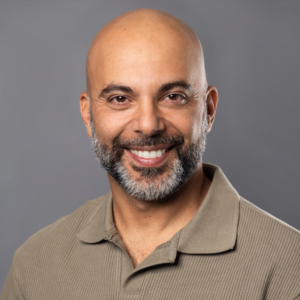
Justin Smith-Ruiu
In this episode of The Psychedelic Podcast, Paul F. Austin speaks with Dr. Justin Smith-Ruiu about how psychedelic experiences challenge long-standing assumptions about consciousness, perception, and reality.
Justin explains how Western philosophy has historically privileged rational, sober, and waking states of mind, often dismissing dreams and altered states as unreliable. He explores how psychedelic experiences push against these assumptions, raising deeper questions about knowledge, language, and what counts as real.
The conversation also examines the tension between therapeutic and existential uses of psychedelics, and how medicalization may shape the cultural role these substances play moving forward.
Justin Smith-Ruiu is a professor of history and philosophy of science at the Université Paris Cité and author of On Drugs: Psychedelics, Philosophy, and the Nature of Reality. His work explores intellectual history, consciousness, and the limits of rational thought, and he writes regularly for Harper’s, WIRED, and The New York Times.
Podcast Highlights
- How philosophy excludes altered states
- Why dreams are dismissed as unreliable
- Psychedelics and limits of rationality
- Language and ineffability of experience
- Therapeutic vs existential frameworks
- Medicalization and cultural impact
- Philosophy beyond sober cognition
Show Links
Podcast Transcript
00:00:01 Paul F. Austin
There's a quiet assumption in Western philosophy that the truth comes from rational and sober thinking, and that everything outside of that is unreliable. But what if that assumption is incomplete? Today's conversation explores what happens when we start to question that assumption, not just from a philosophical lens, but through the lived experience of altered states.
00:00:21 Paul F. Austin
My guest today is Justin Smith Ruiu, Professor of History and Philosophy of Science at the Université Parisité, and author of "On Drugs, Psychedelics, Philosophy, and the Nature of Reality." What we touch on today is how Western philosophy came to exclude altered states like dreams and hallucinations, why rational, waking consciousness became the dominant model of truth, what psychedelic experiences reveal about the limits of perception, why these experiences are so difficult to put into language, the tension between therapeutic use and deeper existential inquiry, and how medicalization may shape or limit the role that psychedelics play in culture.
00:01:04 Paul F. Austin
Justin Smith Ruiu is a Professor of History and Philosophy of Science at the Université Parisité. He is the author of several books, including "The Internet Is Not What You Think It Is" and "On Drugs: Psychedelics, Philosophy, and the Nature of Reality." His work explores intellectual history, consciousness, and the limits of rational thought, and he writes regularly for publications like Harper's, Wired, and The New York Times.
00:01:28 Paul F. Austin
I always love these conversations. We don't do them often, but it was good to be able to dive deep with Justin.
00:01:33 Paul F. Austin
Let's first hear from our sponsors before we get into this episode.
00:01:39 Paul F. Austin
If you've been wanting to turn your passion for psychedelics into a meaningful and profitable practice, then check this out. Enrollment is now open for our microdosing practitioner certification program, and in just 18 weeks, you'll become a certified microdosing practitioner, mastering my signature San Pedro microdosing protocol for nervous system regulation while developing the somatic coaching and business skills to launch or expand your practice. This isn't just another theoretical course; it's hands-on, high-touch training that helps you integrate our microdosing protocol, refine your practitioner presence, and graduate ready to start enrolling clients right away. If you're ready to help others move from dysregulation to balance and build a thriving business doing work that matters, I'd love to see you in our next microdosing practitioner cohort. Just follow the link in the episode description or visit psychedeliccoaching.institute to learn more and apply. Third Wave sometimes shares or partners with outside providers, but we don't control and aren't responsible for their statements, conduct, products, or services. We encourage you to do your own research and consult appropriate professionals.
00:02:47 Paul F. Austin
Hey everyone, I want to take a moment to share something important with you. At Third Wave, one of our biggest commitments is helping people to explore the power of microdosing safely, intentionally, and with the right support systems in place. That's why I'm excited to introduce you to our go-to company, Golden Rule, one of the most respected names in the microdosing space. Golden Rule crafts premium, ethically sourced microdosing products, including psilocybin, single-strain, and blends, San Pedro, and LSD options, all designed to support clarity, creativity, emotional healing, and performance. What really sets them apart is their integrity, honoring traditional plant wisdom while embracing modern science to support real and lasting transformation. Together, Third Wave and Golden Rule are working to make safe, high-quality microdoses more accessible while ensuring you have the education, tools, and community to feel confident on your journey. If you're curious about microdosing and want to try some of my personal favorites, head over to goldenrulemushrooms.com/thirdwave and use code THIRDWAVE at checkout for 10% off, not just once, but for every future order too. Again, that's goldenrulemushrooms.com/thirdwave and use code THIRDWAVE for a lifetime discount of 10% off.
00:04:02 Paul F. Austin
All right, folks, without further ado, we bring you this conversation with Justin Smith Ruiu.
00:04:30 Paul F. Austin
Justin, welcome to the podcast. It's great to have you.
00:04:32 Justin Smith Ruiu
Yeah, thank you for having me on.
00:04:34 Paul F. Austin
So let's start with your motivation, right? Your why for writing "On Drugs." Was there a particular moment or experience that catalyzed that, or did it just sort of unfold and emerge over time?
00:04:46 Justin Smith Ruiu
It was a gradual development. I suppose the immediate precedent was a piece I published in Wired magazine in 2023 that served as the germ for the book that came after it. And in both the Wired piece and in the eventual book, I suppose I'm kind of testing the limits of my own scholarly discipline and of my own tradition.
00:05:17 Justin Smith Ruiu
And even going back further in a book I published in 2017 called Irrationality: A History of the Dark Side of Reason, I'm interested in exploring the reasons for the exclusion of evidence about the nature of reality that comes to us in, let's say, less-than-ideal cognitive conditions, or what the tradition has tended to think of as less-than-ideal cognitive conditions. So that includes when the mind is altered by psychedelic substances, but it could also include, much less interestingly in my view, alcohol, or it could include whirling dervishes spinning around until they get dizzy, or descending down into a cave, or, come to think of it, just going to sleep and having a dream. Like it or not, every single one of us spends about a third of our lives hallucinating deliriously.
00:06:31 Justin Smith Ruiu
And in the Western philosophical tradition, the one I'm trained in and the one I continue to value and identify with, it's clear that over the past several centuries, particularly beginning in the 17th century with the beginning of the modern period, the Scientific Revolution, a high premium comes to be placed on not just rationality, but also a number of other kind of conditions or corollaries that go along with that. And one is wakefulness, and another is lucidity or sobriety. A central problem of 17th-century philosophy, most prominently with René Descartes, is how do I know I'm not dreaming? So all of his effort goes to showing that he's not asleep, and therefore what he thinks is the case about himself and about his place in the world may actually be the case.
00:07:39 Justin Smith Ruiu
And that's curious because we know that many other cultures in many other places and times around the world don't try to sweep their dreams under the rug when they wake up. They take dreams as, you might say, revelatory, but just also as part of the package of what one takes into consideration when structuring one's life in society and in nature. So the perceived need to sideline dreams alongside drunkenness and other, again, less-than-ideal cognitive states is a choice. It's a choice that rests on particular culture of values and that has a history to it. So my interest then in the book was to consider the reasons for this choice and to push somewhat against them, both through a personal account of my own kind of spilling outside of those limits,
00:08:57 Justin Smith Ruiu
and also to some extent try to re-envision what philosophy as a tradition and as a scholarly discipline might look like if it were freer to stray outside of those limits, if it were freer to take into consideration evidence from dreams or mystical experience or indeed psychedelic experience. So there's a broader context that includes more concerns than just the potential relevance of psychedelic experience for philosophy, even though that's the central focus of it. And I think the way I start the book is by noting that philosophers seem to be, both in the past and in the current moment, seem to be kind of caught up in a little trap of their own invention. On the one hand, they say, in order to do good philosophy, you have to be sure you're awake, and you have to be sure there's no mushrooms influencing the way you're perceiving the world, and so on and so on. On the other hand, for the past 2,000 years, philosophers have been sharply aware of the problem that even when you are awake and even when you are not under the influence of anything unusual, there is still no good reason to think that you are on top of the gap or that you can bridge the gap between perception and reality.
00:10:48 Justin Smith Ruiu
So David Hume, in the mid-18th century, has this lovely observation where he says, you know, when I'm walking away from a table, if I continue to look at the table as I'm walking, I'll note that what I'm seeing gets smaller as I walk. Now, other considerations lead me to believe that the table is not getting smaller. Therefore, it follows, logically, necessarily, that I am not seeing the table. I can't be seeing the table because what I'm seeing gets smaller. The table doesn't get smaller. So the premise, the way I set out in the book, is that happens to our sober mind.
00:11:39 Justin Smith Ruiu
Just the external world is already systematically distorted in the best of circumstances. So what exactly is the difference between noticing that under certain circumstances the table can also breathe or radiate light or appear as the reincarnation of my grandfather or any number of other, let's say, outlying marginal experiences or marginal relative to the standard approach? What can we learn from taking that into consideration as part of the whole package? And so I'm cautious now, and I think tonight I'm feeling particularly rationalist and cautious and scholarly for some reason. Sometimes I let loose a bit more. But I'm certainly no Terence McKenna-style kind of ready to rush into these marginal or marginalized experiences, convinced that they will reveal the nature of reality to me. I remain a skeptic, but a somewhat more broad-minded skeptic and a methodologically more flexible skeptic. I think that's the way I would put it.
00:13:09 Paul F. Austin
So there's a lot I want to unpack in this conversation, and it's going to be quite rich and dense. But one place that I want to start is the distinction or difference between, let's say, 17th-century thought as it relates to the nature of reality and ancient Greek thought as it relates to the nature of reality. And I wonder if you could talk us through a little bit about how the sort of foundation I really consider Plato, in many ways, is considered the foundation of Western philosophy. I believe it was you would know this, but someone said, all of Western thought, all of Western philosophy is simply a footnote to Plato.
00:13:46 Justin Smith Ruiu
Yeah, Alfred Whitehead's Alfred North Whitehead mentioned that in the late 19th century. So how is it that Christianity, in particular, impacted our concept of reality, and how did that distinguish maybe how the Greeks might have held altered states and different subjective experiences?
00:14:05 Justin Smith Ruiu
Yeah. Well, certainly, I mean, there's a lot, and I could just get all boring and cite bibliography and so on, and I'll try not to do that. Though there's a lovely book by Yulia Ustinova from around 2007 called The Greek Mind in the Cave or something like that. And it's about specifically the practice of descending into total darkness in classical Greece as a way of blowing your mind, staying down there long enough that you lose the kind of rhythm of day and night. And in total blackness, it alters your cognitive experience. And this is just Ustinova has one line she's pursuing, but you combine that. I know I've read other scholars, not in great detail, but there's significant evidence of the use of cannabis in certain neoplatonic sects and things like this. And it's clear that they were kind of there was still a significant enough proximity between ritual, myth, ecstasy, and other kind of domains of cultural processing of, let's say, the question of our ultimate fate and our place in the world and things like that.
00:15:39 Justin Smith Ruiu
There was a significant element still of ritual and ecstasy in the way classical Greece handled these questions alongside philosophy, such that it still made sense to go down into caves and to smoke hash. And I guess they didn't smoke it, but what was it called? I forget the technique. You might know. So the Greeks were flexible or, let's say, methodologically diverse is another way you could put it. I don't see Christianity as the
00:16:25 Justin Smith Ruiu
historical turn that put out the flame, so to speak, or that tamped down the ecstasy. I think you can find strains of mysticism within Christian tradition that are continuous with what I've just described in classical Greece. What I do find, and this is narrower because it has to do with institutional history and the history of a particular tradition, is that over the course of the emergence of the modern period, what can count as philosophy gets significantly narrower. And so sources like, say, 1st and 2nd century Neoplatonists were perfectly happy to talk about their ecstatic vision of the one or what Christians would call the Godhead and so on. If they were perfectly happy to talk about these things in the context of philosophical inquiry, this became rather more subdued and underground in the modern period. Of course, it doesn't go away. There's just kind of a sociological split between the level-headed, kind of sober philosophers and what are sometimes called the enthusiasts. If you look at the debate in the 18th century between Kant and Swedenborg, it's really fascinating because Swedenborg is off describing his visits to Saturn and Jupiter and how he conversed with the inhabitants there and learned all sorts of new things about farming techniques and so on. And Kant is just like, come on, you didn't go to Jupiter. And so today, the consequence of this is that Kant is a canonical philosopher and Swedenborg is an outlier. We don't teach him unless we're teaching the polemic with Kant. And so in all sorts of ways, I mean, you can still go out there. It's just like the way our institutions work in the modern period, to do so is to kiss your pension goodbye, so to speak, in a metaphorical sense, hopefully not a literal sense.
00:19:11 Justin Smith Ruiu
So yeah, so that's my answer. I think
00:19:17 Justin Smith Ruiu
we can't paint history in broad strokes. And you see surprising twists and variety within a particular tradition, any given tradition, including Christianity. And in, say, modern secular institutional philosophical practice, you also see a lot of variety.
00:19:44 Justin Smith Ruiu
I mean, one thing I noted in the book, and I researched this pretty rigorously, between 1925 and 1975, which was, say, from the beginning of research on Masculin to the kind of total victory of the Nixon Drug War, that's the period I was most interested in, in that part of the book. There's not a single well, with one half exception, because he was also a psychiatrist and a neuroscientist, a British author named J. R. Smithes. He was also an analytic philosopher.
00:20:27 Justin Smith Ruiu
With the exception of him, there's not a single anglophone analytic philosopher who writes about a personal psychedelic experience. By contrast, we have very exemplary moments such as Walter Benjamin. Well, that's Hashish. Does that count? Maybe not. But we have Sartre on Masculin and I think most famously Foucault in Death Valley on LSD.
00:20:58 Justin Smith Ruiu
But you'll notice that ipso facto, almost, these examples I've just cited get kind of processed or slotted as kind of literature-adjacent experimental kind of radical humanities or something like that, but not any kind of contribution to positive knowledge.
00:21:32 Justin Smith Ruiu
By contrast, if you look at William James or Sigmund Freud in the late 19th century, they're not only huffing ether and snorting cocaine, respectively, but they're also writing about it in journal entries that are not just personal, but they're actually kind of journal entries
00:22:02 Justin Smith Ruiu
in their role as men of science advancing science, just as if they were Benjamin Franklin trying to learn about electricity by flying a kite into a lightning storm and getting shocked. That's how William James saw his use of nitrous oxide. He used it to help him as a positive philosopher/experimental psychologist figure out the nature of consciousness and attention and things like that.
00:22:38 Justin Smith Ruiu
So something significant shifted in the 20th century where the legitimacy of that kind of self-experimentation disappeared. And this has a lot to do with the history of experimental science in the 20th century and the rise of behaviorism in the human sciences and in psychology. But what it meant was that any institutionally based philosopher from the early 20th century on who writes about their own drug experience is going to be ipso facto kind of seen as one of the more kind of literary, poetic, bohemian types rather than kind of someone working towards the advancement of science, if that makes sense.
00:23:41 Justin Smith Ruiu
And I'm both a professor of philosophy, but also a professor of the history and philosophy of science. And it's this kind of rift that emerges in the cultural history of science and in the sociology of science that I think is particularly fascinating, independently fascinating beyond the particular example I chose.
00:24:07 Paul F. Austin
Well, let's dive a little bit deeper into the sort of crux of your book, which is the suggestion that psychedelics challenge the foundations of Western philosophy. And you've already sort of talked a little bit through this, but just to get right to the point, how is it that psychedelics challenge the foundations of Western philosophy, particularly in relation to these analytic frameworks or Cartesian rationalism?
00:24:31 Justin Smith Ruiu
Okay, yeah. Okay, it's so difficult to know where to start. We're really in the thick of it here. I suppose it's hard to if you want to find the first law of Western philosophy, the iron law that you have to uphold if you want to be a part of the tradition, it's probably the law of the excluded middle, as formulated by Aristotle. That is to say, everything either is or is not the case. And Aristotle's an absolute genius, and the idea that that gets formulated so concretely at a particular moment in history is really interesting and impressive. There are other traditions that don't necessarily uphold that, that allow for contradiction or what we sometimes describe as polyvalent logic, where you don't just have either X or not X. And famously, East Asian traditions in philosophy are a lot less preoccupied with upholding that law of the excluded middle. And this gets inflected in certain East Asian traditions kind of at the boundary between religious practice and
00:26:08 Justin Smith Ruiu
philosophy in a narrower sense, like in Zen Buddhism, where the kind of the center of the practice is to kind of destabilize yourself with kind of straightforward contradictions in the form of koans. And so there are different ways to relate to the law as Aristotle sees it. And certain traditions, certain times, and places are a lot looser with it.
00:26:44 Justin Smith Ruiu
And so I think it's safe to say, and there are many different ways to characterize a psychedelic experience, but it's safe to say that it's pretty hard to march. I mean, it's a bit like military discipline is one thing at boot camp, but then when you're in the thick of combat, a lot of the kind of order you try to maintain just goes to hell. Just forget it. It's like the rules don't apply anymore. And that's one kind of, I think, broad brush, but still fairly relatable, as they say, characterization of a psychedelic experience.
00:27:31 Justin Smith Ruiu
You can do your best going into it to uphold the law of the excluded middle, but you're going to find that at some point, you're going to be confronted with experience, kind of an inner mode of experience where you're holding before your mind truths or not truths, but ideas that are completely contradictory, completely kind of indefensible in front of your lucid, sober, rational-minded peers. And so famously then, I think one good reason to not write about psychedelic experience is because language fails it. And language, while not being exactly faithful to the law of the excluded middle, I mean, you can express
00:28:36 Justin Smith Ruiu
internally contradictory Zen koans in language. Nonetheless, language requires the transmission of meaning of some sort. So a Zen koan kind of blocks us because we don't know how to process the supposed meaning if it's formulated as a contradiction. And poetry also blocks us often because it's imagistic. We don't know what it's trying to say, but we feel like it's trying to say something, and that kind of gets us somehow deep in the heart.
00:29:18 Justin Smith Ruiu
But nonetheless, language, even if it's, again, not super obsessed with defending the law of the excluded middle, tends to want to communicate meanings in propositional form. That is to say, the cat is on the mat or the table is shrinking and so on.
00:29:41 Justin Smith Ruiu
And when I was surrounded by kind of youthful experimenters with drugs decades ago, I always and at the time, I was totally abstemious, but I was always struck by how inarticulate they were. And I mean, this is in part just because they were 19 years old like I was, and we were all inarticulate. But still, all they could say was like, whoa, weird, weird, weird, weird. And it's like, that's a term that might be good for describing concert posters or a laser light show down at the planetarium when Pink Floyd is playing or something like that. These are dated references, but you get the idea.
00:30:33 Justin Smith Ruiu
But by contrast, what goes on internally, I think, when someone is having a proper psychedelic experience is not captured by that language. And it's very hard to capture it in language. And so again, that's maybe a reason for a philosopher to want to stay away from it, just because it's the philosopher's job to transmit meaningful propositions in language. And so inevitably, when you start to write about that kind of marginal experience, you are moving out from the Aristotelian model of what philosophy is or ought to be. And you are crossing a boundary into something that, like it or not, is a lot closer to poetry in that I can tell you what it's like if you will indulge me in
00:31:43 Justin Smith Ruiu
my effort to express it in metaphor. But even if I do that, it's only going to be partial, limited communication. You're going to grasp the metaphor somewhat differently than the way I intended it and so on. So it's difficult to talk about. And that difficulty could well have something to do, at least something to do, with the cultural taboo around it. We sound like fools in talking about it. But another way of seeing that is perhaps we just don't have the cultural practices to show our efforts to talk about the psychedelic experience in any other way to come across as foolish. And so I find that problem kind of at the boundary between kind of pure philosophy and thinking about the place of these practices in culture, very interesting. But I myself am of a Kantian leaning in a sense that will make sense in just a moment after I explain a bit of what Kant said. So
00:33:11 Justin Smith Ruiu
in the early 18th century, you had or early to mid-18th century, you had the rise of very fashionable, very empiricist line in philosophy. People like Hume who would say, you know if it's not a matter of fact or a relation of ideas, just throw it to the bonfire. And so all of your talk of beauty and the divine and even emotion and Hume's complicated. No, I take that back about emotion. But a lot of the kind of stuff that makes human life human could no longer be discussed. And another thing that could not be discussed was metaphysics, saying anything substantial or concrete about the true nature of the human soul or of the first cause of the soul, all that stuff the medievals loved to talk about, that's out.
00:34:13 Justin Smith Ruiu
So Kant comes after that kind of purge of all these interesting things that make human life human. Kant arrives and says, let's be realistic. Whether you purge it or whether you declare it taboo or not, people are still interested in it just because they're human beings. And so we need to take the measure of how much we have yet to understand and maybe also to take the measure of where the actual ultimate limits of our understanding are, not because we think we can kind of hubristically push past them, but just because we're human beings and we're going to want to do so for better or worse.
00:35:08 Justin Smith Ruiu
And so Kant didn't really win that debate because, again, in the 20th century, metaphysics would be marginalized and pushed out. And if you ever go to like a Borders or Barnes and Noble and you see the section called Metaphysics and it's nothing but like Shirley MacLean on tarot cards and stuff like that, why is it like that? Well, there's a history to this. What happens when the kind of august institutions of philosophy refuse to pay attention to such things? There are plenty of people on the margins happy to pay attention to them who don't have the same kind of internal sense of shame or restraint.
00:35:54 Justin Smith Ruiu
And so I'm Kantian in that I think it's kind of the duty of philosophy to pay attention to everything that constitutes a human life, whether it's possible to make any sense of it or not. And I mean, this is in part a reflection of my religious convictions, as I understand them. But I do think there are parts of human life that are never to be explained and that philosophy shouldn't say, oh, that stuff we can't explain, so we're not even going to touch that. But it should be more like, oh, that stuff we can't explain, but it's also something very kind of irreducibly human, so let's pay attention to it.
00:36:51 Justin Smith Ruiu
And I would say that psychedelics are irreducibly human to the extent that we've got plenty of archaeological evidence from the Paleolithic of people using fungal and botanical supplements to enter into presumably some kind of ecstatic state and that that was part of their kind of fundamental species-specific experience of themselves and of their place in the world and so on. And so in that sense, it's not some deviation, some modern deviation. It's not some weird thing we moderns started doing because ordinary, waking, sober lucidity wasn't good enough for us. It's something human beings do. So plainly, therefore, it's relevant to philosophy.
00:37:52 Justin Smith Ruiu
But that said, again, I'm not an enthusiast in the old sense. And in the book, I talk about the disagreement, the polemic after Aldous Huxley publishes Doors of Perception, 1954. There's a nasty review by an Oxford comparative religionist named R.C. Sanner who says, look, I mean, Huxley's just taking a shortcut if he thinks he's having a beatific vision on masculine, if he thinks he's really being launched outside of the empirical realm or something like that. No. And even in Huxley's own descriptions, he never explicitly says that, you know, that I had a beatific vision. It's more like my consciousness migrated into the leg of a lawn chair and stuff like that. And Sanner's view is that's very interesting and very relevant to understanding how the mind works. And we need to focus on such experience if we want to appreciate what sort of mental beings we are. But I'm inclined to be more on Sanner's side of the split than on Huxley's side in that I now think that
00:39:39 Justin Smith Ruiu
it can deepen your appreciation for what you already know about yourself, but the idea that there could be any revelatory potential there or any potential as a kind of trigger for launching one into a properly transcendental experience, I think I remain somewhat skeptical. But again, maybe it's because you caught me in a particularly rationalist skeptical mood. And my thoughts on this particular question are evolving all the time.
00:40:17 Justin Smith Ruiu
You know, I think and in part, this has to well, we can maybe talk about this if there's still time. You know, the difference between, say, therapeutic uses of psychedelics and, let's say, existential transformative uses of psychedelics. For the therapeutic use, you know, there's no expectation that it's going to launch you into a beatific vision or anything like that. It's, I think, only at the more kind of overtly existential transformative level that that even becomes an issue.
00:41:03 Justin Smith Ruiu
And so much discussion I bring that up just because so much discussion of psychedelics these days is about, you know, are they more effective than SSRIs and double-blind studies of post-traumatic stress disorder in veterans and stuff like that. And I think that's all very interesting, but that's kind of not my beat.
00:41:23 Justin Smith Ruiu
Right? Right, right, right. Well, I'll chime in here, you know, just a couple of reflections. Coming back to the excluded middle that you mentioned, right, which has been a real core foundation. There's this notion then of either/or. And what I've heard talked more and more about in, let's say, integral theory, so from like Ken Wilber's perspective as a quote-unquote philosopher, has been more of the both/and. So how can you welcome the paradox? Because this is what I heard you talk a lot about, that in sort of Western philosophical thought, there hasn't been room as much for the paradox.
00:41:58 Justin Smith Ruiu
Whereas in Taoism and Zen Buddhism, right, if we read into the Tao Te Ching, there is a sort of at least the Confucianists would say there's a philosophical sort of tenet there, but it also is very poetic. And it's written in such a way to be inclusive of a paradox in many ways. So I think my follow-up question for you has to do with the elasticity of Western philosophical thought. In other words, we're sort of entering this phase now where psychedelics in particular, but not just psychedelics, are coming from the underground to the above ground.
00:42:31 Justin Smith Ruiu
And although many people are coming into them from a therapeutic lens, hey, I just want to feel better. I don't want to be depressed. I don't want to have these addictions. I don't want to be anxious. Naturally, some folks who have these experiences where they're just looking for a practical benefit end up having their entire worldview existentially transformed sort of as an afterthought in many ways. And sort of my question for you then is, do you believe that the sort of Western canonical thought or philosophy, there's an opportunity for it to transform from widespread psychedelic use? Or do you feel as if that will simply be a maybe new canon of thought that we don't consider to be Western philosophy a thousand years from now necessarily?
00:43:15 Justin Smith Ruiu
Oh, that's such an interesting question. And I mean, I suppose my somewhat disappointing short answer is, I don't know. Let's wait and see. But I think, I mean, I'm a bit worried about the way I mean, first of all, let me say, you know, and this really kind of became clear to me when I was speaking in December to this group called Drug Science UK. You probably know these people.
00:43:45 Justin Smith Ruiu
Yeah, David Nutt's organization. David Nutt. Yeah, yeah, yeah. And I really like David Nutt. And I'm interested in what they're doing. I have to say, I find the strategy and this might be the only strategy available, but so it's kind of a faute de mieux sort of thing, but the strategy by which this practice, this cultural I don't want to call it a trend. So let's call it a practice. This cultural practice is moving from the below ground to the above ground. The fact that it has to do so through medicalization is something that troubles me.
00:44:38 Justin Smith Ruiu
And I suppose we saw that in a more anodyne way with the rhetoric around cannabis legalization as well. You get it for the people who are under medical treatment first, and then once the door is open to partial legalization, you go to fuller legalization. And again, it might be just the only strategy available, but to me, it's already kind of a defeat when the potential benefit has to be articulated in medicalized terms.
00:45:20 Justin Smith Ruiu
If there is a potential of real existential transformative results within that medicalized context, and there obviously is, people go in thinking, oh, this is going to help me be a better employee, and they end up thinking like, you know, why am I an employee in the first place? Yeah, right. And it's transformative kind of willy-nilly in a way, I think it's safe to say SSRIs seldom are. Right? But the fact that we're trying to stuff it into that role, I think, is really significant about our culture, and it doesn't reflect the state of our culture in a good way at all, as if the existential transformative dimension of human life were intrinsically dangerous and charged and off limits.
00:46:23 Justin Smith Ruiu
And I mean, we see that. If you'll allow me a two-minute tangent, I mean, we see that everywhere. If you look at the kind of the norms that govern, say, social media cancellations, there's a presupposition behind them that we kind of always need to be on our kind of workplace conduct in the way we speak and act. Typically, by contrast, traditionally, societies have made a place for, let's say, moments of topsy-turvy social reality, carnival, when everything is upside down and you can kind of let loose. And so the ordinary expectations that regulate your social behavior when you're back at school or back at work just don't apply. So it's sort of a burning man, is that for a lot of people in a modern Western context? The thing is, I haven't been to Burning Man, but I bet they've got a lot of rules there. My suspicion is that by now it's been institutionalized and they've come up with all sorts of
00:47:41 Justin Smith Ruiu
articles and clauses and what you can and can't do. And so that's an interesting fact about the modern world, that there are fewer and fewer opportunities to just kind of communally overturn the reigning order for a brief moment. Right? And in a way, that's what a psychedelic experience is. It's an individual overturning of the reigning order.
00:48:10 Justin Smith Ruiu
And so we have to think about why that is. Why did the early moderns allow themselves mummery on Christmas Eve while we're kind of constantly expected to be on our best behavior? I think this is a very interesting question, but I kind of forget how I got to this particular point. Oh, yeah.
00:48:38 Justin Smith Ruiu
So for all of these reasons, I feel like that historical consideration I just offered you helps us to understand why the legalization and normalization and kind of mainstreamification has to happen through the medical procedure. That's interesting. I think it's interesting and ultimately
00:49:15 Justin Smith Ruiu
troubling that that's where we're at. So then the question is, well, what might the alternatives be? And I suppose you see that to some extent in the kind of ayahuasca retreats and stuff like that that are not kind of overtly medical.
00:49:33 Justin Smith Ruiu
But we also, I mean, one interesting point I think about a lot, and when they were when my book was being kind of slotted by the publicity people, like, how are we going to market this? What I kept hearing is, first of all, there's an industry secret, which is that the only real genre of book that exists in 2025 when it was published is self-help.
00:50:02 Justin Smith Ruiu
Right? Every book is a self-help book in disguise. And that therefore, we need to orient this book in our marketing efforts towards that massive sector of self-help called wellness. And wellness is weird because it's kind of cousin mindfulness, which has an interesting history in kind of Westernized Buddhism.
00:50:36 Justin Smith Ruiu
But all of this is kind of medicine-adjacent. It's all the kind of stuff that you check your insurance policy to see if it covers this or that treatment. Right? And here in France, a typical insurance policy medical insurance will typically you get such and such number of visits to your normal doctor and then like two visits to alternative treatments per year.
00:51:09 Justin Smith Ruiu
So I think willy-nilly, these kind of ayahuasca retreat therapy-type places, to the extent that they proliferate and get mainstreamed, I expect they'll end up somewhere there in that plus two per year category of medicine-adjacent kind of
00:51:36 Justin Smith Ruiu
taking the good modern subject in for a loob job sort of activities. And of course, for me, as someone who's kind of admittedly mystically inclined, even if I'm a rationalist, my temperament is mystical, I kind of think, is that the best way to conceptualize what a psychedelic experience actually is? Is it just a glorified loob job, so to speak?
00:52:11 Justin Smith Ruiu
It's an interesting question. And I think kind of to reflect on one of your points, my sense is this medicalized approach often requires a very individualistic lens. Right? So I am depressed. I'm going into this clinic. I'm doing it by myself. I'm getting this treatment. And I think what I hear you speaking to is the value of these group ecstatic experiences and creating space for that, even if it isn't the necessarily predominant lens or way of thought in Western philosophy, as an example.
00:52:41 Justin Smith Ruiu
There's sort of a release valve in that that may allow for us to be a true human. Because something that I've picked up just in our conversation today is it feels like a lot of the sort of canon of Western philosophical thought, at least going back to the 17th century, has not really done a great job of encompassing the true human experience in its totality.
00:53:04 Justin Smith Ruiu
Yeah, yeah, yeah, yeah, yeah. The entire spectrum of cognitive states in particular. And I think typically in analytic philosophy over the course of, say, my graduate school career in the '90s, if we talked about hallucinations, one, the preferred example would be like an oasis in the desert or a reed that's sticking out of a pond and that looks crooked but is actually straight. So kind of safe stuff like that. Right? Like G-rated stuff like that.
00:53:40 Justin Smith Ruiu
And the other thing is it's just taken for granted that these are problems. Right? That hallucination is a problem that needs to be explained away. Right? And that already in itself is a huge presupposition. It presupposes, among other things, that there is a mind-world gap. Right? And that the job of philosophy is to try to bridge the gap. Right?
00:54:15 Justin Smith Ruiu
You don't necessarily have to think that. You might live in a society. I mean, I can't cite the anthropological data here, but let me just do a bit of a priori anthropology and say that such a society does exist. I would bet money on it. You might well live in a society that would be perfectly prepared to say that the crooked reed sticking out of the pond is the true reed. Right? In virtue of the way it's presenting itself as crooked to me. Right? And there's no need to go beyond that self-presentation of the reed to the reed itself or anything like that. And we're obsessed with doing that. We love doing that. That's
00:55:08 Justin Smith Ruiu
our whole orientation towards the world around us. And again, I'm not going to say that that orientation has been a mistake or a waste of time or something like that, but it sure is time now to start thinking seriously about what the other possibilities are and about everything that's just implicit and limiting in our approach. Does that make sense? Yeah. Makes total sense. That's not a talking point. Because some of what I say when I do podcasts and stuff on the book at this point is just like, oh, I heard myself saying that before, but this is a first. Right. Yeah. Okay. Good. I like that. I like that. That means we're getting to it. That means I'm enjoying this conversation. That's juicy. Great.
00:55:54 Justin Smith Ruiu
Well, I mean, I'm curious just sort of as a final wrap-up, I mean, what do you hope readers, both academic and general, take away from on drugs? Right? What is it that after they read the book or go through that experience, what are you hoping shifts or opens up or may provide a new lens or perspective that they hadn't considered before?
00:56:15 Justin Smith Ruiu
Well, I suppose, I mean, the academic discipline of philosophy has undergone a lot of transformations over the past couple of decades. And one of these, especially with the work of people like Miranda Fricker, she's the person who came up with the notion of epistemic injustice around 2007, there's a lot of attention to the way our positionality shapes what our commitments are and the way we see the world. And this has mostly come down to us in the form of, let's say, politically conscious critical philosophy of race, feminism.
00:56:59 Justin Smith Ruiu
From these positions, it makes obvious sense to say, you don't know it, but what you're doing is old white man philosophy. Stuff like that. Right? And so that's been good. Mostly, I think sometimes people get carried away with that particular gotcha. But I think the really good thing about this shift in the history of or in the recent history of philosophy is that it opens up the possibility of properly personalistic philosophy.
00:57:34 Justin Smith Ruiu
It shows us the possibility of, as I put it sometimes, doing philosophy with the whole person. Right? And so in some ways, this book is an effort to do that. And in a way, I mean, it's kind of strange because even if René Descartes comes in for significant criticism in the book, in a way, it's also modeled on Descartes' meditations. Right? Descartes was doing personalistic philosophy too. Right? Just like setting out from himself and trying to make sense of the world.
00:58:10 Justin Smith Ruiu
So for me, it was really important to model that conception of what philosophy might be to say like, hey, I am one person. Yes, I am a white man. In fact, I'm a particular white man, the only one exactly like me in the world. And here's some stuff that happened to me, and here's the sense that I've tried to make of it. Now, I suppose I had license to do that because I've been a philosophy professor for a few decades, and
00:58:43 Justin Smith Ruiu
I had the I was socially positioned to be able to do that. But I hope I can inspire other people of different social positions to give it a try as well. And so that was one of the main concerns, to show that there's a way to do philosophy without pretending you're a voice from nowhere. Right? Showing who you are. And also, I suppose to it is a quasi-memoir. It is like there are certainly memoiristic elements. I'd say maybe one-third of it is memoiristic. All that stuff about quitting drinking and stuff like that.
00:59:26 Justin Smith Ruiu
And so I wanted to weave that together with what I take to be some pretty good, rigorous philosophical arguments, and also with enough intellectual and cultural history to give the arguments some flesh to kind of show a whole the whole book, I see it as like the final result of a recipe that involves mixing various ingredients. And so I can't talk about one goal of it, but I did want to demonstrate
01:00:10 Justin Smith Ruiu
a certain way we might think about going about doing philosophical inquiry. And also maybe subconsciously, I also wanted to burn some bridges. I also wanted to just announce to the world, like, look, I'm doing something else now. Right? If that makes sense.
01:00:29 Justin Smith Ruiu
That makes total sense. And I mean, writing publicly about psychedelics and weaving that into philosophy and the nature of reality is, even as we've discussed, is a great way to do that. To distinguish in many ways. In spite of how the orthodox may perceive it or relate to it.
01:00:48 Justin Smith Ruiu
Yeah. Exactly. Exactly. Exactly. So I think I accomplished that at least. I would agree with that.
01:00:56 Justin Smith Ruiu
Well, Justin, it's been a real honor and a real pleasure to have you on just to sort of navigate through this, through the thickets of your mind and psychedelics and analytical philosophy and Hume and Kant. And I personally have really enjoyed this conversation. The book, folks, is called On Drugs: Psychedelics, Philosophy, and the Nature of Reality. We'll drop a link to it in the show notes. You can check that on Amazon. Do you have a personal website as well or any other place that you'd love to appoint folks if they want to learn more about you and your work?
01:01:29 Justin Smith Ruiu
I do write about the book and about everything else as well at a Substack that's called The Hinternet with an H. The Hinternet. Okay. Yeah. With an H. Right? The Hinternet. Yeah. Perfect. So The Hinternet. We'll also drop a link there.
01:01:42 Justin Smith Ruiu
Well, Justin, again, thank you so much for coming on the podcast. It was a real pleasure to have you on. My pleasure. Thanks. Bye-bye.
01:01:50 Justin Smith Ruiu
Okay. Hey, if this conversation brought something up for you, if there's something that may stay with you, I'd be curious what that is. I'd love for you to share this with someone who's interested in consciousness philosophy with the deeper questions that psychedelics may open up. You can follow Rate and Leave a Review wherever you're listening. Subscribe on YouTube at youtube.com/thethrdwave and follow us on Instagram @ThirdWaveIsHere or on my personal Instagram, X, or LinkedIn. I'm posting on there quite a bit. Thanks for tuning in, and we'll see you next week.