Episode 350
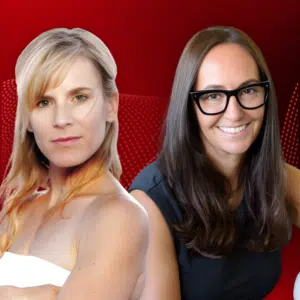
Melissa Bond & Dr. Amy de la Garza
In this episode of The Psychedelic Podcast, Paul F. Austin speaks with Melissa Bond and Dr. Amy de la Garza about the hidden risks of benzodiazepines, the reality of dependency, and what recovery can require.
Melissa shares her experience of becoming dependent on prescribed medication, and the physical and emotional challenges of withdrawal. Dr. de la Garza brings a clinical perspective, explaining how benzodiazepines affect the nervous system and why withdrawal can be prolonged and destabilizing.
The conversation also looks at where conventional care often falls short, and how more integrative approaches are beginning to emerge. This includes the use of low-dose ketamine as a potential tool to support the nervous system during withdrawal, particularly in more complex or prolonged cases.
Melissa Bond is a narrative journalist and poet. Her memoir Blood Orange Night, which chronicles her experience with benzodiazepine dependency, was published by Simon & Schuster and recognized by The New York Times as one of the best audiobooks of 2022. Her work has appeared on PBS, The New York Times Podcast, RadioWest, and TEDx. Dr. Amy de la Garza is a board-certified physician in Family and Addiction Medicine, a certified Functional Medicine practitioner, and co-founder of Nosis Health, a virtual outpatient addiction medicine platform. Her work integrates functional, lifestyle, and emerging therapies, including ketamine-assisted treatment, to support recovery.
Podcast Highlights
- Melissa Bond’s experience with benzodiazepine dependency and withdrawal
- How prescribed use can gradually lead to physical dependence
- Why benzodiazepine withdrawal can be prolonged and destabilizing
- The neurological effects of benzodiazepines on the nervous system
- Gaps in conventional approaches to anxiety and addiction treatment
- The role of functional and lifestyle medicine in recovery
- How low-dose ketamine is being explored to support withdrawal
- What a more integrative, whole-person model of care can look like
Show Links
The Microdosing Practitioner Certification empowers you to launch a sustainable practice built on integrity, science, and results. Learn Paul F. Austin’s signature San Pedro Microdosing Protocol, master somatic coaching skills, and confidently guide clients toward lasting transformation. Click here to learn more and apply.

This episode is brought to you by The Practitioner Certification Program by Third Wave’s Psychedelic Coaching Institute. To learn more about our flagship 6-month training program for coaches who want to integrate psychedelic modalities into their practice, click here.

We’re excited to feature Golden Rule — our trusted resource for premium microdosing products designed to support clarity, creativity, and emotional well-being. From Psilocybin blends to LSD microdosing options, each formula is crafted with care, backed by science, and trusted by the Third Wave community.
Safe, intentional, and transformative — Golden Rule helps you feel more focused, connected, and aligned in your everyday life.
Want to experience the difference? Try Paul’s favorite microdosing picks — hand-selected for performance, mood, and daily flow.
Get a lifetime discount of 10% with code THIRDWAVE at checkout.
Third Wave occasionally partners with or shares information about other people, companies, and/or providers. While we work hard to only share information about ethical and responsible third parties, we can’t and don't control the behavior of, products and services offered by, or the statements made by people, companies, or providers other than Third Wave. Accordingly, we encourage you to research for yourself, and consult a medical, legal, or financial professional before making decisions in those areas. Third Wave isn’t responsible for the statements, conduct, services, or products of third parties. If we share a coupon code, we may receive a commission from sales arising from customers who use our coupon code. No one is required to use our coupon codes.
Podcast Transcript
00:00:01 Paul F. Austin
What happens when a medication prescribed for anxiety becomes something your body depends on just to feel normal? And if the system doesn't offer a clear path off, where do new approaches like ketamine actually fit in? Our guests today are Melissa Bond and Dr. Amy de la Garza.
00:00:20 Paul F. Austin
Now, this is a personal story of Melissa being prescribed benzodiazepines and slowly becoming dependent. So we're going to hear about what withdrawal actually feels like from these medications, why it catches people off guard, why it happens more often than we think, and, most relevant to you as a listener, how low doses of ketamine and other psychedelics are beginning to be used to support withdrawal and recovery in ways that most people aren't even aware of.
00:00:51 Paul F. Austin
Now, who are our guests? Melissa Bond is a narrative journalist and poet whose work explores the complexity of human experience with depth and vulnerability. Her memoir, Blood Orange Night, which chronicles her experience with benzodiazepine dependence, was published by Simon & Schuster and recognized by The New York Times as one of the best audiobooks of 2022. Dr. Amy de la Garza is a board-certified physician in both family and addiction medicine and a certified functional medicine practitioner. She is a distinguished fellow of the American Society of Addiction Medicine and co-founder of Gnosis Health, a virtual outpatient addiction medicine platform that integrates functional and lifestyle medicine into recovery care.
00:01:33 Paul F. Austin
Now, some of the themes that we touch on today: how benzodiazepine dependence can develop through prescribed use even when medications are taken as directed; why benzodiazepine withdrawal can be prolonged, destabilizing, and often misunderstood; the gap in conventional care when it comes to tapering and long-term recovery support; why dependence is a physiological process, not just a psychological one; how functional medicine and lifestyle interventions can support nervous system regulation and healing; how low doses of ketamine are being used in clinical settings to support benzodiazepine withdrawal and recovery; and what a more integrated, whole-person approach to recovery can look like.
00:02:14 Paul F. Austin
I first heard about the harms and potential issues with benzodiazepine withdrawal through the Jordan Peterson story, which was quite publicized a few years ago, where I believe he had to go to Russia to do some crazy treatments in order to handle a lot of the benzodiazepine withdrawals that he was going through. Soon after that, I ran into a couple of very close friends in New York, and they were saying, "Okay, this is going to be the next big crisis," not necessarily SSRIs and getting off SSRIs, but also how we help support people get off anti-anxiety medications and benzodiazepines, which is way gnarlier, apparently, when compared to SSRIs. So this is a really beautiful moving conversation. If you've had anyone in your life who's been affected by this, or if you're a clinical practitioner, I think this is information you really need to know because benzodiazepine withdrawal is just going to become even more widespread in the next several years.
00:03:03 Paul F. Austin
Before we get to the conversation, let's hear from our sponsors.
00:03:07 Paul F. Austin
Did you know that over 4 million people microdose psychedelics last year in the United States, and yet so few have real guidance on how to do it safely and effectively?
00:03:17 Paul F. Austin
That's exactly why I created our Microdosing Practitioner Certification.
00:03:21 Paul F. Austin
This is an 18-week professional training where you'll master my San Pedro microdosing protocol for nervous system regulation, learning how to coach clients through it with confidence and integrity.
00:03:31 Paul F. Austin
Just visit psychedeliccoaching.institute or use the link in the show notes to learn more.
00:03:37 Paul F. Austin
Third Wave sometimes shares or partners with outside providers, but we don't control and aren't responsible for their statements, conduct, products, or services. We encourage you to do your own research and consult appropriate professionals.
00:03:49 Paul F. Austin
Hey everyone, I want to take a moment to share something important with you. At Third Wave, one of our biggest commitments is helping people to explore the power of microdosing safely, intentionally, and with the right support systems in place.
00:04:00 Paul F. Austin
That's why I'm excited to introduce you to our go-to company, Golden Rule, one of the most respected names in the microdosing space. Golden Rule crafts premium, ethically sourced microdosing products, including psilocybin, single-strain, and blends, San Pedro, and LSD options, all designed to support clarity, creativity, emotional healing, and performance.
00:04:21 Paul F. Austin
What really sets them apart is their integrity, honoring traditional plant wisdom while embracing modern science to support real and lasting transformation. Together, Third Wave and Golden Rule are working to make safe, high-quality microdoses more accessible while ensuring you have the education, tools, and community to feel confident on your journey.
00:04:40 Paul F. Austin
If you're curious about microdosing and want to try some of my personal favorites, head over to goldenrulemushrooms.com/thirdwave and use code THIRDWAVE at checkout for 10% off, not just once, but for every future order too. Again, that's goldenrulemushrooms.com/thirdwave and use code THIRDWAVE for a lifetime discount of 10% off.
00:05:04 Paul F. Austin
All right, without further ado, let's bring you Melissa Bond and Dr. Amy de la Garza.
00:05:33 Paul F. Austin
So, Melissa, I'll start with you, and I would love to hear a little bit about how you and Amy met. What was the context of you getting to know each other?
00:05:44 Dr. Amy de la Garza
Oh my gosh. So let me see. So my book that you mentioned was published in 2022, and I think it was shortly thereafter that a local we had the Salt Lake Tribune in town, and they did an interview with me that was full page. You could big spread on me and the book. And Amy, I believe, saw that article or was given the article. And Amy has been working for years with substance use disorder, addictions, dependencies.
00:06:19 Dr. Amy de la Garza
And Amy can fill in the gaps that I have, but I think she saw the article, got the book, and then said, "I've got to meet this woman." And so I just got this call, random call, from this very enthusiastic Dr. Amy de la Garza, who said, "I've got to meet you." So she showed up at my house one day. I had my kids there. I was like, "Yeah, let's talk." And we.
00:06:44 Paul F. Austin
Oh, she invited me, though. She invited me. I didn't just show up.
00:06:48 Paul F. Austin
You didn't just show up uninterrupted.
00:06:50 Dr. Amy de la Garza
No, no. I have been known to stalk people, but I was invited. Right, right. That's a good clarification. So we had a very mutual, excitable lunch date and just talked forever about wellness, about dependency, about the difference between addiction and dependency, and then what I had gone through and just knew that we would be doing some work together in the future. And I did not know the work that we would be doing would be getting me off the last 5 milligrams of benzodiazepines that I had not been able to get off because the withdrawals were so severe.
00:07:30 Paul F. Austin
Wow. So, Amy, what was it that drew you so much too, Melissa, when you saw that news piece in the Salt Lake City Tribune, I believe it was? What compelled you to reach out to her and start this path with her?
00:07:48 Dr. Amy de la Garza
Well, you know I've been treating people with substance use disorders for about 15 years, and benzodiazepines are always in the mix, it seems like, when we're treating people with even just benzodiazepine dependency, which I think hopefully we can get into that a little bit later, the difference between dependency and substance use disorder or addiction. But people don't just overdose on benzodiazepines. They do, but most of the time they're in the mix with other things. And we're always seeing patients who are really disabled, and their substance use disorder is sort of informed additionally by benzodiazepine prescriptions, and we never know what to do with it.
00:08:37 Dr. Amy de la Garza
It's very, very hard to talk people out of tapering off their benzodiazepines. They're very committed to their benzos. And so a good friend of mine who's also a physician at the time, she was working at the VA in a high-utilizer substance use disorder clinic, and she gave me the article. And I mean, we were just like, "This woman is stating the problem. So many people are on benzos. So many people are prescribed benzos when they shouldn't be. So many people are quickly dependent on them.
00:09:15 Dr. Amy de la Garza
And I have to meet this woman as a way to sort of figure out how we can start bringing some attention to this problem, not only for people who are prescribed, but also for prescribers and clinicians who are working with people that are prescribed." So yeah, I didn't know where it was eventually going to lead with helping her eventually get off the diazepam and utilizing ketamine to do that. I had no idea that that was coming. But yeah, I just was compelled to meet her because I know so many patients like her. And she just sort of highlighted all of the concerns and all of the sadness that we see around benzodiazepine dependence.
00:10:05 Paul F. Austin
So benzodiazepine dependence didn't really come on my radar until, I don't know, I want to say 2021, 2022. I talked with a couple of friends in New York, and these are friends of mine who have they're in their 70s now. They've been doing psychedelics a very long time. And they mentioned how a lot of people are talking about SSRI withdrawal, which we've discussed on the podcast a little bit, but not a lot of people are talking about benzodiazepine withdrawal and how, in some cases, how much more intense it can be.
00:10:35 Paul F. Austin
And soon after that, I heard about Jordan Peterson. This is probably the most public sort of awareness of benzodiazepine withdrawal, where he got very sick, had to go to Russia, I believe, to do whatever he did in Russia to try to help with the benzodiazepine withdrawals, was, I believe, able to get off of them. Still seems like he's a little bit of a wreck and a mess, but that was sort of the sort of general context that I had around benzodiazepine withdrawal.
00:11:01 Paul F. Austin
And we know that these benzodiazepines are essentially anti-anxiety medications that started to be really commonly prescribed in the 1950s, and now millions and millions of people are taking them. So, Melissa, I want to turn it back to you to hear a little bit about the sort of buildup in terms of what had you dependent or why did you start taking benzodiazepines in the first place? And just give us a little bit more context about your journey with benzodiazepines and what led you to wanting to get off of these medications.
00:11:41 Dr. Amy de la Garza
Oh my gosh. Yes. And I want to just interject quickly. Jordan Peterson, when he went to Russia, this was something that was so remarkable to me. The suffering is so intense with these withdrawals. He had tried the normal withdrawal process where you taper and you hold, you know, white-knuckle it, hoping that you'll survive and not have seizures or strokes or something like that. And he could not get off of them. He got put into an induced coma for eight days to get off of these things. That is how severe they are. So that just gives you a context of the severity of this drug withdrawal. Everything I have heard has said this is one of the most severe drug withdrawals you can go through.
00:12:35 Dr. Amy de la Garza
So what happened with me was I was a journalist. I was working as a narrative journalist at the local Intermountain, served the Intermountain West magazine. It was just right in the middle of the recession, and I had three very intense life circumstances happen. I had my first child. I call it my own personal Fukushima. So I had this earthquake, which was having my first child be born with a pretty severe disability. So that was like an earthquake. And then I discovered I was pregnant on a Wednesday with my second child, six months after my first, and the magazine that I worked for closed. Just we are done. The publisher walked us into the big room, said, "We're closing. Thanks, everyone, for your hard work, and good luck out there." So add to that, I really was in a new marriage that was not going well.
00:13:39 Dr. Amy de la Garza
So all of that is context for what happened next, which was the fact that I suddenly woke up one night, two weeks-ish into being pregnant with my second, and I couldn't sleep. And I've always been a good sleeper. I never even thought about insomnia. Insomnia, to me, was like, "Oh, get some chamomile, take a bath, get a massage, whatever, and you'll be good." I watched the clock tick through, and all of the insomniacs out there know what it's like when you're watching that clock tick through the hours, and then it's 2:00 AM, 3:00 AM, 4:00 AM, 5:00 AM. 6:00 AM, I've got to get my son up. And I think I probably slept a half an hour that first night, and this went on for week after week after week. I had no idea what was happening.
00:14:30 Dr. Amy de la Garza
I was really teetering on the verge of psychosis after a while. Luckily, prior to that, I had been a big meditator, had done a lot of nervous system regulation, so I was able to kind of keep myself from just completely going off the deep end. Three months into the pregnancy, I was prescribed Ambien, which is one of the Z drugs. I hated it, but it did give me about four or five hours of sleep a night, which kept me from just completely losing it, which is good. I was this new mom, but I also was this woman suffering an identity crisis because the industry that I had been in had collapsed locally. So I was suffering all of that.
00:15:15 Dr. Amy de la Garza
Fast forward to having my daughter. I cold-turkeyed the Ambien, which you're not supposed to do. I was never told not to do it. One month later, I was again just scratching at the walls. And so I went to see a doctor who was a doctor of integrative medicine, Western doctor, very interested in Chinese medicine. He prescribed a high dose of Ativan, which is he prescribed the amount that people are given when they go into the hospital for a grand mal seizure. And that's how it started. Within three months, my tolerance within each month, my tolerance was so rapid that I would stop sleeping. And within six months, I was up to 6 milligrams of Ativan. I'd lost 20% of my body weight. I couldn't walk a block, and I could barely function. So that is how it started for me.
00:16:15 Paul F. Austin
After over a decade of working professionally in the psychedelic space, one thing has become clear to me. If you want to guide others through this journey, there is no substitute for doing our inner work. At the Psychedelic Coaching Institute, we train people to guide others through transformation ethically, effectively, and with integrity. Our six-month certification combines science-backed education with coaching mastery, culminating in a legal psychedelic experience at our in-person intensive in Costa Rica. You'll gain practical skills, leadership training, and get to connect with a supportive community grounded in compassion, rigor, and efficacy. If you're a coach, clinician, or conscious professional ready to serve at a higher level, we'd love to meet you. You can learn more and apply at psychedeliccoaching.institute. Again, that's psychedeliccoaching.institute, or simply see the link in the description.
00:17:09 Paul F. Austin
So we're going to come back, but I want to get the doctor's opinion first. So, Amy, I'm curious. You are a functional and integrative doctor, and so the way you work with clients is probably a little bit different than maybe the traditional healthcare approach. Although it sounds like, Melissa, the sort of prescription for Ativan that you got was from a doctor of Chinese medicine, which is interesting in and of itself. So, Amy, I'd love just to hear sort of your two cents on, you know, Melissa as a pregnant mom with a young child, she's not getting any sleep whatsoever. Sleep is critical and essential to all sort of physiological and psychological functions that we can think of. Is this a bit of a you're damned if you do, you're damned if you don't situation where if someone's in a similar context as she was in, the best thing is to prescribe maybe a benzodiazepine or a sleeping drug? Or how would you, maybe as a functional and integrative doctor, maybe approach even the sort of openings of this, or how do you approach it differently with certain clients so they're not necessarily hooked on a psychiatric drug that may be very difficult to wean off of down the road?
00:18:27 Dr. Amy de la Garza
Yeah. I mean, I want to start out by saying that the doctor that took care of Melissa was not a doctor of Chinese medicine. He was a family practice doctor. He was just very interested in some complementary approaches to treatment. So because I just want to make that clear, doctors of Chinese medicine cannot prescribe medications.
00:18:48 Dr. Amy de la Garza
So this was a family practice doctor who was trained in allopathic medicine. And that's what I am. I'm a family practice doctor trained in a Western medical school. I'm boarded in addiction medicine, but I'm also a functional integrative doc. And because I really take care of people with substance use disorder from an integrative approach, I really try everything that I can to use complementary approaches to help people sleep: acupuncture or meditation or just helping them with their nutrition, getting them moving more, good sleep hygiene.
00:19:25 Dr. Amy de la Garza
But sometimes we have to use medications, especially for a mom like this that isn't sleeping, anybody who's not sleeping. But benzodiazepines are not a treatment for chronic insomnia. We really should only be using benzodiazepines for about seven days, 7 to 10 days at the most, because people can become dependent so they can develop tolerance, meaning they need more and more medicine to get the same effect, and withdrawal symptomatology within seven days.
00:19:58 Dr. Amy de la Garza
So really, we should only be using these medicines for acute episodes of insomnia, acute episodes of panic disorder, or sometimes I'll use them if I'm starting medicine for generalized anxiety disorder like an SSRI. I'll use a very short course of benzodiazepine to help bridge people until they're onto their medication. But if someone was showing up like this with chronic insomnia, I would pick a different medication that doesn't create dependence or put someone at high risk for developing misuse or even a substance use disorder. And there are many of those medications out there.
00:20:47 Dr. Amy de la Garza
But we talk a lot about the difficulty that providers face within the context of our larger system, having seven minutes on average to meet with a patient who is not sleeping, who is anxious, who is becoming increasingly more despondent. We want to do something. And a lot of times, that thing that we do when people aren't sleeping or they're very anxious or panicked is give them a benzodiazepine because we know it's going to work. We know it's going to get them out of our office, and we know that they're probably going to do better for a short time. And that's not a knock on any provider. That's really just
00:21:39 Dr. Amy de la Garza
a symptom of a very broken system that doesn't allow us time to really spend time with our patients and come up with some more complementary interventions and really have a good talk and do good sleep hygiene. As Melissa and I were saying yesterday, we just hit the easy button. And it's also about education. I mean, it never
00:22:08 Dr. Amy de la Garza
stops surprising me how many people will show up in my office: adolescents, very elderly people, women who are in perimenopause and menopause, who are just anxious and probably need some hormone optimization. How many people show up in my office who have been on benzodiazepines for a long time? And it's frustrating, and it's just never surprising. I think that people just don't understand how dangerous they are.
00:22:42 Dr. Amy de la Garza
So I would have started with a medication for this poor woman who hadn't been sleeping for three months, a medication that wouldn't create dependence and potentially misuse and addiction. And I would have worked really hard with some complementary approaches that were really lifestyle-based. That's how I would have handled it.
00:23:01 Paul F. Austin
So I just ChatGPT'd this, which has become a new verb in my linguistic to the last little bit.
00:23:10 Dr. Amy de la Garza
The chat.
00:23:12 Paul F. Austin
Exactly. Approximately 25.3 million adults in the United States are prescribed benzodiazepines each year, representing about 10.4% of the adult population. This is, from what I understand, not quite as many as are prescribed an SSRI. I've seen that up to 50 million adults in the United States are prescribed an SSRI or have been prescribed an SSRI.
00:23:33 Paul F. Austin
And these numbers, of course, have increased tremendously over the last 20 years, even as we've become more dependent. And there's a lot of negative consequences. And part of our hope, and what we'll explore later on in this conversation, is that psychedelic medicine, not only ketamine, which is legally available, but hopefully eventually substances like MDMA, LSD is now entering phase three clinical trials for generalized anxiety disorder.
00:24:00 Paul F. Austin
You have psilocybin, you have other substances like this. These can offer another alternative or another option for folks. And of course, there's peptides, there's stem cells. I'm reading a book right now called Brain Energy by Chris Palmer all about the relationship between metabolic health and mental health. So there's a lot of exciting things.
00:24:21 Dr. Amy de la Garza
That's a great book.
00:24:23 Paul F. Austin
And it's a fantastic book. I'm nerding out on everything mitochondria, and I love it. But to come back to you, Melissa, so you get prescribed this Ativan, you quickly develop tolerance. A lot of the sort of negative side effects are starting to stack up. Talk to us a little bit about being in the throes of this benzodiazepine dependence. And at what point did you say enough is enough? You really needed to get yourself out of this and sort of see the other side of what you were navigating?
00:24:56 Dr. Amy de la Garza
Yeah. Well, I think your question points to something that is really terrifying. That's one of the enemies that Amy and I are really attuned to, which is kind of twofold. People are prescribed these chronically, which they are not meant to be prescribed chronically. They're also immensely addictive. As Amy said, within the space of seven days, you can become and I just use the term addictive. What I want to clarify is dependent, physiological dependence. So what that means is after seven days, if you stop taking it, you can be at risk for rebound insomnia, all kinds of GI issues, balance issues, cognitive issues, things like that.
00:25:45 Dr. Amy de la Garza
So for me, what happened was in that six-month span and it should be I should say the other enemy is the misinformation. So the doctor that I had seen literally said to me, "These drugs are about as addictive as coffee. They are fabulous." And so with that, I who had been very non-drug-focused individual meditation, yoga, all of that stuff, I said, "I feel like I could die if I don't get some sleep. So great. I can take coffee, something that's as addictive as coffee." Little did I know that it would be something that within six months, I would be so dependent, and it would be attaching to the GABA receptors of my brain to such a degree. And I would be having what's called inner dose withdrawal. So I would take them at night to sleep. I would sleep maybe four or five hours. By the next morning or afternoon, I would literally be in withdrawals.
00:26:53 Dr. Amy de la Garza
And what that looked like for me was I had been someone who was extremely active. I'd run ultramarathons. I was a rock climber, yoga, all of that stuff. I could barely walk a block with my kids. My cognitive faculties were severely reduced. I couldn't track things from one day to the next. They have anterior grade amnesia. I would have friends show up and say, "Oh, we said we were going to go to lunch." I was starting to have a very difficult time writing, which as an author is like a death sentence. I would write, and it would be loopy. And my coordination, both fine motor and gross motor, were off.
00:27:35 Dr. Amy de la Garza
And what finally did it, Paul, was a night that and I had no idea that these were withdrawal symptoms. As a new mom, you've got hormones all over the place. I've got two kids that are waking up in the middle of the night. I'm thinking, "Oh my gosh, being a mom is the hardest job I have ever had. I feel so bad all the time. I'm so exhausted, but wow, women have done it before me." And what happened that made me realize, "No, this is not normal," was I was picking up my one-year-old daughter, got her out of the bed or out of the tub, put on her little green froggy towel, and was walking into her bedroom to put on her little onesie. And I took one step with her in my arms, and it was like my legs went liquid, absolute liquid. There was nothing. I fell forward with such force. I could see the corner wall coming at her head. And I had to torque my body, slam my own body into this corner wall. And I'm lying there with my one-year-old thinking to myself, "I must have a brain tumor. This is how it happens. Or maybe I've got MS. This is neurological symptoms. My eyesight is off. I haven't been able to eat. I've got MS."
00:28:59 Dr. Amy de la Garza
And about a minute later, boom, my legs work as if nothing had happened. So I stand up. I get her onesie on. I put her to bed. And I suddenly was like, "Hold on. Six months ago, I started taking this medication, and everything went to hell." And I went upstairs, and I looked it up, and I found information coming out of the UK that named every single symptom I had and said, "You are in drug withdrawal," while I was actively taking it.
00:29:35 Dr. Amy de la Garza
So it also said, "You cannot cold turkey. This is a long-term withdrawal." This is another one of the enemies that Amy and I face, is that the withdrawal takes so long. There are very few clinicians that understand this and can support a year-long active drug withdrawal. And that's what I was looking at.
00:30:00 Dr. Amy de la Garza
Or longer.
00:30:01 Dr. Amy de la Garza
Or longer, sometimes years of actively going through drug withdrawals. So that's what started my research. And it took another year before I got enough information together and was able to set up kind of a rehab situation for myself because there's nothing like that. Our system is not built for something like that. They're like, "Go in, get in. Your insurance will cover 30 days. They're going to pull you off, and good luck. They're going to send you out with chicken wire and bubblegum holding you together."
00:30:34 Paul F. Austin
Literally.
00:30:35 Dr. Amy de la Garza
Literally.
00:30:36 Paul F. Austin
So I want to come back to this, Melissa, but I want to check with the doc first. So Amy, you had mentioned at the outset there's this distinction between dependency and substance use disorder.
00:30:46 Paul F. Austin
So Melissa, she starts taking these benzodiazepines. What I'm hearing from your story, Melissa, is you took them for six months, and you sort of woke up to, "Okay, these are really nasty." And then it took you from then another year. So in total, taking them for 18 months before you started that withdrawal process. Am I understanding that correctly?
00:31:06 Dr. Amy de la Garza
I would say mostly. I did start working in that year. I found a general practitioner who tried working with me. We worked for about six months, and she didn't have enough information to make it sustainable. So I would go down a little bit. I would taper a little bit. And the withdrawals were so severe, she literally said to me, "I do not know how to get you off of these without killing you."
00:31:30 Dr. Amy de la Garza
I was having seizures. I had a stroke. I was losing so much weight. She said, "Your body is eating yourself." She did not know how to get me off the medication that is given every day to people in their doctor's office.
00:31:45 Paul F. Austin
Which is also somewhat nuts because you were only on these for initially six months, in total, let's say 18 months. Some people are on benzodiazepines for years, if not decades.
00:31:58 Paul F. Austin
So Amy, talk to us a little bit about this distinction between dependency and substance use disorder.
00:32:03 Paul F. Austin
And also in your own practice, as you've worked with folks who are maybe coming off benzodiazepines, is there a relationship between length of use and the length it takes to taper off or the intensity of the withdrawal, or is that not necessarily the case?
00:32:21 Dr. Amy de la Garza
Yeah, it's really nuanced. And like everything else, I've only been a doctor for 15 years. In doctor time, that's really short. I have colleagues who have been practicing addiction medicine for 50 years. So I want to make it very clear that I'm just still a baby. And I just cannot get over every day how different every human is. And that's what makes it even more imperative that when we're prescribing medications, whatever they are, we have to be so cognizant of the fact that every human comes onto the planet with a genetic makeup that may or may not predispose them to doing well with one medication, not doing well with another medication. And then we have all of the things that are happening to us on a daily basis: chronic stress, trauma, depression, anxiety, poor lifestyle habits, poor sleep, all of those things. And so the human that's sitting before you, you can't just say, "Okay, well, I gave benzodiazepines to this gal, and she's been on them for 20 years, and she's fine. I can just give them to any gal or guy, and they're going to be fine." So that's the first thing I want to say.
00:33:44 Dr. Amy de la Garza
The second thing I want to say is dependence is something that happens physiologically, and it has to do with how all of the receptors in the brain work with drugs. So dependence really has two pieces. It's tolerance, which is how much drug you need to get an effect. And usually with physiologic drugs like benzodiazepines, the more you take, the more you have to take to get the same effect. That's the same with opioids or alcohol or nicotine or cannabis or whatever it is. Ketamine, too, I'll say. And the second part is withdrawal. And withdrawal just has to do with the fact that now we have all of this upregulation of receptors because our brain really wants this thing around so that we don't feel bad. And so when the substance isn't there, the receptors are left unloaded, and they're upset, and we get release of cortisol. And that's the negative affective state or the withdrawal state of substance use.
00:34:42 Dr. Amy de la Garza
Addiction is very different. So addiction, by definition, is a chronic relapsing disorder that's characterized by compulsive use. And people keep using despite very adverse consequences. So people that are getting really sick and sort of all of the behavioral consequences that come from compulsive use. So those are very different things. But dependence and withdrawal are part and parcel of addiction. So when someone like Melissa ends up in an office of a primary care doc or maybe even a psychiatrist, somebody that's not really familiar with what can happen with substances of potential abuse, someone like Melissa can look a whole lot like someone with a substance use disorder because they're suffering. They're suffering. People with addiction suffer, I would argue, more than most people on the planet. But people like Melissa are suffering, too. And that looks like, "The drugs aren't working for me. I need more because I'm feeling terrible, and I'm experiencing this withdrawal symptomatology, and my life is burning down." But the treatment for Melissa is not, "Oh, go to a meeting or go to a 30-day program and dry out." We don't use those words, but a lot of people use those words still. "You just need to go somewhere else. I don't know how to deal with you." That's not Melissa. That's not a lot of people who have benzodiazepine or even opioid dependence. But they can look very similar in their presentation. And so it's really important to make that distinction because telling Melissa to go to a meeting is not going to be helpful. It's not going to cure her seizures. It's not going to help her gain weight. It's not going to help her get her life back. So that's the distinction between dependency and substance use disorder or benzodiazepine use disorder. And we treat those very differently, a little bit the same, but a lot different.
00:36:52 Dr. Amy de la Garza
And the last thing I wanted to say is what Melissa experienced is really something that we're just starting to name. And it was really named for the first time in a very important article published in 2023 by a host of authors, Dr. Reet Vow and Christie Huff, who is actually a cardiologist who experienced exactly what Melissa is talking about. And unfortunately, Christie died last year. But they did a survey of over 1,000 people who had been on benzodiazepines chronically. And they surveyed these people on symptomatology, so about 23 different symptoms. And additionally, they surveyed these people on functionality and life outcomes, including marriages falling apart, losing jobs, losing houses, losing entire savings, suicidality, losing everything. And the responses from these 1,000 people were unbelievable. And really, this article was a landmark article in bringing to light this concept of a syndrome called benzodiazepine-induced neurological dysfunction.
00:38:21 Dr. Amy de la Garza
And this is really completely separate from withdrawal, which is an acute process that usually involves symptomatology for which you were originally prescribed the drug. So if you had been prescribed benzodiazepine for insomnia and anxiety, your withdrawal symptomatology is usually worsening anxiety, worsening insomnia, oftentimes feelings of doom, maybe some tremors because we know benzodiazepines and alcohol act very similarly. So that glutamate toxicity, that glutamate upregulation can cause tremors. That's really acute withdrawal. Post-acute withdrawal syndrome is something that can happen once the person is off the drug, but they continue to have symptomatology for a long time: anxiety, brain fog, problems with balance and coordination, cognition, emotions, memory, sleep. That's post-acute withdrawal syndrome. Benzodiazepine-induced neurological dysfunction is a whole different beast. And I really think that that's what Melissa was experiencing. And this is something, as yet, undefined. It is a neurological adaptation to what I believe is a neurotoxic drug for some people. Now, maybe it's not neurotoxic for everyone, but for this gal, neurotoxic. This is beyond withdrawal. This is beyond dependence. This is like earth-shattering life falling apart, neuroadaptation. And the key is that people with bind, and it happens with opioid neuroadaptation, too, by the way,
00:40:18 Dr. Amy de la Garza
there is a whole constellation of symptomatology for which the person was never described the drug. I mean, Melissa was never prescribed this drug because she was having GI symptomatology. She was never prescribed this drug because she was having severe muscle twitching or tremors. These are all new neurologically, what I believe, are nervous system neurologically infused symptom constellations that are really devastating. And that's what this gal was that's what Melissa was experiencing. That's what my other patients that I've treated with sort of classic tapering
00:41:07 Dr. Amy de la Garza
sort of programs have experienced. And that's what people that I've treated using ketamine, microdosing ketamine with, have experienced. And that's really the devastating consequence that I think very, very few people know about.
00:41:26 Paul F. Austin
Yeah, brain health is so essential and so important. And we're learning more and more about this every day. In fact, I think one of the reasons that psychedelics are so effective as medicines, not only kind of the classic psychedelics like psilocybin and LSD and mescaline, but we're seeing more and more about ibogaine and what it can do for TBI.
00:41:51 Paul F. Austin
Another friend of mine was over a month ago. And there's also this whole thing, not only traumatic brain injury, but chemical brain injury where the brain can become damaged because of glyphosate, because of microplastics, because of certain psychiatric drugs. So we're learning so much more about the brain and how centrally important it is.
00:42:14 Paul F. Austin
So Melissa, I'm curious to hear then from you, what did you start to do to start to heal yourself, to start to at least begin the weaning-off process, to start to heal the brain, to heal your life? And what kind of had you stuck then at the last little bit, which is when Amy came into the story to help you get off that last little bit?
00:42:41 Dr. Amy de la Garza
Yeah. So in terms of how I did it, I took all of my notes from what's called the Ashton Manual. Dr. Heather Ashton was doctor of neuropsychopharmacology at the University of Newcastle. She has since passed, but leaves a legacy that has saved innumerable people. And it's basically a very, very slow taper of and there's nothing like this in drug withdrawal that requires such a slow and arduous timeline. So you taper one-tenth to one-fifth of your current dose, and then you hold for two weeks to a month while your brain is getting used to having those GABA receptors not being upregulated. And what that looks like is basically you have an arc of kind of increasing symptomology, and you just hope that you can hold on and survive those symptoms for that withdrawal arc. So for me, it was, "Okay, hopefully I won't have seizures, but I'm going to have a really hard time eating. My balance, I'll have eye twitches. I'll have muscle and leg twitches. My balance will be off." And then those will slowly and insomnia, anxiety. I had always been a very social person. I was having a very hard time. I was getting somewhat agoraphobic, which was like anathema to me. I'd never imagined anything like that. I was in such a state of hyperarousal all the time.
00:44:23 Dr. Amy de la Garza
So I basically did that for, I think, about 10 or 11 months, just tapering, holding. I had to construct this is a really radical idea, but I had a Tibetan lama that I was working with, and he said, "You should see if there are friends that you can stay with because you're going to need a place that you can fall apart. And you have two young kids and a husband who doesn't really understand, and you need a safe place." And somehow I found that because there was no rehab to go to where I could just writhe and vomit and all of that stuff. So I had friends that I stayed with for about seven months. We put the kids in daycare, and that was my full-time job.
00:45:08 Dr. Amy de la Garza
What happened was at that 10 or 11-month mark, the daycare that had been taking my kids said, "You know what? We can't handle your son anymore." So my son was diagnosed with Down syndrome. We found out later that he also has autism. So he was in this state of hyperarousal, and he couldn't really survive in a normal daycare. So they had really, really tried to support us. But I think this speaks to another one of the obstacles for people trying to get off. There is so much support that needs to be provided just to maintain. I was very lucky that my husband at the time was able to keep the lights on. But the emotional support, the support with the kids, just keeping a house running is huge.
00:45:59 Dr. Amy de la Garza
So when he came back, I needed to be full-time mom. And I kept trying to do what then was called a micro taper, where you dissolve the Valium in either milk or water, and you do milliliters. And even that, I was suffering such profound withdrawal that my doctor finally said, "You know what? I think this is too much. You are at 5 milligrams. You're not suffering the kind of decline you were suffering before. I think you should just hold at that." And so I did that for a decade. And that's when I met Amy.
00:46:38 Paul F. Austin
Oh, for a decade. Oh, I didn't realize it was that long then.
00:46:41 Dr. Amy de la Garza
A decade.
00:46:41 Paul F. Austin
Okay. So you were on so you were on pretty high dose for, let's say, 12 to 18 months, right? You tried to taper off a little bit. At the 18-month mark, you get down to about 5 milligrams, and you're on that for a decade. And did you try other did you try other times, or it was just like you had tried before?
00:47:01 Dr. Amy de la Garza
So here's where some of the devastation comes. I ended up getting divorced. I think I would have anyway, but it really just ravaged my marriage. So I ended up being a single mom needing to find a job, barely kind of hanging on.
00:47:24 Dr. Amy de la Garza
And I think it's important that I add because you asked how I did it. Not only did I do the taper, but I looked at it from a very holistic vantage of exercise to get endorphins because those were really the only good chemicals I had in my brain. So I would exercise every day, despite the fact that my muscles would be twitching. I would be nauseous. That was the only time after I would do a hike, I would suddenly feel like I could kind of survive. Nutrition was incredibly important, mindfulness exercises.
00:48:00 Dr. Amy de la Garza
So it's so essential to make sure that you optimize the natural healing capabilities of the body so that it can and I really thought about, how can I retrain my brain? How can I get those GABA receptors upregulated again? And I think I did a lot of acupuncture, and I think that really created a lot of rewiring and reduced my suffering exceptionally well. So that's what got me through the first withdrawal process.
00:48:33 Dr. Amy de la Garza
The second withdrawal process with Amy was radically different.
00:48:38 Paul F. Austin
And we'll go back to the doctor to hear. So you see Melissa's piece in the Salt Lake City Tribune. You reach out. You come over to her house, invited. She did invite you. You start to connect and meet her.
00:48:54 Paul F. Austin
So what's then she's been now on 5 milligrams of this benzodiazepine for a decade. Nothing's worked. She's probably given up hope at this point. What do you come in with? What's sort of the context? And what's that process that you bring her through to help her get off the rest of these medications?
00:49:12 Dr. Amy de la Garza
Yeah, it really happened totally by accident. I mean, I've tapered people off using sort of a standard taper protocol. I mean, the American Society of Addiction Medicine actually just published a whole paper on the clinical practice guideline of benzodiazepine tapering. And there's a very sort of classic way that we do it and classic supportive drugs that we use to help people try to get off of these drugs. But at the end of the day, a lot of people just can't get off. And that's exactly where I found her.
00:49:45 Dr. Amy de la Garza
And I ended up going to the California Society of Addiction Medicine meeting a couple of years ago, and this amazing woman who has become a friend, her name is Cindy Grandi. She's now the president of the Washington chapter of the American Society of Addiction Medicine. She has been using a microdosing protocol of ketamine to help people who are using fentanyl and heroin and other opioids, but primarily fentanyl because it's really hard to get people from fentanyl onto buprenorphine, which is our partial agonist that we use to help people with opioid use disorder.
00:50:20 Dr. Amy de la Garza
It's really hard to get people from fentanyl onto buprenorphine because fentanyl is a really challenging opioid to deal with. And so Cindy has been using microinduction of buprenorphine and ketamine to help people transition safely from fentanyl to buprenorphine. And she presented on this at the California Society of Addiction Medicine. And I'd known Melissa already for a while. And really, we just wanted to do some public service announcements about, "Don't prescribe benzos together."
00:50:56 Dr. Amy de la Garza
Oh, and incidentally, Christy Huff, who is now past, she also presented at that same conference and was really talking about what had not yet been described as bind, but describing her story. And I was like, "Oh my gosh, it's the same." So it kind of came together. And I was sitting there thinking to myself, "This is so weird."
00:51:16 Dr. Amy de la Garza
I mean, ketamine is an NMDA receptor antagonist. So it calms down glutamate excitotoxicity, and it's a GABA receptor, which is what is just totally unloaded and screaming for attention when people are withdrawing from benzodiazepines and alcohol use disorder. And so I'm sitting there in the audience, and I'm looking up. I'm like, "Ketamine for alcohol use disorder, ketamine for benzodiazepine use disorder, ketamine for benzo withdrawal."
00:51:51 Dr. Amy de la Garza
And there's a paucity of literature. The literature is really there. Elias Stockwar and others have done a lot of research looking at ketamine and mostly mindfulness-based therapies to help reduce alcohol use and relapse in people with alcohol use disorder, cocaine use disorder, opioid use disorder, Dr. Krupinsky, which I'm sure you're familiar with. But there's this real paucity of evidence around using it for withdrawal symptomatology and really nothing on benzodiazepines except for one article talking about using high-dose ketamine to help individuals get off benzodiazepine that have depression because there's high comorbidity of depression and anxiety.
00:52:39 Dr. Amy de la Garza
A lot of people with depression are on benzos. And so to use ketamine for major depressive disorder or treatment-resistant depression, they really want them to get off of these benzos to sort of give them the full opportunity to experience the benefit of ketamine. But as we're talking about, that's hard as hell to do.
00:52:59 Dr. Amy de la Garza
So they did this really small study where they gave people IV ketamine, and they were able to safely come off of their benzodiazepines. And I'm looking all of this up during Cindy's talk. And I text Cindy because I had been the one to invite her to the California Society of Addiction Medicine. So we had been talking for about a month prior to this. And I'm like, "We have to meet afterwards. I have this woman, and I think I have to use ketamine to get her off of her diazepam."
00:53:28 Dr. Amy de la Garza
And so I met with Cindy out in the hallway after her talk, and she was like, "I think you're right. I think you have to try this. You have to do this. This is totally going to work." And I called Melissa, and I was like, "Melissa, we're going to get you off your 5 milligrams of diazepam." And so that's what we did, and that's how we did it.
00:53:49 Dr. Amy de la Garza
And it really is a perfect I shouldn't say this. Ketamine, we are seeing ketamine ruin so many people's lives now. I will say that, especially people with substance use disorders. Ketamine and alcohol go together really nicely for people, and it's very dangerous. So I just want to be clear that I'm not saying ketamine for everyone that's on a benzodiazepine or any other drug for that matter.
00:54:13 Dr. Amy de la Garza
But ketamine is sort of the perfect little molecule because benzodiazepines and alcohol calm down glutamate and help with GABA, so people felt better. And so then when the drug goes away, we get excitotoxicity with glutamate, and we get a loss of GABA. And so you kind of have this nice little molecule that can sort of modulate both of those sort of neurobiochemical processes. And so we do it with a tiny, tiny little bit, microdosing, 16 to 32.
00:54:52 Paul F. Austin
16 to 32 milligrams?
00:54:53 Dr. Amy de la Garza
16 to 32 milligrams is sort of where we started. And we got up to about 64 milligrams, maybe, Melissa. And we did it really slowly, the upward titration. And Melissa just had this absolutely beautiful
00:55:16 Dr. Amy de la Garza
response and really was able to taper off of those last 5 milligrams of diazepam just like that. And I'll let her speak to that. But benzodiazepine tapers can last months to years to never work. And I've just seen some really great success with Melissa and a few other patients. So I'll let her talk about her experience.
00:55:40 Paul F. Austin
Yeah. And I think before Melissa comes in, just sort of a couple of comments on this. I think another like you said,
00:55:49 Paul F. Austin
ketamine has more of an addictive quality than the classic psychedelics, the serotonergic 5-HT2A agonists. And it can be overprescribed, and there's now telemedicine ketamine, and so there's some risk involved. The vast majority of use is safe and effective. And now that there are probably hundreds of thousands, if not millions, of people using ketamine, addiction is becoming more of an issue. So we have to be mindful of this. And even something like microdoses of ketamine, usually what we talk about in our training program is microdoses of ketamine are a great bridge. You don't want to get stuck there because of the same reasons you won't want to get stuck on other potential psychiatric medications that you have to take for a very long time.
00:56:29 Dr. Amy de la Garza
Absolutely.
00:56:30 Paul F. Austin
One of the great upsides to ketamine is that it doesn't contraindicate with a lot of these classic psychiatric medications. So benzodiazepines, also SSRIs. So SSRIs have a slight contraindication with, for example, the classic psychedelics because they're very active on serotonin. Ketamine is using sort of a different brain system. So I think in that way, it's very exciting.
00:56:54 Paul F. Austin
And sort of my final comment is one thought that comes up is we talked a lot about bind, benzodiazepine-induced neurological disorder. And so I think there's also something about, Melissa, your specific use case in that ketamine and potentially other psychedelics, although, again, we don't have much, if any, research on this. I think that's a really interesting angle.
00:57:18 Paul F. Austin
But it's also helping to restore neurological function, neuroplasticity. I mean, the research on the relationship between ketamine and psychedelics and mitochondrial health is early, but it's also looking promising in terms of what it's doing at a cellular level. So it's kind of fun to hear these anecdotes that are starting to come out.
00:57:39 Paul F. Austin
So, Melissa, I'll pass it over to you. Talk to us a little bit about that final process. What was that like once you started the microdosing with ketamine to get off the final 5 milligrams?
00:57:49 Melissa Bond
Yeah. Well, and I really appreciate, Paul, what you're saying about the positive aspects of ketamine as well as the dangers because I think with any kind of substance, you have levels of toxicity where it's a poison, and then you have levels where it is an absolute little bit of magic. And it's really, really important that we use this momentum to do the research where we know what that perfect spot is, where is that sweet spot for people because, as you said, it's kind of the Wild West. You swing a baguette, and you find a ketamine clinic. So it's really important that we match that with the kind of research that we know we can do.
00:58:32 Melissa Bond
So that said, what it looked like and Amy described kind of the clinical side of it. So I went into it. We optimized everything that we could. We optimized hormone, nutrition. We went over everything. How's my sleep? And then I was able to get these ketamine I think they're called troches or lozenges. And I don't think I actually took more than maybe 45 on a given day. It was usually around 30, and they're spaced out.
00:59:07 Melissa Bond
I will tell you, Paul, I was really nervous because I was at that point a single mom of two kids, one with severe special needs. I needed to be able to work. I needed to be able to go to the store. I needed to take him to his therapies. Those were all things that were essential for my functioning and my family's functioning. So I didn't have the kind of luxury that I had before to have it be my full-time job. And I think this is the case for so many people.
00:59:40 Melissa Bond
We also chose to do the troches and to do the really low dose because we wanted to see if what we did could be really accessible for people because there's a financial issue. People are spending lots of money on big doses of ketamine, and that is not accessible for a lot of people.
00:59:57 Melissa Bond
So what that felt like to me so in 2012, when I was withdrawing, I would cut a tiny amount. And literally, each day, would I be beset with seizures? Would I be able to walk? Would I be able to eat? Those were the questions. When we did the ketamine, we dropped a higher dose. We were not cutting one-fifth to one-tenth. I think we cut one-twentieth or more. And I held out. And what I will say is the first day, it did feel like I'd gotten hit in the head with a kettlebell. So there was kind of a sense of I was concussive. I was dizzy, but I was still able to get up and work. I had enough appetite. I was sleeping.
01:00:42 Melissa Bond
Within two or three days, that had mellowed, and I felt just a little weak and raw. But I was fully my emotions were stable. My cognitive faculties were intact. I was able to function. And I got off the 5 in, I think, six weeks, which is record time without any disruptions in my sleep, with no tremors, no seizures, no strokes, which is a nice thing. And it was remarkable.
01:01:15 Melissa Bond
And so one of the things that I want to just clearly state is that we are talking about ketamine because it actually enables people to have a reduction of suffering so that it is possible to get off. I think that's the problem with this drug withdrawal is the suffering is so immense for so many people, it is impossible to get off. They can't sustain it, or the information is not out there to allow them to set up their lives to get off of it. So for me, it was remarkable. It still wasn't fun. It was a little scary, but it was absolutely doable.
01:01:55 Paul F. Austin
And you did it. And since then, I mean, when did you complete this process? We're recording this September 2025, but.
01:02:04 Melissa Bond
I think it was 2023, Amy.
01:02:07 Paul F. Austin
Okay. So a couple of years now.
01:02:09 Melissa Bond
January.
01:02:10 Dr. Amy de la Garza
Was it that long ago, Melissa? I do not even know. I would have to go into your chart. It's been a while because I've tapered a couple of other people, three other people since then, and a couple of them have taken a year. So yeah, it's probably been like 2023. Yeah.
01:02:29 Paul F. Austin
Wow.
01:02:29 Dr. Amy de la Garza
Yeah. I bet. Yeah.
01:02:31 Melissa Bond
Yeah. And I would add that one of the things with bind is that there is fear that, "Will I get my brain back? Am I going to have?" I had a lot of what I would call brain fog, and I couldn't remember the right words. And that has come back. I've done a lot of brain exercises as well.
01:02:51 Melissa Bond
But I think I can't this is where I just push again on the clinical research because the ability for ketamine to be neurogenitive, did that possibly help my brain recover with more rapidity as well as reducing the suffering sufficiently so that I could get off? I would love to know that. It feels that way from a patient perspective. I'd love to see clinical research on that.
01:03:21 Paul F. Austin
Well, for me, it brings up these questions only because I'm getting pretty deep into this book right now. Are there other treatments that would have a particular focus on cellular rejuvenation and metabolic health or mitochondrial health that could be sort of synergistic with psychedelic medicine? The two most common that are being looked at right now are stem cells and peptides, not necessarily for addiction withdrawal or dependency, just generally speaking in terms of when I'm talking to longevity doctors who are exploring this because
01:03:56 Paul F. Austin
there's something about our capacity to create energy and work with energy. And when we have a physiology that has enough energy, then we can sort of take on life in both all of its glory and all of its challenges. So I'm really excited to see what else we explore. And, Amy, for you in particular, I'm just curious to see what else is sort of at the cutting edge here.
01:04:23 Paul F. Austin
I know a lot of people might not know, but Salt Lake City is sort of a hotbed for ketamine treatment and psychedelic therapy. There's a lot of really interesting things going on there. So we've had a few docs like Reed Robinson is a friend who's been on the podcast before, and Stephen Thayer is also. So it's kind of fun to see what happens.
01:04:46 Dr. Amy de la Garza
I was at Cedar in the very early days of Numinus, which is how I got interested in ketamine in the first place. I didn't know anything about ketamine until I met Sonny Strasberg and then went to go work for Reed.
01:05:00 Paul F. Austin
Oh, for me, yeah. Sonny had Sunny on the podcast too.
01:05:02 Dr. Amy de la Garza
Yeah. And so that's how I kind of got interested in all this. But yeah, yeah, we have a lot of good stuff going on here.
01:05:09 Paul F. Austin
Good. Well, we'll wrap up now. So, folks, check out Melissa's memoir, Blood Orange Night, a memoir of insomnia, motherhood, and benzos. We'll link to that. You can also find that on Amazon. You can learn more about Dr. Amy de la Garza at dramydelagarza.com is her website. We'll link to that. Any other places that you two would like to point folks if they want to learn more or go a little deeper?
01:05:36 Melissa Bond
So I am now the chief medical officer and the co-founder of a program called Gnosis Health, which is health and longevity optimization for people with addiction. So I would rather have you link to Gnosis. I mean, you can link to both, but Gnosis is really my passion, my job right now.
01:05:57 Paul F. Austin
So that's gnosishealth.com?
01:06:00 Melissa Bond
Gnosis.health. I'll put it in there.
01:06:03 Paul F. Austin
Gnosis.health. So G-N-O-S-I-S.
01:06:07 Melissa Bond
No, no. N-O-S-I-S. N-O-S-I-S. Yeah.
01:06:11 Paul F. Austin
N-O-S-I-S. Okay. Perfect. N-O-S-I-S.health.
01:06:14 Melissa Bond
We took off the G because no one could say everybody would say Gnosis. And yeah.
01:06:20 Paul F. Austin
Yeah. People weren't.
01:06:21 Melissa Bond
My co-founder started.
01:06:22 Paul F. Austin
Increase.
01:06:23 Melissa Bond
Picked the name, which is a great name. Yeah.
01:06:26 Paul F. Austin
I love it. It's a beautiful website. This is great. So we'll link to that. We'll point folks to gnosis.health. And, Melissa, what about you? Any places for folks outside of the memoir?
01:06:36 Melissa Bond
I would say my website, melissaabond.com. And I'm working on a new book right now of fiction, so I'm hoping that that will get up there.
01:06:50 Paul F. Austin
Fun. Okay. melissaabond.com, Blood Orange Memoir, or I'm sorry, Blood Orange Night as well for Amy, gnosis.health. Yeah. I want to thank both of you for coming on. This is a super fun and engaging conversation, and I really appreciate you taking the time to join us for the podcast today.
01:07:09 Dr. Amy de la Garza
Yeah. Thank you for having us.
01:07:11 Melissa Bond
Yeah. It's been great, Paul. Thank you.
01:07:15 Paul F. Austin
Hey, folks, if you enjoyed the episode today, consider sharing it with a friend, leaving a review on Spotify or iTunes, checking out our YouTube channel at youtube.com/thetheirdwave. We're also on Instagram. You can find me on Instagram, X, and LinkedIn. I'm pretty active on all platforms, paulaustin3w. And thanks for tuning in. We'll see you next week.