Episode 348
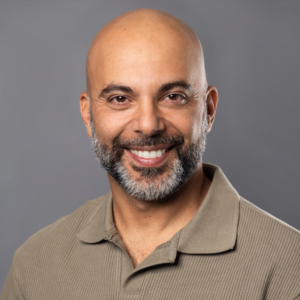
Shaahin Cheyene
Herbal Ecstasy & The Billion Dollar Smart Drug Boom
In this episode of The Psychedelic Podcast, Paul F. Austin sits down with entrepreneur Shaahin Cheyene, creator of the controversial 1990s supplement “Herbal Ecstasy,” which helped launch the legal smart-drug movement.
Shaahin shares how he built a multimillion-dollar business at just fifteen by creating a legal herbal alternative to MDMA during a shortage in the rave scene.
The conversation explores 1990s rave culture, the ethics of prohibition, and how natural supplements intersect with psychedelics, entrepreneurship, and personal freedom. They also discuss his later ventures in Amazon commerce, podcast media, and YouTube.
Shaahin Cheyene is the creator of Herbal Ecstasy, a supplement that helped spark the legal smart-drug movement in the 1990s. He built the business as a teenager into a multimillion-dollar company.
Over the past three decades, Shaahin has become an award-winning entrepreneur, Amazon expert, inventor, author, and filmmaker whose ventures have generated over a billion dollars in revenue. He is the founder of PodcastCola and Viral Mirage.
Through his businesses, Shaahin continues to mentor entrepreneurs and develop health and wellness products focused on optimizing human performance.
Podcast Highlights
- Creating Herbal Ecstasy at age fifteen
- The MDMA shortage that created opportunity
- Rave culture and the 1990s club scene
- Natural supplements as legal alternatives
- Freedom, regulation, and drug policy debates
- Health and wellness entrepreneurship
- Building product brands in emerging markets
- Podcasting and YouTube as influence platforms
Show Links
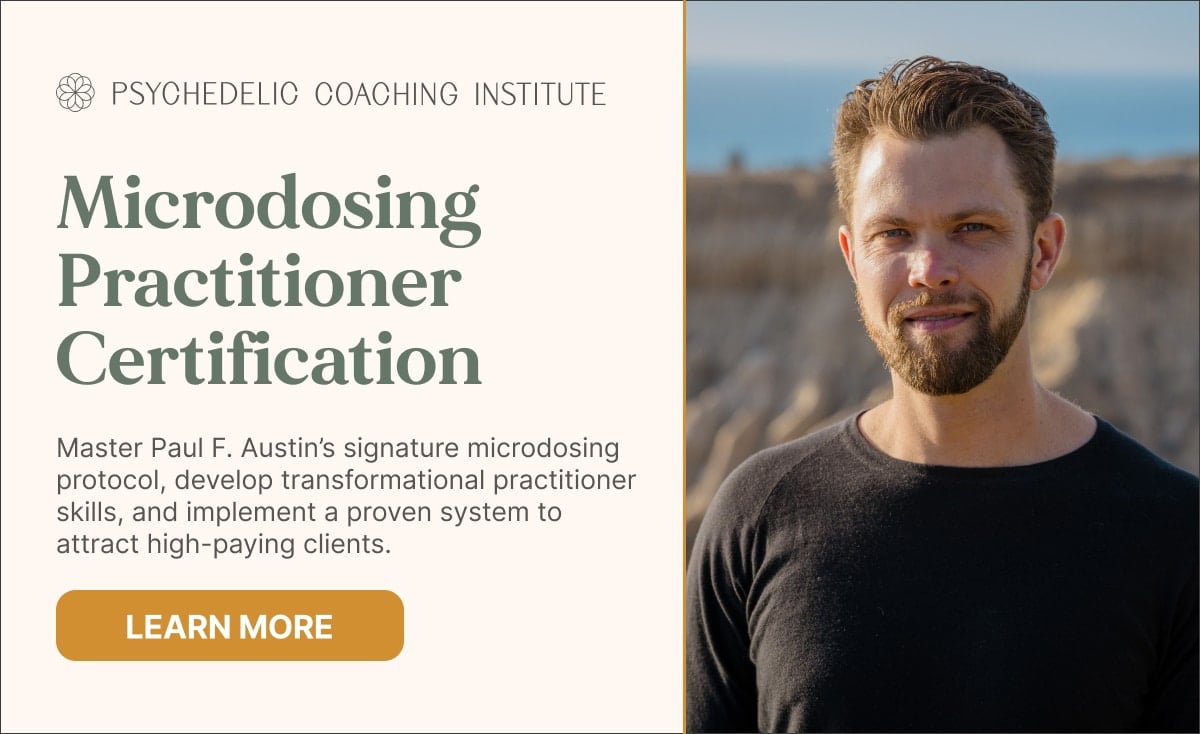
The Microdosing Practitioner Certification empowers you to launch a sustainable practice built on integrity, science, and results. Learn Paul F. Austin’s signature San Pedro Microdosing Protocol, master somatic coaching skills, and confidently guide clients toward lasting transformation. Click here to learn more and apply.

This episode is brought to you by The Practitioner Certification Program by Third Wave’s Psychedelic Coaching Institute. To learn more about our flagship 6-month training program for coaches who want to integrate psychedelic modalities into their practice, click here.

We’re excited to feature Golden Rule — our trusted resource for premium microdosing products designed to support clarity, creativity, and emotional well-being. From Psilocybin blends to LSD microdosing options, each formula is crafted with care, backed by science, and trusted by the Third Wave community.
Safe, intentional, and transformative — Golden Rule helps you feel more focused, connected, and aligned in your everyday life.
Want to experience the difference? Try Paul’s favorite microdosing picks — hand-selected for performance, mood, and daily flow.
Get a lifetime discount of 10% with code THIRDWAVE at checkout.
Third Wave occasionally partners with or shares information about other people, companies, and/or providers. While we work hard to only share information about ethical and responsible third parties, we can’t and don't control the behavior of, products and services offered by, or the statements made by people, companies, or providers other than Third Wave. Accordingly, we encourage you to research for yourself, and consult a medical, legal, or financial professional before making decisions in those areas. Third Wave isn’t responsible for the statements, conduct, services, or products of third parties. If we share a coupon code, we may receive a commission from sales arising from customers who use our coupon code. No one is required to use our coupon codes.
Podcast Transcript
00:00:01 Paul F. Austin
There's a pattern that you're going to start to notice with psychedelics as they move into the mainstream. A substance enters the space, access tightens around it, and almost immediately alternatives begin to emerge, not just as replacements but as entirely new categories. That tension between prohibition, curiosity, and innovation has largely shaped how we engage with these substances today.
00:00:26 Paul F. Austin
Welcome back to the Psychedelic Podcast. As always, I'm your host, Paul Austin, and today's guest is Shaahin Cheyene. Shaahin is the creator of Herbal Ecstasy, a supplement that helped spark the legal smart drug movement in the 1990s. He launched the product as a teenager and built it into a multimillion-dollar business. Over the past few decades, Shaahin has become an award-winning entrepreneur, Amazon expert, inventor, author, and filmmaker whose ventures have generated over a billion dollars in revenue. He is also the founder of Podcast Cola, one of the largest podcast booking agencies, and Viral Mirage, a YouTube growth agency. Through his businesses, Shaahin continues to mentor entrepreneurs and develop health and wellness products focused on optimizing human performance.
00:01:11 Paul F. Austin
Some themes that we covered in our conversation today: creating Herbal Ecstasy at age 15, the MDMA shortage that created this opportunity around Herbal Ecstasy, rave culture in the 1990s club scene, natural supplements as legal alternatives, freedom, regulation, and drug policy debates, health and wellness entrepreneurship, building product brands in emerging markets, and podcasting and YouTube as influence platforms.
00:01:42 Paul F. Austin
I had a lot of fun with this. I got to meet Shaahin in person. We've known each other for a few years now because I've worked with Podcast Cola extensively, so it was cool to be able to record this in person. And you'll notice that at the outset, we talked a little bit about Iran and what was sort of building up there. We recorded this a few weeks ago, so before the outbreak of the actual war, and touched on it a little bit, which I think is relevant to current events.
00:02:09 Paul F. Austin
Now, we do have a practitioner intensive coming up May 13 to 18. We still have some spots left. So if you're a practitioner and you want to join us in Costa Rica for our practitioner training, please reach out to us. We do have a few spots left.
00:02:23 Paul F. Austin
And let's go to our sponsor.
00:02:27 Paul F. Austin
Third Wave sometimes shares their partners with outside providers, but we don't control and aren't responsible for their statements, conduct, products, or services. We encourage you to do your own research and consult appropriate professionals.
00:02:39 Paul F. Austin
Hey, everyone. I want to take a moment to share something important with you. At Third Wave, one of our biggest commitments is helping people to explore the power of microdosing safely, intentionally, and with the right support systems in place. That's why I'm excited to introduce you to our go-to company, Golden Rule, one of the most respected names in the microdosing space. Golden Rule crafts premium, ethically sourced microdosing products, including psilocybin, single-strain, and blends, San Pedro and LSD options, all designed to support clarity, creativity, emotional healing, and performance.
00:03:11 Paul F. Austin
What really sets them apart is their integrity, honoring traditional plant wisdom while embracing modern science to support real and lasting transformation. Together, Third Wave and Golden Rule are working to make safe, high-quality microdoses more accessible while ensuring you have the education, tools, and community to feel confident on your journey. If you're curious about microdosing and want to try some of my personal favorites, head over to goldenrulemushrooms.com/thirdwave and use code THIRDWAVE at checkout for 10% off, not just once, but for every future order, too. Again, that's goldenrulemushrooms.com/thirdwave and use code THIRDWAVE for a lifetime discount of 10% off.
00:03:54 Paul F. Austin
Hey, folks. Okay, let's get into this conversation today with Shaahin Cheyene.
00:04:21 Paul F. Austin
I'm just kind of curious as an opener, like, how connected or have you been connected to Iran at all? Turkey is a place I lived for a year.
00:04:28 Paul F. Austin
Oh, wow. I haven't visited Iran, but I've always, you know, I've had Persian girlfriends, and last year this whole sort of Persian ensemble came to perform in San Diego, and I went with my girlfriend. So I'm like really fascinated by Persian culture and Persian music and the, and, you know, Persian history. So I'm curious, like, what's your relationship there, you know, as it stands?
00:04:48 Shaahin Cheyene
Yeah. So I was born in Iran in the '70s, and I was there. Things were going great. My folks saw that there was a revolution happening, happened in '79, so we moved, went to Europe, and then to the United States. The goal was ultimately to come here, and we never went back.
00:05:08 Shaahin Cheyene
There was never an opportunity to go back because, you know, my parents felt persecuted there for whatever reasons. And I'm not a political guy. I'm more a business guy, but the politics were not really agreeable, so we never went back.
00:05:26 Shaahin Cheyene
And right now, I mean, look, I see the struggle of people, and tyranny, dictatorship, kind of, you know, ruling with an iron fist historically works, but only for brief periods of time, right? So we learned that from Rome. We learned that from ancient Persia. So through the timeline of history, you can rule with an iron fist. You can rule with fear, but that's not the way forward for longevity.
00:05:55 Shaahin Cheyene
If you want your society to grow, the way to do it is to invite people in, invite these democratic processes in, and to empower people to create a better society. You can scare people with violence, and violence is always the most expensive way to get somebody to do something because violence carries with it a reaction. And that reaction, which most people don't calculate because violence happens in the heat of the moment, can cost you a lot more than the initial instigation.
00:06:30 Paul F. Austin
Right. Well, and this is like, this is, there's a thread here, like trade, global trade has been sort of the biggest bulwark against another world war, if you will, that the fact that the world is so globalized and, you know, a lot of the conversation right now is around tariffs, and we're not going to spend much more time on politics, but just this notion of, like, how we relate to each other and the fact that when we can find something mutually beneficial, then all of a sudden, okay, and business has been the way to do that.
00:06:57 Paul F. Austin
Yeah, you know, for a long time, but especially in the last 100 years. And I think what's so interesting about your story is you took business to a particular level at a very young age, and you did it in a way that was, I would say, in its own way, very counterculture rebellious. And I'd love if you could just bring us a little bit into, okay, so you left Iran and you went to Europe, and then you moved to the States, like you're 14, 15, 16, starting to get a sense of the world. Like, what brings you into business initially?
00:07:29 Shaahin Cheyene
Yeah. So most people don't know about this, about me, and I've written a book on it called Billion: How I Became King through a Pocahontas. It's going to be made into a feature film. Paris Hilton's company is producing it, so that's going to be happening in the next couple of years.
00:07:41 Shaahin Cheyene
I left home at a very young age, right? So we moved here when I was really young, went to an enclave of Los Angeles called Pacific Palisades, which people might know because it burnt down, but it was still up then, and it wasn't a fancy part of town, and it started getting really fancy. And we were poor immigrants. My dad worked at dry cleaners, pizza shops, that kind of thing, and we're just working-class people. And I saw all this wealth growing up around me, and I thought to myself, man, I want that. I want access to the Porsche and the Hot Girls and the eating out and all those things. But we didn't have any of that. You know, the clothes that I wore came, you know, clothes that people left at the dry cleaners two seasons ago, it'd be donated, and that's what we would wear to school. We went to public school. We ate the school lunches. It was the '80s.
00:08:34 Shaahin Cheyene
So coming out of that, I was like, man, I want opportunity, but I don't want to go to school. I didn't like the education system here. So I left home at 15 and got involved in what was the burgeoning electronic music scene. Oh, so the rave scene, the dance scene. And I thought it was so cool, but I didn't do drugs. And I thought, wow, who are the people making money here? And I looked around me, and I was like, wow, it's not the musicians. They're broke. It's, you know, the DJ's definitely broke. It's not the club promoters. They're always trying to run away because they don't want to pay people. Who's making the money? But there were these guys hanging around. Turns out it was the drug dealers.
00:09:19 Shaahin Cheyene
Looking back at my adolescence, I thought to myself, dude, like, just don't do crime. Like, a lot of things you can do, Shaahin, don't do crime. You're really bad. Because in my adolescence, I did a lot of stuff in elementary school, and there were great crimes, terrible execution. I would always get busted. We just couldn't do it. I spent so much time in trouble and detention and all that stuff. So I decided I wasn't going to do crime, but I decided, hey, what's the biggest party drug going right now? And it was ecstasy, MDMA. Yeah, so I thought to myself, well.
00:09:53 Paul F. Austin
This is the mid '80s or late '80s?
00:09:55 Shaahin Cheyene
This is the '90s.
00:09:56 Paul F. Austin
So now we're in the '90s.
00:09:57 Shaahin Cheyene
Now we're in the '90s. I'm, you know, 15, 16, and I thought to myself, man, I'm going to make a version of this that's legal using herbs because I know herbs pretty well.
00:10:09 Shaahin Cheyene
A lot of people in my family were herbalists, and I've studied, you know, herbal medicine. I'm going to do this. And nobody told me I couldn't. I didn't have a dollar to my name. I was sleeping on the beach, you know, in abandoned cars, abandoned buildings, whatever.
00:10:22 Paul F. Austin
Like around Venice or.
00:10:24 Shaahin Cheyene
Yeah, around Venice, wherever I could. You know, if I found a couch, I'd sleep on it. But I was free, right? Which, to your point, to our earlier conversation, people just want to be free, man. And it goes to the work that you're doing, right? You just want your mind to be free. You just want to be free. You want to be free to have the highest expression of yourself.
00:10:43 Shaahin Cheyene
It's the ultimate in human civilization is just give people freedom. People will figure it out, and we're not going to mess everything up. Everyone's not going to go out there and kill and murder and rape and pillage and do all this. If you just give people freedom with some structure and access to resources, we tend to do pretty well. We've gotten this far in society.
00:11:04 Shaahin Cheyene
So, okay, so I get involved in the electronic music scene. I figure out how to make some herbal supplements that mimic ecstasy. I sell it in a very unique way. At that time, the supply of MDMA, which was called ecstasy at the time, I don't know what they call it now, had completely dried up. Most of it was coming from Europe. And with the Just Say No campaigns and the new whoever drugs are that they had in power, they'd done a fairly effective job of stopping it from coming into the United States through Europe. And there were very few people producing it here. It's a very complicated process to produce it, I'm told. So there was just no supply. And that was my opportunity. When I came in, the supply had dried out. The drug dealers, the people who were selling it throughout the electronic music scene, the clubs, the raves, didn't have anything to sell. They were selling other things, crazy stuff like speed or, you know, just.
00:12:06 Paul F. Austin
Stimulants more so.
00:12:07 Shaahin Cheyene
Stimulants. Even, you know, we heard them selling heroin, selling all kinds of terrible drugs.
00:12:12 Paul F. Austin
Because '90s was heroin decade.
00:12:14 Shaahin Cheyene
Yeah, that's right. Yeah. With all the grunge rock instead of ecstasy. So I really saw it as providing a service. We had a natural product. It was legal. It was using natural ingredients that were what they call grass in the supplement business generally recognized as safe. And we started selling it through the drug dealers at the clubs, but we did it in a clandestine way. We didn't differentiate it from illegal drugs. We just said, this is herbal ecstasy, and you've got ecstasy. Sorry, we don't have ecstasy. You guys can take herbal ecstasy. And so it went from one to 100 to 1000 to 1000.
00:12:50 Paul F. Austin
Was that good?
00:12:51 Shaahin Cheyene
Oh, yeah.
00:12:52 Paul F. Austin
Because you can invent anything and call it herbal ecstasy, right?
00:12:55 Shaahin Cheyene
Yeah. So methyldeoxymeth, because this is a psychedelics podcast, right? Ecstasy is part amphetamine, right? Methyldeoxymethamphetamine, the amphetamine component of it. And then you have other components of it that lead to these, like, empathetic, kind of like entheogenic heart melt kinds of feelings. That's much harder to duplicate.
00:13:15 Shaahin Cheyene
But the amphetamine part of it, the part that, like, gets you up and makes you want to party, that you can get from a mixture of ephedrine, which comes from a plant called ephedra, which now is illegal, unfortunately. I think it's one of the best smart drugs out there, and I believe that it was safe. I don't recommend anybody taking it. I'm not making any medical claims, but I thought it was fantastic.
00:13:39 Paul F. Austin
And it also goes back, I'll just make a note here, ephedra use goes back thousands of years. In fact, when you look at the ancient Vedic scriptures, they talk about something called soma. There's some people think that ephedra was part of what they were serving in ancient India and these other places.
00:13:54 Shaahin Cheyene
The oldest known plant to man. In fact, there's some fricking dude somewhere, like one of those mummies. He's like frozen like this. He's got a bag, and they open up the bag, and it's like, oh, shit. He's got like a little tobacco, and then he's got ephedra. So, and they're everywhere, right?
00:14:07 Shaahin Cheyene
But so in all the wisdom of our government, they restricted it shortly after. They banned our product back in the '90s, so, or early 2000s, right? I think it was the '90s, the late '90s. So, you know, we start selling this through the rave scene, the club scene, and it starts going really well. And the government wakes up. Once we get past $100 million, people start, you know, I tell people this all the time, you can be under the radar and you're cool. The second you go above a certain level, all the vultures come out, right? Everybody wants a piece.
00:14:46 Shaahin Cheyene
So what happened was the government started coming after us, right? The head of the FDA at the time, this guy, David Kessler, appointed by the president, like, go get this long-haired kid. I had long hair back then. So he said, go get this long-haired kid who, you know, is selling legal drugs. And so they all came at once. It did two things. One, it cost me a lot of money and lawyers, but two, had me on TV every day. Oh, and when I was on TV, they had the FDA, the DEA, every agency there on TV with me, and they were all saying, this is dangerous. You shouldn't take it. But what do you think the people on TV were hearing?
00:15:30 Paul F. Austin
They were hearing, oh, the government's telling me I shouldn't do something. There's got to be something good about this then.
00:15:36 Shaahin Cheyene
Correct. They were thinking the shit works. Right? Yeah, that was their thought.
00:15:41 Paul F. Austin
Totally, right?
00:15:42 Shaahin Cheyene
So we did, over a very short course of time, Paul, over a billion dollars in revenue. It was a lot of it cash, one of the biggest supplement companies of all time, unregulated by the federal government. And that raised a lot of eyebrows, leading to the eventual demise of the company back in the '90s.
00:16:05 Paul F. Austin
Well, and what's the other interesting, and I want to kind of hear about what came after that, right? And sort of how do you follow an opening act that's, you know, selling herbal ecstasy?
00:16:16 Paul F. Austin
But what was also going on at that time in the '90s, as important context for our listeners, is the supplement industry was also starting to come into being, right? So in the '80s is when the FDA started to approve a lot of psychiatric medications like Prozac and Lexapro and Zoloft.
00:16:30 Paul F. Austin
But then in the '90s, they sort of deregulated everything so that anyone could, you know, say, okay, this doesn't have medical value, but it might help you get better sleep, or it might help improve your mood, or you're going to have, you know, a better, you know, hard-on or whatever else it might be, right? There were certain claims that they can make. And so this story that you're telling about the herbal ecstasy, it sort of falls in that domain.
00:16:56 Shaahin Cheyene
Yeah, you're absolutely right. And I'm very impressed that you know that. So what most people don't know is in the '80s, they were really big on these SSRIs, and everybody was on them. It's not like now. Like, everybody was taking these antidepressants. They were like, we're all going to be happy. Here you go, right?
00:17:17 Shaahin Cheyene
But what they forgot is that these SSRIs, for people who don't know, selective serotonin reuptake inhibitors were these, well, I'm not going to go into the technicality. You guys can GPT that stuff. But they had one big side effect, and that was sexual dysfunction, erectile dysfunction. But don't worry, because the same companies who are lobbying the government to sell that stuff and get their clinicals approved and blah, blah, blah, have this magic blue pill that's coming out.
00:17:48 Shaahin Cheyene
And this blue pill, as you say, is going to give you a hard-on for weeks, and it's going to be an answer to all of this. So you don't have to worry that drug number one caused side effect of drug number two. So.
00:18:00 Paul F. Austin
We have a solution for you.
00:18:01 Shaahin Cheyene
They had the solution that they had spent millions and millions of dollars on. But then there's this little Iranian kid who, long hair, has zero government regulation, who's selling a billion dollars of this stuff without any regulation. You don't need a prescription. You don't need a doctor's. And a lot of people were using herbal ecstasy for exactly that. And for a lot of people, it was very effective. And so they came out and lobbied the government. You got to do something about this. And that's when the heat was turned up on us.
00:18:32 Shaahin Cheyene
And it's very exciting. I have, again, you know, the book, you guys can check out the audiobook. It's on Audible. It's called Billion: How He Became King of the Throat Pill Cult. Movie will come out in a couple of years, but that kind of talks about that. So I think that's really interesting.
00:18:46 Shaahin Cheyene
But yeah, you know, like back in Iran, you remind me of that, and you know, because we're talking about the psychedelics podcast, and you were telling me about Hayoma, which I think it's like, and it's another word for soma, right? Which is this, like, for, I mean, most of your listeners probably know, but it's written in a lot of these ancient books. It's this thing, you know, people said that, you know, it came down from heaven, and it's this, it's got all the characteristics of a psychedelic in the ancient books, right? And I think back in the day, they kind of deduced that maybe it's fly garic mushrooms. And then people from the Middle East said, well, no, it could be Harmala, which is a monoamine oxidase inhibitor. And they say that that's one of the reasons, you know, for like the Islamic geometry and the Persian rugs. You know what makes the Persian rugs red, right?
00:19:42 Paul F. Austin
Is the Harmala? It's Harmala.
00:19:44 Shaahin Cheyene
Harmala is the dye that dyes the Persian rugs. So hence the vision of somebody flying on a carpet is a nod towards this hallucinogenic effect, right? So you mix the Harmala with atriptyline, and you have.
00:20:04 Paul F. Austin
It's good to have an acacia in the Middle East, in a place like Iran, right?
00:20:08 Shaahin Cheyene
Or mushrooms.
00:20:09 Paul F. Austin
Or mushrooms even. Yeah, that's true.
00:20:11 Shaahin Cheyene
It grows, everyone's got dung, right? And it grows everywhere. So, you know, we don't know exactly what was in it, but we can postulate. We can kind of like assume what it might have been and probably was something like that. It could have even been simpler.
00:20:28 Shaahin Cheyene
It could have been, you know, like an intoxicant, like involving some kind of brewing of alcohol. Like, you know, the Vikings had mead. And, you know, we wonder, like you look at, you know, like the Greek writings and the Roman writings, and you see them having these parties, right?
00:20:44 Shaahin Cheyene
Where, like, everybody's naked, and they're these crazy rooms, and they're laying back and peacock feathers. And you're like, man, I've been to parties where people drink a lot of wine. And that doesn't happen, right? That's not happening, right? And these are ancient, wise people. Like, WTF happened?
00:21:02 Shaahin Cheyene
And then you realize, you know, I think recently there's been several universities that have actually tested some remnants of residue, and they have found hallucinogenic roots.
00:21:14 Paul F. Austin
Well, it's interesting that you bring this up because just yesterday, a research paper was published that essentially proved this Keikion or Kukion hypothesis. So Brian Murarescu was this author who wrote The Immortality Key. He made the case that the ancient Greeks drank this potion or beverage called Keikion that it had a psychedelic component, but they hadn't, and they've been researching this since the '60s. So Albert Hoffman was also a big fan of this hypothesis. There's a really sort of eccentric professor, Carl Rucker, who's at Boston University, still in his '80s now, who continues, but they had never proven it scientifically that you could actually take the ergot, which was a fungus that grows in rye, and actually get a psychedelic.
00:21:58 Paul F. Austin
And this research paper that was published yesterday proved it scientifically that you can for sure do this, right? Like, it is possible. Yeah. And so it just, because a lot of people, you know, it's like naturally what happened 2,000, 3,000, 4,000, 5,000, 10,000 years ago, it's like scant evidence exists. But if you kind of put two and two together, you know, and you have a little bit of fun with the speculation, it's like, it's pretty clear that we've been, you know, on flying carpets for a long time.
00:22:25 Shaahin Cheyene
That's very true. It's fascinating to me. You know, look, like you and me were talking earlier, I am not an advocate for psychedelics and hallucinogens, even though I've had my share of them with the best. But it's fascinating to me.
00:22:38 Shaahin Cheyene
Like, I was thinking about like alchemy, right? And I collect ancient books and manuscripts. I've been doing that for years. And one of the most, the rarest, most expensive books that you can get are alchemical books because those were banned, particularly in times of, you know, where Christianity was at its height.
00:22:58 Shaahin Cheyene
And I thought about this, like, okay, so the basis of alchemy, a lot of these alchemical things, is that, hey, we're going to create gold from mercury or gold from these other things. But I thought, you know what, man? What if they were just taking something that made them believe that that thing was gold? Like, if you could just shift your belief that, like, hey, now I'm looking at a rock, but I'm going to take something, and now it's gold.
00:23:24 Shaahin Cheyene
Like, we have no idea what these people did. We have such little information, and the stuff that we can glean from what, you know, I mean, maybe something from, you know, like medieval times. But if you go back far enough, like the Sumerians, you go back before them.
00:23:42 Shaahin Cheyene
Like, I was reading about the Sumerians. Like, they're thousands of years ago, right? Where we're just going, oh, this was the first civilization. And then you see they have this kings list. Have you heard of this? So they had the Sumerians, which were one of the first, the first known cultures, right? They had writing. They had, you know, all these things. They had a list of kings. And if you followed that list, that lineage, it goes back like thousands of years before their civilization. But how could that be if they were the first civilization? I find this stuff fascinating.
00:24:16 Paul F. Austin
Did you know that over 4 million people microdose psychedelics last year in the United States? And yet so few have real guidance on how to do it safely and effectively. That's exactly why I created our Microdosing Practitioner Certification. This is an 18-week professional training where you'll master my San Pedro microdosing protocol for nervous system regulation, learning how to coach clients through it with confidence and integrity. Just visit psychedeliccoaching.institute or use the link in the show notes to learn more. I feel like we're veering into Graham Hancock territory.
00:24:48 Shaahin Cheyene
Right? Yeah. All right. Let's bring it back.
00:24:51 Paul F. Austin
Which I think is an interesting thread to open up. I'm just not sure that's the direction we want it. But I love this notion that there's, historically, there's a lot of things that we know, most things we still don't know, and I don't think there's enough humility in that process is sort of what I hear you speaking to.
00:25:08 Shaahin Cheyene
Yeah. And look, I spent a lot of time with indigenous people, with tribal people since the '90s. You know, I've met uncontacted tribes in the Amazon. I've done all that. I've done ayahuasca in the Amazon. I've done the yopo where they blow the thing into your nose, and your brain feels like it's about to explode for two minutes. I've done all that.
00:25:27 Paul F. Austin
Just like a 5-MEO DMT snuff that yopo is.
00:25:29 Shaahin Cheyene
Yeah. I've been to Mexico with Maria Sabino's family. Maria Sabino was, so for everybody who knows, right? It's Gordon Wasson, who was a banker who introduced mushrooms to the West during the whole '90s process. He introduced, and him and Albert Hoffman, the guy who discovered LSD, went to Mexico. Nobody wanted to give them anything. And then they met this family of indigenous people who the grandma, Maria Sabino, initiated them into a mushroom ceremony. So I've been there. I've been with those people. I was one of the first people to bring a plant called Salvia divinorum.
00:26:11 Paul F. Austin
Oh, you brought Salvia.
00:26:12 Shaahin Cheyene
We brought Salvia back to the United States and commercialized it when it was legal.
00:26:16 Paul F. Austin
In Spencer's. That's why I found it in Spencer's when I was 12 years old.
00:26:18 Shaahin Cheyene
Oh, did you? Oh, yeah. Yeah, yeah. You know, I want to say for your part.
00:26:22 Paul F. Austin
I'm not saying I bought it then. I just knew it was a thing in high school.
00:26:26 Shaahin Cheyene
Yeah, for a friend. For a friend. Yeah, yeah. Yeah, I strongly recommend to people to not do that, like legitimately not do it. It is probably the least pleasant. Like, you know, when I tried it at first, I was like, nobody will ever do this. This is the worst drug ever. Like, who would ever want to do this?
00:26:44 Shaahin Cheyene
And Terrence McKenna introduced me to it. Oh, and he, you know, and it's weird. He's like, you should try this. And I was like, all right, sure. Let's give it a go. And I was like, holy king shit. This stuff is insane. Nobody will ever want to do this.
00:27:00 Shaahin Cheyene
And, you know, we commercialized it. We were selling it on Melrose. It was in all the stores on Melrose. It was all throughout the United States. And people just kept doing it. That was the craziest thing I never understood about that stuff.
00:27:13 Paul F. Austin
Well, it's interesting. I just interviewed someone about this because I've had this lens of Salvia, like, I mean, like your experience. I've never smoked Salvia, but I've heard all of the horror stories and how intense it is. And so I interviewed someone just a couple of weeks ago about this. He says, the problem is people are doing way too much of it. And some of these sort of legal options are extracts of Salvia rather than being the plant itself.
00:27:36 Paul F. Austin
So if you smoke it at a very low dose, yeah, it's actually, you can get into sort of a deep meditative state. But the tricky part is most people, they just go for the higher dose, and then it becomes horrifying, you know?
00:27:51 Shaahin Cheyene
Very unpredictable.
00:27:51 Paul F. Austin
In most cases. So, and Salvia divinorum was also from Oaxaca, which is what you're speaking to, right? Which is also where we found out about the magic mushroom.
00:27:59 Shaahin Cheyene
They never smoked it, though. They chewed it.
00:28:01 Paul F. Austin
They chewed it, right? So they would have quids, right? And so the quids, it's a lot different than if you're smoking an extract or smoking a really high dose of it.
00:28:10 Shaahin Cheyene
Yeah, yeah. I think, you know, when Wasson went there, he noticed some young Indians kind of like putting it in something and smoking it with some tobacco. But it wasn't a traditional use. It was just something that they were doing. And it went for years unnoticed. People were like, and it's a weird plant. It like only grows in one place on the planet. Like that ingredient, that chemical that's in there hasn't been discovered anywhere. It's like an alien plant that's like that just showed up in one part of the planet. And it's always fascinating to me.
00:28:42 Shaahin Cheyene
Like, this is the thing I've always thought about hallucinogens and psychedelics, is that I truly believe that there's some doors that you can open that you might not be able to close, right? Is my first thing with psychedelics. The second thing is, I, and you're going to argue with this, I know you are, but I am not sure that the majority, I'm going to say the majority of what you get in that world can be brought back to this world in a useful way.
00:29:12 Shaahin Cheyene
Now, I know a lot of people do. I believe that it can cure PTSD. I believe that for people who have severe drug addiction, opiate addiction, you know, traumas, end-of-life stuff, stuff like Charles Grubb has researched over at UCLA using mushrooms for terminally ill cancer patients. Like that kind of stuff, incredibly valuable. Like, I think those values are there.
00:29:41 Shaahin Cheyene
But, I mean, dude, I've been to Ireland and done mushrooms with druids or the descendants of druids, modern druids, like in a bog. And the stuff that I experienced, I wish I could bring back 1% of it. But it lives somewhere in my mind in between like genius and anxiety. And I've never found a way to utilize the learnings from psychedelics, although fun and, you know, like a great experience. I'm not sure that they're useful if you're on a path to make money.
00:30:27 Shaahin Cheyene
You're a different animal. You've done it in a way that I think very few people have. And I think there's something about you and like your journey and like your path in life that has resonated with that. And you've managed to do it. And I think that's amazing. I'm so proud of you for doing that.
00:30:46 Shaahin Cheyene
But I think for like, if we're talking about you, I think it's a different story. If we're talking about 99.9% of people, I don't see the benefit outside of possibly having some extra level of like self-reflection.
00:31:03 Paul F. Austin
Well, and I, so this, I mean, it brings up a good question because a lot of folks who even listen to this podcast are medical doctors, they're clinical therapists, they're practitioners of some sort who are preparing themselves to help other people heal their shit, right? So as we look at, you know, psilocybin being approved for treatment-resistant depression, or we look at it being approved for PTSD, right?
00:31:24 Paul F. Austin
I think there's a very important need to actually train the practitioners in, okay, how do you hold this and what might come up? And, you know, like how are you healing your, because a lot of times, you know, you have these wounded healers who come back into these spaces. And so it's like, have you done your shit and healed your work? Because if you haven't healed the stuff within you, how are you going to help someone else heal whatever's caused that PTSD or that depression or, you know, the addiction or whatever that might be?
00:31:51 Paul F. Austin
So I think I'm very enthusiastic about that. And as you know, that's kind of been my focus more or less. And then I've also seen, you know, I know there are a lot of skilled executive coaches, and we've trained some who are now doing this with people in CEO and leadership roles. But it's a lot of it in my, from what I've seen, is it's helping them to be a little less stressed and to hold things with a little bit more grace.
00:32:16 Shaahin Cheyene
Right. Yeah.
00:32:18 Paul F. Austin
You know, Tim Ferriss has said maybe it helps with some creative breakthroughs. So if someone's really stuck, I find it can be a good unlock. But the challenge is people, they keep dipping back into the well thinking, okay, it's going to be on this next one. It's going to be like, I'm finally going to get to it. I'm finally going to get to it.
00:32:33 Paul F. Austin
And I've seen also that turn into, and this is across the spectrum. This is with doctors. This is with CEOs. This is with practitioners. This is with definitely people who are just going to raves. It's like, there's, and it's just a grasping thing. People just kind of keep grasping for the thing that's not quite there that they think, okay, if I drink, you know, ayahuasca once more, I'll get there, right?
00:32:54 Paul F. Austin
And so I think it's also how do we hold and train people to know, you know, I love microdosing. I love taking low doses, but I'm also real about it. I'm like, to me, microdosing is kind of like taking creatine, or it's like I'm checking out peptides, or like I think it's going to be helpful physiologically, but I'm not giving up my power to it. Like, okay, this is going to be the thing that finally fixes me, or this is going to be the thing that finally like makes me feel good about myself or whatever that might be. You know, that gets risky.
00:33:22 Shaahin Cheyene
You're right. You're right. And I think we agree there. You know, it's also in this country too, it's a big problem that nobody can do anything in moderation. Like I had a friend of mine, and we went out, very successful individual, and he's like, dude, I'm like, what are you taking? We're just going to a game. And he's like, no, no, it's cool, man. I'm microdosing. You know, this guy brings me these things. They come in these things. And I was like, okay, let me see what you got. And I looked at the dosage of psilocybin that he was taking. I'm like, bro, you're macrodosing. This is not microdosing. He's like, no, no, I just take one of the pills. It's microdosing. I'm like, you are not microdosing. You are getting very high, sir. Very high. I will not be taking that and driving.
00:34:04 Paul F. Austin
It's probably like a half gram or a gram, something like that, right? And that's what I've seen a lot in the sort of microdosing realms is people be like, oh yeah, it's a microdose. And it's a half gram chocolate. Or it's a full gram chocolate. And it's like, bro, this is not a microdose.
00:34:17 Shaahin Cheyene
Yeah, you're not microdosing, man. You're just dosing.
00:34:19 Paul F. Austin
Yeah, you're just dosing, which is, which if that's what it is, that's what it is, right? Like, you know, I'm not an extremist either way. I drink wine. I like drinking wine. I like drinking mezcal. You know, I smoke tobacco here and there. You know, I do take probably a little too much acid, but I like to rationalize it that it's only very low doses, you know, again, in this sort of microdosing form.
00:34:41 Paul F. Austin
But I think we can also be real that like we, as humans, we like to alter our consciousness. And alcohol has been the main way we've done that. And I love alcohol, but if it's used too much, it can get toxic pretty quick as well. So I think some people are also looking to like, you know, mushrooms as a way to like, like a lot of people are like social dosing, you know, where they'll take a half gram and they'll go to a party rather than drinking alcohol.
00:35:04 Paul F. Austin
It's sort of like what you were doing with herbal ecstasy in a way, right? But I think people should at least just, we should be able to choose that and have the freedom of choice. And even another big thing that's been coming up lately is like cannabis. Like a lot of people, like there's sort of this backlash happening against cannabis, which I understand because it's way more addictive than we were led to believe. And there's potentially a lot more harm to the brain and the heart in particular, cardiovascularly than what we've been led to believe. So.
00:35:36 Shaahin Cheyene
Yeah. Again, it's like there's nothing that people in this country can do in moderation. Like it's like, weed is legal. All of a sudden, everybody's, I'm like, seriously? Like everywhere you go, like everyone's got to vape. Everyone's smoking. It's like, man, you know, the way to do these things is in moderation, right?
00:35:56 Shaahin Cheyene
Like if you very occasionally smoke some weed, no one's going to harm you for that, man. Does it calm you down? Does it stress you out? Does it keep you from like getting up and being mean to the dog? Like cool. Like do it. Like that's fine.
00:36:09 Shaahin Cheyene
But especially now with cannabis, like some of these strains really are bordering on psychedelic. Like they're definitely, like people are tripping balls on, you know, with the new technology that they have for growing these strains. And I have seen no less than a dozen people that I know have gone like off the edge not to return. And all they did was smoke weed. Yeah. So.
00:36:36 Paul F. Austin
And there is research that is now showing there is this link between early onset schizophrenia and early cannabis use.
00:36:43 Shaahin Cheyene
Is that right?
00:36:44 Paul F. Austin
Specifically before the age of 25. Yeah, because the brain is still developing by that point in time. And I mean, I had a really good friend in college who had a psychotic break. And we think it was a combination of Adderall with cannabis. You know, that was sort of the thing that really pushed him over the edge. And he was able to recover. He had a great family. He was able to, you know, like come back into himself. It took, but it took years.
00:37:07 Shaahin Cheyene
So I'll tell you a few things. So one of the things that I learned being around indigenous people and tribal people, which I did for years, I was around the Mexica Aztec people in Mexico. I did a whole documentary on that. Did two documentaries on that. I've been in the Amazon. I've been to Cambodia. I've been pretty much all over the world, right?
00:37:31 Shaahin Cheyene
And the first thing that I learned from, and it's universal across all shamans, all medicine people, is that, and they understand plants. They're primitive in a lot of other ways. And a lot of things they do are not culturally acceptable by us. But as far as plants go, they understand them better than we do. And one of the things is that every plant reacts differently to every person. And whereas, you know, like you can microdose whatever, LSD mushrooms, and be fine with it. That resonates with you. That doesn't mean that's going to resonate with other people. And somebody might really resonate with cannabis as a plant. It might really work for them. But for a lot of other people, it doesn't work. Right? So plants kind of have this personality just like people do, which was a big like revelation for me when I learned this.
00:38:23 Shaahin Cheyene
Because I noticed that even within tribes, like where there's, you know, a shaman and other princes and whatever, not everybody does all the things. Like in the Amazon, you know, there's only in the tribes that we went to, there's only like one guy in the tribe that really is doing the ayahuasca. And the other guy's doing a different kind of ayahuasca. He's doing just tobacco. Like there's shamans that do just tobacco, right? And then there's people in the tribe that don't touch the tobacco. And there's people that do just, what do they call it? I think it's borrachero is the datura, right? Which is, you know, I mean, that's, you know, in a seed, that's schizophrenia, right? Like just one time and you're never coming back from that. Very possible, right? A lot of people in medieval times went crazy from that stuff. But they take it every day and they're seemingly fine. So those things that happen, that was the first thing I learned.
00:39:18 Shaahin Cheyene
And the second thing is, is their approach to this stuff is very different than our approach to it. Like I think as Westerners, we tend to mystify things that we don't understand. And I think for these cultures, you know, particularly tribal cultures that are more in tune with nature, it's not as mystical. They're just like, yeah, this is what we're doing, right? Like on Tuesday, we do peyote. Or like, you know, on whatever, the moon, you know, solstice thing, we're doing, you know, this type of thing. And I think that, you know, kind of demystification of it, that it's just like part of the culture is not something that can be readily duplicated in the way a lot of people duplicate it. So I don't know if that makes sense.
00:40:05 Paul F. Austin
Oh, no. I mean, it's one of the big worries or concerns about the sort of mainstreaming of ayahuasca. You know, you have a lot of people who are coming and drinking this tea, this brew, where first of all, for the majority of, I don't know, the hundreds or thousands of years that ayahuasca has been present, it's been drank by the shamans or the leaders.
00:40:24 Paul F. Austin
This isn't, in most cases, there are different contexts, but in most cases, this isn't like we're all going to get together in Cinco Bayá and drink ayahuasca. That's a very recent phenomenon, right? Usually it was like, I drink the ayahuasca or I take the datura as a shaman so I can channel the spirit and heal the thing through you. And then all of a sudden it was like, but all these white people are suffering and we think this medicine could help, right? And so all of a sudden now we have these group ceremonies, right?
00:40:49 Paul F. Austin
Where people are coming and they're all drinking a bunch of ayahuasca and they're introduced to a cosmology or a worldview, which as you've said, is, it's just very different than the West, you know? Like it's very, very different. And so people get opened up and then, you know, they spend their week in the Amazon or two weeks in the Amazon and they come back and, you know, they're in suburban New York or LA and they're like, what the fuck? You know? Like it's kind of like what you were saying before, like what had happened with these druids when you took mushrooms. It's like, that was a part of your, I almost, like it's not compartmentalized, but it's like, it's tucked away, you know? And a lot of people have these big experiences with ayahuasca and they're just so raw and they come back and they don't have any ability to, quote-unquote, tuck it away. But they don't have the support really that they need to fully integrate it. And so it just becomes this weird sort of hook in them for a long time.
00:41:39 Shaahin Cheyene
Oh, interesting.
00:41:41 Paul F. Austin
And I think that's a big part of like what we're attempting to solve. It's like the community aspect around that. Like how can people feel like they're supported once they come back? Or if they're going to go and open themselves up like this, how.
00:41:51 Paul F. Austin
You know, I was talking to Ben Greenfield about this the other day. And Ben was like, you know, I'm looking more and more at like the use of ayahuasca or some of these intense psychedelics. It's like soul surgery or brain surgery, right? People are just going, they're going in the Amazon and just getting random brain surgery from someone they've never met before. You wouldn't do that, right? Like you'd want to do it under the guidance of someone who, like you know, is legit.
00:42:15 Shaahin Cheyene
Have you ever been to Ireland or Scotland? Like have you done their fairy walks? Do you know about those?
00:42:21 Paul F. Austin
No.
00:42:21 Shaahin Cheyene
So, all right. So most people don't know that in particularly Ireland and parts of England, parts of Scotland, they have all this fairy lore, right?
00:42:32 Paul F. Austin
I learned about this from Graham Hancock from his book Supernatural. So I'd like, oh, I have a little bit of context.
00:42:38 Shaahin Cheyene
What did he say in there?
00:42:39 Paul F. Austin
He just said that in Ireland in particular, they have this really deep relationship with these fairies where they'll, you know, they're like these little gnomes. They'll have these little homes and they'll be in the countryside. And, you know, people will sometimes provide offerings to them. Or there's a whole sort of mythology and lore. I mean, this is years ago that I read the book.
00:42:56 Shaahin Cheyene
Okay. Yeah, yeah.
00:42:57 Paul F. Austin
Something like the little people stuff, you know?
00:42:59 Shaahin Cheyene
So I used to hang out with a guy who was a big metaphysician. Used to be an exorcist, you know, and became a big metaphysician. He wrote a bunch of very famous books, popular books. And he's since passed.
00:43:11 Shaahin Cheyene
So we went to Ireland. He's like, you got to come, mate. You got to see the druids, right? So we go there. I'm like, I don't know about any of this stuff. I'd never taken anything before in my life.
00:43:19 Shaahin Cheyene
And so we walk around. First off, it's some of the most beautiful nature you ever seen. So this particular property was in Ireland and it was a castle from, I don't know, 16th century, 15th century. And what those castles are known for is that they're very damp. So in the lower areas, it makes an ideal environment for growing fungus. And so a lot of these druids had picked some of these ruinous buildings as sites for.
00:43:49 Paul F. Austin
Mushroom grows, basically.
00:43:50 Shaahin Cheyene
Mushroom cultivation, right? So we're walking in someone's private estate. And it's a large estate with a lake and, you know, access to beautiful nature. And we're walking through here and you see them actually setting up. It's almost like shrines, right? So there's like a tree and there's like moss growing on it. And there's like a little door in the tree, like a little tiny person door.
00:44:12 Shaahin Cheyene
Yo, yo, that's cute. But they're like everywhere, right? And they have all these rules. Like you cannot go within a certain area of that because there's what they call fairy rings. They believe you can actually get pulled in. And they're like, whatever, right?
00:44:24 Shaahin Cheyene
So they have, you know, somebody brings out the, you know, the mushrooms and we're like, okay. And I take a little sip and I see everyone looking at me and I'm like, screw it. I drink the whole, and they're like, that was for everybody. So I'm like, whatever. I'm not feeling anything.
00:44:39 Shaahin Cheyene
I keep walking down. I'm sitting on a tree, like on a tree. Everybody's like scattered around this massive estate. And I'm talking to this girl. We're having this conversation. You know, it's kind of interesting. She's like this Irish girl, you know, having this conversation with her. It's kind of like interesting.
00:44:57 Shaahin Cheyene
And then I go back and the stuff's really starting to like kick in. And I'm like, wow. And very different from any other psilocybin I've ever taken. Like very different. Because like the first hour of it is just cracking up, laughing. And everybody has that effect. And then the second hour is very intense.
00:45:17 Shaahin Cheyene
And they were like, yeah, you know, we saw you hanging out on that tree. Like who are you talking to? And I was like, you know, I was talking to, you know, whatever, whatever the name was. And they were like, they all froze and looked at me. And I'm like, what? And they were like, you know, that's this guy's daughter who passed away. And she's, you know, she is buried on, you know, the property.
00:45:40 Paul F. Austin
Oh, wow.
00:45:40 Shaahin Cheyene
That's what they did. And I was like, I had no idea, right? And that's how that experience started. And I was just, you know, I actually was talking to someone. And so it continues. And I'm young. I'm like 16, 17, right? Never taken anything. I had fasted. The other part of it is I'd been fasting for a week because I was big into fasting. So I had nothing in my system except for, you know, 10 people's dosage of these things.
00:46:11 Shaahin Cheyene
And so then these guys come out wearing these like, you know, they've got like fox or wolf things on their head. And, you know, they've got the things and the fire. And, you know, they're drumming. And you really like, I'm hearing the drumming. And then I'm like, man, there's a lot of bugs around here. And I look and then I see somebody else look. And I'm like, wow. It's like, you know, there's like things here. And I look, I'm like, these are really big bugs.
00:46:34 Shaahin Cheyene
And as you, as I turn my head, I'm seeing these like, and I look and they're like almost like insects, right? But I'm not the only one seeing this. The other people in the group are saying the same things as I do. And my friend, who's a metaphysician, he said, look, if you want to see them, the way you see them is don't stare direct. You just stare in the direction and then you close your eyes and you see them in your mind's eye. So you see these things buzzing by.
00:47:03 Shaahin Cheyene
I close my eyes. And mind you, I'm heavily inebriated in this moment. And you can see these little like fairy-like creatures. And then we start walking around. And it was like the entire area lit up. And you understood, like in that moment, I understood how this like world worked. Like I had a complete understanding of how this forest was alive. And you looked at the tree with the moss and you saw like a million different things in the tree. But you just understood.
00:47:35 Shaahin Cheyene
But not only that, everybody around you also understood what you understood. Now, I don't know what that is because like I said, I don't think you can bring it back. And the whole journey was like that. And you really saw all these doors open up, like all these portals open up. And that lasted for days, for days, the effects of that. And then coming back, it was a very weird experience. I don't think I'd want to repeat it. But there were understandings when in that psychedelic experience, in that like trance, that like I just wished I knew. You know, like, have you ever taken, have you taken ecstasy before?
00:48:16 Paul F. Austin
Oh, yeah, yeah.
00:48:17 Shaahin Cheyene
Right. Okay. So you know, when you take ecstasy, like especially like the first few times you take it, you just feel like, oh my God, if everybody had this, there'd be no war, right? Like we would just love each other. Like we wouldn't need drones and bombs and, right? Like everything would be okay. And then it ends and it's a little bit of a fricking bummer, right? You're like, oh, right?
00:48:38 Shaahin Cheyene
And this was a little like that. It was like for a moment in time, like you slip in time and you really understand how it all works. Like I really, or you think you do and you're just being delusional, but you really, like your heart melts. You feel like, oh my God, now I get it. I get like this tree. Like I fricking understand the moss. I understand that little door. I understand everything. And then it's gone.
00:49:07 Paul F. Austin
Yeah. Yeah. The profound, profundity sort of slips, right? And this is like, it's sort of like the, it's like the paradox or the, you know, it's like we have these experiences. They are so meaningful. We remember them, but we also can't fully remember them, you know? But when we're in them, it's like, oh wow, we're really remembering something, right? Like this feels familiar.
00:49:30 Shaahin Cheyene
There's something to these, I know you don't want to talk too much about this, but there's something to these ancient sites.
00:49:35 Paul F. Austin
Yeah, yeah, yeah.
00:49:36 Shaahin Cheyene
And like the indigenous.
00:49:38 Paul F. Austin
Like Go Bekli Tepe or even.
00:49:39 Shaahin Cheyene
I don't know what they were taking there, but no, no. Just these, like just in Ireland, for example, like this stuff grows there. It's from there, right? So back in the nineties, when I started going on the news, people decided that I was some big like drug guru, right? And I wasn't really. I really had done nothing. Not weed, nothing, right? I was very clean because I was focused on my business at the time, herbal ecstasy. Yeah.
00:50:04 Shaahin Cheyene
So people sent me stuff and I didn't know what to do with half of it. I didn't know how to throw away or like, do I send it to the police? What do I do? Like half of it wasn't legal. So I had a safe. And when somebody would send me a package, a lot of stuff would come FedEx. I would just put it in the safe and I'd like.
00:50:17 Paul F. Austin
It's kind of what I do currently.
00:50:18 Shaahin Cheyene
Really? Yeah. People just send you everything, right?
00:50:20 Paul F. Austin
This is like, it's going to be very similar to my day-to-day at the moment.
00:50:23 Shaahin Cheyene
I figured what to do. So one day I'm saying, and so my office was on Melrose and it was right across the street from a music studio. And not across the street, in the same building, there was a music studio and then there was my office. And so I was laying down in the office. It was like a Friday night. Everybody had gone.
00:50:38 Shaahin Cheyene
And I like, just, you know, had opened the safe to take something out. And I was like staring at the stuff. And I was like, oh, this is kind of cool. They had done like some African art on it. I was like, what would happen if I tried this? I looked at it and it said Iboga.
00:50:52 Paul F. Austin
Oh God.
00:50:52 Shaahin Cheyene
Right? And I was like, eh, all right. So I took a little bit and I'm just sitting and I'm hearing like drumming, right? I'm hearing this like tribal drumming, boom, boom, boom, boom, boom. And the fans going on in the room. And it was one of the most amazing experiences.
00:51:10 Shaahin Cheyene
It was like six hours, seven hours. I was just laying on my back, just listening to this like tribal, very drumming kind of thing and just like solving things in my head. I had taken very little of it. I hadn't taken the full, like it was like a, it was like a wafer, but I had taken like a little piece of it. And it was extraordinary because I really like felt the fabric of the, you know, of like where the stuff came from. I knew nothing about it. And that's actually one of the ones that I think is very promising as far as what we're talking about.
00:51:43 Paul F. Austin
Ibogaine is for sure. Yeah.
00:51:45 Shaahin Cheyene
For addiction. Yeah. Most people, this could be a one-pill solution to the fentanyl crisis. This could be to, you know, opiate addiction in general. I know several people who otherwise had been successful in their lives, but had fallen prey to addiction, which really is a disease. And I know that they've gone to places like Canada and Switzerland and taken it.
00:52:07 Paul F. Austin
And Mexico now?
00:52:08 Shaahin Cheyene
Are they doing it in Mexico?
00:52:10 Paul F. Austin
Yeah. I mean, there's been a, especially the last six months to a year, there's been a pretty massive and concerted push, in particular with people of influence in Ibogaine. So Brett Favre, who you may, Brett Favre, does that name ring a bell?
00:52:27 Shaahin Cheyene
I know Rick, Rick Dodlin was a big.
00:52:30 Paul F. Austin
No, Brett's like a, Brett's like a, he was an NFL quarterback. He's called Hall of Fame NFL quarterback. Played for the Packers for a long time. Won Super Bowls with the Packers.
00:52:38 Shaahin Cheyene
Yeah, yeah.
00:52:38 Paul F. Austin
And then, and has early onset Parkinson's and went and got Ibogaine treatment.
00:52:43 Shaahin Cheyene
Oh.
00:52:43 Paul F. Austin
For his early onset Parkinson's. Conor McGregor, does that name ring a bell?
00:52:48 Shaahin Cheyene
Really? Yeah.
00:52:48 Paul F. Austin
Conor McGregor just went and got Ibogaine treatment.
00:52:50 Shaahin Cheyene
No, for what?
00:52:52 Paul F. Austin
Because of all his head trauma and all of his anger issues.
00:52:54 Shaahin Cheyene
Does it help?
00:52:55 Paul F. Austin
And he came out of Ibogaine treatment and he married his partner who he's been with and they have kids for 15 years, but he never felt the desire to get married to her. And they now, oh wow, as a result of his Ibogaine treatment, got married. I mean, there's been clinical research published out of Stanford in particular showing the impact that Ibogaine has on TBI. And they did this.
00:53:16 Shaahin Cheyene
What's TBI?
00:53:17 Paul F. Austin
Traumatic brain injury.
00:53:18 Shaahin Cheyene
Ah, okay.
00:53:19 Paul F. Austin
So they did 30 trial or they did a trial with 30 people, all special ops, all of whom had really significant TBIs, traumatic brain injuries. They all took Ibogaine and I also think 5-MeO DMT because oftentimes these places in Mexico will do, they'll start with Ibogaine and then they'll end with 5-MeO.
00:53:35 Shaahin Cheyene
Really?
00:53:36 Paul F. Austin
Because if you just stay in the Ibogaine experience, it can sometimes get a little depressing.
00:53:41 Shaahin Cheyene
Oh, interesting.
00:53:42 Paul F. Austin
So there's something that the 5-MeO does to really bring this sort of lightness through and kind of openness. But all 30 of those special ops vets healed their brain injuries with a single dose of Ibogaine and 5-MeO.
00:53:55 Shaahin Cheyene
Yeah. I mean, like a lot of people said, I mean, you take something that grows in the ground and you say that it's illegal is really kind of a silly thing, right?
00:54:04 Paul F. Austin
Right.
00:54:04 Shaahin Cheyene
And I, you know, again, I'm a big believer in freedom. I think all this stuff should be legalized and regulated. I mean, that should be the government's job to make sure that it's produced correctly, that people have the education on how to use it. And it's actually, you know, I think it's criminal that a lot of this stuff isn't studied more.
00:54:27 Shaahin Cheyene
You know, a lot of it came from like the 1960s, right? So they asked a guy to write this book, right? And they're like, hey, they had this big panic, right? Coming out of the fifties, you know, white picket fences, you know, everything is perfect, you know, nuclear family. And going into that, you got into the sixties, which was a reaction to the fifties. And the sixties were like, we're going to drop acid. We're going to, you know, get naked and run around and white planes, New York.
00:54:57 Paul F. Austin
Yeah. Free love and communism.
00:54:58 Shaahin Cheyene
Free love and yeah, all that.
00:54:59 Paul F. Austin
So the reaction to that, the governmental reaction was, hey, we're going to regulate everything. So they hired a bunch of people to write these books on psychedelics. And these guys just, you know, they cataloged everything that had psychedelic under it and they banned it. And the unfortunate part of that is a lot of that stuff, right? Like I could see how people can abuse things like LSD and whatever. But a lot of that stuff also had therapeutic uses. And I'm sure LSD also has therapeutic uses, but that kind of cut that completely. And maybe that causes a slowing in society. I don't know how you feel about it. Maybe it does.
00:55:38 Shaahin Cheyene
I mean, maybe it was all meant to be like, you know, like we hadn't really taken psychedelics for a couple thousand years. So LSD came on the scene and like we were trying to get a sense for it. You know, the honest truth is like what we're attempting now, we're like any adult can essentially access these really mind-altering substances is an experiment that's never been done before.
00:55:57 Shaahin Cheyene
Because even in places like Persia or even in places like ancient Greece or even in places like in the ancient India, this was really mostly available to the priestly caste or the elite caste. This wasn't like everyone and their mother is going to be doing mushrooms, you know? This was very much sort of secured or reserved for people who were of elite status.
00:56:17 Shaahin Cheyene
And so that's to me the big experiment. It's like can normal people hold their shit together when they got to, you know, pay taxes and, you know, keep a house? And I guess we'll see, you know? Like we'll see.
00:56:30 Shaahin Cheyene
I still want to talk a little bit about like, yeah, what you're doing today and what you're up to today. Because the way we met was not through, I mean, it wasn't, it wasn't, it wasn't necessarily because of a sort of psychedelic relationship, right? Shaheen, we met because you run something called Podcast Cola.
00:56:46 Shaahin Cheyene
I was introduced to it. We worked together for, I don't know, the better part of three years. You probably booked, you and your team helped me get booked on, I mean, it's somewhere between 60 and 80 podcasts, which is pretty insane. And I had, it wasn't, this wasn't just like book me on any podcast. This was like, there's a certain level that I want to go on. And you killed it.
00:57:06 Shaahin Cheyene
And we've been taking a break because I'm working on a second book and I'm kind of giving the media time a little bit of space to breathe, but we'll work again shortly. And I think you also had a background with some of the Amazon FBA stuff in terms of dropshipping.
00:57:19 Shaahin Cheyene
But I'm just kind of curious, like what's, yeah, what's giving you inspiration today? And like what are you most excited about? Because you have two kids, right?
00:57:31 Paul F. Austin
I've got one kid. Yeah.
00:57:32 Shaahin Cheyene
You have one kid. All right. So daughter, son?
00:57:34 Paul F. Austin
Son.
00:57:34 Shaahin Cheyene
Okay. So you have a son, you know, you're married, you're responsible for a business. You're not doing the thrill pill cult, you know, anymore. I mean, you have a book and a movie coming out about it, which is awesome. But like, you know, you've settled in now to life, right? Like how does that feel for you? And what brings you joy and motivation and energy every day?
00:57:53 Paul F. Austin
Yeah. Life is good. I feel like I live a pretty purposeful life and I'm really grateful for that. I think, you know, my life has always been bifurcated in kind of different areas of life.
00:58:06 Paul F. Austin
But in general, I get very excited about health and wellness, right? And productivity. Those are kind of like the two things. So business and entrepreneurship has always been my calling and mostly in the space of health and wellness.
00:58:25 Paul F. Austin
So I've always been launching products, particularly in health and wellness. We popularized matcha tea in the United States. There was, nobody was doing matcha tea. And I came out with a brand and we created one of the big brands. And that brand recently was sold to private equity.
00:58:42 Paul F. Austin
We've grown a lot of products. I believe in natural products a lot. And I believe that we can optimize ourselves quite a bit as far as health and wellness goes. And I think there's a lot of products that can empower us to do that.
00:58:57 Paul F. Austin
So it's kind of been my mission over the last 20 years, 30 years to do that and introduce those products. So that's something I get very excited about and I'm doing more of. I'm going to be launching, relaunching, I should say, another line of products under the Ecstasy brand, which is very exciting. There are some alternatives to coffee and caffeine, which I think people are going to be very excited about. If people want to get on the list, you know, reach out to me.
00:59:23 Shaahin Cheyene
What's it called?
00:59:24 Paul F. Austin
We'll include the email. Well, right now there's no name for it, but they can reach out to me on the website and I'll add them to the list for when that drops. It'll probably drop mid-year of this year in 2026.
00:59:36 Paul F. Austin
And then, you know, focused on the service business, which are really, you know, how do you get your message out to the world, right? You've got something to say. You're a bright, dynamic guy doing amazing stuff. Not only that, you're a successful entrepreneur. And part of it is that you know how to tell a story. You're very good at that.
00:59:54 Paul F. Austin
And people who are good at that should be doing the most powerful medium we have now, which is podcasting, what you and me are on. And our company, Podcast Cola, what we do is we take people like you and we connect them with great podcasts where they can tell their story and then get those shows aggregated throughout the web. So we do that.
01:00:14 Paul F. Austin
I have a YouTube agency now called Viral Mirage. People can look at that where we create.
01:00:20 Shaahin Cheyene
Can I get your take on YouTube while we're here? Because YouTube, we worked together for some time and, you know, 24/7 live stream. We're now like refocused. Like I'm shooting three, four, five videos today. I'm probably going to hang out after our interview today and record a few reels and whatnot. But I'm keen on YouTube as a growth platform. So I'm curious kind of if you put your YouTube growth platform hat on, like what are you noticing and observing? What's working? Why YouTube in particular as a channel that people really should be serious about?
01:00:50 Paul F. Austin
Isn't this interesting though? If you think about it, like I listen to a lot of podcasts, right? I know you do too. We listen to a lot of stuff, but like the biggest podcast in the world, Joe Rogan, right? The Joe Rogan Experience. How much more do you get out of that when you just watch them? They're saying the same stuff.
01:01:08 Shaahin Cheyene
That's true.
01:01:09 Paul F. Austin
Right? They might not even be showing anything, but the difference between I went there and then you look at their face and I went there, there's so many little points of data that you can pick from a video that YouTube now has surpassed Spotify and Apple Podcasts on where people consume content. That's right.
01:01:34 Paul F. Austin
Most people now will watch the podcast on YouTube and just click their phone off the video. And then they might turn the video on at some point or they're in the car. You've seen people put their phone up and it's just playing in the periphery. But YouTube is the number one place where people are consuming content.
01:01:51 Paul F. Austin
And I think that makes sense. I think most people are visual people and they learn visually. The majority of people are like that. So it makes sense, especially now that like me and you, I know we're both in personal development and, you know, we like to grow. We like to expand.
01:02:07 Paul F. Austin
And that's why you do what you do and I do what I do. Watching content is so important. That's why it's so important for influencers like yourself and me to really be building out these channels. I think YouTube is very powerful.
01:02:21 Paul F. Austin
And what we're doing right now, just having a conversation, AI isn't going to be able to do that very well for a long time. Not a genuine conversation. You've got like Notebook that'll make kind of like this, like emulation of a human conversation, but the weird stuff, the quirkiness, the facial gestures, the energy that you bring for however many years you've been doing what you're doing, right?
01:02:45 Paul F. Austin
The music of what we're doing really comes out in this art form, right? And so I think, you know, especially with you, I think doing YouTube and having that channel probably in time is going to be one of the most impactful things that you're going to be doing for your work.
01:03:04 Shaahin Cheyene
Well, and it's interesting that you mentioned it in the context of AI because the reason we've shifted to YouTube is because AI killed us in Google. So we've been, if I'm to bring people behind the scenes here a little bit as an entrepreneur, we had a really strong top of funnel for a very long time through SEO.
01:03:18 Paul F. Austin
Yeah, yeah.
01:03:19 Shaahin Cheyene
And then in 2023, right? Soon after ChatGPT came on the scene in November 2022, it's just like SEO, the game change forever. And a lot of these mid-tier publishers like ourselves got fucking hammered, you know, to the point where we lost 95% of that traffic, you know?
01:03:37 Shaahin Cheyene
So you adapt, right? We adapt. And YouTube, it feels like, you know, especially staying outside of the meta universe because it just, the meta universe is feeling more and more icky.
01:03:48 Paul F. Austin
Yeah, yeah.
01:03:49 Shaahin Cheyene
You know, and people are feeling like it's getting more expensive to advertise. And, you know, there's all these issues with censorship for psychedelics when posting on things like Instagram.
01:03:57 Paul F. Austin
Yep.
01:03:58 Shaahin Cheyene
You know, it just feels like it's a race to the bottom. I got off Facebook years ago. You know, it just feels like it's a race to the bottom. And I was talking with another good friend of mine, this guy Daniel DiPiazza. And Daniel's kind of a well-known thought leader. And he was saying, yeah, like I just don't want to build on meta anymore. Like there's something just feels off about it, you know?
01:04:14 Paul F. Austin
It is. And I'll tell you, one of the initiatives that we just launched, this is probably the first place I'm talking about, on the Psychedelics Podcast, I'm talking about our new initiative. So you've got Podcast Cola. We get people booked on podcasts, podcastcola.com. And then Viral Mirage is our YouTube influencing program where we also do Instagram. So it's YouTube and Instagram. But we just launched an NLM SEO.
01:04:39 Paul F. Austin
So right now, to your point, 70% of all search is going through ChatGPT, Gemini, and Claude, right? So through the natural language models. The natural language models have to return a result much faster than Google. Google caches information. They know if you're looking for the Nikes that Kanye was wearing, right? That 50 million people are looking for that. So by the time you search it, it already knows. It predictably knows what you're going to be searching for and it returns a quick result. What it doesn't have the ability to do, the natural language models, because when you're on ChatGPT and you ask a question, how long do you want to wait for an answer? A second?
01:05:27 Shaahin Cheyene
Right.
01:05:27 Paul F. Austin
Two. So it has to go through the entire web and the entire repository of information and pull just what you're asking for and deliver it to you in a fraction of a second. So the way the architecture of current websites is not such that's conducive to natural language model search.
01:05:46 Paul F. Austin
So what we've done is we figured out a whole algorithm, and it's crazy, of how to get your site within 90 days to rank for whatever keywords you want through the natural language models. I don't know if it'll be working a year from now, but right now it's very effective.
01:06:05 Paul F. Austin
And basically what we do, and this is, you're not going to find it on the website for Viral Mirage because we're only offering this to existing clients, but we'll probably open it up to the general public, is we build a mirror of your website. This lives on your host, but it's not visible to the human eye.
01:06:26 Paul F. Austin
So when you search, you will never see this version of your site. But when the search engines, the natural language models search, they see this. And the information is formatted. No pictures, no videos. It's only what they see. And they pull the information and deliver it to people quickly.
01:06:44 Paul F. Austin
So right now it's the most effective way to rank in these natural language models. And we found it insanely effective.
01:06:53 Shaahin Cheyene
Oh wow.
01:06:53 Paul F. Austin
And it's very inexpensive to do. So anyone that's interested in that, go to viralmirage.com or podcastcola.com and reach out to us. Because right now it's working and it's pennies compared to all the other forms of advertising.
01:07:07 Shaahin Cheyene
I saw like a tweet about this maybe three, four, five months ago on X. You know, something just generally how, yeah, this is the next cutting edge.
01:07:16 Shaahin Cheyene
It's like, you know, how are these large language models going to, and I even think of this for folks who are like interested in practitioner training programs. It's like, man, that would be killer, you know? Because the amount of people who are going into ChatGPT now and saying, hey, I want to do this training in psychedelics, where do I go for this? Or who might the best person be? Or whatever that might be. You know, that's like a huge arbitrage and opportunity I imagine.
01:07:38 Paul F. Austin
It's a huge opportunity right now. Not a lot of people are doing it. We are partnered with one of the biggest tech companies. They're Silicon Valley-based, venture capital funded. So they've got millions of dollars of capital to help with these algorithms. And we're one of their exclusive providers for this particular service.
01:07:59 Paul F. Austin
And we do some unique algorithms with our own service. So we've had crazy results. Like I've had people in, you know, three weeks, four weeks, start ranking for number one on GPT. We can pretty much at this stage tell the GPTs what to say.
01:08:14 Paul F. Austin
It's going to get harder and harder in time, but like now's the opportunity. If you're going to, if you want to get in on the NLMs and start ranking on there, like now's the time. Yeah, yeah.
01:08:26 Shaahin Cheyene
Yeah. I feel like you're the type of guy who always knows what's at the cutting edge. Like that's just a pattern that I'm noticing and seeing. Like even with the herbal ecstasy stuff, it's like you know when it's a good time for arbitrage. And it sounds like I would imagine, and this might be an assumption, but part of your maturity, I imagine, over the last 30, 40 years has been also knowing when to get out, you know? And when it's time to move on to the next thing or whatever that might be, right?
01:08:51 Shaahin Cheyene
That's probably, and that's for true of all of us who have been in business long enough. It's like you get burned or you get hurt or, you know, something goes off or wrong or, you know, you lose, you know, a nine-figure revenue source overnight because of whatever, right? You've just got to keep going and figure it out. And you've continued to do that, you know? And it's in different, but unique ways.
01:09:16 Paul F. Austin
Yeah. I think what I'm hearing you say is that timing is everything.
01:09:19 Shaahin Cheyene
Timing is everything.
01:09:20 Paul F. Austin
And it's the key. So I think that's a very astute observation.
01:09:23 Shaahin Cheyene
And I think it's what I appreciate about you or what resonates with you and why I've worked with you and even, you know, have felt drawn to you is because I see a similar way in myself. You know, like when I started doing all the psychedelic stuff in 2015, no one was really talking about it. And now I think where I feel a little bit maybe blocked or a little frustrated in my own life is like, I'm like, okay, like people got it now, right? Like this isn't as cutting edge as it used to be. What's the real cutting edge now of health and wellness or, you know, how we live or whatever, you know, leadership? Or I'm always kind of like, what's the next, you know?
01:10:02 Paul F. Austin
What's the next thing? Yeah.
01:10:03 Shaahin Cheyene
It's true. It's fun that way.
01:10:05 Paul F. Austin
Yeah. You got to always be ahead. You got to always be looking forward, right? That's what we do.
01:10:10 Shaahin Cheyene
That's what we do. Yeah. All right. Cheyene, I don't think I even pronounced your last name. How do I pronounce your last name?
01:10:17 Paul F. Austin
Cheyenne.
01:10:17 Shaahin Cheyene
Cheyenne. Okay. So Cheyene, Cheyenne. Billion, how I became the king of the thrill pill cult. I mean, the book is out now. You said the movie in a couple of years. So folks, keep an eye out for that. podcastcola.com, viralmirage.com.
01:10:32 Paul F. Austin
Yeah.
01:10:33 Shaahin Cheyene
Any other kind of places or?
01:10:37 Paul F. Austin
Yeah. No, that's pretty much it for us. You know, you guys can reach out to me. I give my email on every show. It's [email protected]. I answer every email personally. It might take me a little while to get back to you, but I do that. So please reach out. I love hearing from people. And if there's a way we can support you, get your message out or you just want to talk, reach out.
01:11:01 Shaahin Cheyene
Great. Well, thanks for doing this. It's been a long time coming. And it was really great to have you on the Psychedelic Podcast today.
01:11:07 Paul F. Austin
Appreciate you having me on, bud. That was fun.
01:11:09 Shaahin Cheyene
Absolutely. It was fun. Hey folks, I hope you enjoyed that episode. If you did, share this with a friend who's interested in psychedelics, entrepreneurship, or how this third wave of psychedelics is unfolding.
01:11:22 Shaahin Cheyene
Follow Rate and leave a review wherever you're listening. Subscribe on YouTube at youtube.com/thethewave. Follow me on social, Instagram, X, LinkedIn, Paul Austin. Find me there. Say hi and let me know what you thought about the podcast.
01:11:36 Shaahin Cheyene
All right. Thanks for tuning in and I'll see you next week.