Ibogaine and Traumatic Brain Injury: A New Treatment Frontier
LISTEN ON:

Episode 347
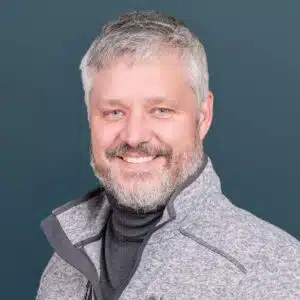
Jonathan Dickinson
In this episode of The Psychedelic Podcast, Paul F. Austin speaks with Jonathan Dickinson, CEO and Co-Founder of Ambio Life Sciences, about the evolving role of ibogaine in psychedelic medicine.
Jonathan shares his path from leading the Global Ibogaine Therapy Alliance to helping build one of the field’s most prominent ibogaine treatment organizations. Together they explore ibogaine’s expanding therapeutic potential for traumatic brain injury, addiction, and neurological conditions, along with the clinical realities of delivering this powerful medicine safely.
They also discuss the challenges of scaling ibogaine treatment, the importance of preparation and integration, and how traditional Bwiti knowledge from Gabon continues to shape ethical and culturally grounded approaches to this work.
Jonathan Dickinson is the CEO and Co-Founder of Ambio Life Sciences and a leading expert on ibogaine therapy. With more than 15 years of experience in psychedelic research, clinical care, and traditional practice, he has helped shape global safety standards for ibogaine treatment.
A Mexico-licensed psychologist and former Executive Director of the Global Ibogaine Therapy Alliance, Jonathan has published research on ibogaine’s therapeutic potential for trauma, traumatic brain injury, and neurological conditions. He has also been initiated into the Bwiti traditions of Gabon and holds a Nagoya-compliant export license for Tabernanthe iboga root.
Podcast Highlights
- Jonathan Dickinson’s path from the Global Ibogaine Therapy Alliance to Ambio Life Sciences
- How ibogaine treatment expanded beyond opioid detox
- The growing use of ibogaine for traumatic brain injury and veterans’ recovery
- Why ibogaine treatment requires extensive medical screening and preparation
- The importance of integration and community support after treatment
- What Bwiti traditions in Gabon teach about working with iboga
- The challenges of scaling ibogaine treatment safely
- Why ibogaine may create a longer window for lasting change
Show Links
The Microdosing Practitioner Certification empowers you to launch a sustainable practice built on integrity, science, and results. Learn Paul F. Austin’s signature San Pedro Microdosing Protocol, master somatic coaching skills, and confidently guide clients toward lasting transformation. Click here to learn more and apply.

This episode is brought to you by The Practitioner Certification Program by Third Wave’s Psychedelic Coaching Institute. To learn more about our flagship 6-month training program for coaches who want to integrate psychedelic modalities into their practice, click here.
Podcast Transcript
00:00:01 Paul F. Austin
One of the most interesting questions in psychedelic medicine right now is whether powerful treatments like ibogaine can ever scale in a safe and effective way. Today's guest is Jonathan Dickinson, who is the CEO and co-founder of Ambio Life Sciences, and one of the leading experts working with ibogaine today. He has spent more than 15 years involved in ibogaine therapy, research, and clinical safety protocols. Jonathan previously served as the executive director of the Global Ibogaine Therapy Alliance, which is actually how I met him originally, where he helped establish many of the early safety guidelines for ibogaine treatment. His work now focuses on building scalable clinical programs that explore ibogaine's potential for addiction, traumatic brain injury, and neurological conditions. He's also been initiated into the Bwiti traditions of Gabon and works at the intersection of traditional knowledge, clinical research, and responsible psychedelic treatment modicles.
00:00:54 Paul F. Austin
Now, in today's conversation, we're going to talk about how ibogaine therapy evolved from opioid detox clinics into broader neurological treatment, why traumatic brain injury has become one of the most promising new areas of research, what early data from veterans and special forces communities is revealing, why ibogaine treatments require more infrastructure, screening, and preparation than most psychedelic therapies, the challenge of scaling ibogaine treatment responsibly, how Jonathan's work attempts to bridge traditional Bwiti practice with modern clinical models, and, of course, as always, the importance of integration, community, and long-term support after treatment.
00:01:33 Paul F. Austin
Now, I first met Jonathan in early 2016. Gita, this Global Ibogaine Therapy Alliance, was hosting an ibogaine conference in Tepotlan in Mexico. It was the first-ever psychedelic conference that I attended, and I got to know Jonathan a little bit there. And fast forward 10 years, and now he's running Ambio Life Sciences, which has served Brett Favre, Conor McGregor, and many other former professional athletes, special ops vets, and other folks who are just struggling with general things like Parkinson's and TBI and MS. So this was really cool to be able to catch up with Jonathan after our original meeting a decade ago and just hear what's now happening at the cutting edge of ibogaine treatment. So I think you'll really enjoy this one. It's very relevant for a lot of the conversations that are happening now in the broad media.
00:02:23 Paul F. Austin
And let's now turn it over to our sponsors.
00:02:28 Paul F. Austin
If you've been wanting to turn your passion for psychedelics into a meaningful and profitable practice, then check this out. Enrollment is now open for our microdosing practitioner certification program. And in just 18 weeks, you'll become a certified microdosing practitioner, mastering my signature San Pedro microdosing protocol for nervous system regulation while developing the somatic coaching and business skills to launch or expand your practice. This isn't just another theoretical course. It's hands-on, high-touch training that helps you integrate our microdosing protocol, refine your practitioner presence, and graduate ready to start enrolling clients right away. If you're ready to help others move from dysregulation to balance and build a thriving business doing work that matters, I'd love to see you in our next microdosing practitioner cohort. Just follow the link in the episode description or visit psychedeliccoaching.institute to learn more and apply. Third Wave sometimes shares or partners with outside providers, but we don't control and aren't responsible for their statements, conduct, products, or services. We encourage you to do your own research and consult appropriate professionals.
00:03:36 Paul F. Austin
Hey, everyone. I want to take a moment to share something important with you. At Third Wave, one of our biggest commitments is helping people to explore the power of microdosing safely, intentionally, and with the right support systems in place. That's why I'm excited to introduce you to our go-to company, Golden Rule, one of the most respected names in the microdosing space. Golden Rule crafts premium, ethically sourced microdosing products, including psilocybin, single-strain, and blends, San Pedro, and LSD options, all designed to support clarity, creativity, emotional healing, and performance. What really sets them apart is their integrity, honoring traditional plant wisdom while embracing modern science to support real and lasting transformation. Together, Third Wave and Golden Rule are working to make safe, high-quality microdoses more accessible while ensuring you have the education, tools, and community to feel confident on your journey. If you're curious about microdosing and want to try some of my personal favorites, head over to goldenrulemushrooms.com/thirdwave and use code THIRDWAVE at checkout for 10% off, not just once, but for every future order, too. Again, that's goldenrulemushrooms.com/thirdwave and use code THIRDWAVE for a lifetime discount of 10% off.
00:04:50 Paul F. Austin
All right, folks, let's get into our conversation with Jonathan Dickinson.
00:05:18 Paul F. Austin
So, Jonathan, welcome to the show. It's great to have you on here.
00:05:21 Jonathan Dickinson
Hey, thanks, Paul. Yeah, glad to be here. It's good to reconnect. Yeah.
00:05:25 Paul F. Austin
Yeah, it's been a long time coming. So when we first met, you were the executive director of the Global Ibogaine Therapeutic Alliance, Gita, which I found out about through this conference that you hosted in Taputlan in March 2016. Tell us a little bit about how you went from executive director of nonprofit in the ibogaine world to now the co-founder and CEO of what I think is the most exciting ibogaine company in the world today. Talk us through that path.
00:05:58 Jonathan Dickinson
Sure. Well, I guess it's helpful to understand Gita a little bit and what we were doing and why it was convening conferences and that. So when I showed up to work around ibogaine, it was late 2009. And at the time, there was only a handful of clinics in Mexico, and there were other people in different parts of the world that were basically running small practices. Mostly, people were working out of their homes or sort of one-on-one or with a very small number of clients at a time, and it was very focused on opiate detox.
00:06:36 Jonathan Dickinson
So this movement had kind of grown slowly and blossomed over the years ever since the early 1990s when the FDA was actually studying ibogaine and turned their attention away from that. NIDA was providing some of the funding, and they started to redirect funds towards buprenorphine and other priorities for a variety of reasons that are very logical and sensible. But unfortunately, it sort of turned the funding tap off for ibogaine. And so this kind of outside-the-US cottage industry of clinics had gradually started.
00:07:23 Jonathan Dickinson
So by early 2009, it was still small, and it was kind of right on the verge of starting to grow very quickly. So at that time, there were still some of the main issues around ibogaine that had to be addressed were the safety of treatment. There were a bunch of deaths that had occurred. And so we had to try to understand what happened in those cases and then how to prevent them. So there was some science that started to come out, sort of forensic studies about these cases and identifying a few key risk factors.
00:08:01 Jonathan Dickinson
And so essentially, some of the earlier conferences that I did were what you would call in the medical field, sort of mortality and morbidity conferences. We were talking about adverse events and deaths that had happened and trying to help providers to understand how we could practically mitigate those risks.
00:08:20 Jonathan Dickinson
So by the time that you came to that conference in Tepotlan, this organization had grown up a little bit, and we'd gotten to the point where we'd put together clinical guidelines for ibogaine-assisted detox. And so to a certain degree, it was an answer to that question. And so there were different directions that the organization could have taken, but it was hard to reconcile the opinions about whether it should form into a professional organization, who should be included, who should not be included. Because up until that point, we'd been working with a very sort of harm reduction ethos of, "Let's please involve everybody to try to get as good of information as we can about the safety and what's going on on the ground level." So it just didn't have the legs to continue in the same way after that. So that's what led me to move on to other projects.
00:09:20 Jonathan Dickinson
But at the same time that we'd been working on the safety stuff, the early conversations about sustainability of Tabernacle Iboga in Gabon had started to surface. And so with Gita, there were always these two tracks. We're going to talk about safety, but then there were also these issues in Gabon because increasing demand for ibogaine was causing problems where it would be overharvested or the prices were rising, making it inaccessible for traditional practitioners to continue working with Iboga in Gabon. And so there were some early efforts to try to resolve that.
00:10:01 Jonathan Dickinson
And so when I left, one of the things that I did was sort of shift into the process of trying to support that by creating a channel where we could export it legally under the Nagoya Protocol. So Gabon created some legal frameworks where they tried to control the sort of unrestricted exports and allow for applications for licensed wholesalers to be able to work directly with communities and to ensure that there were proper benefits going back and full transparency. And we knew that they were coming from cultivated sources, and it had that kind of oversight. And so that was something that I got involved with for several years before Ambio started. So that was sort of why Gita sort of wound down. Yeah.
00:10:53 Paul F. Austin
Got it. Okay. So I want to get into Ambio because that's really going to be the focus of our conversation today. But before that, the Nagoya Protocol, if you could just explain a little bit more about what is the Nagoya Protocol and why is it important that it's applied to an alkaloid or a plant medicine like Iboga ibogaine?
00:11:18 Jonathan Dickinson
Sure. So the Nagoya Protocol is a UN tree. It's part of the Convention on Biological Diversity, which is to protect ecosystems and the diverse plant species and fauna that are within them. But Nagoya in particular is to protect traditional knowledge around the use of genetic resources that are in those ecosystems and to make sure that when there is use outside of those ecosystems, like whenever they're extracted and exported, that that external use also benefits back to the ecosystem, the traditional peoples who are using it and their traditional lifestyles, and to the conservation of those ecosystems and those species.
00:12:07 Jonathan Dickinson
So this is relevant for quite a few different foods and medicines that we work with. And there are some really good examples that are currently out there about plants that there was traditional knowledge, and then they found markets in the outside world. And there are actually arrangements to provide assurances of access and benefits sharing back to traditional communities. So one example is rooibos tea. If you've ever drank rooibos tea, it comes from communities in South Africa. Yeah. Yeah. Yeah. And so that's one of the better examples out there.
00:12:46 Jonathan Dickinson
There's been other examples where countries and groups have made legal claims, such as around turmeric in India, things like that. So in this case, with Iboga and ibogaine, there's a fairly clear-cut link between export that was done early on, like gifts of material that were given to early researchers to be able to work with and develop the data set that forms the foundation of the scientific literature and the use of ibogaine that happens now today. So basically, this link, I mean, I don't think you can find a scientific paper out there that doesn't mention the traditional use of Iboga as a source of our knowledge about the existence of ibogaine. It's fairly well documented. It's clean-cut.
00:13:48 Jonathan Dickinson
So essentially, what Gabon was arguing was that it's a traditional strategic heritage of Gabon and that it should be protected. It should continue to be available for traditional practitioners, and there should be benefits back to communities from those who are benefiting outside of the country. So that's what we've done is we've created agreements that provide a share of profits, but also things like sharing information.
00:14:20 Jonathan Dickinson
We're working on an arrangement, hopefully soon, to be able to share techniques, actually, that are related with drug detox. Tramadol has shown up in Gabon, and this is not something that traditional knowledge has really a concept of how to deal with in a medical sense. And so this is something where people in Gabon can now potentially, through this agreement, now benefit by understanding how to address this emerging problem. So there are sort of monetary benefits as well as non-monetary benefits that are included in the agreement.
00:15:00 Jonathan Dickinson
And so I have a company that we work on exporting Iboga and producing medicine for clinics. And then Ambio is also part of this Nagoya agreement. So Ambio has a clinic that uses ibogaine and provides ibogaine treatment to people who come down mostly to Mexico and soon to Malta as well. But at these centers, part of the profits are directed back to Gabon. So that's the way that this agreement is set up.
00:15:34 Jonathan Dickinson
And I think we're still in early days. This was the first agreement that Gabon had made. There's a lot of countries that have been signatories to Nagoya still haven't implemented it. Or sorry, there's no agreements that they've published yet that demonstrate that they're actively using the Nagoya program. So it's still very early, and we're working out how does this actually play out in practice. So this is sort of the first of hopefully many experiments in how this kind of business can operate.
00:16:09 Paul F. Austin
And has this been applied for ayahuasca, for huachuma, for psilocybin mushrooms, or is it really just a very particular Iboga ibogaine thing?
00:16:20 Jonathan Dickinson
Yeah, it's actually really interesting because from my understanding, and I don't know comprehensively how conversations play out in different communities, but from representatives that we've heard who have been, for example, talking about the strategy in Gabon with Gabonese representatives and some of the not-for-profits that are involved, like Blessings of the Forest, is that most communities don't want to do that kind of business with the Western medical science.
00:16:57 Jonathan Dickinson
So a very good example is peyote, where actually peyote activism has mostly targeted having peyote removed from some of the state decrim initiatives because they kind of want to make sure that it's not accessed by people. And there's been, not necessarily to the same degree, but sort of similar sentiments that in communities that work with ayahuasca and mushrooms, they don't necessarily want to form those kinds of relationships.
00:17:28 Jonathan Dickinson
Whereas in Gabon, it's very clear that they do.
00:17:32 Paul F. Austin
Why is that? What's particular about the Gabonese people that has them curious and interested and open to that?
00:17:41 Jonathan Dickinson
That's a very good question. I think that culturally, the way that people think about money and benefits and things like that fits into how things work, even in a Bwiti ceremony. One of the first stages of a ceremony is this giving of gifts, and you're kind of honoring people who have maybe taught you something or shown you something. And there's this exchange of goods and even cash that happens at the early stage of a ceremony. It's mostly tokenistic, but this is sort of recognizable that if something is given or knowledge is given, that there's this type of exchange. So I don't think there's the same resistance
00:18:31 Jonathan Dickinson
to having that in a model of exchange. It's still like a gift economy, but still just having this kind of, how do you say, transaction involved sort of fits within the cosmovision of Bwiti, we'll say. So I think that might contribute to it.
00:18:52 Jonathan Dickinson
And also, I think that they just see a tremendous opportunity to learn and that it's a lot more, how do you say, potentially fruitful to participate instead of trying to sort of resist or torpedo it. But so I think that's a big part of it, is just this desire really to, more than anything, participate and to benefit from everything that's learning and all the excitement of research that's going on.
00:19:25 Paul F. Austin
Right. Because ibogaine is, and Iboga generally is a fascinating molecule and substance. And of course, all these are psilocybin, ayahuasca, huachuma, but there's something in particular about Iboga and ibogaine, and we'll get deeper into that in our conversation.
00:19:42 Paul F. Austin
But before we get into that, let's talk a little bit about Ambio Life Sciences. When did Ambio Life Sciences start? I sort of saw it come on the map maybe a year or two ago, but talk to us a little bit about the origin story, how that came together, and a little bit about just the mission and vision of Ambio Life Sciences.
00:20:06 Jonathan Dickinson
Yeah. So Ambio is the product of three partners, and each of us had been working already around ibogaine for about a decade before we saw this need. And there was an increasing demand amongst the veterans and particularly special forces communities in the United States that had begun to see this massive benefit from ibogaine for post-war challenges. There's a lot of discussion about PTSD and depression and kind of the psychological fallout of warfare and trauma, but there's more and more emphasis on this physiological understanding of what the toll of being close to explosions and high-caliber weapon fire does on brain tissue over time.
00:21:06 Jonathan Dickinson
And so there's more and more data coming out that describes traumatic brain injury as the signature wound of the global war on terror for American soldiers. And actually, it shares a lot of the same symptomology as post-traumatic stress disorder. People have this sense of sort of hypervigilance and difficulty sleeping, and sort of many of the same sort of psychological concerns come up as a result of traumatic brain injury, as well as things like headaches and light sensitivity and things that are more clearly neurological and not psychological. So people were beginning to notice that ibogaine was extremely helpful for this and sending their combat colleagues down for treatment.
00:21:59 Jonathan Dickinson
So what we were asked to do was sort of create a space where we could provide a dedicated treatment facility for veterans. And so that's how Ambio started, and it's grown quite a lot since then. But one of the big questions that I was interested in working on was if the veteran community is getting involved and we're sort of finally now telling a different story about what ibogaine is that's not just related with opioid detox, then this has the potential to grow very quickly. And knowing what it takes to do ibogaine in a good way, it's quite complicated. We have to have the medical infrastructure to create a safe environment, but there's also a lot of particularities about just the ibogaine experience that needs to be held and accompanied in a specific way as well.
00:23:01 Jonathan Dickinson
So we really set out to try to understand if this needs to scale, what does scaling even look like? So that's the experiment and the mission is to try to answer this question of what does ibogaine treatment look like at scale? And I think we've been fairly successful at that. We went from treating 16 patients a month to, by the end of the year, we'll be up to 32. No, sorry, I'm way off. We're up to 32 a week. So yeah, we're upwards of 180 to almost 200 patients a month. Yeah. Yeah. So we have been in this process of scaling.
00:23:48 Jonathan Dickinson
And yeah, in the process, we've had this opportunity to be able to see what ibogaine is doing when opioids aren't a factor. Because for all of this time, we would have seen all kinds of healing going on for people and associated that with the fact that they were coming off of drugs. So now when we see the same types of things happening, but those drugs aren't a factor, it gives us a lot more of a clear picture about what ibogaine healing actually looks like.
00:24:24 Paul F. Austin
One, what I'm curious about is strategically, why you chose this path around TBI and neurodegenerative brain conditions rather than continuing down the same path that had already been pretty well established in terms of how it could help with opioid detox and opioid addiction. It feels like to go into TBI and neurodegenerative conditions, it's like a whole new arena in some way. So I'm just curious to hear you unpack that a little bit more. Why is it that you chose that pathway instead of the more sort of well-established path around opioid addiction and detox?
00:25:06 Jonathan Dickinson
Yeah. So Ambio continues to run one facility that's committed to people who are coming off of drugs. So it's a detox program.
00:25:20 Jonathan Dickinson
We can support people coming off any number of different substances, but fentanyl and opioids remain one of the more prominent treatment requests. And so we do have a dedicated facility for that. And obviously, we have the experience and the background and the protocols to be able to do that well. But what we were responding to from the veterans was essentially this request or this demand from outside. So we can't say that we had this insight about traumatic brain injury. And in fact, we've been on a learning ride with everyone else.
00:25:58 Jonathan Dickinson
The research has begun to reflect back to us through imaging studies and stuff, what's going on when we're treating people. What Ambio has attempted to do is just to create a space where if you would like to take ibogaine, then we can make sure that it's safe for you to do so. We can't necessarily say that it's going to treat your TBI or that it's going to treat any other condition. But if it's something that you would like to try, then yeah, we can try to accommodate the needs of different groups of people. And that's what we've been trying to do with different programs. But this isn't approved for any specific condition. All that we've been able to do is say, if this is something that you would like to do, then we can create the safe environment for you to do that, and we can accommodate your needs as well as we are able.
00:26:52 Jonathan Dickinson
So the branch into TBI was really responding just to the demand and the still increasing demand from veterans. And that's led to working with athletes as well because it's actually amazing to learn that the athletes that we admire in retirement sometimes are struggling quite a lot with many of the same symptoms that veterans in retirement from combat are facing. And again, it comes down to that a lot of these symptoms are a result of the head trauma and the cellular degeneration that cannot happen after repeated head acceleration events and concussions. And so I think it's been opening up new realms of research.
00:27:48 Jonathan Dickinson
And a lot of these are still fairly light, I would say, forms of brain injury. The veterans and all the research that's out, they talk about mild traumatic brain injury. So it's not necessarily as notable as something being physically penetrating the skull or the major sort of acute injuries that occur. These sort of mild injuries come with repeated, repeated exposure. And so this has sort of just led us down this path to exploring. But okay, now what happens in the case of people who do have acute events like strokes or who do develop other kinds of neurodegenerative conditions? What happens in those cases? And just through the work of receiving people into the program, again, who aren't on opiates, we've been able to see examples of what does happen.
00:28:53 Paul F. Austin
Right. And I want to get into that now because I feel like this is sort of the I've been setting this up, but I want to get into the meat of some of the research that you've carried out and started to publish and explore because I think this emphasis on TBI and also neurodegenerative conditions is fascinating. And I remember when I reviewed the initial results for ibogaine for TBI, I was astounded.
00:29:23 Paul F. Austin
I think the only other time I've talked about it on the podcast was with Rick Doblin when I interviewed him a few months ago just to ask about this, which I'll ask you about as well, this relationship between sort of physiological impact or health, so just healing the brain versus the PREP and integration that goes along with healing the brain.
00:29:42 Paul F. Austin
But to start with, the thing that has gotten the most airtime from Ambio was research that was done on ibogaine for TBI for, I believe, 30 special ops where both ibogaine and magnesium were used in tandem. And so I'd love to hear you just unpack those results, what those results were, what surprised you, and maybe what some of the limitations around the research was.
00:30:12 Jonathan Dickinson
Sure. So yeah, these guys were all former Navy SEALs who had been in combat. I think the general combat history was that they'd had at least two combat deployments post-9/11. And all of these guys were screened in because they had been retired on a diagnosis of traumatic brain injury. And so this had been previously identified in their medical chart. And yeah, a lot of these guys were struggling in really big ways. And to some degree, they were representative of the larger population of veterans who were coming down to Ambio.
00:31:03 Jonathan Dickinson
I think the first study that you're referring to was really at that time, all they published was just questionnaire data that was looking at the rates of post-traumatic stress symptoms, depression, anxiety. Those were sort of all the secondary ones. And the main one was just disability, so sort of cognitive impairment and sort of inability to carry out cognitive tasks. And so yeah, what you're describing, the astounding results were the sort of rapid
00:31:48 Jonathan Dickinson
resolution of most of those symptoms. I think it was 87% of the people became from being graded as severe PTSD to essentially not qualifying for PTSD immediately after treatment. And these results were sustained after a month, which is even more remarkable. It was sort of a single treatment that this was sustained even further. And so these were just the self-reporting questionnaires. So there's a lot more data that's going to continue to come out over time that shows what was actually going on in the brain behind those experiences that they were sharing and reporting. There is one study that they showed so far that shows the EEG results. So they were looking at sort of frequency of brain rhythms, and they were showing dramatic changes before and after that essentially they've told us equate to somebody looking like they've gone through six to eight weeks of meditation practice or something, just this.
00:33:06 Paul F. Austin
After a single ibogaine experience.
00:33:08 Jonathan Dickinson
Yeah.
00:33:09 Paul F. Austin
Wow.
00:33:10 Jonathan Dickinson
Yeah, just to be able to sort of clarify the mind and to be able to clarify thoughts. And I think that sort of if I was going to think about what encapsulates the result that we witness from people, whether this is people who are coming off of opiates or other drugs or people who are struggling with mental health or it's something related with this TBI and creating this kind of cognitive disability, I think what encapsulates that experience is this increase of agency afterwards, sort of like the ability to be able to execute choices where choices felt like they were taken away.
00:33:57 Jonathan Dickinson
You know what I mean? And that's sort of the defining feature of an addiction is you feel like you lose the ability to choose. And I think it's also what can drive people towards suicide is this sort of feeling backed into a corner where there's no other available options. And so it's sort of an attempt perhaps to sort of retain control over the story. So I think that it's helpful to sort of think about this just ability to clear the mind.
00:34:33 Jonathan Dickinson
And I think it's like with anything else, we can't say that everybody who comes out of ibogaine post-detox, who is then given the choice, is going to choose to remain abstinent from opioids. And we can't say that everybody who comes out of treatment and has a more clear mind afterwards is not going to continue to have challenges that they face going forward, but that it provides that ability to be able to choose or that period of clarity to be able to sort of sort through thoughts and realign your life in a different way, I think, is where there's a massive, massive amount of value.
00:35:14 Paul F. Austin
One, I think this also goes into the next part of this question, which is this relationship between clearly, when ibogaine is used safely and effectively, it has a pretty astounding effect on the health of the brain. And as a result of that healing, for lack of a better term, kind of like if you broke your leg and you put a cast in it and you healed it up, there's just going to be great things that come from the relationship with the alkaloid and the drug or the medicine itself.
00:35:47 Paul F. Austin
There's also within this, I think, also the importance of not only preparation, but most importantly, integration. So there's more research coming out about how after a high-dose psychedelic experience, whether that's with ibogaine, mushrooms, MDMA, we have this critical learning period. And so we can establish these new practices and habits and benefits that ideally help us to remain in that sort of centered place of choice.
00:36:17 Paul F. Austin
And I think that also speaks to, yeah, just the importance of and we know this from addiction work as well, the importance of community, the importance of a new environment, the importance of a new context, the importance of either professional or friend and family support as someone is starting to chart that sort of new pathway for themselves. I think these are all critical elements that also potentially make it more complex to scale a treatment like this within the sort of typical healthcare lens, if you will.
00:36:55 Jonathan Dickinson
Yeah, absolutely. And I think one of the
00:37:01 Jonathan Dickinson
I think the sort of baseline issue with ibogaine is that more is not necessarily better. This is helpful. People come out of this feeling better, but it's not like a lot of other drugs where, hey, if that was good and I feel wonderful, then just having more is going to help more. I think that's sort of the first sort of baseline structure behind integration is just that, no, I've done this. I've opened up this period, and now there's some other process that I need to go through to sort of make even more value out of this, not just to sort of repeat what I just did. And I think that's even potentially even more pronounced with ibogaine just because of the duration of the effect.
00:37:57 Jonathan Dickinson
There was you were talking about the critical period, and there was a study that came out very recently from Johns Hopkins University, and they were looking at the sort of critical period around different psychedelics. And they show ketamine, which is a relatively short critical period compared to psilocybin, and then LSD. And unfortunately, the ibogaine one just goes completely off the chart, and they ran out of funding to be able to continue to collect data after the one-month period. But
00:38:33 Jonathan Dickinson
the period of time, the expansiveness of an ibogaine treatment can be so wide and so long and give us so much to work with over such an extended period that I think it sort of becomes almost self-guided because we don't come back as quickly to that threshold of back to immediate normalcy.
00:38:58 Jonathan Dickinson
We do have this period of quite a long time where it is still easier to make a lot of change and to still feel that sense of fluidity and clarity and stuff.
00:39:08 Paul F. Austin
I love that. Now, I mean, let's talk about let's get into then some of the research and work that you've been doing with neurodegeneration because there was some media that came out, I want to say a few months ago, about Brett Favre.
00:39:22 Paul F. Austin
And not all my listeners are probably NFL aficionados like I am, but Brett Favre is one of the best quarterbacks of all time, played for the Green Bay Packers for most of his career, and then for some reason went to the Vikings for the last couple of years of his career. And
00:39:41 Paul F. Austin
he was diagnosed with, I believe, early-stage, early-onset Parkinson's and ended up coming out to Ambio to get some treatment and said it helped him. I also know that there was, I believe, a research paper published about the potential efficacy of ibogaine for MS where it talked about two people in particular, sort of these case studies or case reports that had seen a reduction in the size of the amyloid tumors. I don't know the exact terminology, but something in their brain.
00:40:19 Jonathan Dickinson
Yeah, the lesion.
00:40:19 Paul F. Austin
The lesion.
00:40:21 Jonathan Dickinson
The lesion. Yeah, the lesion
00:40:21 Paul F. Austin
that had reduced as a result of ibogaine use. So again, bring us a little bit into how is it that you started to explore this as a potential option? And what do you think is going on? Why is it that ibogaine in particular seems to be helping people with Parkinson's and MS and other neurodegenerative conditions?
00:40:48 Jonathan Dickinson
Yeah, well, the first indication that we had about this was back in 2014. And at the time, there was some early research that was showing the benefit of glial cell-derived neurotrophic factor on a treatment of Parkinson's. And so that glial cell-derived neurotrophic factor, or GDNF for short, is a type of neurotrophic factor that we have in our brains and in our nervous system that help with the repair and the generation of certain types of neurons. And in particular, dopamine neurons are affected by GDNF. So there was an interest at the time in trying to figure out how to deliver GDNF to midbrain regions that were being affected by Parkinson's. And so there was studies going on, laboratory studies where they were doing direct brain injections. They did that first with mice and animal studies and then with humans as well. And most of the studies I mean, there were some that showed some promise, and then some of them that had kind of limitations were basically trying to say that they had a hard time targeting the specific regions that maybe would have benefited from the exposure to GDNF. And so the issue was that there's nothing that we know of that sort of stimulates GDNF by taking a pill except for, of course, now we know that ibogaine can do that. So those breadcrumbs were there at that time.
00:42:38 Jonathan Dickinson
And in 2014, there was a gentleman from the Bay Area who realized that this might help him with his Parkinson's, or at least it was worth a try. And he was an old deadhead, so it wasn't too much of a hard sell for him to go and try a crazy psychedelic. So he went and essentially just started microdosing at a clinic down in Mexico. And he had atypical Parkinson's. So he had a number of different symptoms, but not the tremor in his hands or anything. But he was having a hard time with motor coordination. He had facial rigidity. He had a difficulty kind of balancing. So in most of the other areas outside of the tremor, he had notable Parkinson's symptoms. And within 30 days of microdosing, all of those symptom areas had improved. And so I followed him for six years just talking with him and trying to learn what he was finding and how he was adjusting his microdoses over time. And he was committed enough. He didn't want to take a day off because he didn't really care to know what happened if he did. But it was enough for us to learn that actually quite a small amount of ibogaine taken repeatedly over time could create some of the restorative effects that we were interested in. And so that was one thread. And there was only a handful of people, anecdotes that I'd heard of before we started a program.
00:44:14 Jonathan Dickinson
On the other thread, we didn't see a lot of people with Parkinson's because normally people get diagnosed when they're quite a lot older. And so they weren't sort of part of our normal patient population. But MS gets diagnosed often in people's 30s and 40s. So we did start to see people who had diagnoses of MS come through the program. And so the cases that we worked with and that we published about that you described, one of them was a veteran who came through, and he had been experiencing this intense vertigo. He couldn't feel comfortable driving because he was worried about these sort of dizzy spells that would overtake him. And he thought it was because he was binge drinking. So he came down to Ambia. One of his primary goals was to address this binge drinking cycle. And it worked. For about six months, he didn't have any vertigo. But six months later, the vertigo returned. And so he went and got tested and realized he had MS. So we saw him again. We did a second treatment, and that's what shows up in the case report. And it did show because he had been tested, was involved in MRI, we were able to see his lesion prior to treatment and then post-treatment. And it corresponds not only does the lesion sort of reduce in size, but he also had a reduction of all of his symptoms. He wasn't at that point able to sign his name on a check, or he wasn't able to jog because his feet would get sort of tripped up over themselves and that. So he went on immediately in the year afterwards, he went and ran an ultramarathon. So he was obviously able to regain a lot of his motor control. And so this was really interesting to us because, again, these are not psychological symptoms that we're treating, but these are motor issues as well. And so, again, it just speaks to the level of neurological repair. But, of course, in the second treatment, we followed up with ongoing microdosing to try to sustain those benefits over time, and that's been helpful for him.
00:46:27 Jonathan Dickinson
So the program that we developed was sort of based on a bunch of early cases, but it was enough for us to learn that giving the same high dose that we give for opioid detox is too high. Just microdosing works for some people, but it doesn't work for everybody. And so we're working with sort of a mid-range loading dose, then microdosing afterwards. And that seems to get the process started, create an initial benefit, an initial reduction of symptoms. And it's something that we've seen people able to sustain for sort of different periods of time. People have to learn how to work with microdoses. As you know very well, it's something that you build a relationship with.
00:47:14 Paul F. Austin
And Iboga is particular when it comes to microdosing. It's not necessarily like the classic serotonergic psychedelics like LSD, mushrooms, or even Huchol.
00:47:23 Jonathan Dickinson
Correct.
00:47:23 Paul F. Austin
Talk a little bit about that. Why is it that Iboga is particular when it comes to microdosing?
00:47:29 Jonathan Dickinson
Well, there's a number of different reasons, one of them being that ibogaine gets converted into a metabolite called noribogaine. And so actually, when we're microdosing, what we're interested in isn't necessarily the initial ibogaine, but it's the metabolite buildup over time. So we're kind of microdosing daily to just keep a stock of noribogaine essentially in the system. And so noribogaine also has a lot of the same kind of reparative and restorative functions.
00:48:07 Jonathan Dickinson
But people metabolize ibogaine into noribogaine at different rates or with different kind of efficiency. So there's genetic differences that make some people really rapid metabolizers and some people poor metabolizers. And so we have to kind of that's why working with the dosage is very helpful. So in addition to just general sensitivity, this kind of metabolite profiling is also very important. And so we're essentially, in the absence of having lots of blood tests and stuff for people, we're finding clinical ways to easily work around that problem and to help people adjust their dosage. But that's one of the reasons.
00:48:54 Paul F. Austin
Yeah, it is that buildup. And sometimes then there needs to be, from what I understand, a little bit of a washout period. So if it's done for X amount of days straight, and I would imagine it would be different depending on someone's context that they have symptoms that they're looking to resolve.
00:49:08 Paul F. Austin
Or the first person I ever heard about who was microdosing Iboga was Tim Ferriss because he wrote about it in this book, Tools of Titans. I think he had interviewed Martin Polanco and Dan Engel for the podcast, and then had heard about it that way. And LSD and psilocybin were too stimulating for him because I imagine he's pretty high strung, but Iboga seemed to help him out.
00:49:29 Jonathan Dickinson
Interesting.
00:49:30 Paul F. Austin
So yeah, super interesting. All right, so final thing I want to hear from you is to come back to what we had talked about earlier in the podcast around scale, right, and how this treatment scales. So we've previously interviewed Brian Hubbard for the podcast. So we heard a little bit about the public-private partnership to fund the state of Texas with $50 million in research funding. Ambio was a pretty central part of that. A lot of people that I've talked to behind the scenes, folks who have been around a long time, folks that you would know as well, have expressed, I think, some level of skepticism about can this actually scale.
00:50:11 Paul F. Austin
The typical clinical treatment window is about two hours in length. Ibogaine can be anywhere from 12 to 18 to 24, upwards, sometimes even of 36 hours in length in terms of how long people are in it. It does have cardiac issues as well, which we talked about on other podcasts we won't get into, but it seems like a lot of those are addressed with the right medical screening, the inclusion of magnesium as part of the treatment protocol. So it feels like that's not as big of a risk as we once thought it was.
00:50:45 Paul F. Austin
And yet we know that millions of people are struggling with neurodegenerative conditions, with TBI, with now fentanyl addiction. And this looks to be one of, if not the most promising treatment available. So when you think about scale, especially over the next decade, and that relationship between, let's say, federal bureaucracy or federal government and the underground, because you now know both worlds really well, how do we get this treatment into the hands of the people that need it without it turning into a fiasco, if you will, because of just the intensity of what ibogaine is?
00:51:30 Jonathan Dickinson
Yeah, I mean, the intensity is certainly a concern. Our base program, so again, this is people not coming in off of opiates or alcohol or anything. This is people who are coming in who have been able to meet the pretreatment requirements, not take certain substances prior. The base treatment time is five days to be able to do a large dose of medicine. And that gives us time to screen and prep and observe and make sure that there really are no other substances on board to do the treatment and then just to recover from the treatment because it does take a while even after the acute effects have worn off.
00:52:13 Jonathan Dickinson
So we're looking at something that costs right now people in the range of $8,000, $8,500 to come and do. In the States, it might be upwards of $60,000. And so unless you're able to get it covered by insurances, it's hard to imagine.
00:52:33 Jonathan Dickinson
So we've been thinking about this problem for a really long time. How does it scale? And I think that the issue is that most of the time when people are coming in with a very top-down idea about how to develop ibogaine or to make this treatment available, they're essentially looking at what we're doing now. And the thing is, what we're doing now is people are coming from somewhere in the United States. They're coming down to Tijuana. And then we have to do something in as short a amount of time as efficiently and cost-effectively as possible before they go home, and that they have to endure that benefit for as long as possible over time. That's essentially what the goal is.
00:53:23 Paul F. Austin
Because you can't legally send them home with microdoses when they go back into the States because ibogaine is a Schedule I substance in the US.
00:53:31 Jonathan Dickinson
That's right. If we were local to a community and there was people who were able to come in on a more regular basis without a lot of extra burden of travel, then the way that we would work with them could be completely different.
00:53:48 Paul F. Austin
Got it.
00:53:49 Jonathan Dickinson
There was a study that was done in Spain. And again, the way that we do opiate detox is the way I describe. People come from their home, they come down, and they do treatment, and then they go back to their home. But in Spain, they did this study where somebody was on a methadone program, and they came in for a treatment with a relatively low dose every weekend. And this was something that they could do within the course of the day.
00:54:18 Paul F. Austin
Almost like a psycholytic dose or something like that.
00:54:20 Jonathan Dickinson
Like a psycholytic dose. And they were just able to rapidly taper down the methadone dose. Every weekend, they were able to sensitize the body a little bit more to the methadone they were taking and then go in at a lower dose. And so they actually did a clinical trial where they brought several people through that program. I mean, Spain is a very particular kind of environment, but that's what I'm suggesting is in a localized setting, you can adapt the treatment to be able to work in different ways.
00:54:52 Jonathan Dickinson
So microdosing is potentially a route where you can scale the treatment very safely because you don't have the same cardiac concerns. You're essentially working with the same thing that you work with everywhere else. You have to have a doctor screen people in. You have to have a pharmacist fill the prescription every period of time because you're not going to give people a year's supply all at once.
00:55:14 Jonathan Dickinson
So I do think that there's ways to achieve massive healing results and have it less costly for the people who are looking for them, especially unless people are looking for a massive trip to transform their whole world. I think then maybe it is something that you need to think about investing in or creating a bigger infrastructure for. But if we're just talking about treating these neurological conditions, there's ways that ibogaine can be adapted to that. And that's something that I think if you don't just have to look at what's already going on, we can show how we have enough clinical experience to be able to help to redesign protocols and programs that would fit into a more localized setting.
00:56:03 Paul F. Austin
And is there a potential to experiment or pioneer that in Texas, or is the Texas initiative just strictly clinical research?
00:56:15 Jonathan Dickinson
Yeah, I mean, it's supposed to be like the entry point is that you have a plan for FDA approval. You have to outline what is your pathway to FDA approval. And as much as Ambio is willing and interested to participate and share our data, we're not a drug development company. We operate clinics. That's what we do.
00:56:37 Jonathan Dickinson
And that's, I think, where Texas drug or any drug developer that's going for Texas money or other state money as other states kind of come on board to the coalition of funding, I think that it would be a mistake not to benefit from the existing knowledge. Because normally, when you're going through drug development, you don't really start thinking about commercialization until you're in phase three. And that's when you start thinking about scaling and the structure of training programs and stuff like that. But these are already problems that we're working out.
00:57:20 Jonathan Dickinson
There is already a model for how to scale. There is already knowledge about what it would take to deploy different kinds of treatment programs. And so I think that's where Ambio can help to skip a lot of steps and avoid a lot of mistakes going forward is to help kind of set the target on a reasonable protocol to affect the greatest change at the lowest cost. I think that's something where we can bring a lot of value.
00:57:50 Paul F. Austin
In terms of FDA approval, is it an issue with the cardiotoxicity element of ibogaine, or is that addressed by the integration of magnesium with the overall protocol?
00:58:02 Jonathan Dickinson
So magnesium is something that most clinical settings have been using for quite a while. That was written into the clinical guidelines that we published in 2015. And so, I mean, it's definitely an important and very useful factor in helping to stabilize the heart pretreatment.
00:58:21 Jonathan Dickinson
But it's one of many things that you have to employ, which includes careful screening. And just generally, there's different things we have to do to stabilize people before entering into treatment. So that's one of the most important periods of the treatment process is stabilization during the preparation phase.
00:58:48 Paul F. Austin
Got it. All right. Well, I wish we had more time. I'm mindful that it's getting late now in Canada, and we had only scheduled to go till 4:30 your time. I maybe we'll have to do a follow-up because I have questions about now I'm seeing these microdosing Iboga tinctures on Instagram that are called Boga. And I think it's like Iboga without the ibogaine. And so there's a lot of alkaloids in Iboga that aren't just an ibogaine. And I have questions about, yeah, just there's a lot more.
00:59:25 Paul F. Austin
So I do appreciate you coming on and spending some time. I would like to revisit this conversation as a follow-up, maybe in a year or two once we've seen kind of how the Texas public-private partnership goes and as more research comes out.
00:59:43 Paul F. Austin
I mean, ibogaine is incredibly exciting. And I think what you all are working on is, from a clinical perspective, is really cool. And I love that you are both grounded in the traditional aspects or elements of this, and now you've chosen to start and amplify the clinical potential and the research elements. I think I give you a lot of credit for having the courage to try to integrate those worlds because being a bridge builder is not always easy.
01:00:19 Jonathan Dickinson
Thank you. I appreciate it. Yeah. We'll be happy to follow up. And just so your listeners know, yeah, those Instagram products are not legal anywhere in the United States.
01:00:29 Paul F. Austin
Right. Yeah.
01:00:33 Paul F. Austin
Crazy world that we live in. That's a whole nother conversation. Anyway, Jonathan, so if folks want to find out more about Ambio Life Sciences and your research and your work or maybe your clinic as well that's in Tijuana, where's a good place that we can point them to for more information?
01:00:50 Jonathan Dickinson
Yeah. So the best place is just to check out Ambio Life Sciences. You can find us at ambio.life.
01:00:58 Paul F. Austin
Ambio.life. That's A-M-B-I-O dot life, ambio.life. Jonathan Dickinson, it's been a pleasure to have you on the podcast. Thank you for joining us.
01:01:09 Jonathan Dickinson
Thanks so much, Paul.
01:01:12 Paul F. Austin
Yeah. What I love about having leaders like Jonathan in the mix is he clearly is steeped in these lineages and these practices, and yet he's also building a world-class company that is doing amazing things.
01:01:24 Paul F. Austin
So I really hope you enjoyed that episode as much as I did. If you did, share it with a friend who's interested in ibogaine, trauma healing, brain injury recovery, someone who you know who may be struggling with Parkinson's or MS. This really could change their life.
01:01:37 Paul F. Austin
Follow Rate, leave a review, Spotify, Apple, even YouTube, youtube.com/thethewave. You can subscribe there.
01:01:44 Paul F. Austin
And we're on socials, on Instagram, on X, on LinkedIn. Find me there and say hi.
01:01:50 Paul F. Austin
All right. So that's it for now. Thanks for tuning in, and we'll see you next week.