
Episode 346
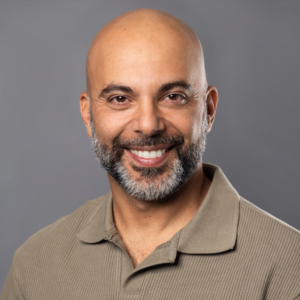
Christopher Solomon
In this episode of The Psychedelic Podcast, Paul F. Austin speaks with Christopher Solomon, a somatic Salvia guide and founder of Salvia Healings, about the therapeutic potential of Salvia divinorum when approached with structure and intention.
He explains how somatic awareness, preparation, and container building can transform intense Salvia experiences into opportunities for meditation, introspection, and healing. They discuss dosage, breath, nervous system regulation, and why Salvia requires a different framework than many other psychedelics.
Christopher Solomon is a somatic Salvia guide and founder of Salvia Healings. Drawing from training in somatic psychotherapy, he teaches intentional approaches to working with Salvia for meditation and self exploration. He holds a B.A. in Psychology from the University of Texas at Dallas and trained in somatic psychotherapy at the Hakomi Institute of California.
Podcast Highlights
- Reframing Salvia’s Cultural Reputation
- Why Set and Setting Matter More with Salvia
- Somatic Awareness During Peak States
- Microdosing vs Threshold Experiences
- Building a Therapeutic Salvia Container
- Nervous System Regulation in Altered States
- Salvia as a Meditation Catalyst
- Trauma Processing Through Embodiment
- Inventing Tools for Safer Administration
Show Links
These show links may contain affiliate links. Third Wave receives a small percentage of the product price if you purchase through the above affiliate links.
The Microdosing Practitioner Certification empowers you to launch a sustainable practice built on integrity, science, and results. Learn Paul F. Austin’s signature San Pedro Microdosing Protocol, master somatic coaching skills, and confidently guide clients toward lasting transformation. Click here to learn more and apply.
This episode is brought to you by The Practitioner Certification Program by Third Wave’s Psychedelic Coaching Institute. To learn more about our flagship 6-month training program for coaches who want to integrate psychedelic modalities into their practice, click here.
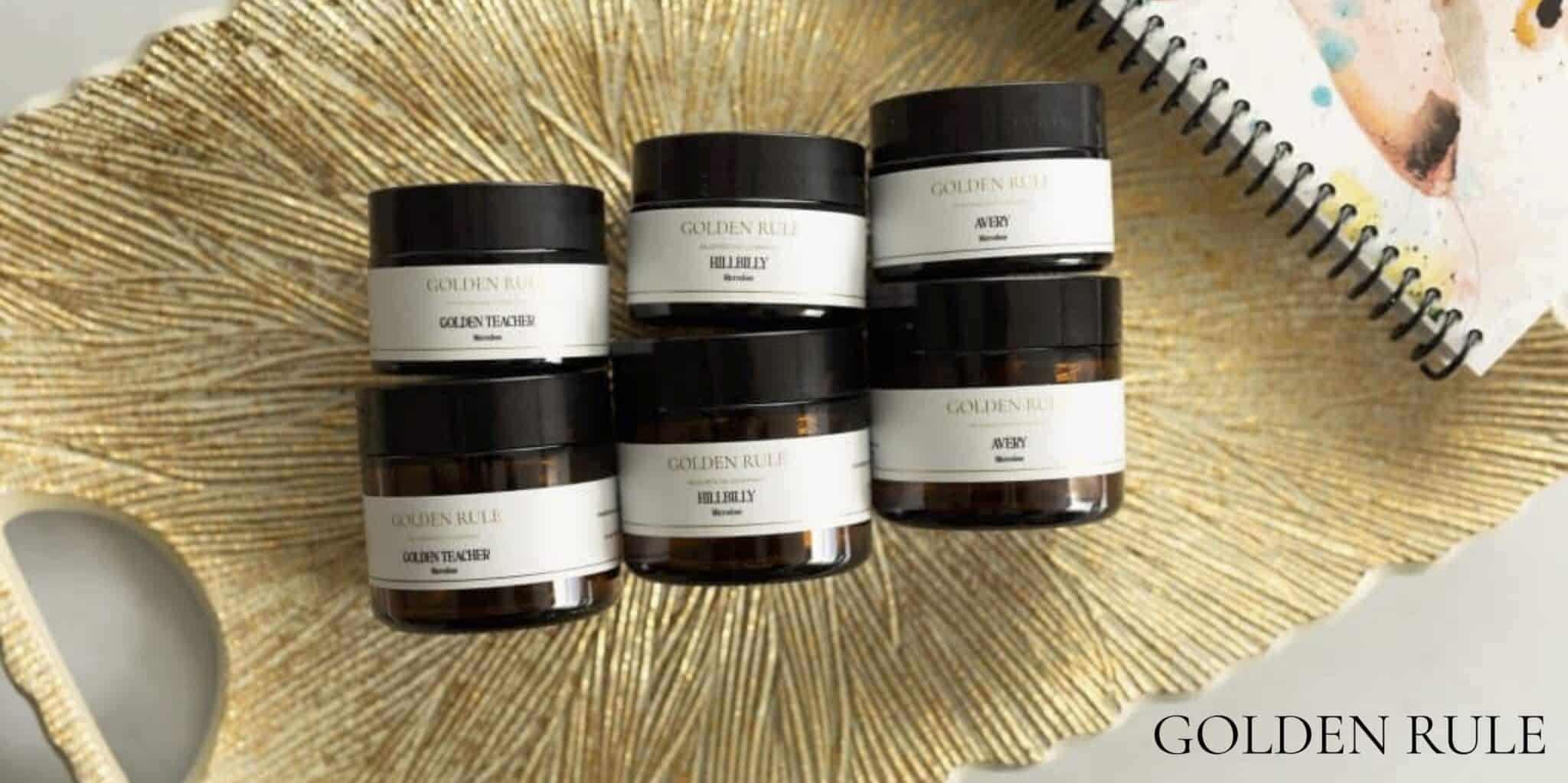
We’re excited to feature Golden Rule — our trusted resource for premium microdosing products designed to support clarity, creativity, and emotional well-being. From Psilocybin blends to LSD microdosing options, each formula is crafted with care, backed by science, and trusted by the Third Wave community.
Safe, intentional, and transformative — Golden Rule helps you feel more focused, connected, and aligned in your everyday life.
Want to experience the difference? Try Paul’s favorite microdosing picks — hand-selected for performance, mood, and daily flow.
Get a lifetime discount of 10% with code THIRDWAVE at checkout.
Third Wave occasionally partners with or shares information about other people, companies, and/or providers. While we work hard to only share information about ethical and responsible third parties, we can’t and don't control the behavior of, products and services offered by, or the statements made by people, companies, or providers other than Third Wave. Accordingly, we encourage you to research for yourself, and consult a medical, legal, or financial professional before making decisions in those areas. Third Wave isn’t responsible for the statements, conduct, services, or products of third parties. If we share a coupon code, we may receive a commission from sales arising from customers who use our coupon code. No one is required to use our coupon codes.
Podcast Transcript
00:00:01 Paul F. Austin
What if one of the most misunderstood psychedelics isn't chaotic at all, but simply demands more preparation than we're used to giving? In this episode of the Psychedelic Podcast, I speak with Christopher Solomon, a somatic Salvia guide and founder of Salvia Healings, about the therapeutic potential of Salvia Divinorum when approached with structure and intention. Christopher shares how his training in somatic psychotherapy informs his work with Salvia, reframing it from a chaotic recreational substance to a tool for embodied introspection. We explore dosage, container building, and nervous system regulation, and how somatic awareness can transform high-intensity altered states into opportunities for meditation, trauma processing, and self-guided healing.
00:00:47 Paul F. Austin
We also discuss why Salvia's intensity demands a different kind of preparation than other psychedelics, how pacing and breath influence the experience, and what it means to work with this plant in a grounded, responsible way. This conversation invites a more nuanced view of Salvia Divinorum, rooted in maturity, education, and embodied practice rather than spectacle.
00:01:08 Paul F. Austin
Christopher Solomon is a somatic Salvia guide, teacher, and inventor of a pipe that aids in the mindful exploration of Salvia Divinorum, incorporating lessons learned directly from Salvia. And as a student of somatic psychotherapy, Christopher is pioneering techniques to use Salvia as a therapeutic tool for guided self-healing, meditation, and introspection. He lectures about the proper, intentional, and therapeutic use of Salvia, offering a blend of scientific, esoteric, and therapeutic perspectives. He also cultivates a medicinal Salvia garden for use in his therapeutic practice with clients, with his main goal being to teach people how to use Salvia for themselves in a manner that is supportive, informative, and empowering.
00:01:49 Paul F. Austin
Some of the highlights from our conversation today: reframing Salvia's cultural reputation, why settings matter more with Salvia, somatic awareness during peak states, microdosing versus threshold experiences, building a therapeutic Salvia container, nervous system regulation in altered states, Salvia as a catalyst for meditation, and trauma processing through embodiment.
00:02:11 Paul F. Austin
Now, we've never done an episode in Salvia. I admit initially that I was very skeptical, but immediately after I recorded this podcast with Christopher, I went to his website, I bought the pipe and the little sort of Salvia capsules that he have. As of recording this introduction, I've not yet experimented with it, but I plan to soon. I think it's really interesting and potentially offers up a new pathway for exploration that I and many are not familiar with. So I really do hope that you enjoy this episode.
00:02:41 Paul F. Austin
All right, folks, let's hear from our sponsors.
00:02:45 Paul F. Austin
Did you know that over 4 million people microdose psychedelics last year in the United States, and yet so few have real guidance on how to do it safely and effectively? That's exactly why I created our Microdosing Practitioner Certification. This is an 18-week professional training where you'll master my San Pedro microdosing protocol for nervous system regulation, learning how to coach clients through it with confidence and integrity. Just visit psychedeliccoaching.institute or use the link in the show notes to learn more.
00:03:14 Paul F. Austin
Third Wave sometimes shares or partners with outside providers, but we don't control and aren't responsible for their statements, conduct, products, or services. We encourage you to do your own research and consult appropriate professionals.
00:03:26 Paul F. Austin
Hey everyone, I want to take a moment to share something important with you. At Third Wave, one of our biggest commitments is helping people to explore the power of microdosing safely, intentionally, and with the right support systems in place. That's why I'm excited to introduce you to our go-to company, Golden Rule, one of the most respected names in the microdosing space.
00:03:45 Paul F. Austin
Golden Rule crafts premium, ethically sourced microdosing products, including psilocybin, single-strain, and blends, San Pedro and LSD options, all designed to support clarity, creativity, emotional healing, and performance. What really sets them apart is their integrity, honoring traditional plant wisdom while embracing modern science to support real and lasting transformation. Together, Third Wave and Golden Rule are working to make safe, high-quality microdoses more accessible while ensuring you have the education, tools, and community to feel confident on your journey.
00:04:18 Paul F. Austin
If you're curious about microdosing and want to try some of my personal favorites, head over to goldenrulemushrooms.com/thirdwave and use code THIRDWAVE at checkout for 10% off, not just once, but for every future order too. Again, that's goldenrulemushrooms.com/thirdwave and use code THIRDWAVE for a lifetime discount of 10% off.
00:04:41 Paul F. Austin
Okay, without further ado, I bring you Christopher Solomon.
00:05:09 Paul F. Austin
So Christopher, welcome to the show. It's great to have you here.
00:05:12 Christopher Solomon
Yeah, thanks so much, Paul. It's really great to be here.
00:05:15 Paul F. Austin
Okay, so my opening question, we're just going to really dive right in with it. For people who lump Salvia in with quote-unquote psychedelics, what's already wrong with that framing from the get-go?
00:05:27 Christopher Solomon
That's a good question. Yeah, so I mean, you know, technically, Salvia, although it does have extremely potent consciousness-altering properties, it's one of the most potent naturally occurring hallucinogenic substances on the planet, actually.
00:05:41 Christopher Solomon
It is not a stereotypical or classic psychedelic because it doesn't affect the 5-HT2A receptors. It seems to work very, very exclusively on a set of receptors in the brain called the kappa-opioid receptors.
00:05:56 Christopher Solomon
And so it's, it's, and there's actually very many positives for the fact that it doesn't work as classical psychedelics do because it means that you can use SSRIs while still using Salvia. So I work with a lot of clients who are still on classical antidepressants, and they want some form of consciousness alteration because the antidepressants aren't really cutting it for them anymore. And, but they can't really do that with, you know, ayahuasca or mushrooms because the SSRIs. So while it does alter your consciousness extremely profoundly, it's not a classical psychedelic.
00:06:35 Paul F. Austin
I want to come back to the receptor thing because I was studying ibogaine last week, and in some of the conversations that I've had, came to recognize that ibogaine is also quite active on the kappa-opioid receptor. So I may revisit that because ibogaine is also sort of lumped in with the classic psychedelics, but in fact, it's, you know, narrogen, which means it's sort of this dream-inducing plant. So I'm curious about maybe some of the, I mean, obviously Salvia and ibogaine are very, very different in many ways, but I'm curious about that commonality.
00:07:08 Paul F. Austin
But before we go deeper into that, I'm just curious, how did Salvia enter your life and what made you realize it required a completely different interpretive lens?
00:07:17 Christopher Solomon
Yeah, so I mean, I was like many people who have used Salvia, you know, I got introduced to Salvia in the, I think it was in 2003 when it was still sold in many smoke shops and you could just buy it wherever. And so I went to a local smoke shop and I smoked it, and it really just initially just seemed like a weird, bizarre, slightly dissociative, non-visual, tactile experience. But I didn't know quite, quite know where to place it.
00:07:47 Christopher Solomon
You know, I was experimenting with cannabis and mushrooms, and Salvia was just weird, and it just didn't seem like it had any pragmatic application or practical purpose. And, you know, that really changed when, after a few years of working with Salvia, I decided to meditate before smoking it. And it was that one experience of just doing a brief meditation before smoking Salvia that the experience was radically different. I had an entity encounter, I saw Salvia, she actually appeared to me in front of my room a little bit to the left, and we communicated very clearly, telepathically. And it was quite amazing because I thought, wow, this is incredible because this is the same batch of Salvia that I've been smoking for a long time. And the only thing I did differently that one time is I meditated a little bit beforehand.
00:08:39 Christopher Solomon
So that was one of the first things that queued me into the fact that you can, like how you approach this plant actually makes a difference. And then the dosing is also radically, radically important because it is so potent. And if people do smoke too much, you can have a very scary dissociative experience. So I like to say at a light dose, Salvia is very embodying and grounding and stabilizing, amazing for anxiety relief, depression, and emotional regulation. But then at a high dose, it can completely transcend you out of space and time. And so you can actually have a lot of degree of certainty over how deep you go into the space and what benefits you get from each level.
00:09:24 Paul F. Austin
This sort of reminds me of 5-MeO-DMT or Bufo, that the way it entered, especially the last decade or so into, you know, Western consciousness was this breakthrough dose and unity consciousness. And what ended up happening is a lot of people became unnecessarily destabilized in that process.
00:09:44 Paul F. Austin
And so now I know there are a lot of practitioners who are working with very low doses of 5-MeO-DMT and sort of taking the stepwise approach where first you become comfortable at these very low doses, and then, you know, as you become more sort of relational with the substance or the drug, the medicine, then you enhance the intensity. And it sounds like Salvia might be approached in a similar manner for, you know, for harm reduction and sort of overall safety.
00:10:13 Christopher Solomon
Yeah, harm reduction, overall safety. And then there's also, I noticed that, you know, the clients that I work with, because I do one-on-one guided Salvia sessions with people, and I do it all remotely via Zoom. And I grow all my own Salvia. I make these little pre-dosed gel caps that I use to dose it correctly. I make a five-bold water pipe as well that I manufacture myself, and I send that to clients.
00:10:37 Christopher Solomon
And so what I'm noticing is that the low dose is always most of the benefits actually seem to be. Because I incorporate, I incorporate somatic therapy with it. I incorporate parts work with it. Salvia is not a visual medicine, really. It's much more of a somatic embodied medicine. It's extremely tactile. And so I work with people at low doses where they can feel this Salvia energy coming up in their body, and they can trace it and follow it. And many times the Salvia goes to areas in their body where there's a message from their body, or where it can bring them to a place of safety or groundedness. So there's many very various ways to work with Salvia, but the modality that I found to be the most helpful is through the lens of introspection, IFS, parts work, and meditation.
00:11:29 Paul F. Austin
Sounds very similar to this low dose 5-MeO work. So my final question before we kind of go deeper into what Salvia is and isn't is, you know, why is it that you think Salvia emerged into Western culture the way it did via YouTube clips and shock value rather than through a more ceremonial or, you know, respectful pathway?
00:11:51 Christopher Solomon
That is a brilliant question. You know, I even wondered that when I first smoked it in high school and in college, I was like, why do they have to make it so strong? Because the thing is, you know, Salvia, many people don't even really know what Salvia is. They just think about it as this weird potent substance, but it's part of the sage family. It's a type of sage. There's a thousand different types of Salvias.
00:12:16 Christopher Solomon
You know, the Salvia that you cook with is Salvia officinalis. Rosemary was recently classified as a Salvia. So rosemary is Salvia rosmarinus. So there's tons of Salvias, but then there's this one specific type of Salvia, Salvia divinorum, that was endemic to the Sierra Mazatec region outside of Oaxaca.
00:12:38 Christopher Solomon
And so it's a regular green leafy plant that doesn't have any, you know, interesting characteristics while just looking at it. So you can take the plain leaf and just smoke that, dry that, and smoke that as it is and get a plenty strong effect. And then you get these concentrated extracts where you get like 10, 20x extract. So 10x means they took 10 grams of leaf, extracted the Salvia, and put it back on one gram. So there's really very little need to actually concentrate the leaf because it's strong enough as it is anyway.
00:13:18 Christopher Solomon
So, you know, some of the initial suppliers that just started to introduce it into the West, I guess they realized it would give people a lot of bang for their buck to have a crazy strong experience. You know, but when I bought Salvia from the smoke shop, the people who sold it as well said, you know, you got to smoke a lot at once and you got to rush through the experience and you can't take your time and you got to use a torch lighter and smoke it all in one go, otherwise it won't work.
00:13:46 Christopher Solomon
So there was this commonly spread misinformation that you got to do a lot, you got to do it at once, you got to hurry or else it won't work. And what I've learned is that the opposite is actually true. You smoke a tiny amount and then wait a few minutes, at least five minutes, and then smoke another little amount and then go slowly in it step by step. So yeah, the whole narrative was just completely incorrect and backwards.
00:14:13 Paul F. Austin
You mentioned it's from Oaxaca, which is interesting because we know that the, I would say, I mean, they say Salasa Bicubensis potentially has been found all over the world, but we know there's especially strong, you know, anthropological evidence, Maria Sabina, and, you know, still in areas in Oaxaca, you can go there and get the mushroom.
00:14:34 Paul F. Austin
Was there any or is there any anthropological evidence of Salvia divinorum use? Like kind of bring us into a little bit of the historical context of how and when it's been used and what that relationship has been like.
00:14:46 Christopher Solomon
Yeah, absolutely. So it has been used for a long time and is still used today by the curanderos and the healers of the Sierra Mazatec region. And they use it specifically mainly for healing physical illnesses. And research has shown that it does boost your immune system. If ever I'm getting sick, I'll smoke Salvia and it knocks my sickness right out. It's really good for breaking a fever. It's really good for rheumatism, arthritis, and also for intestinal digestive issues. And that's because of the terpene profile that it has as well.
00:15:23 Christopher Solomon
And, but the way that it's used traditionally is by what's called a quid, where they take the fresh leaf and they roll the fresh leaf into like a cigar and chew that. And so, and it's much more associated with the Virgin Mary. You know, they call it the eyes of the shepherdess, or they believe she's the embodiment of the Virgin Mary. And so it's used traditionally with prayers in darkness and chewing the leaf. And that's a much different experience than smoking it. Chewing it, you know, lasts about two hours. And smoking it lasts about five minutes.
00:16:02 Paul F. Austin
And have you tried the chewing the quid leaf before? Like how did that compare to smoking it? What are some of the sort of nuances or distinctions between those two approaches?
00:16:14 Christopher Solomon
Yeah, so the chewing it is, a lot of people find it more cumbersome because you have to chew quite a lot of leaves. And it only works by being absorbed through the buccal membranes inside of your mouth. So if you swallow Salvia, it doesn't do anything. And so you have to chew it and then let it absorb through the membranes in your cheek. And when you chew it, you know, it comes on in about 15 to 20 minutes. It's much more of a slower, gradual onset. You don't go as deep as you do with smoking it.
00:16:47 Christopher Solomon
You can. I noticed that with chewing it, it's just a little bit smoother and softer around the edges. The afterglow lasts a little bit longer as well. And then, yeah, so I think, you know, chewing it gives you more time to explore the Salvia space. And smoking it is more if you kind of want to do some short focused work.
00:17:13 Christopher Solomon
And, you know, the thing is when you smoke it as well, there's no residual, you know, recovery or anything like that. You're back to normal very quickly. So lots of people like to use it. This is almost like a Western mentality, but because it is so pragmatic and useful, you can jump in there, you can do your really clean, focused, concise, almost surgical precision work with Salvia, and then go back to your life. But I think both methods are wonderful.
00:17:43 Paul F. Austin
Kind of reminds me of the difference between N and DMT when it's smoked versus, let's say, drinking ayahuasca. I mean, obviously drinking ayahuasca can still be quite potent, but in tea form, it's extended or elongated over four or five, six hours, whereas they say that smoking N and DMT is more like the businessman's trip, I think is sometimes what they'll call it, because you can do it in like a lunch break. Not that I would encourage that or invite that, but there is this, as you said, sort of intensity to it.
00:18:17 Paul F. Austin
And building on that, you know, I know so much of working with psychoactive substances, Salvia, LSD, psilocybin, ayahuasca, it's at times hard to put into words or articulate some of the distinctions and differences. You know, sometimes I would just say go and try it for yourself and see what that's like. But how would you describe the Salvia state to someone who has extensive experience with the classic psychedelics like psilocybin or LSD, but has never encountered disassociation or the particular experience that Salvia provides?
00:18:53 Christopher Solomon
Yeah, so, you know, as far as the, and this is helpful when, you know, I work with clients as well and just educating people about Salvia as well is knowing what to expect when you go into it. So you sort of know what to look for versus not to look for.
00:19:08 Christopher Solomon
You know, so Salvia doesn't change your thinking in the way that cannabis does, for example. You know, you smoke some cannabis, you get creative thinking, you know, your mind goes a little bit faster. You can make seemingly disparate connections between things, which sometimes at the time seem extremely profound, but then afterwards you're like, oh, that wasn't much.
00:19:30 Christopher Solomon
And then, you know, compared to like LSD or DMT, which are very visual, closed eye visuals, open eye visuals, much more of an emotional experience as well. I would say by contrast, Salvia is much more of an emotionless experience. It actually takes you to a place of profound inner stillness and emotional neutrality.
00:19:52 Christopher Solomon
Which is wonderful because what I like about Salvia is you don't have to be in like the perfect state of mind in order to use it. Because there are some days where, you know, some days there's just too much going on in life. And I'm like, you know what, I'm not even going to microdose today because there's too much emotional stuff going on in my world.
00:20:11 Christopher Solomon
Similarly, that, you know, you can't just, you know, if you're going through some challenges in life, you might not want to do mushrooms because you're like, ooh, am I going to have to confront these big things? Salvia, you can be in the throes of despair. You can be, you can be approaching an anxiety attack, and you can smoke a little bit of Salvia, and it just brings you back to baseline and back to homeostasis.
00:20:34 Christopher Solomon
So it's much more, so it's less visual, it's less emotional, it's more tactile, it's more somatic, it's more meditative. And it's, you know, comparing, you know, Salvia to ketamine, for example.
00:20:51 Paul F. Austin
That was going to be my next question, actually, was because it sounds a lot like ketamine, you know, in terms of what you're describing.
00:20:57 Christopher Solomon
Right, right. It can be, you know, because they're both associative, but there's a mental clarity that remains with Salvia that isn't there with ketamine. Ketamine can sort of give you some fuzziness, some fogginess. Ketamine can also bring one to a belief that the ideas you're having at the time are revolutionary and groundbreaking.
00:21:17 Christopher Solomon
But with Salvia, it's more, it's so rooted in the present moment. It takes you to, you know, many people say that it takes them to a place that feels like they're getting in touch with their authentic self again. And so it really just cuts through the bullshit. It connects you to yourself.
00:21:37 Christopher Solomon
And it just allows you to, you know, I was working with someone recently and he was saying that Salvia takes him to what feels like a place of eternal freshness. And also the same space that the place of potentiality exists. So it's a very, it's not looking at your past, it's not concerned about the future. It's dropping into what's happening right now in the present moment.
00:22:03 Paul F. Austin
And you've touched on this already in our conversation, but there seems to be something essential about embodiment within the Salvia experience. And so maybe if you could deepen a little bit, what role then does embodiment play in the Salvia experience? How does the sort of concept or notion of embodiment help to ground and maybe even integrate the experience with Salvia?
00:22:30 Christopher Solomon
Yeah, well, it leads so well to being able to be curious about your embodied space because it is such a tactile and somatic experience. You know, so for example, you know, I was working with someone just the other day and we did like our first little intro half dose. And she just felt a rotating force just a little bit outside of her body, you know, about two feet to the front outside of her body, she felt this rotating force. And then the rotating force sort of approached her and started to swirl around her entire body, sort of like a hurricane in a way, but a very slow moving, gentle, caressing hurricane was just moving around her.
00:23:12 Christopher Solomon
And that helped her, in this particular example, she could feel how all the forces of energy moving around her body let her feel the rooted stability that was currently present within her own body. Or sometimes some people will smoke Salvia and they'll feel, oh, you know, the other day someone felt a door open up in his head. And like literally felt a door open up in his head. And he felt like a fresh breeze coming through his brain. And the fresh breeze attached itself to thoughts that he was clinging onto, that was causing him to ruminate. And it moved the ruminating thoughts out of his head.
00:23:58 Christopher Solomon
And so you can, the sense of embodiment you get from Salvia is you literally physically feel it working on your body. And that gives you something so much more tangible to feel into, rather than trying to feel into your thoughts or your story or your perceived notions of ethereal ideas. It's just very, you know, it incites enough curiosity in someone as well that they actually feel safe exploring their body.
00:24:33 Christopher Solomon
I've worked with some people who've been through sexual trauma and abuse. And they've tried to see a somatic therapist. And the idea of having any awareness on their body is just too threatening and too dangerous for them. And so with Salvia, it's so neutral, but it's so embodied that it gives them the space and support to be able to sometimes for the first time in decades, feel into their body and connect with their body. And from that place, then you can do the somatic work, but you can get into a conversation with the body.
00:25:06 Paul F. Austin
So let's go a little bit deeper into that, because so much of work with, I'm going to say the classic psychedelics as we know is about set and setting. And you've already mentioned a little bit that in your practices or let's say protocols with Salvia, there's a relationship to meditation, there's a relationship to parts work, there's a relationship to soma, the body.
00:25:28 Paul F. Austin
So I'm curious when you're working with clients and they're starting to, you know, explore or experiment with Salvia, how is it that you're helping them to set up their space? And how is it that you're helping them to, you know, weave in maybe other practices?
00:25:45 Paul F. Austin
Like this is like maybe there's breathwork, or maybe you're encouraging some movement, or maybe, you know, you're bringing them through some hikomi or some somatic work, or maybe it's just purely parts work with meditation. Talk us through a little bit about kind of protocols and modalities and the overall context in which, you know, folks are often working with Salvia.
00:26:05 Christopher Solomon
Yeah, so, you know, it's nice because with Salvia, there's not that much prep that's needed. You don't really have to be on any special dietary considerations. You know, you don't necessarily need to be avoiding anything. You don't have to taper off of medication. The main thing is, you just want your environment to be clean, quiet, and essentially set up your space as if you were to do an undisturbed meditation. You know, you don't really want music around because the music can be distracting. The main thing is stillness and silence, because the stiller you are and the more quieter you are, the more you'll notice.
00:26:50 Christopher Solomon
And then as far as how Salvia shows up for different people, it seems as if Salvia does a good job of presenting itself to people through a lens that they have the most understanding. So if I work with people who are long-term meditators, Salvia shows up as a meditation teacher. If I work with people who've done a lot of bodywork experience, Salvia shows up as a bodyworker. If I work with people who've done a lot of talk therapy, they seem to be sort of chatty on Salvia. And so I really appreciate how you don't have to fit the therapeutic modality into the Salvia experience. It's almost as if there's a broad range of ways in which it can be addressed and connected to. And so I'm pretty open-ended and dynamic about how I work. It's a little bit different for different people. But there's also, you know, some similarities. But I'm, you know, I'm not, you know, I don't use a script or anything like that. It's just, you know, dropping into the present moment, curiosity, seeing how it's showing up.
00:27:55 Christopher Solomon
And, you know, there's always room for, you know, the clarity in which Salvia provides meditation. You know, I was working with someone who was having trouble taking deep breaths. And he was trying all these breathwork things and these structured, he's like, okay, I breathe in for six seconds, I breathe out for four seconds, I close a nostril, I open a nostril. He was doing all these things. But he just felt like his breath was always getting stuck at a certain part in his body. And we smoked the Salvia, and this was within, you know, a couple of minutes of our very first session together. Salvia, he felt Salvia coming into his body and going deep to the lower part of his low belly, and just sort of like expanding it and opening it like a balloon. And Salvia just took his breath from his lungs and from the rest of his body, actually, and just brought it straight to that part in the body. And Salvia was just like, that's where you breathe into. Like that's how you take a deep breath. Like you've been so focused on your lungs, and you've been so focused on getting a full breath into your lungs, that you're missing out on the fact that you just need to let your breath naturally drop into your belly. And so, you know, that's just like a concrete example of how Salvia can just be so pointed and so specific in the way that it gives instructions.
00:29:19 Paul F. Austin
So I want to make sure we ask this, and then I want to get into some deeper stuff around ontological shock and non-human intelligence, and maybe some of the more kind of out there stuff about Salvia. But just on a very practical level, right?
00:29:34 Paul F. Austin
I remember I first heard about Salvia through Spencer's, which was in my local mall in West Michigan, right? This sort of, it wasn't really a smoke shop, they had all kind of wild stuff at Spencer's. And I remember, you know, friends in high school would be able to get it from there.
00:29:51 Paul F. Austin
So talk to us a little bit about the legality of Salvia. And, you know, if folks are curious or interested in exploring this themselves, kind of where to source it and how to go about that process, and maybe some precautions to take, and just talk us through some of the practical stuff about legality and use of the medicine.
00:30:12 Christopher Solomon
Yeah, yeah. So there's, you know, Salvia, so it used to be legal in every single state in America. But then in 2008, some states made it illegal. And so Salvia is currently legal on the federal level. And it is legal or illegal on a state by state basis.
00:30:32 Christopher Solomon
You know, in California, it's legal, you have to be over 18. You know, in South Carolina, it's legal to own a Salvia plant, but you can't have the extract. And so, you know, as far as sourcing, I mean, you know, my website, Salviahealings.com, I sell Salvia there. And again, it's Salvia that I grow all myself, completely organic, pesticide free.
00:31:00 Christopher Solomon
And I make these little pre-dosed amounts, so you know what you're getting. You know, you don't have to be concerned about buying Salvia and not getting Salvia from any vendors. You know, no one's cutting Salvia with anything. And so it's, you know, it just looks and smells like green tea. You know, there's no tests for it.
00:31:20 Christopher Solomon
No one's really looking for Salvia. And, but yeah, you just need to check in your local state laws, and just make sure that you're acting within your boundaries of safety. But yeah, it's federally legal.
00:31:34 Christopher Solomon
And there's a lot of, you know, Johns Hopkins has done some research on Salvia as well. And, you know, I was one of the participants in their research study with Roland Griffiths, where he gave, they gave me a high dose of pure salvonorin A crystal while I was in an MRI machine, and scanned my brain.
00:31:54 Christopher Solomon
And so the interesting thing is, you know, comparing Salvia to other classical psychedelics is what they found in that study is that Salvia affects the default mode network more than any of the other classical psychedelics.
00:32:06 Paul F. Austin
Interesting.
00:32:07 Christopher Solomon
Yeah.
00:32:08 Paul F. Austin
Even though it's not a 5-HT2A agonist, right? So in spite of that, it's still, hmm, that's really interesting.
00:32:14 Christopher Solomon
Right, right. And you know, as I'm sure many of your listeners know, you know, one of the things that our default mode network is responsible for is our autobiographical sense of ourself, our identity.
00:32:24 Christopher Solomon
And with Salvia, you can, and this is more like the ontological nature of being questions as well, is that the deeper you go into Salvia's space, the more you lose your sense of self, and the more you lose your identity. And you can very easily become inanimate objects. That's a pretty common experience at higher doses. You can live other lives, you can do time travel, you can become other people, other objects. So at a high dose, you can completely lose all touch with the fact that you're ever even a human being.
00:32:58 Paul F. Austin
Wow.
00:32:59 Christopher Solomon
Which, you know, for some people that's frightening, and then for some people, you know, some people if they're going through a lot of personal things, you know, I was working with someone who was going through a very challenging, messy divorce. And he would smoke enough Salvia to where he would lose a little bit of his identity. And he would start to, he would no longer identify with the challenges of the divorce. But then he would re-identify with his strong, grounded, eternal self, that is the one that's actually going to carry him through the challenging times in life.
00:33:30 Christopher Solomon
And that's what I like about the titrated way of using it as well. You can drop into yourself and become very closely attached to your identity, or use it as an opportunity to forge a new identity, or really ask yourself fundamental questions about who am I, who do I want to be, how do I no longer remain attached to this narrative that I have that's no longer serving me.
00:33:56 Christopher Solomon
And yeah, and then also sometimes people just need a hard reset, where they just get completely taken outside of themselves. And then they get plonked back into their body, and they're like, oh, that's refreshing. And then they find it's actually nice to be back in their body, and to have autonomy.
00:34:12 Paul F. Austin
Okay, so that's an important thing to focus on, right? This sense of autonomy, because what I've heard you discuss and talk about is, you know, a lot of people who come into this maybe from a recreational context, or not without a lot of knowledge, overdose initially, and it can be quite a jarring or, you know, frightening experience.
00:34:30 Paul F. Austin
So let's say there's folks listening to this, and I would include myself in this, because now I'm really curious, I want to explore this, I go to your website, selviahealings.com, I purchase some of the Salvia that you have there, and I want to work with it at home. How should I go about that, right?
00:34:44 Paul F. Austin
Do I, does it make sense to hire someone like you as a sort of coach or support? Are there, you know, online courses or learning modules that would be helpful to navigate?
00:34:56 Paul F. Austin
And, you know, when you're working with clients, how do you help them sort of maintain autonomy and choosing, okay, I want to go deeper and deeper into this, or not? Like these lower doses are actually sufficient for the type of work that I want to do.
00:35:10 Christopher Solomon
Yeah, yeah. So, you know, as far as, you know, like, you can get the supplies on my website, some people like to get the supplies, and they just like to experiment by themselves and just see what it's like. You know, I do recommend, you know, the one safety aspect that I'll say with Salvia is, you know, it's physiologically very safe. The only quote unquote danger that with Salvia is that if you do smoke too high of a dose, one can get up and start walking around without being aware that you're doing that. And then you can trip and fall and hit your, like, bonk your head or anything like that. And so some people like to start with the trip sitter.
00:35:48 Christopher Solomon
You know, you know, I'm someone that I'm all for autonomous self-exploration. So if you want to get my Salvia and explore solo, go for it. I do find it's very helpful for people to have, you know, at least one or two sessions with me, where I, we dial in your dosage, I teach you how to use the Salvia pipe that I make as well. And I just, I'm more of like an on-ramper, I'll like unramp you and teach you how to explore with it, what to follow, what not to follow, how to make sense of the experience, how to analyze it. So it's a little bit like, it's a combination of the somatic work with dream interpretation as well. And, you know, and then some people like to come to me once a month. Other people like to have two or three sessions with me, and then they go solo.
00:36:37 Christopher Solomon
I'm kind of one of the few people that I know that's actually working with people with Salvia. There's very few people in the world actually doing it like I am. And so as far as I know, I'm like the person to go to for it. You know, there are some people that are, they sometimes have Salvia retreats where they do chewed leaf, or you can use a Salvia tincture. But yeah, there's very, very few people out there working with Salvia. And so I'll occasionally do trainings as well. I'll do trainings for guides about, you know, if they want to start incorporating Salvia into their practice. I also have a website, the somatic-Salvia network, just somatic-Salvia network.com. And we have integration sessions and group calls, and people can ask their questions. You know, it's people who are using Salvia from a therapeutic standpoint rather than just recreationally.
00:37:34 Paul F. Austin
And then these are all great resources, and we'll link to all of these in the show notes. So if someone's on the road, you're listening to this, just come back to the thirdway.co/podcast, you can find all these show notes and these links will make it easy for you to check it all out.
00:37:48 Paul F. Austin
I think I'll just sort of revisit the last part of my question. When is the appropriate time to go deeper? You know, if someone is starting out at a low dose, you know, when and how can they judge that, okay, I really want to go for it and go have this deep experience, and the appropriate context for that, and the buildup to that? Talk us through that process a little bit.
00:38:07 Christopher Solomon
Yeah, so, you know, you know, I've been working with Salvia with people for almost a decade now. And I'm noticing that most people do get most of the benefits at the lighter doses, because they can remain more engaged with the experience.
00:38:23 Christopher Solomon
If one does want to have a deep experience, it's tricky because the deeper you go with Salvia as well, it does have more of an amnesiac effect. So it's actually kind of difficult to remember the experience. So people can smoke a big dose, and they have a strong experience, but they're also sort of blacked out in a way, they're just like, you know, the lights are on, but nobody's home. And then they come back, and they're like, well, what the hell was that? You know?
00:38:52 Christopher Solomon
And so, you know, if someone does want to jump deep, I say that they should have a trip sitter with them. And I would say rather than just jumping into a deep experience, bring yourself slowly into the deep experience. You know, you can titrate how deep you go depending on the timing between the bowls as well.
00:39:13 Paul F. Austin
Can you say more about that, like the specific timing or kind of how to do that?
00:39:18 Christopher Solomon
Yeah, yeah. So I like to, you know, when I'm doing the guided sessions with people online, it's, I usually like to wait at least five minutes between doses. A little bit less than five minutes, you can go a little bit too deep.
00:39:32 Christopher Solomon
I would say there is a time when you're going deeper into the Salvia space where everyone sort of gets to that little, like, I like to call it like the oh shit moment, where it's just like, oh shit, I think I've gone a little bit too far. And I like to take people, if they do want to explore deeper, just take them to the edge of that oh shit moment, where you can actually feel yourself, you know, I was working with someone where he felt himself in his body, but then to the right of him, outside of his body, a portal opened. And he could see and feel this whole other village and this whole other multiverse was opened up. And he was sort of like, so his awareness became the bridge between the two worlds. And I like, he's like, okay, let's straddle the two worlds, let's go into Salvia space and then come back to your body, Salvia space, come back to your body.
00:40:24 Christopher Solomon
But then when you do want to go like very deep into Salvia space, then it's really all just about trust and surrender, and not trying to control the experience. But the one thing that is important to know that no matter how wild and crazy your Salvia experience gets, the one thing that you are always in control of is where you place your awareness. So you can always find a place in the experience to fix your awareness.
00:40:53 Christopher Solomon
You know, even if, even if you've, you know, I've had Salvia experiences where I became nothing but pure awareness. And I was like, okay, well at least that still exists. And there's at least a focal point that you can put it on. And so it becomes more of a tunnel vision of awareness versus, like with 5-MeO, it might become a huge diffused space of awareness. But Salvia is more laser-like and more focused in.
00:41:24 Paul F. Austin
Okay, I want to shift a little bit to the clinical research, because we know that Salvia doesn't have the same degree of clinical research as let's say LSD from all the research that was published in the 50s and 60s, or in more, you know, more modern times, psilocybin, or 5-MeO, or LSD, or MDMA, or ketamine, right?
00:41:47 Paul F. Austin
A lot of these classic psychedelics or disassociatives and pathogens are now being tested for certain clinical conditions, they're being brought through phase one, two, and three clinical trials, we have a lot of data and knowledge about them from a clinical lens. It feels like Salvia, like I don't know of a single biotech company that's bringing Salvia through clinical trials to get it approved for a certain condition, which honestly may be a great idea now that we're talking about this. But we'll revisit that. So talk to us about what do we know from a clinical research perspective around what Salvia is doing and its efficacy, and what it may be useful for, and things like that.
00:42:27 Christopher Solomon
Yeah, so from a clinical side, I think the majority of the interest has been from the standpoint of it being used as a painkiller.
00:42:34 Paul F. Austin
Interesting.
00:42:35 Christopher Solomon
A non-opioid painkiller. Because it is a powerful analgesic, it's a really potent painkiller. But they have tried to take, you know, there's a whole class of kappa opioid receptor agonists. And they've tried to make Salvia into a painkiller, but what many people find is that there can be a slight dysphoric effect to Salvia.
00:43:04 Christopher Solomon
And also Salvia demands attention while you are with it. Even if you smoke a very light dose for the purpose of microdosing, you know, if you microdose mushrooms or LSD, you can take your microdose and then immediately get on with your day. You know, you take your 200 milligrams of mushrooms, and then you just do do do, you have your coffee, and you get along with your life. But with Salvia, even at a very light dose, it does require you to actually sit there and be mindful and present with it.
00:43:35 Christopher Solomon
And that's sort of difficult to make into a mass market painkiller. You can't, you know, imagine someone like popped a Tylenol, but then you had to meditate for 20 minutes after you took your Tylenol. There's also no desire and draw often to go back and do Salvia again, even if one has a very euphoric experience.
00:43:55 Christopher Solomon
And so it's very regulating. You know, from an addictive standpoint, it's actually not addictive at all. And it's very useful for overcoming addiction, actually. I've worked with quite a few people who are coming off of opioids and cocaine. And it stops withdrawal symptoms in its track. Also people who have been addicted to cratom. Yeah, it's fantastic.
00:44:17 Christopher Solomon
I've worked with some people who are very addicted to cratom. And you know, he needed like multiple grams of powder a day, or else he'll start shaking and get stomach cramps. And we smoked Salvia, and it would just stop the withdrawal symptoms immediately.
00:44:31 Paul F. Austin
Why is that? Do you know, have a sense neurobiologically or what might be happening?
00:44:37 Christopher Solomon
So if you take like a prescription opioid, it affects the immune opioid receptors. And that increases your dopamine levels, and you feel good. And then your dopamine levels come back to normal. And so relatively speaking, your new baseline feels kind of low. But Salvia can actually temporarily lower your dopamine levels. And then when it wears off, your dopamine levels go back up to normal. But since everything's relative to our own perception of things, this new baseline of normalcy feels like an improvement. So there's that, you know, there's that aspect from the neuropharmacological side.
00:45:16 Christopher Solomon
But then also from the physiological side, at these light doses, it does have such a calming, softening effect within the body physically. That's also why it's so helpful for anxiety, because anxiety is kind of an all-encompassing, almost cramped feeling. But with Salvia, it just makes your body feel very big and spacious.
00:45:39 Christopher Solomon
So, and this is the same with like trauma work as well. The goal isn't to minimize the trauma within the body. The goal is to let the person feel into the spaciousness of their true being. And then by comparison, the trauma or the anxiety or the craving that they're holding on to seems minimized. And so it's just very settling and regulating for the nervous system.
00:46:02 Paul F. Austin
You've hinted at this already, but I'm curious to hear you talk a little bit more about this. Why is it that you think Salvia resists being medicalized or therapeutically integrated? What is it about the plant and the experience that keeps it sort of at arm's length for most folks?
00:46:21 Christopher Solomon
You know, I mean, that is a very good question. Again, it might be that, you know, when there are some research companies that have made other kappa opioid receptor agonists, it's created a non-euphoric, or it's created a dysphoric experience in some people. So unless you approach it with mindfulness, it can actually feel weird enough to where you're like, ooh, I don't really know what's going on here.
00:46:52 Christopher Solomon
It's interesting, there's a familiarity that you can feel with the Salvia experience. But then there's also an alien feeling with it as well. Sometimes people might feel like tingles in their body, like ants walking over them, or very cold and prickly and sweaty. Or cold, or yeah,
00:47:19 Christopher Solomon
it's, you know, there's, yeah, for some reason, the plant itself like doesn't want to be woven into the red, you know, into the medical, yeah, I think honestly the main reason is because you can't just take it mindlessly and go about your life. I just think it's because it does take intentionality, it does take respect, it takes showing up, it takes reverence, you sort of have to be humble.
00:47:45 Christopher Solomon
So Salvia is much more of a practice than anything else. You know, you get into a Salvia practice, and you cultivate a relationship with it over time. You know, many people, their initial Salvia experiences are sort of weird, and they don't know how to place them. But as you continue to work with it, it's almost as if Salvia is aware that you're doing the work necessary to do the deep listening that you have to do.
00:48:09 Christopher Solomon
And you know, as you continue to work with Salvia, what you're also doing is you're getting into a more intimate, close relationship with yourself. So it's much more of a relational experience than it is just having some chemistry changed within you.
00:48:26 Paul F. Austin
What have you learned from Salvia that couldn't have been learned any other way?
00:48:31 Christopher Solomon
Ooh, man, that's a really good question. Well, I think, you know, one of the big lessons that I learned, this was years ago, was I had a very profound, strong Salvia experience where I was shown, and this sounds cliché, but I was really shown the hallucinary nature of this existence and this universe. It just really clearly put it so plainly to me about how my entire perception was just as real as a dream.
00:49:03 Christopher Solomon
And so, you know, it took me to a place where I just became one with everything. But it was also sort of lonely and isolating. Being, you know, some people, they might have a unity experience and they're connected with everything. But with my unity experience with Salvia, there was no longer any other to relate to, there was only myself, and there was something existentially terrifyingly lonely about that.
00:49:29 Christopher Solomon
And so what I learned from that experience was what joy it is to be an embodied human being, and how wonderful it is to feel emotions, even if they're challenging, and how wonderful it is to have regular autonomy. You know, it's just like, gosh, you know, at least I have problems in my life, versus having everything be, having everything be nothing, and having everything be everything at the same time.
00:50:00 Christopher Solomon
You know, I can see why there would be this, you know, this mythological tale of God being this extremely lonely being that created the world in order to feel things again, in order to have different experiences. And so Salvia gave me very firsthand intimate knowledge of that experience.
00:50:17 Christopher Solomon
You know, I've also learned on Salvia, you know, it fixed my low back pain because it showed me what specific stretch I needed to do. There was also a message about how I wasn't grounding through my feet correctly when I was walking from an accident I had when I was younger.
00:50:36 Christopher Solomon
So I've learned, so, you know, I've learned very pragmatic things, like a teacher or a bodyworker would teach you. I've also learned, you know, about, you know, the nature of the universe. I've learned, and sometimes it gives very specific things like, hey, email this person and say this thing.
00:50:56 Christopher Solomon
And so, and people notice as well when they have a Salvia practice that synchronicities really start to increase, like tenfold in their life.
00:51:07 Paul F. Austin
Why is that, do you think?
00:51:09 Christopher Solomon
I think it just seems as if it sets up the conditions to where things feel flowy in your life. You know, many people, you know, I hate to even like, you know, mention it from the side of productivity, you know, because many people are like taking substances to like be more productive and stuff like that, and like the biohacking side of things. But people do find that when they have a practice with Salvia, even if they just do it like once a week, there's practically no resistance to them getting things done in their life that they need to be doing. It just makes, there's like this effortless way in which it helps people show up.
00:51:52 Christopher Solomon
It was funny, I was working with someone a couple of years ago, and she had some very wonderful Salvia experiences, and she was like, oh, I'm going to give this to my husband, you know? And so she gave the Salvia to her husband, and he smoked five bowls, and she said, you know, it was fascinating because he said that absolutely nothing happened. He was like, I guess Salvia doesn't work for me.
00:52:12 Christopher Solomon
But then what she noticed that for weeks afterwards, she said, you know, my husband has had the most productive two weeks in the last decade. Like all the projects like that were lying around the house that he didn't get to, and everything, he just, he just started doing stuff. And you know, it's, yeah, and so why that is, I wonder if maybe because there is that flowy somatic experience that people have in their body, that then that translates to just getting things done.
00:52:48 Christopher Solomon
You know, it's also an extremely potent antidepressant. And so, you know, there's nothing to keep you from doing things in life like being depressed. But then, you know, when you have this mood lift from Salvia, like everything just seems more manageable and not that big of a deal. And what I appreciate about the mood lift from Salvia is it doesn't come in a sense of mania. You know, sometimes you're depressed, you'll do a psychedelic, you'll be like, oh my god, I'm king of the world again, everything's fine, but then you crash. Salvia doesn't have that crash. And I think it's just because it has that, you know, somatically and emotionally neutralizing effect.
00:53:28 Christopher Solomon
So it's just, you know, my goal with working with people with Salvia is, aside from teaching them how to use it, is just to get them to feel okay. You know, can you just feel fine about things? And from this place of fineness, and from this place of being connected to yourself, then how do you engage with life? And how do you create your own future? So it's a very involved and engaged space to be from.
00:53:54 Paul F. Austin
Well put. I mean, this comes back to the notion of autonomy and agency, right? And enoughness, right? When we feel like we're enough, and when we have that sense of agency in terms of what we can create, it empowers us to be more active in the world and go and make something of ourselves. And I love how you described that as well.
00:54:14 Paul F. Austin
With Salvia, it's more of a practice that unfolds over time. Whereas sometimes with high doses of psychedelics, we go, we have the breakthrough, the message, but you know, we're maybe only doing it once every so often. So a lot of the momentum like dissipates after just a week or two weeks. And with Salvia, it sounds like there's a bit more of continuity there.
00:54:33 Christopher Solomon
Yeah. Right, right. Yeah, I was, it's funny, about a year ago, I was using a fair amount of ketamine, more than I should have been. I think that's one of the slippery slopes with ketamine, it does have that effect. And then I used Salvia, and I hadn't used Salvia in quite a while, and I felt Salvia coming in, I felt Salvia also like clearing some of the gunk that ketamine had like left over.
00:54:58 Christopher Solomon
But it was kind of funny because, you know, with ketamine, there's a lot of tolerance and so on and so forth. And Salvia came in and she said to me, and these were her words, which I thought was funny, she said, isn't it nice that I don't offer diminishing returns? And she sort of meant like, you know, you can always come to me and there's always something we can connect with, you know, like I've been using her for, you know, over 20 years, and she's just like, I'm always there for you.
00:55:26 Christopher Solomon
So there's this, you know, with Salvia as well, one can get an extreme sense of empathetic witnessing. You can feel Salvia witnessing and understanding you. Now I'm reminded of someone I was working with, it was just our first session together, and it was maybe his first or second bowl. And you know, he said he felt Salvia coming in and seeing the sadness and pain in his heart. And he reported to me, he said, and he got emotional, he said, this is the first time in my life I've ever felt anything or anyone actually understanding the pain that's in my heart.
00:56:04 Paul F. Austin
Wow.
00:56:05 Christopher Solomon
And so there's this deeply intimate knowing and witnessing that you can get with Salvia. And that in and of itself is a huge therapeutic experience, because you feel seen and you feel understood. And you don't have to try to explain yourself to someone else or to yourself.
00:56:24 Paul F. Austin
Well, we could keep going. And I know you said at the outset, you could probably talk for hours. I feel like we covered all of the very practical things, which I appreciate, right? This podcast is going to be a really great resource, including for myself. Now I'm curious, I'm like, okay, I'm going to go to SalviaHealings.com, I'll, you know, pick up some of Christopher Salvia and, you know, get a bowl and start to experiment a little bit. So this has been incredibly helpful. I would love to, once I've actually experienced this myself, have you back on to go a little bit deeper, because I'll be able to speak from a more personal lens. But for now, we'll wrap up this first interview. I know you've mentioned SalviaHealings.com, you've also mentioned the community.
00:57:08 Christopher Solomon
Yes, somaticSalvia network.com.
00:57:10 Paul F. Austin
SomaticSalvia network.com. Any other places you'd love to point folks to go check out or learn more about, you know, your work or Salvia in general?
00:57:21 Christopher Solomon
Yeah, that's basically the two main resources. There's a few good books, there's an author named Ross Heaven, he's written some good things. There's a book by an author named J.D. Arthur, just called Salvia Divinorum.
00:57:37 Christopher Solomon
And the tagline is Doorway to Thought-Free Awareness. And that sums it up pretty nicely, this thought-free awareness, it just takes you to a place of awareness without being like encumbered by thoughts. There's a Salvia subreddit group.
00:57:55 Christopher Solomon
And yeah, but you know, I like to say, you know, just, I also do like free 20-minute consultations with people, you know, you can book one of those through my website. And yeah, those are the main resources.
00:58:08 Paul F. Austin
Great. Well, Christopher, this has been a pleasure to have you on the Psychedelic Podcast. It was great to go deep on Salvia, and I look forward to our next conversation, once I've had a chance to explore this myself.
00:58:20 Christopher Solomon
Yeah, thank you so much, Paul. I really appreciate it, and thanks for the good questions.
00:58:26 Paul F. Austin
All right, folks, if you enjoyed this episode, you thought it was as interesting as I thought it was, or maybe you have a friend who previously was very dismissive of Salvia that you think could benefit from hearing this, share this podcast with them. And if you did enjoy this episode, leave us a review on iTunes, or Spotify, or even YouTube. You can subscribe to our YouTube channel at youtube.com/thethirdwave. And you can follow me on social, I'm on Instagram, X, and LinkedIn, just search for Paul Austin, send me a note that you're a listener to the podcast, I'd love to hear from those who tune in. All right, thanks for showing up, and we'll see you next week.