Episode 345
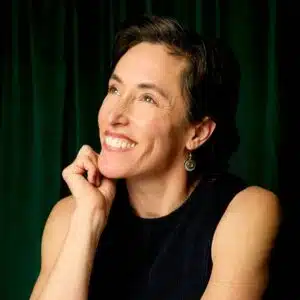
Jodi Lomask
In this episode of The Psychedelic Podcast, Paul F. Austin speaks with Jodi Lomask, an artist, choreographer, and creative guide whose work bridges art, science, embodiment, and psychedelic experience.
They explore how psychedelic experiences can be approached as acts of creative design shaped by context and environment. Jodi shares insights from decades of immersive performance work and discusses flow, embodied intelligence, psychological safety in groups, and the differences between microdosing and vision quests.
Jodi Lomask is an artist and founder of Capacitor, a performance company exploring the intersection of dance, science, and consciousness. Through Creative Journey, she supports individuals and teams in cultivating creative flow and embodied insight.
Podcast Highlights
- Why psychedelics are also creative collaborators
- How context shapes the depth of experience
- Designing journeys instead of “doing sessions”
- When creativity becomes a path to healing
- Nature as an active participant, not a backdrop
- The body’s intelligence in altered states
- Why flow matters more than fixing trauma
- Microdosing vs vision quests for creatives
- What artists can teach psychedelic facilitators
- Building containers that invite trust and insight
Show Links
The Microdosing Practitioner Certification empowers you to launch a sustainable practice built on integrity, science, and results. Learn Paul F. Austin’s signature San Pedro Microdosing Protocol, master somatic coaching skills, and confidently guide clients toward lasting transformation. Click here to learn more and apply.
This episode is brought to you by The Practitioner Certification Program by Third Wave’s Psychedelic Coaching Institute. To learn more about our flagship 6-month training program for coaches who want to integrate psychedelic modalities into their practice, click here.

We’re excited to feature Golden Rule — our trusted resource for premium microdosing products designed to support clarity, creativity, and emotional well-being. From Psilocybin blends to LSD microdosing options, each formula is crafted with care, backed by science, and trusted by the Third Wave community.
Safe, intentional, and transformative — Golden Rule helps you feel more focused, connected, and aligned in your everyday life.
Want to experience the difference? Try Paul’s favorite microdosing picks — hand-selected for performance, mood, and daily flow.
Get a lifetime discount of 10% with code THIRDWAVE at checkout.
Third Wave occasionally partners with or shares information about other people, companies, and/or providers. While we work hard to only share information about ethical and responsible third parties, we can’t and don't control the behavior of, products and services offered by, or the statements made by people, companies, or providers other than Third Wave. Accordingly, we encourage you to research for yourself, and consult a medical, legal, or financial professional before making decisions in those areas. Third Wave isn’t responsible for the statements, conduct, services, or products of third parties. If we share a coupon code, we may receive a commission from sales arising from customers who use our coupon code. No one is required to use our coupon codes.
Podcast Transcript
00:00:01 Paul F. Austin
What if psychedelic experiences aren't something you take, but something you design? In this episode, I speak with Jodi Lomask, an artist, choreographer, and creative guide whose work bridges art, science, embodiment, and psychedelic experience. Jodi shares how decades of designing immersive performances through her company, Capacitor, shaped the way that she approaches psychedelic work today. Rather than focusing on therapy alone, she treats these experiences as acts of creative design, where context, environment, and the body's intelligence play a central role. Together, we explore how different medicines respond to different settings, why nature-based experiences can produce distinct outcomes from clinical environments, and how creative flow can support healing without fixating on pathology. We also touch on microdosing, vision quests, and what it means to design containers that foster trust, safety, and meaningful interaction over time. Jodi Lomask is an artist, choreographer, and creative guide whose work explores the relationship between creativity, nature, and human consciousness.
00:01:07 Paul F. Austin
She is the founder of Capacitor, a San Francisco-based performance company established in 1997 that creates immersive works combining dance, sculpture, sound, and technology. Her performances have toured internationally and have been commissioned by organizations including Apple, NASA, TED, the San Francisco International Airport, and the Discovery Channel. She received the Isadora Duncan Award for sustained achievement and has served as an artist in residence at UCSF Neuroscape Lab, exploring creativity through neuroscience. Through Creative Journey, Jodi now brings this experience-design approach into nature-based psychedelic and embodiment work. All right, folks, before we get into it, here's a quick word from our sponsors. Third Wave sometimes shares their partners with outside providers, but we don't control and aren't responsible for their statements, conduct, products, or services. We encourage you to do your own research and consult appropriate professionals.
00:02:04 Paul F. Austin
Hey, everyone, I want to take a moment to share something important with you. At Third Wave, one of our biggest commitments is helping people to explore the power of microdosing safely, intentionally, and with the right support systems in place. That's why I'm excited to introduce you to our go-to company, Golden Rule, one of the most respected names in the microdosing space. Golden Rule crafts premium, ethically sourced microdosing products, including psilocybin, single-strain, and blends, San Pedro and LSD options, all designed to support clarity, creativity, emotional healing, and performance. What really sets them apart is their integrity, honoring traditional plant wisdom while embracing modern science to support real and lasting transformation. Together, Third Wave and Golden Rule are working to make safe, high-quality microdoses more accessible while ensuring you have the education, tools, and community to feel confident on your journey. If you're curious about microdosing and want to try some of my personal favorites, head over to goldenrulemushrooms.com/thirdwave and use code THIRDWAVE at checkout for 10% off, not just once, but for every future order, too.
00:03:10 Paul F. Austin
Again, that's goldenrulemushrooms.com/thirdwave and use code THIRDWAVE for a lifetime discount of 10% off. All right, that's it for now. Let's get into my conversation with Jodi Lomask.
00:03:45 Paul F. Austin
Jodi, it's great to have you on the podcast. Thank you for joining us.
00:03:48 Jodi Lomask
Thanks for having me, Paul. Happy to be here.
00:03:50 Paul F. Austin
You know, I reviewed your bio before we agreed to this. I think you either wrote in or someone on your team wrote in. And now, just in reading through the bio again, I'm picking up on some fun details, like the Neuroscape Lab, which is really interesting. So before we get into the details, I'd love to just start with this sort of thread of dance, sculpture, science, and now psychedelics. What is it that connects all these disciplines for you?
00:04:21 Jodi Lomask
Well, all along, I've considered myself an experienced designer. So whether I'm putting together a full evening show with 30-plus artists or whether I'm taking one person on a creative psychedelic journey into the forest, it really utilizes the same skill set and the same framing. It has to do with setting up the situation, designing the situation, and trusting that the results we want will happen on their own, in a way.
00:04:55 Jodi Lomask
If you design a beautiful experience for a team of artists, guess what? They're going to create really powerful, moving, beautiful work. They're going to feel really comfortable and open and willing to share with one another. They'll feel trusting and creatively engaged.
00:05:15 Jodi Lomask
And if I set up a really beautiful experience for a creative director, and it's supposed to unlock vision and direction for that person, I just need to focus on creating that beautiful experience, and that wisdom will come through their body, and they will get what they need out of it.
00:05:41 Jodi Lomask
So yeah, another thread is just trusting the body's wisdom, being a lifelong dancer, performer, and choreographer, that what we really need to know is probably already with us and in us. And if we create the situation that allows that to rise and be heard, then we can be our own healers and our own muse, in a sense. It's really about serving the muse, whether you're creating art or whether you're creating a new life for yourself.
00:06:17 Paul F. Austin
And so what I'm hearing in that, from an experience design perspective, is the first thing that comes up is sort of the environment or the context in which things are existing.
00:06:28 Paul F. Austin
So when we think about psychedelic work, the context of doing something in nature is a much different context than doing something in a clinic, in an urban center.
00:06:36 Paul F. Austin
And I would argue, and I'm sure you would argue as well, that the context of this nature-based experience is likely to be more powerful than in an urban environment where there's noise and sound and pollution and other things like that.
00:06:52 Jodi Lomask
Yeah, my take on that is each psychedelic or each compound, whether it's a psychedelic or something else, anything we use to influence our brains or manipulate the way we think, has an intrinsic ideal situation built into it. For instance, I believe psilocybin wants the forest. It wants nature. It's really turned off by human constructs. Yet LSD, for example, I don't think LSD minds the city. It likes bright colors. It likes looking at the power lines and interesting constructs that humans have built in urban environments or in the Playa. People in LSD are very attracted to all the light art, for example, whereas MDMA can partner with a lot of experiences and can go to a lot of places. But I think often, it really wants a comforting environment, a warm environment. So it's attracted to that. When people take these substances, they're attracted to certain things. And as long as we're listening to that and paying attention to that, then we end up seeking the ideal conditions for the most successful experience.
00:08:20 Paul F. Austin
Yeah, there's a way in which you were kind of hinting at this, that when the ideal environment or the ideal context is created and it's paired with it could be a specific modality, or it could be a specific medicine or even a specific practitioner, that the sense of agency or empowerment or capacity starts to really come online for someone to direct and sort of construct the life that they want to live.
00:08:53 Paul F. Austin
And I think that brings me kind of to my next point, which is talking a little bit about just dance as a context, because honestly, we've hosted this podcast for probably almost a decade now. We've maybe had one or two dancers on the show. So I'm curious, what is it that you love about dance and embodied movement?
00:09:18 Paul F. Austin
And why is it that you think this capacity to be in the body, and not just be in the body, but to actually dance and learn how to work with the body, is an integral part of even the psychedelic integration process, if you will?
00:09:32 Jodi Lomask
Yeah, well, simply put, the body doesn't lie. Our thoughts can go all over the place. We can argue three sides of the same issue all at the same time and believe all of them. But the body is pretty straightforward. And I started dancing when I was three and choreographing when I was nine. And I think that there's this way that I've used the connection to the body to help me guide my life and my pursuits. And it's also allowed me to read other people's bodies quite well. So I can see things in my clients' movement and in their bodies. And then I can bring that up. And then that's the material they end up working on after the journey, usually. And also, coming from a dance background, I've been trained on helping people get into their bodies. And having the most embodied journey has always served me and has served my clients as well.
00:10:36 Jodi Lomask
When we are in the body and comfortable in our skin, then there's increased flow, and things can rise to the surface that would otherwise get jammed and stuck and confused and stressed. And so number one is help people get in their body, get centered, get comfortable. I always start off giving travelers a movement workshop in the morning, so they're really feeling themselves. And it's like a safe bed to lie on during the journey. If you are comfortable in your body, the chances of an anxious experience seem to be diminished.
00:11:24 Paul F. Austin
If you've been wanting to turn your passion for psychedelics into a meaningful and profitable practice, then check this out. Enrollment is now open for our microdosing practitioner certification program. And in just 18 weeks, you'll become a certified microdosing practitioner, mastering my signature San Pedro microdosing protocol for nervous system regulation while developing the somatic coaching and business skills to launch or expand your practice.
00:11:50 Paul F. Austin
This isn't just another theoretical course. It's hands-on, high-touch training that helps you integrate our microdosing protocol, refine your practitioner presence, and graduate ready to start enrolling clients right away. If you're ready to help others move from dysregulation to balance and build a thriving business doing work that matters, I'd love to see you in our next microdosing practitioner cohort. Just follow the link in the episode description or visit psychedeliccoaching.institute to learn more and apply.
00:12:20 Paul F. Austin
I would assume that's your own technique, if you will, or your own approach. Kind of talk to us a little bit about what that embodied movement practice is like. Is it like, I know Tai Chi, Qigong? So kind of give us a little bit more context about your background in dance and sort of what that process might be if you're working with a client.
00:12:42 Jodi Lomask
Yeah, so I've been teaching master classes in dance since the late '90s. Everywhere my dance company would perform, part of the contract would be, OK, we're going to offer a master class to dancers in the area when we're on tour or I'm teaching my company or various outreach opportunities. And so I developed a class that I basically call an embodiment movement workshop because it works for dancers. It works for circus artists. It works for martial artists. And it works for everyday people who just want to get to know their bodies from the inside out.
00:13:23 Jodi Lomask
The entire point of the embodiment movement workshop is, if you can feel and control your body from the inside out, that tool is a much more useful tool for you, whether you're just walking around and buying your groceries or whether you're an aerialist who's doing really insane tricks up on a rope or an apparatus. The process is the same. Know yourself from the inside out.
00:13:54 Jodi Lomask
And more recently, I've been teaching non-dancers and non-circus artists more because I've been teaching an embodiment movement workshop called "How You Stand and Move Changes How You Think and Feel." And it's the results of me really meditating on how I'm sitting right now changes how I feel in this interview, changes how I present myself, changes who I know myself to be.
00:14:24 Jodi Lomask
And part of that is, when I teach the full workshop, is I take folks through different movement textures and repertory and choreography, in a sense. And it changes their mood. It changes how they're seeing themselves, how they're seeing a problem that they're working on.
00:14:43 Jodi Lomask
Before a journey, I don't get too deep into new movement and challenging. It's really just about getting in touch with yourself from the inside out. And then, of course, when you're in the psychedelic experience, there's a comfort in that.
00:15:00 Jodi Lomask
Your core can wrap around your center can wrap around your core, in a sense. And if people have that on the inside, everything's a lot less scary. And when there's union within yourself and my goal has never, ever been to make myself the central theme for a traveler or even the central theme for a performance project. It's to help people connect with themselves and come together in a if it's an ensemble project, like a team experience, teaching the technique of ensemble literacy. How is it to be in a group that supports the individual? And how do you respect the golden ring of support of a group and still blossom as the individual?
00:16:06 Paul F. Austin
Which is also an interesting I mean, from what I understand, a lot of your work is in guiding individual experiences. Is that correct with psychedelics?
00:16:15 Jodi Lomask
I've also been developing, over the last year, a program for teams, small teams. I'm not interested in the 20-person experience. I feel like that's too complicated. And there are plenty of people already doing that. And that's their thing. And they do that really well. So my focus these days is creative journey for leaders and creative journey for teams. And yeah, we're talking four to six people. Yeah.
00:16:48 Paul F. Austin
Because I think that this sort of notion of ensemble literacy is interesting, right, especially when we're working with psychedelics, because these boundaries that we normally have up as an individual tend to dissolve. So there's a greater capacity to attune, to be aware of. And I like this. It's like it almost becomes an organism.
00:17:10 Paul F. Austin
A lot of the work that I've done in this space has been guiding group experiences, like the orchestration of we'll have 30, sometimes 40 people in ceremony together. And so I'm always looking at it from an orchestration perspective in terms of the environment, in terms of the attention to detail, in terms of the communication up front. These are all really important aspects and elements.
00:17:33 Paul F. Austin
And so just to come back to the movement piece, the traditional way that a lot of folks are exposed to psychedelic therapy, for lack of a better term, is a high dose of psilocybin or MDMA, an eye mask, and laying down on a yoga mat and sort of surrendering to the experience. I'm a fan of that for people who are brand new or beginners. But I'm not so much a fan of that for folks who have done a little bit of work because I think it can be a little passive in nature.
00:18:06 Paul F. Austin
So I'm curious, when you think about the way that we keep our body in ceremony or the way that we hold ourselves in ceremony and how that impacts the overall experience, how do you sort of work with either individuals or teams for them to better understand this relationship between the medicine work and sort of their physiology, especially in the throes of a high-dose ceremony?
00:18:29 Jodi Lomask
Yeah, what a great question. Well, the way I work and what I've found is, when I'm able to explain something to people through movement, they get it really quickly. They understand subtleties that, on the physical plane or energetic plane, just really aren't that subtle.
00:18:50 Jodi Lomask
I was at the Society for the Neuroscience of Creativity in, I think it was April, in Paris. And I was teaching an embodiment movement workshop there. And I was sharing some of these ensemble work exercises. And one of the neuroscience PhD candidates that was there after one of these exercises said, oh, my goodness, I've been doing that. Every time somebody goes to leave the group, I'm constantly trying to pull them back in, even to my own detriment. And I just don't want to let anyone go, even if it's not good for them to be there.
00:19:31 Jodi Lomask
And what I've been finding and what's been exciting to me about the embodiment movement workshops is, simply by taking people through these really simple exercises, they themselves learn about themselves. And I don't need to tell them anything about who they've been or how they've been. They can feel it physically.
00:19:53 Jodi Lomask
So for instance, if I was your neighbor and you were doing a 30-person journey, I would suggest, hey, what if I came in the day before or earlier in the day and guided people through 30 minutes of movement or more, whatever, 30 to 90 minutes, just on ensemble literacy so they can feel what their tendency is with the group, how to stay present in the group, how to excuse themselves kindly from a group, what the potential pitfalls are.
00:20:30 Jodi Lomask
Very often, people are uncomfortable with leaving a group. And then they will do things like try to take somebody down with them or somehow disrupt the group because it's really painful sometimes for them to leave the group because there's a lot of I think, in our culture, you're supposed to stay. You're supposed to be friendly, be good with everybody, even if it's not working for you. And instead, how do you kindly, respectfully step away without destroying the golden ring of support that's around you, without ruining it for everybody, which I imagine would be a really helpful bit of information for people sitting 30 at a time. Yeah.
00:21:18 Paul F. Austin
So you've mentioned this twice now, the golden ring of support. Could you just explicate what that is?
00:21:24 Jodi Lomask
Just that I think part of our society and culture not really having a lot of literacy around ensemble work, there's not a lot of respect given to
00:21:38 Jodi Lomask
the team, to the group, to the ensemble. And maybe it's from our individualistic culture. There's just not a lot of education about it. So what I mean by that is, by framing the group and the community and the circle with a little bit of value, even if it's a fantasy value, a golden ring of support, the fact is, it frames it in a way that the participants should respect it, that there is something that's beyond each individual that happens when a group of people come together.
00:22:19 Jodi Lomask
And even if you step away from it, if there's respect for that, that that is something of value, I think people behave very differently. Maybe they won't exert people from that group because they might respect that that group came together for a reason. Anyway, yeah. So it's a way to add value to the coming together.
00:22:44 Paul F. Austin
Which is critical because even for our own practitioner training program, when we have these cohort models, a lot of the agreements so we do this thing where we have the whole group agree to agreements. So our agreements are beginner's mind, walk the walk, personal responsibility, full commitment, generosity. And there might be one more as well. So it sort of creates this sense of, OK, this is the container that we're stepping into. These are some of the agreements that we're making. And ever since we implemented some of these things, it's been much easier. When we go through a situation where it's clearly someone is disrupting the container or it's not a good fit for them, it's really easy to sort of part them because it's much more clear and upfront. So I think this communication, especially for groups, is really important, which brings me to my next question because you brought up potentially working with teams a little bit or starting to work with teams. Individuals, we know that high-performing individuals have been using psychedelics for a long time. I won't go into all of the backstory here, but we know that to be true. This whole notion of getting teams to work on things together is a little bit of a newer notion. When the book "Stealing Fire" came out in 2017, Stephen Kotler and Jamie Weil talked a lot about group flow in reference to Navy SEALs, in reference to scientists and engineers, in reference to Burning Man. But there wasn't necessarily any talk in that book of groups of individuals or teams who were using psychedelics, implant medicines for this sense of group flow. It was non-psychoactive sort of approaches. So I'm curious, kind of as you've given this thought and started to test it and experiment with it, what are you noticing around the container for teams and how to hold that, especially when these Schedule I substances are involved with that because it's tricky to navigate?
00:24:45 Jodi Lomask
Yeah. Well, a lot of my experience with teams is based on my dance company, my arts company. It's dance, circus, sculpture, and media, and new technology. And so there was a point in my early career well, I was introduced to psychedelics when I was studying abroad. I was going to school in the Netherlands for half as for a semester when I was in college and hanging out with a group of expats in Amsterdam.
00:25:21 Paul F. Austin
Oh, in Amsterdam. Cool.
00:25:22 Jodi Lomask
So that was in the mid-'90s. Rave was happening. And from there, I just continued to work with psychedelics in parallel to my art career. At some point, I realized that the psychedelics were really influencing my art career. But well before that, I had this experience where I thought, I don't want anyone in my company who I wouldn't feel comfortable doing mushrooms with. And the reason for that is, it wasn't really about the mushrooms. It was about wanting such a high level of comfort and flow within the studio that I could be totally spontaneous, not self-conscious, not protecting myself, not careful. I wanted to be so creatively free. And I wanted everyone in the studio to be creatively free.
00:26:20 Jodi Lomask
And what was important about that moment is, up until that time, I started my company when I was very young. I was maybe 21 or 22. And I was very ambitious. And to begin with, just getting people to listen to me and take my direction felt like a big challenge because I was right out of college. And so I believe my initial approach was fun and playful and creative but also with a little bit of control.
00:26:56 Jodi Lomask
But from this point on, I realized, I don't want to have to control anybody. I want them there purely because they wanted to be there. And creative flow was my top priority. And I realized it wasn't going to work for everybody. And
00:27:19 Jodi Lomask
so in that, a lot of my experience with psychedelics and creative teams came out of my company. And it has everything to do with creative flow within the group and what the group can accomplish together if they're feeling psychological safety. As we learned in the Google research have you read about that study? Google at some point studied all the teams in Google and compared?
00:27:50 Paul F. Austin
No, tell me about it.
00:27:52 Jodi Lomask
OK. Well, Google's massive. And they have so many teams. And at some point, they did a study of all of their teams to see which ones were the most effective, which ones were the most creative, and why, and a ton of data comparison. And what they came out with was that psychological safety was the difference between a really effective creative team or any team and ones that weren't effective. It didn't have to do with whether they went out for drinks afterwards or all these other things that you might imagine. It was really about who felt psychological safety.
00:28:31 Jodi Lomask
And I think that moment when I said, I don't want anyone in the studio who I wouldn't feel comfortable doing mushrooms with, was about me saying, I want to feel so much psychological safety that I can be the most creative person I can be. I want to be spontaneous and wild and free and honest. And
00:28:54 Jodi Lomask
won an award from the Isadora Duncan Dance Awards for sustained achievement. My mentor, Joanna Heigud, introduced me. And she said, I can always tell when capacitor is rehearsing because everybody's having a good time. And it's not that the work isn't serious or intense or painful at times. But the creative process was and is a lot about flow and freedom. And
00:29:28 Jodi Lomask
it's fun. I just got back from Canada. I was teaching Circus Sessions 10 in Welland, Canada, in Ontario. And I met these five circus artists on Monday. And we produced a show on Saturday. So it was a very intensive, very fast process, 8 to 10 hours a day in the studio. And I was a range of disciplines, some were aerialists, some were aerialist contortionists, some were clowns and hula hoopers. And what else? It was just really eclectic.
00:30:04 Jodi Lomask
How do you pull all this together? Well, I focused on together apart was the theme because this is what I'm interested in right now. And we did morning embodiment workshops. And then we did exercises about, OK, what is ensemble literacy? What does it mean to be in a group? What does it mean to be in a team? And what does it mean to be apart from that? And is it possible to create a situation where the team is supportive of the individual, where you don't have to choose? You don't have to choose shining very bright on your own or being part of the group. How do they flow from one to the other?
00:30:47 Jodi Lomask
And it was an amazing experience because all of those performers chose to connect and support and work with each other, integrate each other, and then also do really amazing solo work and duet work. And this together apart theme was kind of what we needed just to kind of get really clear about what that meant and how to I mean, I'm thinking even about what you were describing with your agreements. And it makes me think of this architect. I read a few of her books, Susan Sesenka. And she talked about having an away place, like an away room. And it's for people with kids. It's a room you can go in with maybe a glass door where you're away from your kids, but you can see them. So you can find peace and quiet and be away for a moment. And I just thought it was such a smart, lovely idea and that sometimes it's really great to be in the group. And then it's also really great to be apart sometimes and to have an away place.
00:32:05 Jodi Lomask
And especially as I get older, I feel like I really value my time alone. I feel like I've got a lot to think about and a lot to simmer on. And it's very fulfilling and peaceful to be in myself, to wrap around my own core. It doesn't mean that I don't want to also play with everybody and do crazy, cool, fun things all together. So I think that's my angle on the individual versus the teamwork.
00:32:36 Paul F. Austin
Well, and as part of this dynamic, I think it's also helpful to be part of organizations or families or spiritual communities that you want to be a part of. So I think there are so many people who are part of teams or families or even spiritual communities that they don't want to be a part of. And so they actually have to separate themselves or get out of it and be sort of a lone wolf initially before they really find a community that they feel held and supported by.
00:33:11 Paul F. Austin
And so I'm curious, just to kind of bring this into the work that you're doing with founders and creatives and whatnot, a lot of founders and creatives struggle with loneliness, I would imagine, to some degree, especially in places like the Bay Area, Silicon Valley. CEOs have a hard time relating to other people besides maybe CEOs. So I'm curious, what impact have you seen your work with embodied movement and psychedelics and these other things? How have you seen that help the clients that you've worked with or individuals feel more psychologically safe within groups so they finally feel like, oh, they can really open up or they can let go or they can really be seen for who they are?
00:33:59 Jodi Lomask
Well, psilocybin is what I've been working with in the forest. And it is the great connector under the earth, connecting all the trees and all the plants to one another. And what people love about a deep psilocybin journey is the feeling that they are connected to nature and that they're connected to all living things. And that is a release from loneliness. You realize that you never were alone. You never actually can be alone. You're actually connected to everything. And that felt experience of that lingers. It's not like people forget it when it's over. And they feel the powerful, peaceful feeling of connecting.
00:34:48 Jodi Lomask
It makes me think of I was doing a vision quest in Tahoe in the winter. And I was out on the snowy deck in a hot tub. It was pretty great. Everything was covered in snow. So everything was really silent. And a bird flew by. And I could hear the wind created with every beat of the wing. And I saw the trees laden with the snow and the heaviness of the snow. And there was such a profound feeling that I was connected to all of it that it just was deep, relaxing.
00:35:28 Jodi Lomask
And I think that is one of the great gifts of psilocybin is we realize that the ego tells us that we're apart, but we're actually not apart. And when you come back from something like that, you can see, OK, yeah, my ego is this person is calling me this thing. Somebody in a social media post called me a fearless leader. And I was chuckling and telling my mom about it. And I said, I don't know if it's all the psychedelics. But it's kind of funny to me because I think it's like it feels kind of separate from me in a way, not that I don't think I'm a leader. I've been leading stuff for decades. But there's something in me that chuckles at the idea that I'm anything, that I'm anything separate from anybody else.
00:36:25 Jodi Lomask
So I know that sounds a little odd. But I think that's what the gift is and why it's such a bliss experience for a lot of people who are in a position of having to make a lot of decisions and guide the direction of any project. And in another part of my personality, I take leading really seriously. I think it's really important to not lead if you don't have clear vision, if you don't have clear sight. Just say, I don't have the answers right now. I'm not clear. Because when you do that, people will trust you more. And I don't like leading if I don't have any clarity myself. I think that's really painful.
00:37:14 Paul F. Austin
Well, there's a way in which just to sort of reflect on this, psychedelics, the natural world, doing mushrooms in the forests, that initial sustained connection to something external, this deep sense of interconnectedness or interbeing with the natural environment, it doesn't repair or regenerate all of the attachment wounds that many people come in with. But it is, I find, a really good first step for folks.
00:37:45 Paul F. Austin
I do think eventually the sort of whether you call it attachment work or work around isolation or loneliness, it has to happen still in community, which is why I'm really inspired and excited by psychedelic churches and how more and more people are sort of bringing psychedelics into a spiritual and communal context. And at times, when people leave relationships or they leave jobs or they leave an old life behind when they've worked with psychedelics, it could be really scary to go out into the unknown because it's hard to know when you're going to find your people again, if at all.
00:38:22 Jodi Lomask
Yeah. Well, I guess the result I've been seeing in the leadership one-on-one work has been people realizing that they're more deeply connected and connecting more deeply with the people that are already in their lives. People who are in their families is definitely a theme, and even people in their creative work.
00:38:48 Jodi Lomask
But specifically, each traveler comes out with something else that they're working on based on who they are in their bodies and what their experience has been. Maybe it's a creative director who feels like they're not allowed to take up space because they're the leader and they don't want to be oppressive to other people. And maybe I'll work with that person on, OK, well, how do you take up space so that you can uplift other people? I mean, if you're not strong and solid in yourself, you're not that much used to somebody else. So how do we work on that?
00:39:27 Jodi Lomask
Or another traveler who's having we noticed something in the movement in the body where there is a disconnection to the earth through the heel. And let's trace that back. Well, what was that about? And once that small adjustment is made physically, all sorts of stuff starts changing and opening up, how that person does their work, their creative work, how that person runs their company, how that person relates to their wife. Everything changes when you start finding these deep truths that are already visible in your body, but we just aren't paying attention.
00:40:09 Paul F. Austin
And so how do you then help people within a ceremony or within a sort of container, just to kind of bring it back to the point, reconnect with those sort of unconscious parts of themselves that they maybe have forgotten about or they've lost touch with? Or what does that kind of look like practically?
00:40:31 Jodi Lomask
Yeah, that's a great question. Well, this goes back to how it's all the same to me, whether I'm making art or making a journey. And it feels like the same part of my brain. And when I'm talking with somebody in this way, images will come to mind. And I'll share my images with them. And I don't always know what they mean. And I'll share stories from my own experience.
00:41:00 Jodi Lomask
I'm not a therapist, so I'm not interested in the therapy process. I will have clients who have therapists. And I tell them, keep your therapist. That's really great. Keep that support. This is different. I'm going to be your creative collaborator. You're going to say things and present things that are going to trigger images and thoughts for me. I'm going to share them back with you. You're going to see if they resonate with you. Then you're going to work with them or not.
00:41:28 Jodi Lomask
And then so one thing I do is I give them creative exercises for weeks before and weeks after the retreat. My first creative journey experience is a minimum of five weeks. Or if it's a team, we can make that just three weeks, possibly. But that's so that we can get this creative dialogue going where I'm their collaborator. I'm collaborating on their living art project.
00:41:55 Paul F. Austin
Which is themselves.
00:41:57 Jodi Lomask
Which is themselves, their lives, whatever is in their lives. Yeah.
00:42:01 Paul F. Austin
It reminds me one of my favorite authors is this guy, Robert Fritz. Have you heard of Robert Fritz?
00:42:06 Jodi Lomask
No, I don't think so.
00:42:07 Paul F. Austin
So Robert Fritz, he wrote one great book called "The Path of Least Resistance," which is a phenomenal book. But he also wrote a book called "Your Life as Art." And so he talked a lot about this ethos. He's a composer. He's an author. He's a filmmaker. He's a management consultant. So he sort of brought all these things together.
00:42:27 Paul F. Austin
And he pioneered something called structural dynamics that really helps the creative process to take off. And so he often talks about this sort of notion of you are yourself. Your life is an art piece. And so you're constantly sort of sculpting it and working with it. And you're way more malleable than you recognize and that you realize.
00:42:45 Paul F. Austin
And so the more agency we have in that process to really create what it is that we want to create, the more fun life becomes. And this is something that you talked about before, that when people see what capacitor is doing, they notice, oh, they're having a lot of fun. And I think at the end of the day, that's what we're here for. Some people get stuck a little too deep in the sort of rabbit hole of therapy. And therapy has a place for sure. And we're really here to experience life as something enjoyable, something mesmerizing.
00:43:19 Jodi Lomask
Yeah. And if you're in creative flow, there's a natural play in that. There's a lot more delight. There's a lot more joy. And I guess that's the gist or the goal of all the work I'm doing with folks, whether it's I'm working with artists or whether I'm working with travelers in the psychedelic journey, is I'm helping them achieve more flow.
00:43:42 Jodi Lomask
Now, if there's some trauma in the way, it's blocking their flow, well, that'll come out. And that'll get released. That'll get processed. But the process is a little bit different. It's using the process that the artist uses, which is whatever that trauma story is, is grist for the mill.
00:43:59 Jodi Lomask
What are you going to make out of it? What are you going to create with it? We don't want to get stuck in the story and repeat the story over and over and over to ourselves. It's how do we use the story as material and then discard it when we're done with it?
00:44:17 Jodi Lomask
I got involved with the UCSF NeuroScape Lab because I was working on a project called "Synaptic Motion." And I was curious about the creative process and the mind, what is happening in my brain during the two seconds that I have an idea that I then have to spend two years to actualize. My full evening shows were two-year projects. But I usually had the idea for them in a matter of seconds.
00:44:43 Paul F. Austin
Split second, yeah.
00:44:44 Jodi Lomask
And I thought that was so interesting. So I just wanted to learn everything there was to know about the neuroscience of creativity at that time, which was quite a long time now ago. That was 2013.
00:44:58 Jodi Lomask
But that also is the reason why I got involved with being an artist in residence at the UCSF NeuroScape Lab. And I got involved with the Society for the Neuroscience of Creativity.
00:45:09 Jodi Lomask
But it wasn't that far away from what capacitor had been doing since 2000 because we've been formally collaborating with scientists since 2000 in the capacitor lab project process, which is the way I would bring scientists and technologists and philosophers and architects together with the creative team over six months to develop the ideas behind a full evening show.
00:45:36 Paul F. Austin
Wow. Did you ever see?
00:45:38 Jodi Lomask
It's a mouthful.
00:45:39 Paul F. Austin
No, no, no. It's cool. Did you ever see "Lucent Dossier"? Do you know "Lucent Dossier," the acrobatic show?
00:45:45 Jodi Lomask
Yeah. Yeah, I was aware I mean, yeah, I was aware of them at some point. It's been a minute since I've seen their work.
00:45:52 Paul F. Austin
They were the highlight. We were talking about "Burning Man" before we went live. I went to my first burn in 2018. And they did a show there. And then it was like the highlight of my burn at that point in time. They actually did it in the Playa Alchemist pyramid, which is the.
00:46:07 Jodi Lomask
Oh, no way. How cool.
00:46:09 Paul F. Austin
The camp that I was at this year. And then this year, we were out in the play. It was late at night. My bike got messed up somehow. And I had to go find a random person who had scissors to try to help cut something out. And it ended up being this guy who was part of "Lucent Dossier." And so we ended up going to their show again.
00:46:25 Paul F. Austin
So I've just sort of had this "Lucent Dossier" thing because of everything that you're talking about with the architecture and the acrobatics. And I think one thing that I really appreciated about the "Lucent Dossier" show is it really did this incredible job of weaving in a sort of mythopoetic lens to the work. There aren't many shows or acrobatic shows or dancers that I know do that as well as "Lucent Dossier." And I'm a big geek for anything that's sort of mythopoetic in that way.
00:46:55 Jodi Lomask
Yeah, that sounds cool.
00:46:59 Paul F. Austin
Yeah. Do you ever work with so in terms of these containers, you mentioned five weeks, right? You're guiding high-dose, psilocybin journeys. Do you ever work with lower doses or microdoses as part of that process as well? Or is most of the emphasis just on the high-dose work?
00:47:14 Jodi Lomask
Well, I experimented with the microdosing. And I felt that for me, it was really hard for me to get anything done because I feel like psychedelics melt your construct. And if I was melting it slightly every day, I just couldn't get any traction.
00:47:34 Jodi Lomask
Whereas the reason why I'm a big fan of the Vision Quest is you melt your construct. You reconstruct it for this moment. And then you run it for a while. And you see where it takes you.
00:47:49 Jodi Lomask
For instance, last year, I had a Vision Quest. And I came out thinking, I want to approach my life with comprehensive thinking. I want to take all these various projects that I'm involved in, say yes to a bunch of different things, and trust that they will all feed each other in some way. So I've been working with that construct.
00:48:15 Jodi Lomask
And I said yes to a bunch of different things. I ended up going to Paris to teach at this science conference and shooting a dance film and going on tour to Joshua Tree and putting on shows in my backyard and teaching a circus workshop in Canada and writing an article for a psychedelic publication and writing my blog posts. And anyway, it was just
00:48:43 Jodi Lomask
really varied. But coming to sort of the end of this season, I'm thinking, wow, sometimes I felt like my brain was smeared across the canvas. And maybe this coming year, I'm going to be looking for something a little bit more simple and with a little bit more repetition involved. Plus, that's not even the psychedelic journeys I was guiding for couples and for individuals and teams. So yeah. So yeah, it was a lot of different things, which has been really fun, really interesting. But I think I want to try a different construct for this coming year. And I guess that's my answer to the microdosing. I know some people, it really works well for them. So I don't judge at all if it works for you. You should do it for sure. But that's not my experience. So I don't teach it. And I don't guide with it.
00:49:41 Paul F. Austin
That makes sense. I think with microdosing or lower dosing, it comes back to what you had mentioned at the outset, that different medicines are ideal for different contexts. And the tricky part with microdosing or low dosing is it takes some time to get the dose level sort of correct. So oftentimes, yeah, oftentimes, people overdose. And then it does become really hard to have any sort of execution capacity.
00:50:10 Paul F. Austin
I find with LSD, 5 to 10 mics, micrograms is really good for folks. We've also been exploring San Pedro Huachuma a lot more because there's a lot of embodiment that comes through Huachuma. You still get the sort of greater cognitive capacity like LSD. But it feels a little bit more grounded and embodied.
00:50:33 Paul F. Austin
So oftentimes, it's like if I need to get things done, it's a very low dose of LSD. I'm drinking tea right now with some tea, maybe. But if I'm in a more creative brainstorming thing, it might be a little bit of a higher dose of LSD in like a two-hour hike in a natural environment because then things can sort of breathe and open up.
00:50:54 Jodi Lomask
Well, LSD is so great for endurance and.
00:50:57 Paul F. Austin
That too, yeah. Fatigue and stamina.
00:51:01 Jodi Lomask
Yeah. I had some very good times last winter doing some skiing, not on a full dose, but like a half dose.
00:51:11 Paul F. Austin
Yeah, like a half tab. That's the best. Well, Jodi, it's been fun to have you join us for the podcast today. For folks who want to learn more about your work, including your container and everything else that you're up to, you have a website, I believe. What's the URL?
00:51:31 Jodi Lomask
Jodilomask.com is probably a good place to go because from there, you can get to capacitor, the outward-facing project. And you can get to Creative Journey, which is the inward-facing project. So jodilomask.com.
00:51:47 Paul F. Austin
Beautiful. Jodilomask.com, J-O-D-I-L-O-M-A-S-K dot com.
00:51:53 Jodi Lomask
Yeah.
00:51:54 Paul F. Austin
This has been fun. I'm glad that you were able to join us. And thanks so much for hopping on today.
00:52:00 Jodi Lomask
Thanks, Paul.
00:52:01 Paul F. Austin
Hey, folks, it's Paul here. I really hope you enjoyed this episode. I would invite you to share this episode with a friend or family member or just someone in your life who you think would benefit from tuning in to this conversation.
00:52:15 Paul F. Austin
If you did enjoy this episode, please rate and review the podcast on Spotify or Apple or even check out our YouTube channel. You can subscribe to our YouTube channel at youtube.com/thetheirdwave.
00:52:27 Paul F. Austin
And finally, follow me on Instagram or X or even LinkedIn. I'm pretty active on all of these social platforms. Just search for Paul Austin on any of these platforms. Reach out, say hi, tell me that you're a listener of the podcast. I would love to hear from you.
00:52:40 Paul F. Austin
All right, that's it for now. See you next time.