A Christian Lens on Psychedelics: Faith Meets Altered States
LISTEN ON:

Episode 344
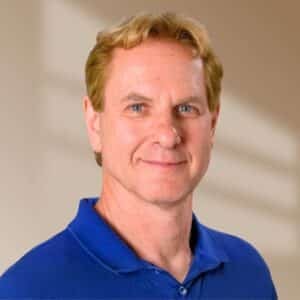
Hunt Priest
In this episode of The Psychedelic Podcast, Paul F. Austin speaks with Hunt Priest, founder of Ligare, about Christianity, mysticism, and the ethical integration of psychedelic experience within spiritual life.
They discuss Hunt’s participation in a 2016 Johns Hopkins psilocybin study for clergy, Christianity’s long history of mystical experience, and how non-ordinary states can be held within ethical and communal containers. The conversation also explores legality versus ethics, justice and institutional risk, and how psychedelics relate to prayer, meditation, and service within a broader spiritual life.
Hunt Priest is a Christian minister and founder of Ligare, a nonprofit exploring the relationship between Christianity and psychedelics. Formerly an Episcopal priest, he works at the intersection of spiritual formation, ethics, and community-based integration of mystical experience.
Podcast Highlights
- Johns Hopkins clergy study
- Christian mysticism and non-ordinary states
- Psychedelics as catalysts for spiritual practice
- Legal versus ethical tensions
- Institutional risk and grace
The Microdosing Practitioner Certification empowers you to launch a sustainable practice built on integrity, science, and results. Learn Paul F. Austin’s signature San Pedro Microdosing Protocol, master somatic coaching skills, and confidently guide clients toward lasting transformation. Click here to learn more and apply.

This episode is brought to you by The Practitioner Certification Program by Third Wave’s Psychedelic Coaching Institute. To learn more about our flagship 6-month training program for coaches who want to integrate psychedelic modalities into their practice, click here.

We’re excited to feature Golden Rule — our trusted resource for premium microdosing products designed to support clarity, creativity, and emotional well-being. From Psilocybin blends to LSD microdosing options, each formula is crafted with care, backed by science, and trusted by the Third Wave community.
Safe, intentional, and transformative — Golden Rule helps you feel more focused, connected, and aligned in your everyday life.
Want to experience the difference? Try Paul’s favorite microdosing picks — hand-selected for performance, mood, and daily flow.
Get a lifetime discount of 10% with code THIRDWAVE at checkout.
Third Wave occasionally partners with or shares information about other people, companies, and/or providers. While we work hard to only share information about ethical and responsible third parties, we can’t and don't control the behavior of, products and services offered by, or the statements made by people, companies, or providers other than Third Wave. Accordingly, we encourage you to research for yourself, and consult a medical, legal, or financial professional before making decisions in those areas. Third Wave isn’t responsible for the statements, conduct, services, or products of third parties. If we share a coupon code, we may receive a commission from sales arising from customers who use our coupon code. No one is required to use our coupon codes.
Podcast Transcript
00:00:01 Paul F. Austin
What happens when a Christian minister publicly embraces psychedelics as part of his spiritual life? In this episode of the Psychedelic Podcast, I speak with Hunt Priest, founder of Ligare, a Christian psychedelic society exploring the relationship between psychedelics, contemplative Christianity, and spiritual formation. Hunt shares his experience participating in the 2016 Johns Hopkins psilocybin study for clergy, and how that experience reshaped his understanding of the mystical experience within Christian tradition.
00:00:32 Paul F. Austin
We explore the long history of Christian contemplative practice, the distinction between psychedelics as catalysts versus replacements for faith, and the ethical tensions between legality and moral responsibility. We also discuss institutional resistance, the controversy that Hunt navigated within the Episcopal Church, and the decision to resign his ordination in order to continue his work. This conversation offers a grounded reflection on faith, justice, community, and what it means to hold spiritual experience with integrity.
00:01:03 Paul F. Austin
Now, who is Hunt Priest? Hunt is the founder of Ligare and was a participant in this 2016 study. At the time that he was in the study, he was the senior pastor of Emanuel Episcopal Church on Mercer Island in Washington, and his encounters with psilocybin opened him to the healing and consciousness-raising power of sacred plants and fungi. He served the Episcopal Church as a priest for 20 years, resigning his ordination in 2025 to continue his work at the intersection of psychedelics, religion, contemplative Christianity, and mental health.
00:01:37 Paul F. Austin
Now, what's fun is you'll also get to hear me talk quite a bit about my own Christian upbringing, which is something that I've hinted at in previous episodes, but haven't really gone into the same depth that I went into here. And overall, I think this is a sort of unique episode because we've never had someone on, a former clergy member, who has sort of stepped out of the clergy as a result of their psychedelic experience. So I think you'll really enjoy this episode.
00:02:02 Paul F. Austin
And without further ado, let's go to our sponsors.
00:02:05 Paul F. Austin
If you've been wanting to turn your passion for psychedelics into a meaningful and profitable practice, then check this out. Enrollment is now open for our microdosing practitioner certification program. And in just 18 weeks, you'll become a certified microdosing practitioner, mastering my signature San Pedro microdosing protocol for nervous system regulation while developing the somatic coaching and business skills to launch or expand your practice. This isn't just another theoretical course; it's hands-on, high-touch training that helps you integrate our microdosing protocol, refine your practitioner presence, and graduate ready to start enrolling clients right away. If you're ready to help others move from dysregulation to balance and build a thriving business doing work that matters, I'd love to see you in our next microdosing practitioner cohort. Just follow the link in the episode description or visit psychedeliccoaching.institute to learn more and apply.
00:03:01 Paul F. Austin
Third Wave sometimes shares or partners with outside providers, but we don't control and aren't responsible for their statements, conduct, products, or services. We encourage you to do your own research and consult appropriate professionals.
00:03:13 Paul F. Austin
Hey everyone, I want to take a moment to share something important with you. At Third Wave, one of our biggest commitments is helping people to explore the power of microdosing safely, intentionally, and with the right support systems in place. That's why I'm excited to introduce you to our go-to company, Golden Rule, one of the most respected names in the microdosing space. Golden Rule crafts premium, ethically sourced microdosing products, including psilocybin, single-strain, and blends, San Pedro, and LSD options, all designed to support clarity, creativity, emotional healing, and performance. What really sets them apart is their integrity, honoring traditional plant wisdom while embracing modern science to support real and lasting transformation.
00:03:54 Paul F. Austin
Together, Third Wave and Golden Rule are working to make safe, high-quality microdoses more accessible while ensuring you have the education, tools, and community to feel confident on your journey. If you're curious about microdosing and want to try some of my personal favorites, head over to goldenrulemushrooms.com/thirdwave and use code THIRDWAVE at checkout for 10% off, not just once, but for every future order too. Again, that's goldenrulemushrooms.com/thirdwave and use code THIRDWAVE for a lifetime discount of 10% off.
00:04:28 Paul F. Austin
All right, folks, let's get right into it. Here's my podcast episode with Hunt Priest.
00:04:58 Paul F. Austin
So Hunt, it's great to have you on the podcast today. Thank you for joining us.
00:05:01 Hunt Priest
Thank you, Paul. It's really an honor to be here. Your work has been really important. It's been helpful to me in my work, so thank you.
00:05:08 Paul F. Austin
Beautiful. Thank you so much. Let's talk a little bit about that psilocybin study to start, because we haven't really discussed it on the podcast before. If you could just provide our listeners with a little bit of context about 2016, Johns Hopkins, this study on psilocybin for sort of pastoral or religious leaders. Talk to us a little bit about what drew you to that study in the first place and what the sort of immediate result of that experience was for you.
00:05:37 Hunt Priest
Sure. Yeah. So 2015, about this time, it was in October of 2015. I lived in Seattle. I was the rector, which is the way Episcopalians talk about their senior pastor. I was rector of the Episcopal Church on Mercer Island, which is near Seattle. And I was at home one afternoon, and I was flipping through Christian Century magazine, which is sort of the progressive liberal, one of the magazines that serves that part of Christianity. And I was flipping through the magazine and saw an article and an ad for the study at Hopkins and NYU. This was the Hopkins site, but I saw an ad for it and an article. And I immediately thought, "Oh my God, why wouldn't I do that?" And that's amazing. Johns Hopkins cares what Christian or clergy think about anything. I'm in. I knew a little bit about the research. I'd read Pollan's 2015 article in The New Yorker, but it was just sort of out there. And I applied thinking, "Well, there's no way I'll get in because there's going to be a thousand people that want to do this." And it turns out it took five years to fill it up, at least. But I applied and met the amazing people at Hopkins, Roland, Griffiths, and Mary Casimano and Bill Richards, other people on that team, and felt immediately safe. So I applied. I got accepted. I flew to Baltimore for an interview. Then I did get fully accepted into the study. And three months later, I'm at Hopkins. They'd been doing the research since 2020, I mean, since 2000. This was now 2015. They've been doing the research, picking up on the research that had been going on in the '40s and '50s and '60s. And they were discovering that people that were having the best results with the mental health issues, addiction, depression, trauma, were having some form of spiritual and/or religious experiences in the midst of that. And I think they wanted to see how those of us that were trained in pastoral care and theology and leading communities would respond with the same protocol. So we were screened for mental health. So we were screened for any mental health disorders, physically screened. And I was accepted. And there were about 30 of us, mostly Christian, but there were four rabbis. There were, I think, two Buddhists, one Muslim woman, and then the Christian, mostly Protestant. There were four Episcopalians, one Roman Catholic, Presbyterians, Lutherans, one American Baptist. So a good representation congregationally, so a good representation of American Protestantism, at least. And I ended up on the sofa at Hopkins in February of 2016. I was psychedelically naive, which was one of the requirements, and in a religious setting, a religious professional, which I was, as the rector of that church in Seattle. So there I was.
00:08:30 Paul F. Austin
And what drew you to the study? Why did you feel so compelled to fly all the way to Baltimore and go back and do this? And kind of what was there for you?
00:08:39 Hunt Priest
Well, I think, well, the immediate thing was just I thought that was so cool to be part of the because I've always been interested in the relationship between science and religion and spirituality. So that was an immediate draw. As I've jokingly said, they cared what Christian clergy thought about anything. And it was about the things I care about.
00:08:58 Hunt Priest
And I'd also discerned my call to the priesthood in my mid-30s at an Episcopal church in Atlanta, where most of the congregation dealt with really severe mental illness, and 80% of the congregation. So it was a very unusual place. And I saw firsthand there what community where people with serious mental health issues were treated with dignity and respect and were incorporated into a community and not some kind of do-good project of the congregation. So I had this long-time interest in the connection between spiritual health and mental health. So there were just several threads that came together.
00:09:34 Hunt Priest
And I'm sort of curious about things. And I was never I'd never done psychedelics, but I wasn't afraid of them necessarily. I was a little afraid of LSD, but mushrooms, I wasn't. I just had never done them. And it just felt like an incredible opportunity. I was 51. I was dealing with some anxiety. There were some things going on in my family with work.
00:09:56 Hunt Priest
But I passed the screening for that. And I'm going to talk about that in a minute. But I got some healing from some pretty serious anxiety that I was dealing with. So even though it wasn't a mental health study, I got some real mental health benefits. And I got profound spiritual benefits in my work as a clergy person.
00:10:12 Paul F. Austin
And I want to come back and revisit that as really the crux of our conversation. But I'd first love to start with a little bit of the landscape around Christianity and psychedelics. I've mentioned on this podcast many times. I won't sort of go back over it again. But I was raised in the Christian church. And for basically the first 18 years of my life, I was at church more or less every single Sunday and mission trips, most summers, and Sunday school and everything you could think of.
00:10:46 Paul F. Austin
And when I started to get into psychedelics, it was at a point in my life when I was leaning more atheistic. I had a hard time really buying into a lot of the sort of Christian, not traditions necessarily, but maybe some of the teachings. And psychedelics were the thing that helped me to sort of revitalize my own spiritual understanding and life and also realize that as a human, sort of orthodox religion was not necessarily my calling, that I felt like I wanted to look at a more sort of syncretic approach to spirituality and religion.
00:11:27 Paul F. Austin
And so I'm curious, first of all, practically, what does Ligare mean? And sort of what was your vision for starting Ligare? What is it that you wanted to sort of help support in exploring this relationship between Christianity and psychedelics?
00:11:45 Hunt Priest
Okay. So just real quick, I was in the study, ended up in early '16. I was in the study and had two profound, very religious, very Christian experiences. Quite unexpectedly, I didn't know what was going to happen. I was totally open to anything. I had two very profound experiences a month apart and got back to Seattle for the first experience.
00:12:05 Hunt Priest
And a friend, just out of the blue, had sent me a job listing for a job in Savannah, which is where I live now. And I have one son. He was about to be a senior. And that's a weird time to move a child. But I saw that profile so clear in my mind. I saw the profile of the church here in Savannah. I thought, "Well, that's an incredible fit." And I was sensing it was time to move on. I'd been there eight years in Seattle. And it just was feeling a little nudge to move. And so I asked my son, and he said, "No, Dad, let's go for it." So I applied, got the job, and moved to Savannah and had a really wonderful time there.
00:12:42 Hunt Priest
And about five years in, it was COVID. I saw the mental health crisis. I'd had those experiences at Hopkins. And I just knew that there was something very important, both for the Christian church around psychedelic experiences and for the psychedelic community around a Christian container, a way to understand it, and harm reduction and safety.
00:13:06 Hunt Priest
So it was so obvious to me. So anyway, I applied for that job in Savannah. I got it, came here, served the congregation. And in late 2020, I was on a retreat, on a meditation retreat. And over the course of a few days, I just realized that there needed to be a place for Christians to learn about psychedelic experiences, the healing that happens, the spiritual experiences, the direct experience of God, which I'd had.
00:13:31 Hunt Priest
And there was a need for the psychedelic community to understand that Christianity maybe is not exactly what they've experienced and that there's a much deeper and more contemplative and mystical, non-dual part of Christianity that's really been sort of the Protestant Reformation sort of washed it away in some ways. But it's there, and it's been held in monastic. It's been held in the church. It's just not on the forefront. And that was the Christianity that had fed me most of my life and certainly as an adult.
00:14:00 Hunt Priest
So it was so obvious to me. So I was on that retreat, came back, and realized I needed to do something because there wasn't anything out there. And so I've made some phone calls to some people I've been talking to about funding, got some money to get started, and needed to name it. And Ligare is Latin, and it means to bind or unite. And it's the root word of religion. And re-Ligare is really religion to rebind to God. And so Ligare.org was available. And I was off to the races, not really knowing exactly what I was going to do. But I knew that so I just got busy basically doing some community organizing work, going to every psychedelic conference I could, getting on the phone with anybody I could. Again, it was during COVID, so it was easy to do that, and began to develop a network. And we slowly rolled it out. So that's the genesis of it. But it came on a retreat and then just the Latin word for religion.
00:15:01 Paul F. Austin
That's beautiful. That's beautiful. So Ligare.org is where folks can find out. We'll revisit that at the end of the conversation.
00:15:07 Paul F. Austin
Something you said sort of piqued my interest, and I want to dive into that a little bit deeper. You had mentioned part of your theological framework, even coming into these psilocybin experiences, was more, let's say, monastic or mystical in context. There's a reason, I believe, that the monastic life is sort of set aside from the rest of the world, right? So there can be a real diving in. And as you mentioned, with the Protestant Reformation and then industrialization overall, these sort of monastic traditions really have died away. And also from what I understand, a lot of these monastic traditions are not necessarily associated with the sort of Protestant tradition. They tend to be more associated with Catholicism or even Orthodox, whether that's Greek Orthodox or Russian Orthodox.
00:16:04 Paul F. Austin
So talk to us a little bit about these more monastic or mystical traditions in Christianity and maybe even talk a little bit about your speculation on why you think psychedelics may be helpful in reviving some of these traditions within a Christian context.
00:16:24 Hunt Priest
Sure. So I'll step back just a little bit to my connection with what you said about your own. I grew up in the Episcopal Church, which is part of the Anglican Communion, which is the Church of England. So it's a large branch of Protestantism that's really in between sort of traditional Protestantism and Roman Catholic. So sort of maintained. And the Anglican tradition also has convents and monasteries, not as many as the Roman Catholic Church, but that's part of our tradition, too. And in my 20s, I was beginning to I sensed something was missing in Christianity for me.
00:17:00 Hunt Priest
And I started reading Hindu texts and started reading Buddhist texts. And although I was still going to church, I was just interested in that. And I read a book called Living Buddha, Living Christ by a Buddhist monk named Thich Nhat Hanh, who's Vietnamese and had lived in France. And in that book, he says, "This contemplative, meditative sort of religion is in all traditions. It's more obvious in Buddhism, but it's in every tradition. And if you can find it in yours, go back to yours." And so I made a quick turn back to Christianity and started reading more of the mystics.
00:17:38 Hunt Priest
I started going on some retreats at convents and monasteries, which became really a lifelong practice after that, and started reading Thomas Merton and Julian of Norwich and Hildegard and this deep tradition in Christianity that has always been on the edge of the church. The convents and monasteries are on the edge of the church. And the mystics have always there's always a tension between the kind of structure of organized Christianity and these more contemplative, spirit-led, less controllable parts of Christianity. And the monasteries have held these traditions through the centuries. And to connect to those so that was just part of my own formation, both as a Christian and then as a pastor and priest, was this part of Christianity.
00:18:29 Hunt Priest
So I knew it was there. It fed me. I went to seminary and got a bunch of education, which is really helpful. But I think I've always been contemplative at heart. And all of that prepared me well for the experience I had at Hopkins. So what I try to help people see, both people that are still in the church and people that are outside the church, is there is such a spiritual wealth in Christianity that's overshadowed by a lot of bad theology, a lot of control, a lot of homophobia and anti-science and anti-women and sort of just bad stuff. And that's overshadowed.
00:19:10 Hunt Priest
But at the core is this beautiful tradition that goes back way past Jesus. But certainly, Jesus and Paul, who was, I think, the church's first mystic, these unexplained, difficult-to-explain experiences of God that full Scripture is full of. So Christianity has the tradition. It has the stories and scriptures, many of which are really weird and non-ordinary and maybe or maybe not involve psychedelics. To me, it doesn't really matter that much. The fact is, these experiences are very difficult to explain, often like psychedelic experiences are. And then Christianity has community.
00:19:46 Hunt Priest
And we know how to keep people safe. We don't always do it, but we know how to keep people safe. And community is so important. And part of what I'm trying to do is wake the church up to what's happening in psychedelic spaces where the church could really find a ministry. I really think the church can find a ministry in this. And I think we have a lot to offer. So that was a long answer to a short question.
00:20:09 Hunt Priest
But there's just so much within Christianity that can be helpful. And what psychedelics can bring to Christianity are these profound experiences of God that people are having.
00:20:20 Paul F. Austin
The mystical experience. Talk to us a little bit about sort of the state of Christianity today.
00:20:27 Paul F. Austin
I grew up in the church. I would have left I graduated from high school in 2008. I graduated from undergrad in 2012. And that's more or less when I left the church. I've gone back here and there, but I'm not an active practicing member of any denomination necessarily.
00:20:43 Paul F. Austin
I know from talking with my parents, they continue to go to the same church that I was raised in. It's one of the, I would say, preeminent churches in Grand Rapids, the city that I was raised in. It's called Central Reform Church. It's right downtown. It's been around since 1840.
00:20:57 Paul F. Austin
And they've also noticed that attendance has started to go down a little bit these last 10 or 15 years. And the polarization that's also present in general culture has also been present in the church as well around when I was growing up, it was women's rights in terms of could women be ministers or not. Now it's a lot around sort of LGBT, BIPOC, social justice, things like that.
00:21:29 Paul F. Austin
So kind of bring us a little bit into what is the state of the Christian church today, specifically in North America or the United States.
00:21:40 Hunt Priest
After over a decade of working professionally in the psychedelic space, one thing has become clear to me. If you want to guide others through this journey, there is no substitute for doing our inner work.
00:21:51 Hunt Priest
At the Psychedelic Coaching Institute, we train people to guide others through transformation ethically, effectively, and with integrity. Our six-month certification combines science-backed education with coaching mastery, culminating in a legal psychedelic experience at our in-person intensive in Costa Rica. You'll gain practical skills, leadership training, and get to connect with a supportive community grounded in compassion, rigor, and efficacy. If you're a coach, clinician, or conscious professional ready to serve at a higher level, we'd love to meet you. You can learn more and apply at psychedeliccoaching.institute. Again, that's psychedeliccoaching.institute, or simply see the link in the description.
00:22:33 Hunt Priest
Yeah. I mean, I think Christianity is growing in lots of parts of the world. In the Global South, it's certainly growing. In the Global North and Europe, a long time ago, it started declining. In the US, I think that's been happening. And the church is graying. The average age is significantly higher than it was when I was younger and when you were younger even.
00:22:56 Hunt Priest
I think COVID took a major people realized, "Oh, wait. I don't necessarily have to I can connect to God, or I can have spiritual experiences without having necessarily to come to church." And I think the politics has been devastating. I think the polarization in the culture has been devastating.
00:23:14 Hunt Priest
And I was serving the church in 2016. And then beginning with that election and then with COVID, it became so difficult to lead congregations without really, frankly, pissing somebody off all the time. And people would threaten to leave if something was said that felt too political, which is interesting because Christianity should be nonpartisan, but it should not be nonpolitical because Jesus was very political.
00:23:46 Hunt Priest
He just may have not been nonpartisan, but he was very political. His ministry was very political. He spoke truth to power in the politics and religious circles. So that's been a peace-mongering tactic in the church to say that politics does no place in church. Politics does have place in church. And our politics should be informed by our religious beliefs.
00:24:08 Hunt Priest
That's not to say that the preacher should stand up and say, "Vote for this candidate or that candidate." I don't think they should. But to put the gospel message out front, which is about compassion and mercy and care for immigrants and care for the widows and orphans, the core messages of Christianity are about compassion. And so when that gets presented as being anti-not-Christian, then we're really in a bad place. And we're in a really bad place.
00:24:33 Hunt Priest
So I think American Christianity is in a crisis. I know it is. And yeah, I think it's like every other institution. It's under extreme pressure.
00:24:46 Paul F. Austin
And just to go a little bit deeper into that because my sense is these more, let's say, non-denominational or evangelical or even I might characterize them as fundamentalist sort of traditions maybe have actually grown over the last 8 or 10 years in the United States. This might just be.
00:25:09 Hunt Priest
No, they haven't. They haven't. Yeah, I think they have. And yeah, they say that they've got what people say about those big mega churches, they've got a big front door. Lots of people come in and a pretty big back door. But yeah, and evangelicalism is complicated, too. It's not all fundamentalists.
00:25:28 Hunt Priest
I mean, evangelical means sharing the good news. I mean, it's not a but it's become very political. And it's become very partisan. It's become very partisan. And it's been aligned with one very narrow stream of one particular party. And it's aligned itself with Christian nationalism, which is antithetical to the gospel. And it's aligned itself with some bad patriarchy and bad misogyny and homophobia and I think all the things that would have Jesus come in and tear the temple upside down. I mean, that's what I think.
00:26:01 Paul F. Austin
Turn the table, right?
00:26:03 Hunt Priest
Yeah, exactly. Yeah, exactly.
00:26:05 Paul F. Austin
And I think my perspective a little bit, which is maybe something you may agree with, is that psychedelics may be the thing that is needed to disrupt or turn the tables upside down. In other words, there seems to be a pretty close relationship between some of the experiences that people have with these plant medicines and some of the sort of core wisdom teachings from, let's say, Jesus in particular, but you could also say from Peter and Paul the Apostle and other.
00:26:39 Hunt Priest
The Hebrew prophets. I mean, all the way back. And yeah, I mean, it's the wisdom tradition that I think we should be lifting up and not the rules.
00:26:49 Hunt Priest
I mean, the rules are I mean, Christianity has become sort of back to your question a minute ago. Christianity has become way too rule-focused and way too and then interpretations are very narrow and really our attempt to exclude and silence a lot of people.
00:27:06 Hunt Priest
It's sad. It's sometimes hard to be a Christian right now if you see the message of Jesus as being about inclusion and acceptance and love.
00:27:19 Paul F. Austin
So I mean, talk to me then a little bit about as you've come out of this study, as you've started Ligare, how have people within Christian institutions and denominations and other clergy and even seminaries, how have they regarded your work with psychedelics, or how have they regarded generally what's going on with psychedelic therapy? What are maybe some of the what's some of the resistance you've encountered? And has there been maybe some openness as well for people who want to who are curious and want to learn more?
00:27:56 Hunt Priest
All that. I think the biggest surprise I had, especially after Michael Pollan's book came out in 2018 and then in those year or two after that, was how I saw so many people in the wider culture aware and so many people and now the Episcopal Church is pretty open-minded. It's a pretty educated crowd. The church I served in Savannah, all of that was true. And there was almost a complete unawareness.
00:28:21 Hunt Priest
I don't think it was an intentional ignorance, but a complete unawareness of all this research that's been going on. And I think there's some built-in bias from Judge Center generational bias since the '60s against "drugs." So that may be some of it. And just people weren't tuned into it. But that was the shock to me after Pollan's book came out and the documentary that people were so unaware.
00:28:43 Hunt Priest
So there was just a real lack of awareness in the Christian even in very curious parts of Christianity. And there are a lot of Christians, clergy, lay people, people who used to be Christian, people that still hold Jesus in very dear place, even if they may not go to church, who've been working with psychedelics, who used to work with psychedelics, who need and want to work with psychedelics, including priests and bishops and pastors and lay leaders and seminary professors, I mean, scholars. There are a lot of people out there. And we can talk about this in a minute, too. It's still a little unsafe to be out there talking about it at a certain level of leadership and sort of being seen.
00:29:34 Hunt Priest
So I think we're at a I think we're at a really good place in this that I just came back from two conferences, two work, two festivals that I can talk about, two Christian festivals I just got back from where there was an incredible amount of interest, one in England and one in the US. And I was at the MAPS conference this summer in Denver. I was on a panel there. And there's so much more interest now than two years ago in the spiritual dimensions of psychedelics and how do we provide spiritual care for people, not just therapeutic, clinical, psychiatric care, but how do we care for people's souls, which, again, the church has a lot we got a lot to say about that, a lot of resources and a lot of good history with that.
00:30:15 Hunt Priest
So I think it's just a we're just right at a, I think, a threshold of there being a much more public and vibrant conversation around Christianity and psychedelics. And it's been happening. So Ligare has been four years in the making. And I think we're at a really important place. Ligare has we've changed and updated what we're doing to provide a more pastoral and spiritual care framework for people. And the mental health crisis continues to get worse. And it looks like healthcare is getting worse. Insurance is getting worse. And we need I always say we have a moral responsibility to make these available in safe settings, safe and ethical settings for people that really, really need the healing and may not be able to afford to go to Jamaica or the Netherlands or don't feel safe.
00:31:08 Paul F. Austin
Or even Oregon or Colorado.
00:31:09 Hunt Priest
Or even Oregon or don't feel safe to really break in the law. I think that's also a thing in part with the Christian community is a fairly law-abiding community. My Jewish friends have pointed out that laws often benefit the Christian community, the Jewish community not always benefiting by law. So they may be a little more willing to subvert the legal structures when it's appropriate.
00:31:30 Hunt Priest
I think that's part of it, too, with Christians is equating the war on drugs with scientific fact. And of course, we know that was all political. That was all political.
00:31:40 Paul F. Austin
Well, and it's funny that you're mentioning this because this was sort of my upbringing. When my mom found out that I was involved with psychedelics or when they found out when I smoked cannabis at a pretty young age, 16 or so, they were horrified, partly because my mom's sister had dealt with addiction to certain drugs. And my parents didn't have a lot of education around this versus that, but also just because it was illegal. That was a lot of it.
00:32:09 Paul F. Austin
I even growing up, my parents refused to let me drink alcohol around them until I was 21 because it was illegal. And so there's definitely the sense of law abiding. We do the right thing, right? There's a relationship there. And I could care less what's legal and what's not legal. I go kind of deeper to what's ethical based on science and all these things, right?
00:32:32 Hunt Priest
And justice. There's a lot of things that there's multiple things that are illegal in this country that have negative impacts on well, I think the war on drugs is the best example. The people most impacted by that are people on the margins with the least power. White people can snort a lot of cocaine and not get caught. And Black people could smoke a little crack and go to prison for life. I mean, that's just one example of the injustice in the drug laws.
00:32:58 Hunt Priest
And we know that psilocybin and LSD and MDMA can bring profound healing to people. And yet, they're still Schedule I underground things. So it's a matter of justice as much as anything.
00:33:14 Paul F. Austin
Yeah, I would agree with that. Talk to us a little bit about the controversy that you've navigated because it's been you haven't had it easy. And you sort of hinted at this before that if you have a leadership role in the church, it might be risky to come out about supporting psychedelics and being part of psychedelics. You've been, especially over the last few years, very public and open. As you said, your experience was in 2016, but you didn't really start to actively open up and talk about it more publicly till 2020, 2021 when you started Ligare. What have you had to navigate as part of "coming out of the closet" for psychedelics, especially as someone who was ordained as an Episcopalian rector, I believe, is the.
00:34:00 Hunt Priest
Yeah, right. Yeah, yeah our priest we use that language, too, but which is always a little funny since my last name's priest. I would say, please, please, please do not call me Father Priest. Please just don't do it. But anyway, so.
00:34:11 Paul F. Austin
It's good double entendre, though.
00:34:14 Hunt Priest
It is. It is. So I never really once I decided to make this shift, I resigned my parish position. In the Episcopal Church, the ordination is for life. It doesn't really hinge on whether or not you're serving a congregation. It's a vocation and a role. And lots of people that are ordained in the Episcopal Church do lots of different things, therapists, run nonprofits, hospital chaplains. And so I did made that transition. What I imagined was an extension of my ministry as an Episcopal priest. I went to meet with the bishop, told him what I was doing, got his permission. He was a little concerned, but he knew about the research. And so I did that and then was plugging along and doing my thing.
00:35:08 Hunt Priest
And then I had a former intern who decided that he did not want to in the middle of his internship, resigned that. There was a big controversy and scandal and some damage done by a therapist in the Bay Area. It got covered by symposia. And that upset this intern a lot as it should have. It should have upset everyone, the sexual misconduct that happened. And he resigned the position and felt like I should have been more vocal about it and became more and more sort of anti-psychedelics and eventually filed charges against or eventually complained about me to the bishop. And I was sort of navigating that and continued to do my work and then filed formal charges in the Episcopal Church using the part of canon law that's used for clergy misconduct of all sorts and conditions like stealing money, abusing children, sexual misconduct. It's very vague in the Episcopal Church, but there's a really rigid and dramatic part of canon law that comes out of the clergy scandals of the late '90s and all valid. So if charges were filed against me for conduct, I'm becoming a member of the clergy.
00:36:26 Hunt Priest
An investigation was started and lasted about nine months, involved a law firm and interviews with everyone. And at the end result of that investigation, I had misspoken one part of he had resigned. And in a letter I'd written, a cease and desist letter, I'd said that he'd been fired, which he hadn't. He had resigned. So that was my bad. It was not proofreading enough. I should have. And so that all came to the light. And I met with the bishop. And basically, long story short, but the gist of it, once the investigation starts, you're in the investigation. And then the committee makes a decision that I had used my priesthood to encourage people to take illegal drugs was basically what they said I was doing, which I disagreed with. But that was the decision of the committee. And it was then up to the bishop to decide how to respond and basically what the punishment would be or what the outcome would be.
00:37:25 Hunt Priest
So I was given a choice to either resign my work at Ligare or to resign my ordination. And I had 90 days to think about it. And I always saw my work at Ligare as an extension of my priesthood as part of my work as a Christian leader. And I still do see that. But this is my ministry. Bringing the conversation around Christianity and psychedelics is my primary ministry. So I resigned my ordination. And the official church language of that is deposed, which sounds very defrocked is what we sometimes say. But it's illegal. It's a church legal term. But I could have stayed in had I resigned my work at Ligare. And I'm still Episcopian. I'm still Christian. I understand in some ways that there was a and the main complaint was that I had stopped saying legal kind of back to what we talked about a minute ago. I stopped saying legal and started saying ethical and safe because I think the laws are unjust. And some of it was intentional. And some of it was just me throwing words out, which I do sometimes. But upon reflection, I do think the laws are unjust. And so I think and people are for millennia, lots of people, Indigenous people and others have used these substances in violation of the law and have had deep, profound healing in their lives. So we're just in this weird in-between place. And here, I am stuck in that. And I'm OK. I'm OK. I'm sad about it because I do think some of the denominations, the Episcopal Church, the Lutheran Church, the more progressive parts of Christianity really will embrace this sooner than later. And we'll see that we have a ministry. And I'm OK. I'm doing what I'm called to do.
00:39:12 Paul F. Austin
Well, and in fact, I mean, you mentioned that Indigenous peoples have been using these for a long time. They even had to rename their cactus in the Andes, at least the Caro people, from Huachuma to San Pedro so they could hide it, right? St. Peter so they could hide it from the Christian missionaries. And same with.
00:39:33 Hunt Priest
Hide it in plain sight.
00:39:34 Paul F. Austin
Hide it in plain sight. And same with psilocybin, right? They had to also come up with a new way to contextualize that. So the sort of Christian orthodoxy has been coming down hard on these, let's say, entheogenic plant medicines for hundreds of years at this point in time, right? And it's interesting.
00:39:51 Paul F. Austin
You're really the first, from what I can tell, the first, let's say, for lack of a better term, public figure who has openly talked about and come out about your own psychedelic use and how it may or it could hopefully shift the church.
00:40:05 Paul F. Austin
There have been a few other people here and there that have maybe talked about it, but it's not necessarily their professional focus. You're really making this your professional focus. And so there's a way in which you're a bit of a heretic. And we know the heretics, what happens to heretics is they get put on the cross.
00:40:23 Hunt Priest
Yeah, or burned. I'm trying to avoid the stake if I can. Burned at the stake.
00:40:26 Paul F. Austin
00:40:26 Hunt Priest
I'm trying to avoid that if I can, but yeah.
00:40:28 Paul F. Austin
Yeah, it feels like cancel culture is sort of the current modern equivalent of either getting put on a cross or burned at the stake, which thankfully isn't nearly as damaging to our life in many ways.
00:40:39 Hunt Priest
Right. It's pretty damaging, though, the whole cancel culture thing is. And it does feel like that's happening in all parts of this. I think if everyone involved in this psychedelic conversation could take a or the political conversation could just take a breath and extend grace to each other, the good old-fashioned Christian concept of extending grace, an undeserved gift, extend grace and assume that people actually are coming at this for the right reasons, even if they're our mistake.
00:41:07 Hunt Priest
My God, I've made a lot of mistakes in this. But overall, the work I'm doing, I feel very grounded in my Christianity and in my priesthood and in my sense of justice. So yeah, I don't feel like I'm out of my integrity in any of this, although there's certainly been things I've said and done that I wish I hadn't. But that's all learning. And we're.
00:41:29 Paul F. Austin
Part of being human.
00:41:30 Hunt Priest
Again, yeah. And the grace part is and again, this is bigger than psychedelics. There is a dearth of grace in the culture right now. I mean, we're seeing it right now in the news every day. And it comes out of fear. And it comes out of lots of things. So I've got compassion for us. But if we don't straighten ourselves out, we're going to kill each other, literally going to kill each other.
00:41:55 Paul F. Austin
Yeah, let's hope we avoid that.
00:41:57 Hunt Priest
I know.
00:41:58 Paul F. Austin
So I'd love to hear your thoughts on how psychedelics fit into a broader spiritual life. So a lot of the early research at Johns Hopkins, especially the study that was published initially in 2006 showing this relationship between a high dose of psilocybin, a mystical experience, and an improvement in quality of life has really helped to frame this broader conversation around psychedelics and spirituality.
00:42:21 Paul F. Austin
And as podcast listeners have heard me talk about before, Nietzsche said at the end of the 19th century, God is dead, and we've killed him. And that this sort of dearth of spiritual practice is maybe largely responsible for the sort of nihilistic lens that we've held in 20th and 21st century modernity in World War I, World War II. And there's a lot more there, which I won't get into.
00:42:49 Paul F. Austin
But psychedelics seem to offer us a hope of regenerating this sort of spiritual nourishment that we're really looking for. And yet, they can't be the only thing that we lean on and rely on. There's prayer. There's contemplation. There's community. There's service. So talk to us a little bit about this relationship between psychedelics or entheogens and these other sort of grounded spiritual practices that have been traditions for thousands of years in many ways.
00:43:20 Hunt Priest
Right. Well, that's a great question. I know I was going to say I think, but I know that there are ways to get to these nonordinary states that have nothing to do with psychedelics. And the mystics in all traditions show us that. And fasting, meditation, chanting, retreats, sensory deprivation, holotropic breathwork, there's lots of ways to get there. And what the religious and spiritual traditions offer is a container and a lens through which to understand those experiences, to make meaning of those experiences, and then to integrate them into how we live our lives to become better humans. And all the way back, I mean, that's in scripture. That's in all the mystical writings from all the world's traditions.
00:44:05 Hunt Priest
So just to take Christianity because that's what I am. And that's the dominant religion in the West. And even if people aren't practicing Christians, it affects their lives. It affects our lives. And in spite of all the sort of negative things that we talked about, the core is this beautiful story in Christianity of that death does not have the final say, that there's a cycle. There's a life, death, and resurrection, what Richard Rohr, the Franciscan friar, calls order, disorder, and reorder. And people have those experiences in psychedelic space where everything blows apart. And then everything eventually gets put back together. And it's better. When it's put back together, it's actually better.
00:44:47 Hunt Priest
And just to take the story of Jesus, the crucifixion and resurrection of Jesus, that Jesus is doing his ministry. He's killed by the state. It's capital punishment for his offenses. And he receives capital punishment, dies on the cross. And in the story, he descends to the dead. And three days later, he's back. It's not a resuscitation. It's not a dead body that doesn't sit up. It's a new creation that he's so new that his friends don't recognize him. And so just to think of that as a metaphor for the psychedelic experience, that was certainly my experience. After my first experience, my good friend that lived in DC picked me up in Baltimore. And he said I looked he said he almost didn't recognize me. I was so fresh and so sparkly and so not freaked out, but just like literally like a new creation. So there's just one example of how the Christian understanding of life, not doctrine necessarily or not even actual
00:45:53 Hunt Priest
literal in some ways, literal truth is irrelevant to this. This story is very critical. It's in nature that things die and come back. So it's like that, to me, is one of the core things is these psychedelics, these mystical experiences, whether it was psychedelics or anything, can create a whole new way of being in the world. It did for me. And it does for so many people. It's not just about mental health. It's about I was 51. And I got a whole new way of living out of that and not disconnected from the old way, but a fresher and I think more enlivened and more present. I'm much more present to my life and to the life of the world. So that's just one example.
00:46:43 Hunt Priest
I mean, I always say the whole book of Revelation is like some it's like a serious psychedelic experience that maybe it was or maybe it wasn't. But read that through the lens of psychedelics. And then there's the resurrection appearance of Jesus that I sort of mentioned, that his friends didn't recognize him. And there's Paul on the road to Damascus. There's Paul's vision of the third heaven. There's Ezekiel. There's Moses in the burning bush. And just to think of these as archetypal stories, if nothing else, and there are more than that.
00:47:15 Hunt Priest
But at their core, they're archetypal stories. And you can apply those to so many parts of psychedelic or mystical or nonordinary states of consciousness. I think the whole Bible is a record of experiences with God, often of them hard to explain. And we have an experience. And we want to explain it. So we tell a story.
00:47:35 Paul F. Austin
I love that. Yeah, there's a way in which these experiences literally open up the heavens. And then from that experience, right, with what I would call the regeneration or rejuvenation of or even remembrance of our soul or our essence, then we seem to have more energy for prayer, contemplation, service, community, right? There's so much that can kind of come from that well.
00:48:04 Paul F. Austin
But I think part of the challenge in modern-day religion, Christianity, or even Protestantism, it's sort of what impacted me growing up is a lot of times, these traditions feel ossified. They feel too intellectual. There isn't a lot of actual deep connection to spirit. It's just the sort of rote patterns of saying the Nicene Creed or saying the Lord's Prayer or singing the hymns or doing the study without the actual lived experience.
00:48:42 Paul F. Austin
And so my hope is that especially for Protestantism, because I think it's rampant there, we also see this in Catholicism and Orthodoxy. But there seems to be something there seems to be something about Catholicism and Orthodoxy that's a bit more embodied. Protestant, it's very heavier. It can be very heavy.
00:48:59 Hunt Priest
It's about right here. That's about all it is in a lot of cases. And so just real quickly, I was kind of a mystical kid. I mean, I was kind of a magical kid. I grew up in a small town in Kentucky. I was outside a lot. I felt like God was everywhere. I felt like I didn't want to step on rocks. I just had sort of this sense of animism and the sentience of everything. That was really my childhood. It was magical.
00:49:25 Hunt Priest
And of course, you get older. And you go to school. And you get a job. And by the time I went to seminary in my mid-30s, and I'd had all kinds of these experiences, but I went to seminary, got a lot of good training and education, and then was running in charge of a church. And I went right here, even though that's probably not my best place to lead from. I was just like, how do I figure how do we get more how do we appeal to more people? How do we how do I ha ha ha? And what book can I read? What conference can I go to?
00:49:54 Hunt Priest
And by the time I got to Hopkins, I was 51. I don't know, 11 years, 12 years into my ordained ministry, I had forgotten that there was anything below my neck. And I'd kind of forgotten how to lead from my heart. And within two hours of my first experience, I had this electrified, profound experience of electrical current in my body. I think it was a kundalini awakening, which is something I didn't know much about. And I also think it was the way I understood it in my own Christian language was the presence of the Holy Spirit in my body moving dramatic it was dramatic.
00:50:30 Hunt Priest
It was scary. It was so dramatic. It was a little scary. And as I came out of that, I was like, oh, that's what Paul means by the body's a temple of the Holy Spirit. That's what that means. It's not about drinking and smoking. And it's not having sex. It's about the temple this is the temple. The Spirit is active, active right now between us, but active in me.
00:50:52 Hunt Priest
And that yeah, so I'd done with a lot of us doing middle age. I'd just gotten disconnected from my core, my core spirit, the Christ in me, the Christ light in me. So again, Christianity's got so many beautiful ideas and metaphors and concepts and visions. And it's just so much the Christ consciousness, which doesn't have much to do with Christianity. It's way beyond that. Christ consciousness is way beyond that.
00:51:22 Paul F. Austin
Yeah, religion seems to be more of a structure of survival than sort of thriving, whereas an individual spiritual practice and spiritual connection is really about regeneration. And it feels like we have a hard time and this has always been the case. We've always had a hard time
00:51:49 Paul F. Austin
integrating the tension between those two, right? The need to survive, especially for large groups of people in the greater collective. And the rules that religion has put down is often helpful in that process because there are sort of these traditions that are passed down again and again and again. But oftentimes, if it becomes too ossified, then it's actually more hurtful than it is helpful, right?
00:52:17 Hunt Priest
Yeah.
00:52:17 Paul F. Austin
So that's when the Orthodoxy needs to be disrupted a little bit. And new things need to emerge.
00:52:24 Hunt Priest
I mean, I think for probably the last 1,600 years, the Christian Church has been, in most places, been a handmaiden to empire and to colonialization.
00:52:33 Hunt Priest
I mean, you talked a little bit about South and Central America with peyote and with mushrooms and other psychedelics. And I try to say this, and I forgot to when we started, is the Church has a terrible history with oppressing people using these healing substances. And there's some atonement that we need to do. And that's part of what we're doing at Lagarre is acknowledging the damage institutional Christianity has done to Indigenous communities. And thankfully, they've held them and are now, with some caution and concern, but an openness of heart to say, learn from us, but these are here. And
00:53:12 Hunt Priest
probably the biggest critique I have of institutional Christianity at this point is that it's sold its soul to empire and capitalism and everything that dominates the culture right now. And that's what's got to change. Our Christianity is just going to lose more and more lose the respect of more and more people and become a tool of authoritarianism, sadly.
00:53:37 Paul F. Austin
There's Christian nationalism and that whole kind of thing.
00:53:39 Hunt Priest
Yes, exactly. And it's not losing the sense and I think it's a loss of experience of God. I think it's a loss of that felt experience of the presence of the holy selling out for fear and for safety and for yeah, and just for tribalism.
00:54:00 Hunt Priest
I mean, a famous bit of scripture is, "In Christ, there is no east or west, no Jew, no Greek, no free or slave." And that's a core piece of Christian scripture and that we're all there's a unity in our difference. Yeah, and that's one of the things that people say about psychedelics is I feel a oneness with everything, oneness in creation.
00:54:23 Hunt Priest
So again, these are core teachings of all religions and certainly a core teaching of Christianity.
00:54:28 Paul F. Austin
Well, we also saw Rob Bell, which I'm sure you know Rob Bell.
00:54:32 Hunt Priest
Yeah, good old Western Michigan guy.
00:54:34 Paul F. Austin
Marcel was in my hometown, Granville, in fact, which is pretty crazy. I went there a couple of times growing up. And I think when he wrote Love Wins, I believe this was 2010 is when he published Love Wins, it really rocked the Church to its core. And it feels like psychedelics are doing something similar in many ways.
00:54:57 Hunt Priest
Yeah, I hope so. I hope so. Yeah, I think the Church really can be a place that again, I'll say this is not necessarily a Sunday morning activity in your Reformed or Episcopal or Presbyterian Church. But my vision is that small groups of parishioners or friends would go off to a retreat center or go to somebody's home and have someone that really does know what they're doing to lead them through it. And then they can reflect on it through their own lived experience of life and their own Christian life.
00:55:27 Hunt Priest
Or Santo Daime and UDV, which is a syncretistic Christian I mean, they're Christian. And they're using ayahuasca. So it's out there. And it's really close. People don't realize that there's a real we're getting there. And there's a tension. And there's some fear from both sides. Valid. The concerns about psychedelics are valid. I don't want to downplay them. But the fear should not be the dominant emotion.
00:55:58 Paul F. Austin
Agreed. Well, Hunt, I appreciate you joining us for the podcast today. This is a ton of fun to go back and forth with you folks. If you want to learn more about Lagarre, it's ligare.org. So lagarre.org, ligare.org. Check out what Hunt has been building and working on. And any sort of final other places or resources that folks might want to check out after our conversation?
00:56:26 Hunt Priest
Yeah, well, yeah. I mean, I think just around Christian I think a lot of people that are trying to figure out how to get back into Christianity or at least have some sort of so there's two organizations that I point people to that are not psychedelic but support this whole idea of the mystical and the nonordinary. Richard Rohr's Center for Action and Contemplation.
00:56:45 Paul F. Austin
Yeah, Richard Rohr is fantastic.
00:56:46 Hunt Priest
He's doing that organization did fantastic work. His book, The Universal Christ, is really important. And then I think Christogenesis, which is Iliadeleo. She's also Franciscan. She lives in Washington, DC. And she's a scientist and a theologian.
00:57:00 Hunt Priest
And the Center for Christogenesis is doing incredible work at the intersection of science and religion and Christianity, the work of Teilhard de Chardin and others. So those two, Center for Christogenesis, Richard Rohr's Center for Action and Contemplation, and Matthew Fox, I think, is another person. Cynthia Bourgeaux is another person.
00:57:20 Hunt Priest
So there are people in the Christian world that are really focusing on the contemplative, the mystical, the nonordinary, and are really leaders in that part of it. And that's an important part of what we're doing is pointing to that, saying, you may think you understand Christianity. And maybe you do. But there's this whole other side that you may not know about that goes back to the way before the earliest days. It goes back to Judaism. And so yeah, so those organizations.
00:57:47 Hunt Priest
And please check us out. We've got multiple ways to connect. And that's on the website.
00:57:51 Paul F. Austin
Great, lagarre.org. We'll also link to the other folks that Hunt mentioned. And yeah, just thank you again, Hunt, for coming on today and for all the work that you're doing.
00:58:01 Hunt Priest
Thank you, Paul. I'm glad to know you a bit and glad to know more about what you're doing too. And we'll stay in touch. And thank you for all you're doing.
00:58:13 Paul F. Austin
Hey, folks, I hope you enjoyed this episode. It was really great to interview Hunt about everything related to his own psilocybin experiences. I would invite you, if you found this episode to be interesting or inspiring or even provocative, please share this with a friend or family member or someone that you think might be interested in this.
00:58:32 Paul F. Austin
You can rate and review our podcast on Spotify, Apple, and even subscribe to our YouTube channel, where we publish these in full video at youtube.com/thethrdwave. And if you want to stay up to date on social, follow me on LinkedIn or X at @paulawson3w or check out our Instagram at @thirdwave is here.
00:58:51 Paul F. Austin
Again, thanks so much for tuning in. And we can't wait to see you again next week.